Inside the Lilac Accord: The Aroma Molecules Behind the Bloom
Ask most people what lilac smells like and they'll describe a memory before they describe a scent: a hedge in a side yard, a grandmother's soap dish, the first warm week after a long winter. Ask a perfumer the same question and you'll get a different answer entirely, a list of specific molecules, each contributing a narrow slice of the overall impression. Lilac is one of the more interesting flowers in aroma chemistry precisely because the two answers don't fully overlap. The scent everyone recognizes is, in large part, a reconstruction. Understanding why takes us into the actual chemistry of the bloom, and it changes how you should read a bottle labeled "lilac oil."
Why "Lilac Oil" Is Rarely a True Essential Oil
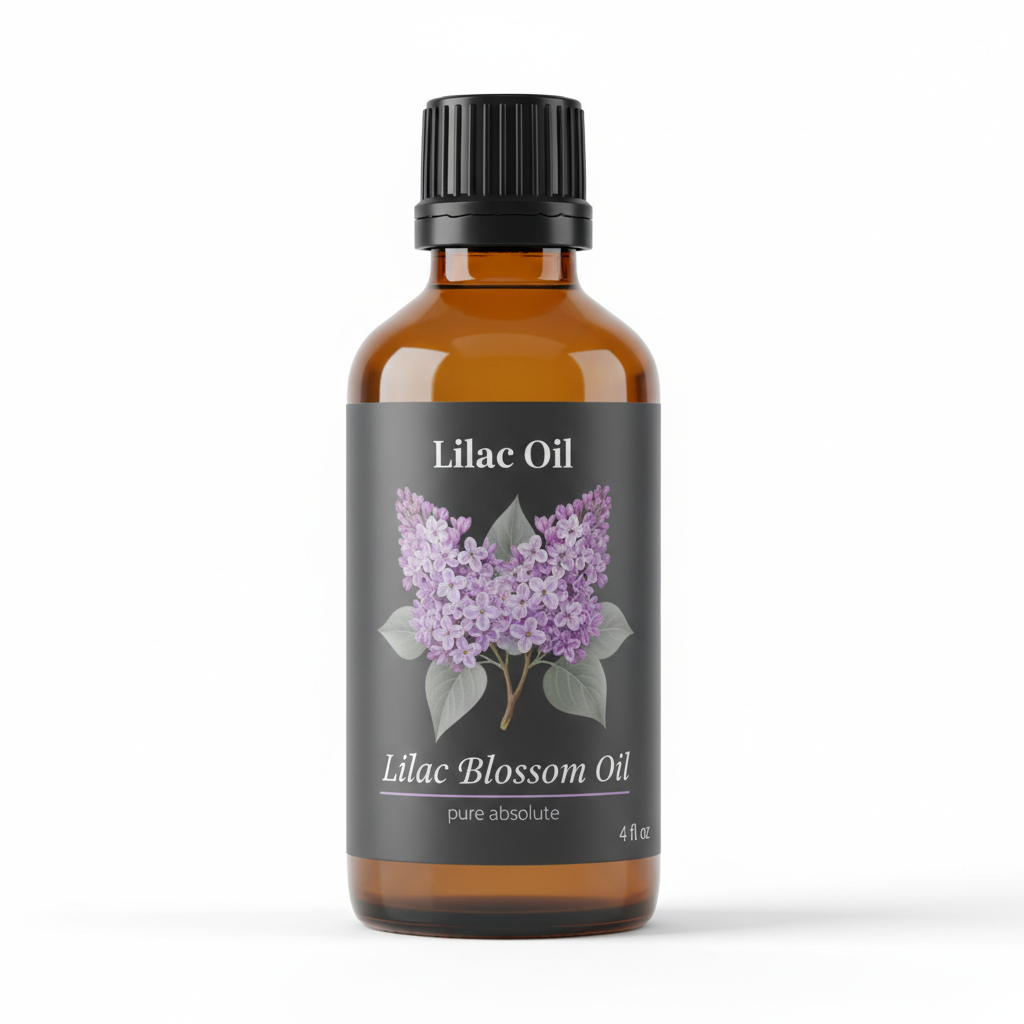
Here's the part most product pages skip. Lilac blossoms are what perfumers call a "non-yielding" flower. Steam distillation, the process that gives us lavender or peppermint oil, doesn't work well on lilac. The delicate aroma compounds in the petals break down or transform under heat and pressure before they can be captured, and the yield that does survive is tiny and doesn't smell much like the living flower. Solvent extraction methods that work for jasmine or rose (producing what's called an absolute) fare only slightly better with lilac, and true lilac absolute is rare, expensive, and inconsistent from batch to batch.
What this means in practice: when you see "lilac oil" or "lilac fragrance oil" on a label, you are almost always looking at a lilac accord, a blend of individual aroma molecules formulated to recreate the smell of the flower, sometimes built around a small amount of real lilac absolute for depth, sometimes built entirely from isolated compounds and naturally derived aroma chemicals. Neither approach is inherently a downgrade. A well-built accord can smell more convincingly "lilac" than the actual flower does in isolation, because it's designed by someone who studied what the nose responds to. But it does mean quality and honesty about sourcing matter more here than with a straightforward single-origin oil, and it's worth knowing what's actually in the bottle.
The Chemistry of a Lilac Accord
Lilac scent molecules explained simply: a handful of compounds do almost all of the work, each occupying a different register of the fragrance, from top notes that hit the nose first to base notes that linger after the lighter molecules have evaporated.
Hydroxycitronellal: the backbone
If there's a single molecule most responsible for what makes lilac oil smell like lilac, it's hydroxycitronellal. This is the compound that gives lily-of-the-valley and lilac accords their soft, slightly powdery floral core, and it's been a cornerstone of white-floral perfumery for over a century. Hydroxycitronellal lilac fragrance work almost always starts here, because the molecule reads as unmistakably floral without pointing to any one specific flower, which is exactly the ambiguous, dewy quality lilac itself has.
Chemically, hydroxycitronellal is an aldehyde derived from citronellal, and it's produced both synthetically and through processing of natural citronella-derived material. In an accord it's usually present at a meaningful percentage, often the single largest component, because so much of the "lilac-ness" rides on it.
Terpineol and the green lift
Alpha-terpineol contributes a lilac-adjacent note with a soft, slightly piney green edge, less sweet than hydroxycitronellal and useful for keeping the accord from tipping into something closer to lily-of-the-valley or muguet. It's a terpene alcohol found naturally in a wide range of plant oils, and in a lilac accord it usually plays a supporting role, rounding out the top of the composition.
Phenylethyl alcohol's rosy undertone
Phenylethyl alcohol (also called phenethyl alcohol) is the same molecule responsible for much of rose's characteristic honeyed, slightly sweet quality, and it shows up in lilac accords for a reason: real lilac blossoms, when analyzed, contain trace amounts of it alongside their more distinctive compounds. Including it in a reconstruction adds a rosy warmth underneath the sharper floral top notes, which is part of why a good lilac accord can smell more complex than a single molecule ever could on its own.
Indole and the trace of depth
This is the compound that surprises people. Indole, in concentration, smells sharply unpleasant, almost fecal. In vanishingly small amounts, though, it's present in the natural aroma profile of many white flowers, including jasmine, orange blossom, and lilac, and it's what gives those flowers a certain lived-in, slightly animalic depth rather than a flat, one-dimensional sweetness. A skilled perfumer uses it in quantities measured in parts per million. Its presence, in the right proportion, is part of what separates a convincing lilac accord from a generic "purple floral" air freshener smell.
Supporting players: linalool, cinnamic alcohol, heliotropin
Rounding out most lilac accords are a handful of secondary compounds. Linalool, a terpene alcohol also found in lavender and coriander, softens the top notes and adds a light citrus-floral brightness. Cinnamic alcohol contributes a warm, slightly balsamic sweetness. Heliotropin (also called piperonal) is sometimes included for its soft, powdery almond-like facet, which helps bridge the green top notes into a smoother, more rounded drydown. None of these dominate the composition, but each shifts the overall impression in a specific direction, and formulators adjust the ratios to land closer to a fresh-cut spring lilac versus a deeper, more purple, almost grape-adjacent lilac note.
What Research Observes About These Molecules
Most of the published research on hydroxycitronellal, terpineol, and their neighbors comes out of fragrance and flavor chemistry journals, and it's worth being precise about what that research actually covers. These studies generally analyze how the molecules behave, how they're metabolized, how they interact with olfactory receptors, and how they perform in patch and dermal studies used for fragrance safety assessment. They are not studies of lilac oil as a wellness product, and it would be a mischaracterization to read them that way.
Some observations worth knowing if you're curious about the chemistry: research on hydroxycitronellal's odor threshold suggests the human nose is extraordinarily sensitive to it, detecting it at concentrations far lower than many other aroma compounds, which is part of why it's such an efficient building block for perfumers working at low cost per unit of scent impact. Research into indole's dose-dependent character, pleasant at trace levels, unpleasant at higher concentrations, is well documented and is part of the reason perfumers describe it as one of the more technically demanding materials to work with. None of this research suggests any cosmetic or aromatic benefit beyond the scent experience itself, and any product description that stretches these chemistry papers into claims about mood, sleep, or physical wellbeing is overreaching what the underlying research actually says.
Safety Profile and Skin Considerations
Because a lilac accord is built primarily from isolated aroma chemicals rather than a single whole-plant extract, its safety profile is really the sum of its individual ingredients' safety profiles, and a few of them deserve specific attention.
- Hydroxycitronellal is classified by fragrance safety bodies as a potential skin sensitizer for some individuals, meaning repeated or undiluted skin contact can, in a subset of people, provoke a reaction over time. This is the single most important reason to dilute any lilac accord product before applying it to skin, and to patch test on a small area (inner forearm is a common choice) at least 24 hours before broader use.
- Cinnamic alcohol carries a similar sensitizer classification and is one of the fragrance allergens that must be disclosed on ingredient labels in the EU above certain concentration thresholds, a useful signal even for shoppers outside that market, since reputable brands tend to disclose it everywhere once they've committed to the practice.
- Indole, at the trace levels used in fragrance, is not typically flagged as a major skin concern, but formulations vary and quality control matters.
- Photosensitivity is generally not a major concern with lilac accords the way it is with citrus oils containing furanocoumarins, but sun exposure after applying any concentrated fragrance blend is worth being cautious about regardless.
General practice for any lilac oil or lilac accord product: keep it away from the eyes and mucous membranes, dilute in a carrier oil before skin application (a common starting ratio is 1 to 2 percent for body application, meaning a few drops per tablespoon of carrier), check with a qualified healthcare provider before use during pregnancy or on infants and young children, and stop use if any redness, itching, or discomfort develops. These oils and accords are intended for cosmetic and aromatic use only. They are not intended for ingestion, and they are not a substitute for professional medical guidance. If you have known fragrance sensitivities, a lilac accord (being fragrance-chemical-dense by nature) is one to be especially deliberate about testing before regular use.
Sourcing and Quality Indicators for Lilac Oil Products
Because true steam-distilled lilac essential oil is essentially not commercially viable, honest sourcing language matters more here than for almost any other botanical. A few things worth checking before you buy:
Does the brand say "accord" or "fragrance oil" anywhere?
If a product is labeled simply "100% pure lilac essential oil" with no mention of a blend, be skeptical. Given the extraction challenges described above, that claim is either imprecise marketing language or, less charitably, misleading. Brands that are transparent about working with a formulated accord, rather than obscuring it behind vague "pure" language, are generally the ones that have thought carefully about the rest of their sourcing too.
Is there a GC-MS report or ingredient breakdown available?
Gas chromatography-mass spectrometry analysis is the standard way to verify what's actually in a bottle. A brand willing to publish, or provide on request, a compound breakdown showing hydroxycitronellal, terpineol, phenylethyl alcohol, and the other components in their approximate ratios is demonstrating a level of quality control that vague marketing copy can't substitute for.
Are the individual aroma chemicals naturally derived or synthetic, and does the brand say which?
Both naturally derived and synthetic versions of these molecules exist, and both can be produced to high purity standards. What matters more than the natural-versus-synthetic label itself is whether the brand is straightforward about it. "Nature-identical" is a legitimate and common industry term meaning a molecule is chemically identical to its naturally occurring counterpart regardless of manufacturing route; a brand using that phrase accurately is being more honest than one implying everything came straight from a flower.
Does the scent evolve, or does it smell flat and one-note?
This is the simplest test you can do yourself. Apply a diluted drop to a paper strip or your wrist and check back at the top of the scent (first few minutes), the heart (twenty to thirty minutes in), and the drydown (an hour or more later). A well-built lilac accord shifts subtly as the lighter top notes evaporate and the base notes take over, moving from a brighter, greener opening toward a softer, slightly powdery finish. A cheap, single-molecule imitation tends to smell the same the entire time, because there's nothing underneath the initial impression to reveal.
How to Read a Lilac Oil Label
Putting the chemistry together into a practical checklist: look for a brand that names its blend as an accord or reconstruction rather than implying whole-flower distillation, discloses or makes available a compound analysis, is specific about natural versus nature-identical sourcing for individual aroma chemicals, and includes clear dilution guidance along with a note about patch testing before skin use. None of this is about finding a pure lilac oil in the sense that a rose or lavender oil can be pure. It's about finding a well-made, honestly labeled reconstruction, because for this particular flower, that's what the whole category actually is. Understood that way, an ingredient deep-dive into lilac becomes less about hunting for a mythical single-source extract and more about appreciating the specific, well-studied chemistry that lets a formulator put a spring hedge in a bottle at all.