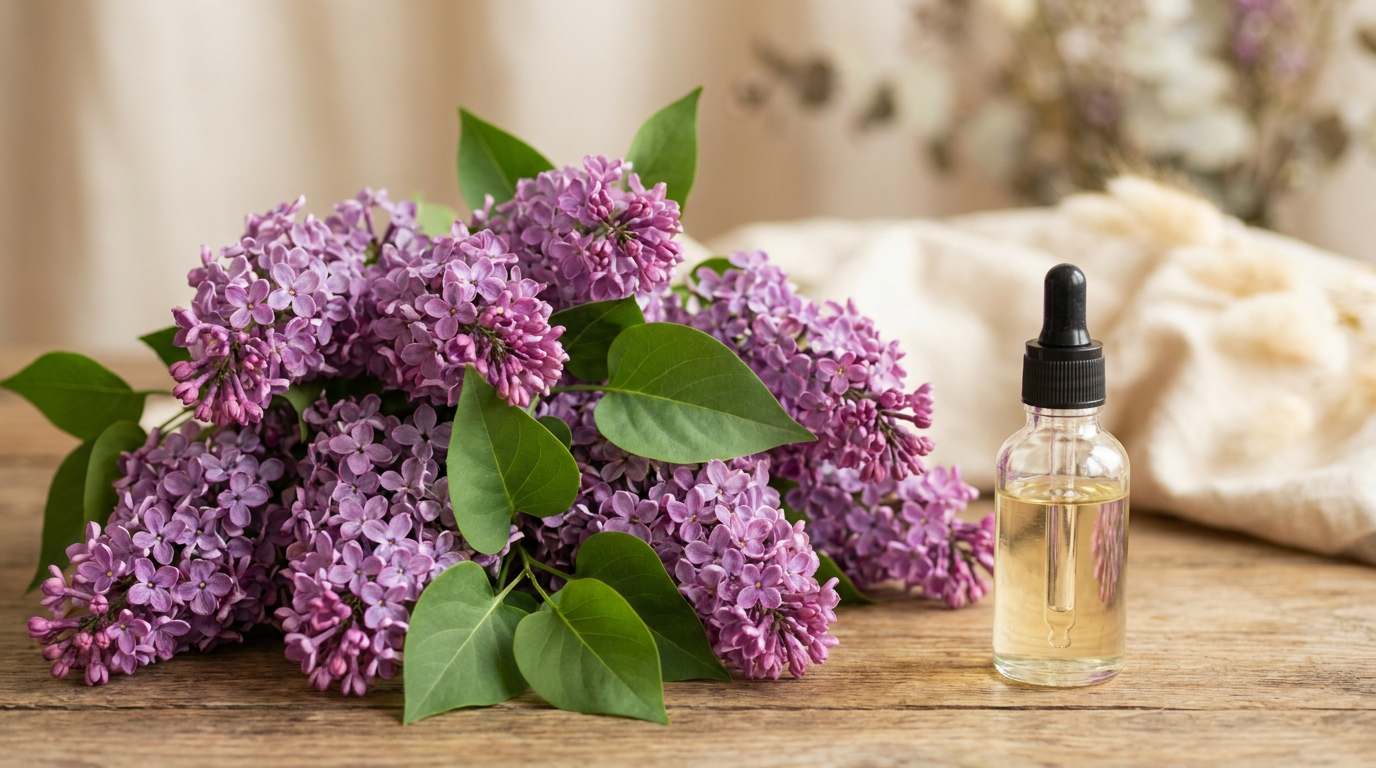
Lilac Oil vs Hyacinth Oil: Comparing Two Fleeting Spring Florals
If you've spent any time chasing spring floral scents, you've probably noticed that lilac and hyacinth show up in the same conversation constantly. Both bloom for a matter of weeks. Both smell unmistakably like a garden waking up after winter. And both have a reputation, among people who actually work with botanicals, for being nearly impossible to capture honestly in a bottle. This guide lays out a straightforward lilac and hyacinth fragrance comparison: what each oil actually is, how it's sourced, where the two diverge in scent and use, and which one makes more sense for your particular routine.
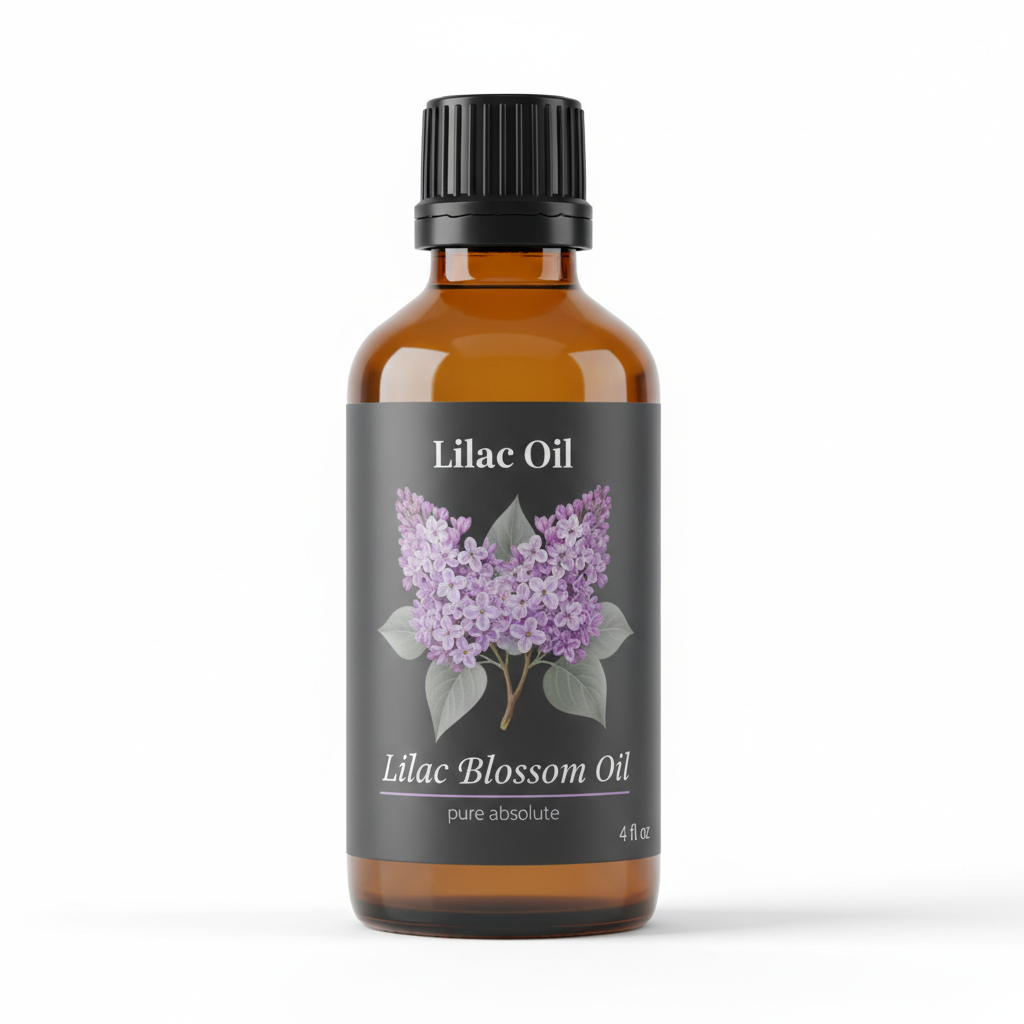
Two Notoriously Difficult Florals
Before comparing the two side by side, it's worth being upfront about something the fragrance industry doesn't always volunteer: neither lilac nor hyacinth yields well to traditional steam distillation. Lilac blossoms are delicate and low in essential oil content. Push them through a still and you get a fraction of a fraction of a percent of usable oil, if you get anything recognizable at all. Hyacinth has the same problem, and its natural absolute (produced through solvent extraction rather than distillation) is one of the most expensive florals in the perfumer's palette, priced closer to jasmine or rose otto than to lavender or peppermint.
Because of that, most bottles labeled "lilac oil" or "hyacinth oil" on the market are not pure single-flower distillates. They're carefully built compositions, blending true botanical extracts where available with nature-identical aroma molecules that recreate the parts of the scent distillation simply can't preserve. That's not a red flag by itself. It's how perfumery has handled fragile spring florals for well over a century. The distinction that actually matters is whether a brand tells you this plainly or lets you assume you're buying something it isn't.
Lilac Oil vs Hyacinth Oil: Comparison Table
| Attribute | Lilac Oil | Hyacinth Oil |
|---|---|---|
| Typical sourcing | Compound blend built around lilac-derived aroma molecules; true steam-distilled lilac oil is essentially not commercially viable | Solvent-extracted absolute (rare, costly) or, more commonly, a nature-identical composition |
| Scent character | Soft, powdery, slightly green with a cool floral sweetness | Bright, dewy, sharper green top note with a heavier, almost waxy floral heart |
| Intensity | Moderate; reads as gentle and diffusive rather than heavy | Stronger and more assertive; a little goes further |
| Typical price range | Mid-range for a specialty floral | Higher, especially for anything closer to true absolute |
| Best format for beginners | Pre-diluted roll-on or blended body oil | Pre-diluted roll-on; undiluted absolute is generally not a starting point |
| Skin-safe dilution | Standard 1 to 2 percent in a carrier oil for topical use | Standard 1 to 2 percent, sometimes lower given its intensity |
| Longevity on skin | Light to moderate, tends to fade within a few hours | Slightly longer staying power due to its heavier floral base notes |
| Availability | Fairly easy to find from specialty suppliers | Harder to find in a true form; more brands substitute entirely synthetic versions |
| Pairs well with | Citrus, light musks, green tea accords | Rose, ylang ylang, sandalwood, other heavier florals |
Lilac Oil: Pros and Cons
Lilac's appeal is its restraint. It doesn't try to dominate a blend or a room. People who gravitate toward it usually describe wanting something that feels like a memory of a specific garden in April, not a loud floral statement.
Pros
- Soft, easy-to-wear scent that layers well with other notes instead of fighting them
- Generally more affordable than hyacinth given the smaller share of rare absolute in most formulations
- Wide availability across candle, diffuser, and personal-care applications
- A familiar, nostalgic scent profile for anyone who grew up around lilac hedges
Cons
- Fades relatively quickly compared to heavier florals, so it needs reapplication or a fixative in a blend
- Because true distillation isn't viable, sourcing transparency varies a lot between brands; always check whether you're getting a blend or being sold something misleadingly
- Can read as slightly one-dimensional on its own without supporting notes
Hyacinth Oil: Pros and Cons
Hyacinth is the more dramatic of the two. Anyone who has walked past a bed of hyacinths in full bloom knows the scent carries in a way lilac's doesn't; that same intensity is what shows up in the bottle.
Pros
- Bold, distinctive scent with more presence and longer staying power
- Blends beautifully as a heart note in more complex spring or floral bouquets
- A less common choice, which appeals to people looking for something outside the usual rose-lavender-jasmine rotation
Cons
- Meaningfully pricier, especially anything approaching a true absolute
- Its intensity means it's easy to overuse in a blend; small amounts go a long way
- True hyacinth absolute is genuinely hard to source consistently, and supply can be inconsistent year to year
- The strong green top note can read as sharp or even a little "wet" to noses that prefer softer florals
Scent Profile Head-to-Head
Put them side by side and the difference is immediate. Lilac opens soft and stays soft: a powdery, cool floral with a faint green undertone that never really raises its voice. Hyacinth opens sharp and green, almost like crushed stems and rain, before settling into a denser, waxier floral heart that lingers noticeably longer on skin or in a room.
If you're building a spring floral oil comparison in your head around a specific use, that opening moment matters. Lilac tends to suit close, personal application, worn on skin or blended into a body oil where subtlety is the point. Hyacinth performs better at a slight distance: diffused in a room, used in a candle, or as a supporting note in a blend where you want the composition to have some backbone.
Best For: Matching the Oil to Your Use Case
- Best for everyday personal wear: Lilac oil, diluted in a light carrier and worn close to the skin, where its softer profile doesn't overwhelm.
- Best for a statement room scent: Hyacinth oil in a diffuser blend, where its intensity and longevity carry across a larger space.
- Best for a nostalgic, garden-inspired atmosphere: Lilac oil, especially paired with green tea or light citrus notes for a fresh, unfussy feel.
- Best for layering into a more complex floral blend: Hyacinth oil, used sparingly as a heart note alongside rose or ylang ylang.
- Best for budget-conscious spring blending: Lilac oil, which is generally more accessible without sacrificing the seasonal floral character people are after.
- Best if lilac feels too faint for your taste: Hyacinth oil is a reasonable hyacinth oil alternative in reverse, essentially a louder, longer-lasting cousin with a related but distinct green floral signature.
Sourcing and Quality: What to Actually Look For
Because neither oil comes from a simple, transparent distillation process the way lavender or peppermint does, the label matters more than usual. A trustworthy supplier will tell you plainly whether a bottle is a natural absolute, a blend of natural and nature-identical components, or a fully synthetic composition built to mimic the flower. None of those categories is inherently a problem for a cosmetic or aromatic product. The problem is a brand that lets "lilac oil" or "hyacinth oil" imply pure steam-distilled botanical origin when the economics of the actual flower make that essentially impossible at any price a typical customer would pay.
Look for a supplier that discloses its extraction or composition method, batch-tests for consistency, and is willing to say plainly when a product is a blend rather than a single-note absolute. That honesty is a better indicator of overall quality than any specific price point.
Using Either Oil Safely
Both lilac and hyacinth oils are typically sold pre-diluted for topical use, and that's the format worth choosing unless you specifically want to build your own blend from a concentrate. If you are diluting from a more concentrated form, a standard starting point is 1 to 2 percent in a suitable carrier oil, roughly 6 to 12 drops per ounce of carrier. Always do a patch test on a small area of skin, such as the inner forearm, and wait 24 to 48 hours before wider use. Discontinue use if any irritation appears. These oils are intended for cosmetic and aromatic use only; they are not meant to be ingested, and anyone pregnant, nursing, or managing a specific skin sensitivity should check with a qualified healthcare provider before adding a new botanical to their routine.
The Verdict
Neither oil beats the other outright; they're built for different moments. Lilac oil is the better everyday choice for most people: softer, more affordable, easier to wear close to the skin, and instantly recognizable as "spring" without demanding much attention. Hyacinth oil earns its higher price and stronger presence when you want a floral that holds its own in a diffuser blend or anchors a more complex composition as a heart note.
If you're deciding between the two as a lilac and hyacinth fragrance comparison for a specific project, a diffuser blend or a candle line, lean toward hyacinth for its staying power. For a personal fragrance oil or a light seasonal body product, lilac is the friendlier, more versatile option. And if budget or availability rules one out, the other genuinely works as a substitute; they share enough of that classic spring garden character that swapping between them, rather than sitting the season out, is a completely reasonable call.