
A Signature Dooryard Lilac Blend
There is a particular kind of memory that lives in a lilac bush near a front gate. It is not the formal garden kind. It is the kind from a dooryard planting, the scrappy, generous shrub that blooms whether anyone tends it or not, filling a whole side yard with scent for two weeks in May and then going quietly back to being furniture. This signature lilac blend tries to bottle exactly that moment.
Capturing lilac in oil is famously difficult. True Syringa vulgaris essential oil does not exist at commercial scale; the blossoms simply will not yield their scent to steam distillation in any meaningful way. What we work with instead is a combination of lilac-forward infused carrier oil, carefully chosen botanical companions, and a base resin that can hold the whole composition together without shouting. That base, here, is Boswellia serrata, and its choice is not arbitrary. Read on for the full recipe, the reasoning behind every ingredient, and a few variations worth exploring.
Why Boswellia Serrata for a Dooryard Lilac Blend
Frankincense is a large family, and each member brings a different personality. Boswellia carterii leans bright and citrus-edged. Boswellia sacra from the Dhofar region reads almost sweet and milky. Boswellia frereana is sharp and resinous, more bark than blossom. Serrata, native to the dry forests of the Indian subcontinent, sits in a different register entirely.
Serrata's aroma profile is warm, woody, and gently earthy, with a soft spice note that some describe as almost nutmeg-adjacent. Compared to its East African relatives, it is quieter in the top notes and more persistent in the base. That persistence is the point. Lilac fragrance, whether captured in infused oil or approximated through absolutes and isolates, is inherently delicate. It needs a base that will carry it without competing. Serrata does exactly that.
There is also a textural quality to serrata that matters in blending. Its resinous body is less sharp than carterii, which means it does not slice through a floral accord the way a more citrus-prominent frankincense might. It settles underneath, providing warmth and longevity. For a dooryard impression, something that should feel lived-in and unhurried, that quality is essential.
Serrata is also widely available from sustainable Indian sources, and its production has a long documented history in Ayurvedic craft traditions. For a blend meant to evoke something homegrown and honest, that origin story fits naturally.
Full Ingredient List: The Dooryard Lilac Blend
This recipe produces approximately 30 ml of finished blend oil, diluted to a skin-safe 3% total aromatic load in carrier. This concentration suits pulse-point application and diffuser use. For purely aromatic or room-diffuser use, you may blend without carrier and adjust ratios accordingly (see Variations below).
| Ingredient | Role in Blend | Amount (drops) | Amount (ml) |
|---|---|---|---|
| Lilac-infused jojoba oil | Carrier and primary floral character | N/A (base) | 27.0 ml |
| Boswellia serrata essential oil | Warm, woody base; fixative | 9 drops | 0.45 ml |
| Ho wood essential oil (Cinnamomum camphora ct. linalool) | Soft floral bridge, gentle green lift | 6 drops | 0.30 ml |
| Violet leaf absolute (diluted to 10% in jojoba) | Green, slightly earthy floral nuance | 4 drops | 0.20 ml |
| Clary sage essential oil | Soft herbal mid-note, slight muskiness | 2 drops | 0.10 ml |
| Benzoin resinoid (diluted to 50% in jojoba) | Sweet, balsamic dry-down; extends wear | 3 drops | 0.15 ml |
Total volume: approximately 28.2 ml, rounded to 30 ml with additional plain jojoba to fill your chosen vessel.
Aromatic load: approximately 2.8% to 3%, skin-safe for most adults when applied to intact skin. See safety notes below.
A Note on the Lilac-Infused Jojoba
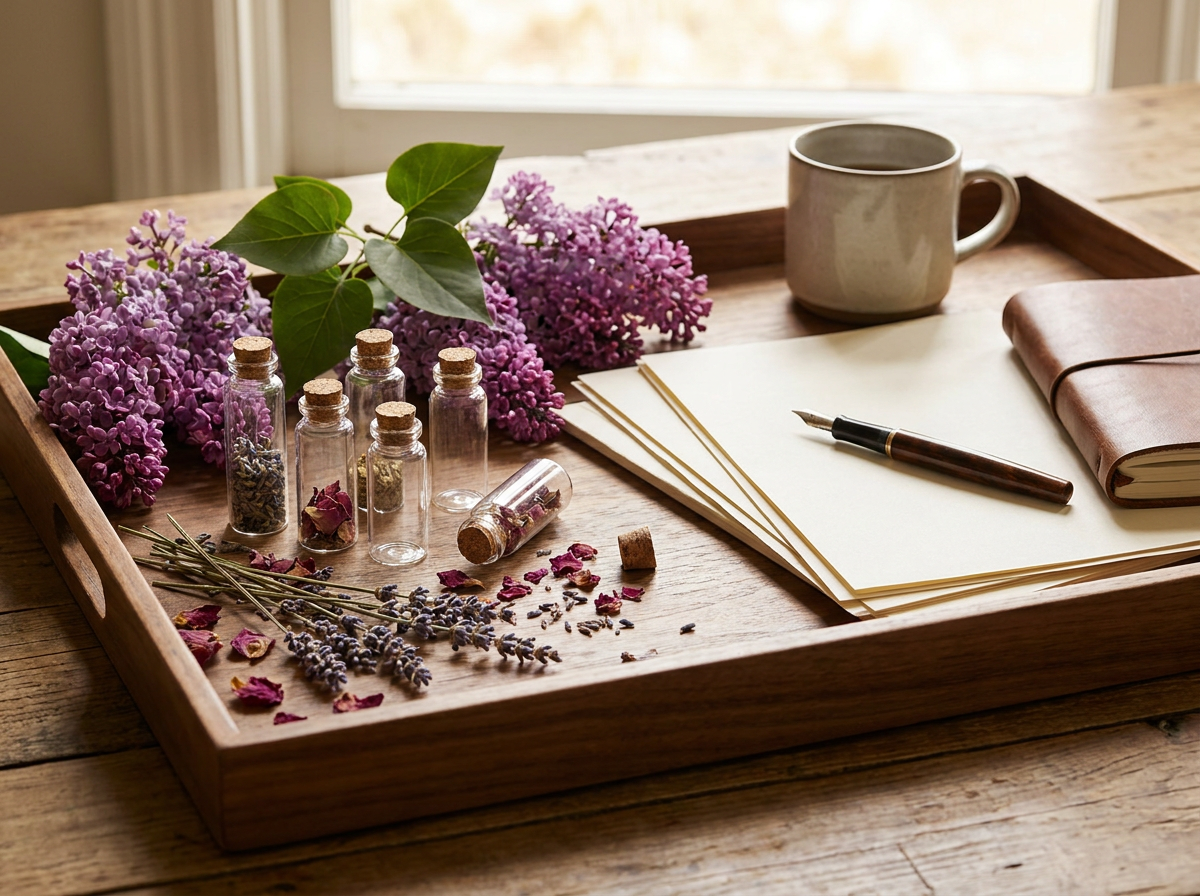
The foundation of this signature lilac blend is a slow cold infusion of fresh lilac blossoms in jojoba. Jojoba is technically a liquid wax, which means it is exceptionally shelf-stable and carries delicate blossom scent well without going rancid quickly. If you have not made your own yet, the full process is laid out in our guide to making lilac infused oil from fresh blossoms. A commercial lilac-infused jojoba from a reputable supplier can also serve well here if blossom season has passed.
Step-by-Step Blending Instructions
- Gather and measure. Set out a clean 30 ml glass dropper bottle or roll-on vessel. Have your lilac-infused jojoba at room temperature. Cold carrier oil can mute your perception of aromatic top notes while blending, so if yours has been refrigerated, let it sit for 20 minutes first.
- Build from the base up. Add the Boswellia serrata drops first. Resinous base notes benefit from a little time to bloom in the carrier before other materials join them. Swirl the bottle gently for 10 seconds.
- Add the mid-notes. Drop in the ho wood oil, then the clary sage. Swirl again. Pause and smell at this stage. You are looking for a warm, slightly green foundation that does not read as any single ingredient.
- Introduce the florals. Add the violet leaf absolute (pre-diluted) and swirl. The blend will shift noticeably here, picking up a green, slightly powdery floral quality that echoes the real lilac character rather well.
- Add the balsamic anchor. Drop in the benzoin resinoid. Swirl. Smell again. The blend should now have a visible dry-down quality, a sweetness that reads as background rather than foreground.
- Fill with carrier. Pour the lilac-infused jojoba over the aromatic materials to reach your 30 ml mark. Cap the bottle and roll it gently between your palms for 30 seconds to integrate.
- Rest before evaluating. Set the blend aside for at least 24 hours, ideally 48 to 72. Freshly blended aromatic materials can smell disjointed. Resting allows the molecules to marry and the true character of the blend to emerge.
- Evaluate and adjust. After resting, apply a small amount to your inner wrist. Let it sit for 10 minutes before making any judgments. If the serrata reads as too prominent, a drop or two of additional ho wood can soften it. If the whole blend feels flat, a single additional drop of violet leaf absolute often brings it forward.
For a broader look at blending techniques and timing across different lilac-based projects, the ultimate craft guide to making and blending with lilac covers the subject in depth and is worth reading alongside this recipe.
Dilution, Patch Testing, and Safety Notes
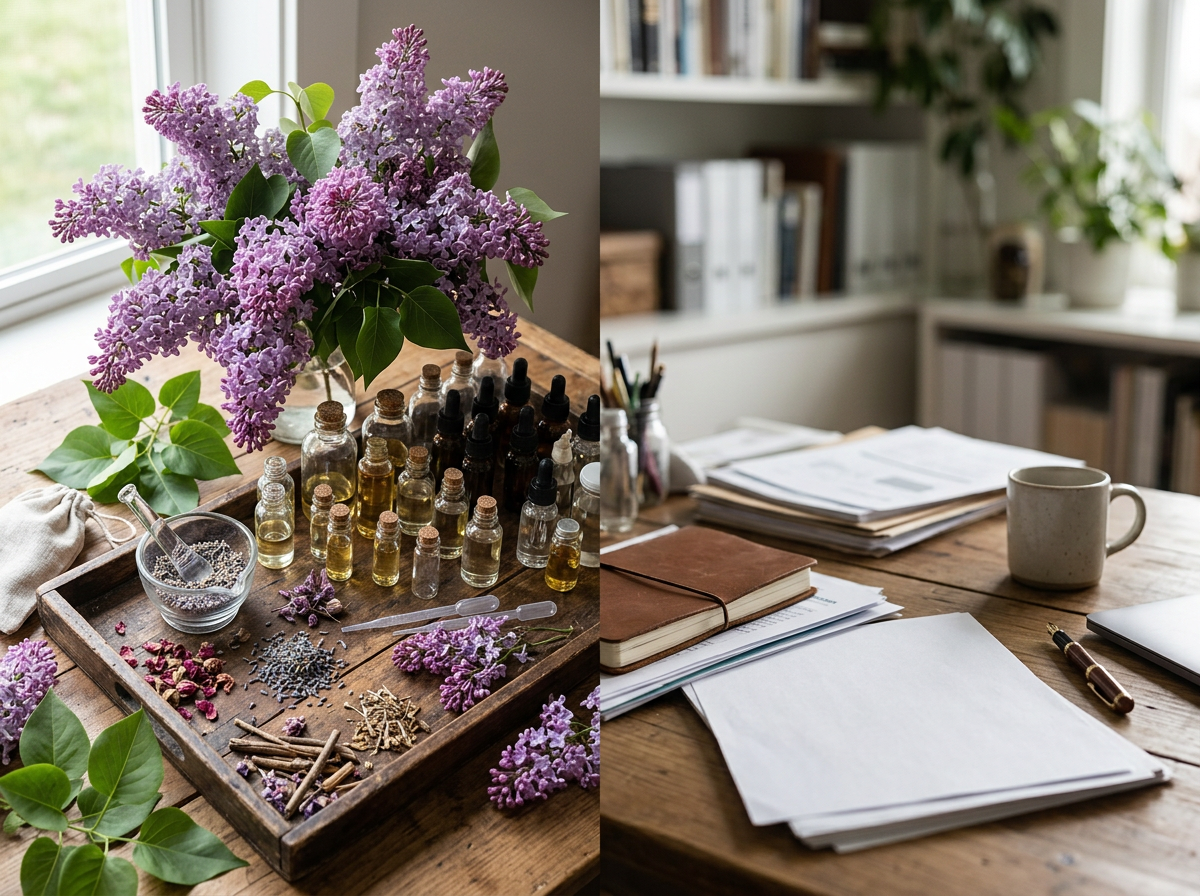
This blend is formulated at approximately 3% total aromatic load in carrier, which falls within general guidance for leave-on skin application for most adults. A few specific notes:
- Patch test before first use. Apply a small amount to the inside of the elbow and wait 24 hours before applying more broadly. Discontinue use if any irritation or discomfort develops.
- Clary sage is generally avoided during pregnancy. If you are pregnant or nursing, consult a qualified healthcare provider before use.
- Benzoin resinoid can occasionally cause skin sensitization in individuals with sensitive skin. If your skin tends to react to balsamic materials, start with 1 drop instead of 3 and observe.
- Violet leaf absolute should always be used pre-diluted. Neat application of absolutes directly to skin is not recommended.
- Avoid eye contact and keep away from children and pets.
- This blend is for aromatic and topical personal use only. It is not intended for ingestion.
- When in doubt about any ingredient or application, consult a qualified healthcare provider.
Storage and Shelf Life
Store your finished dooryard lilac blend in a dark glass bottle, away from heat and direct light. A cool cabinet or drawer works well. Jojoba is among the most shelf-stable carriers available, which is part of why it was chosen here, but the lilac-infused portion of the carrier does contain trace botanical material that can shorten overall stability.
Expect a comfortable shelf life of 12 to 18 months when stored properly. The aromatic top notes from ho wood may soften over time; this is normal and does not indicate spoilage. Trust your nose. If the blend smells rancid, sour, or off in any way, it is past its best.
Label your bottle with the date of blending and a brief ingredient list. It takes 30 seconds and saves confusion later.
Variations on the Signature Blend
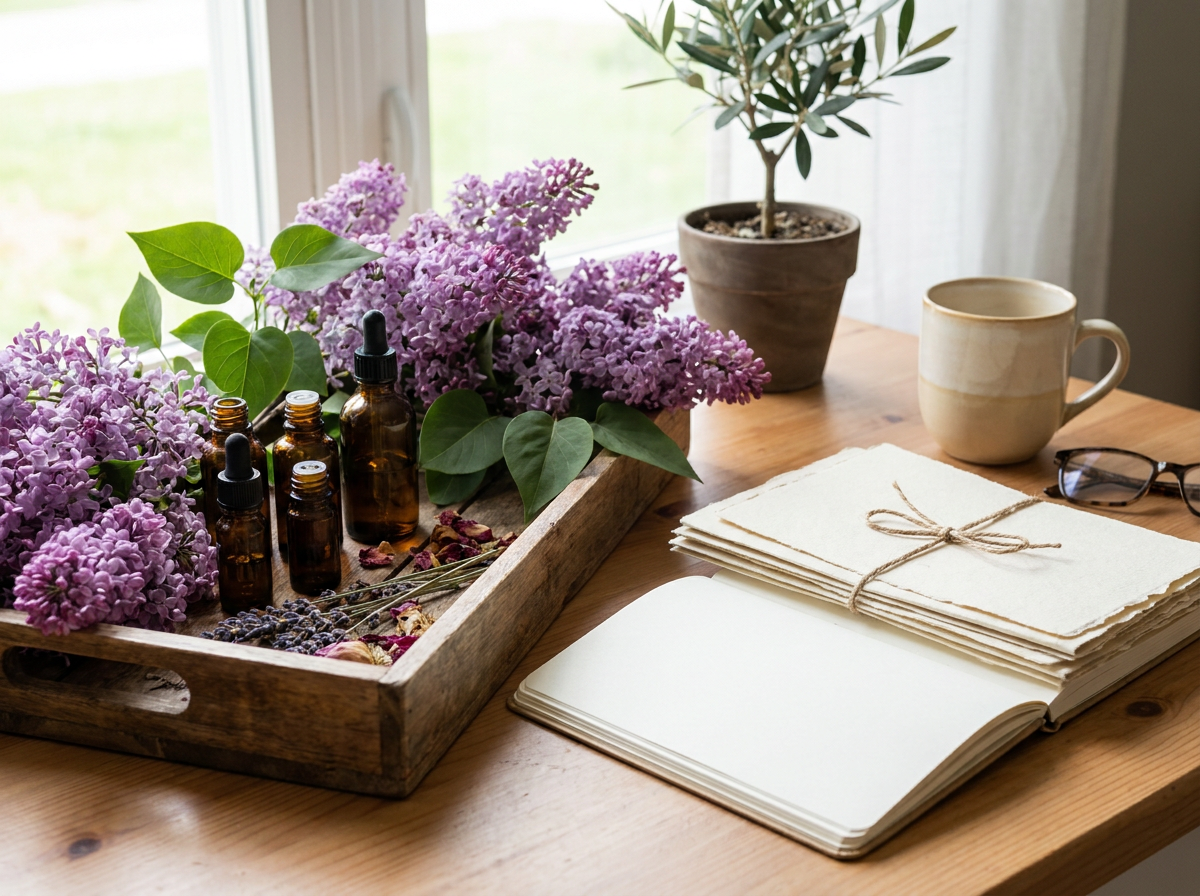
1. The Evening Version
For a blend oriented toward quieter evening rituals, a bedtime wind-down, or simply a different mood, reduce the ho wood to 3 drops and add 3 drops of Roman chamomile essential oil in its place. Roman chamomile brings a soft, apple-touched sweetness that reads as deeply calm without dramatically changing the overall floral character. The serrata base reads slightly more prominently in this version, which suits the longer, slower drift of an evening scent.
2. The Garden-Air Diffuser Blend
For diffuser use only (not for skin application at these concentrations), build an undiluted aromatic concentrate using the following proportions per 5 ml of total blend:
- Boswellia serrata: 15 drops
- Ho wood: 10 drops
- Violet leaf absolute (neat or 10% dilution): 5 drops
- Clary sage: 4 drops
- Benzoin resinoid (50% dilution): 6 drops
Use 4 to 6 drops of this concentrate in your diffuser. The diffuser version reads greener and more expansive than the skin blend, which suits the open-air impression of a dooryard in full bloom.
3. The Solid Perfume Version
A solid perfume format works beautifully for this lilac fragrance recipe, especially for travel. Melt together 8 grams of cosmetic-grade beeswax and 14 ml of the finished blend oil (already diluted as above) over a double boiler at low heat. Pour into a small tin or locket and allow to set undisturbed for two hours. The wax will slightly mute the initial top notes, but the serrata base and violet leaf mid-note come through warmly on skin contact. Shelf life for the solid version is approximately 10 to 12 months.
On the Character of This Blend
What makes this a dooryard lilac blend rather than a formal or abstract lilac fragrance is its unhurriedness. The serrata does not perform. It holds. The ho wood bridges without calling attention to itself. The violet leaf adds the green-shadowed quality that fresh lilac clusters actually have when you press your face into them, the slight earthiness of leaves nearby, the cool air underneath the scent.
Lilac season is short. Blending is one way to extend it into the rest of the year, and Boswellia serrata is a quiet but confident partner in that effort. For more on how small-batch lilac oil production works from field to bottle, the one-season small-batch lilac blossom oil case study offers a close look at what goes into every drop of quality lilac-infused material.
Make this blend in May if you can, with fresh-infused jojoba still carrying the memory of actual blossoms. Make it in January if you need to. The dooryard spirit of it holds either way.