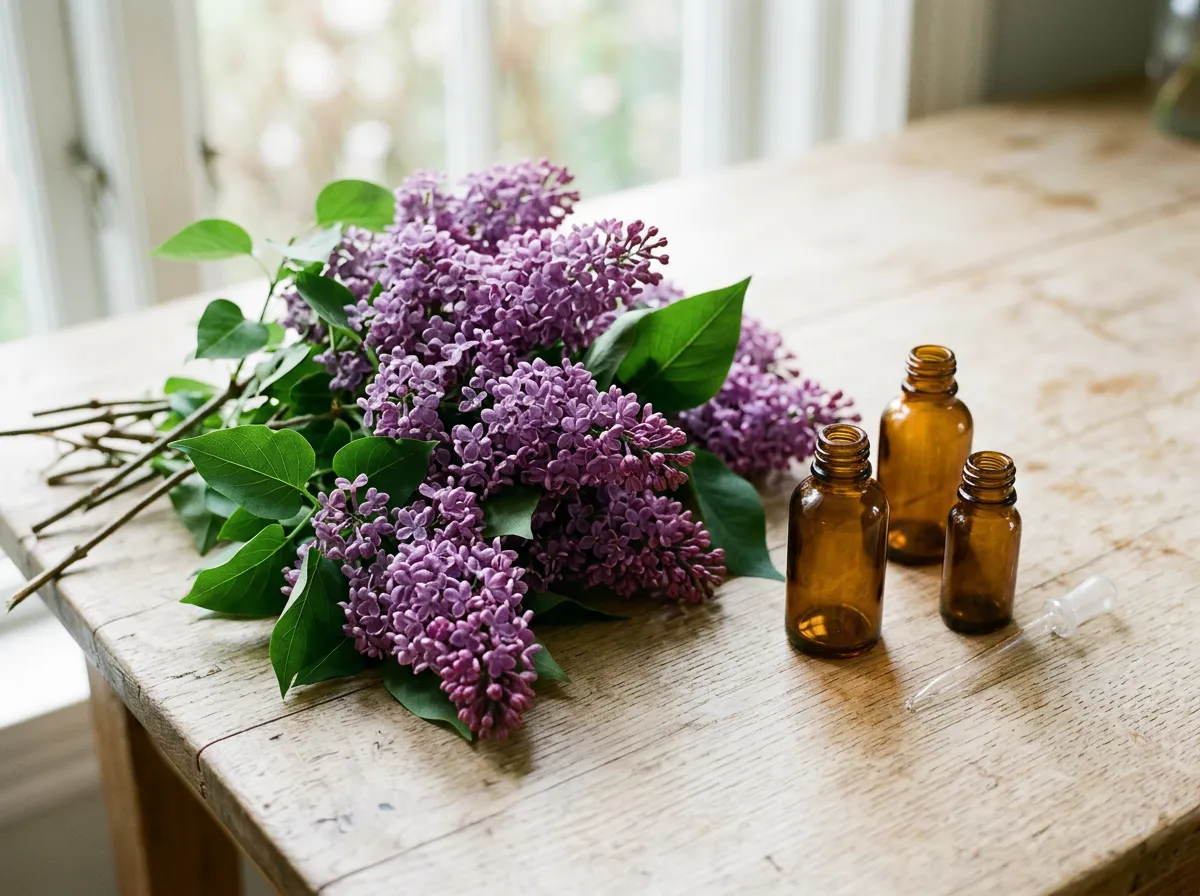
Every other page in this network explains how an oil was made. This one has to begin by telling you that the oil you came looking for does not exist.
Lilac is the most asked-for scent in this whole network that cannot be bought as a single-species oil, at any price, from anyone.
Steam ruins it. The panicles go into a still and the green-floral character that makes lilac worth wanting does not come out the other side; what little is recoverable does not read as the flower in bloom. Solvent extraction has been tried on lilac for the better part of two centuries and it remains one of the flowers that does not repay the effort, which is why perfumery has always built lilac rather than harvested it.
So a bottle labeled pure lilac essential oil has earned your suspicion rather than your money. It is an infusion, a fragrance oil, or a composition, and the only real question is whether the label is willing to say which.
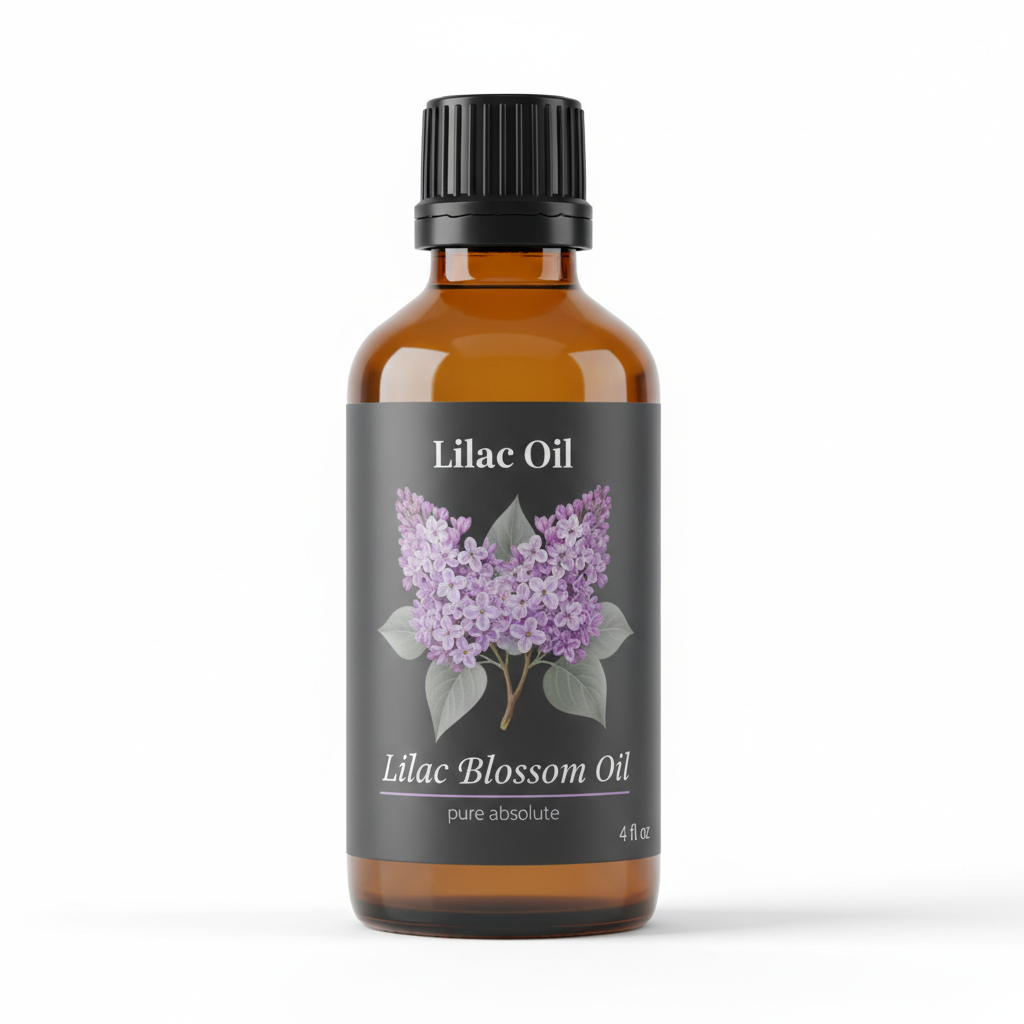
Ours says which. This is a lilac blossom oil: a composition of botanical extracts and infused aromatics, built to be faithful to Syringa vulgaris in bloom, and sold under that description instead of a more flattering one.
A composition, described as one. It is not a distillate of anything, it is not an absolute, and it is not presented as either. Nothing synthetic is hidden inside a natural-sounding word.
What it aims at is recognition. Soft, powdery, unmistakably late spring: purple floral over green stem, a thread of almond sweetness, a clean musky base that keeps it from turning sharp. It behaves as a heart note and sits easily beside rose, violet leaf and the lighter citrus materials.
It earns its keep in candles and wax melts, in room and linen sprays, and in perfume projects that want a nostalgic dooryard-garden note. Diluted in a carrier it will scent a body oil gently.
Six things a bottle can be, and what each one is actually telling you.
The claim to walk away from. No such material is produced commercially, so the bottle is something else and the label has decided not to mention it.
Genuinely rare and correspondingly expensive when real. Ask for the analysis and the extraction house before you believe a low price.
Also rare. Carbon dioxide extraction runs cooler than a still and is worth trying when someone genuinely has it, so ask to see the analysis behind the claim.
Blossom steeped in a carrier. An honest and pleasant thing to make, far weaker than any concentrate, and it should be sold with the word infused kept in view.
A perfectly legitimate product for candles and soap, and an honest label when it says so. It is a fragrance composition, not a plant extract.
What we sell: a stated composition of botanical extracts and infused aromatics, named as a composition on the page you are reading.
We will not call it a distilled essential oil, because it is not one and there is no such product in existence to compare it against. We will not imply a single-species origin either, since it does not have one.
We also will not publish a formula. What we will say is what the label says, and if you need more than that for a formulation or a compliance file, ask about your lot and you will get what we can tell you about it rather than a marketing sentence.
Dilute before skin use and try a small patch first. Keep it cool, dark and closed. No medical claims are made for it, and its purpose is scent.
The same dark glass at every size, small bottles through to bulk.
The label calls it a composition, and so does every page of this site.
Carried on the bottle, so a question about yours has an answer.
No lilac distillate exists, so we do not sell one. What we sell is a composition of botanical extracts and infused aromatics, described as exactly that from the label inward.
Spring, without the pretending.
Shop Lilac Blossom Oil