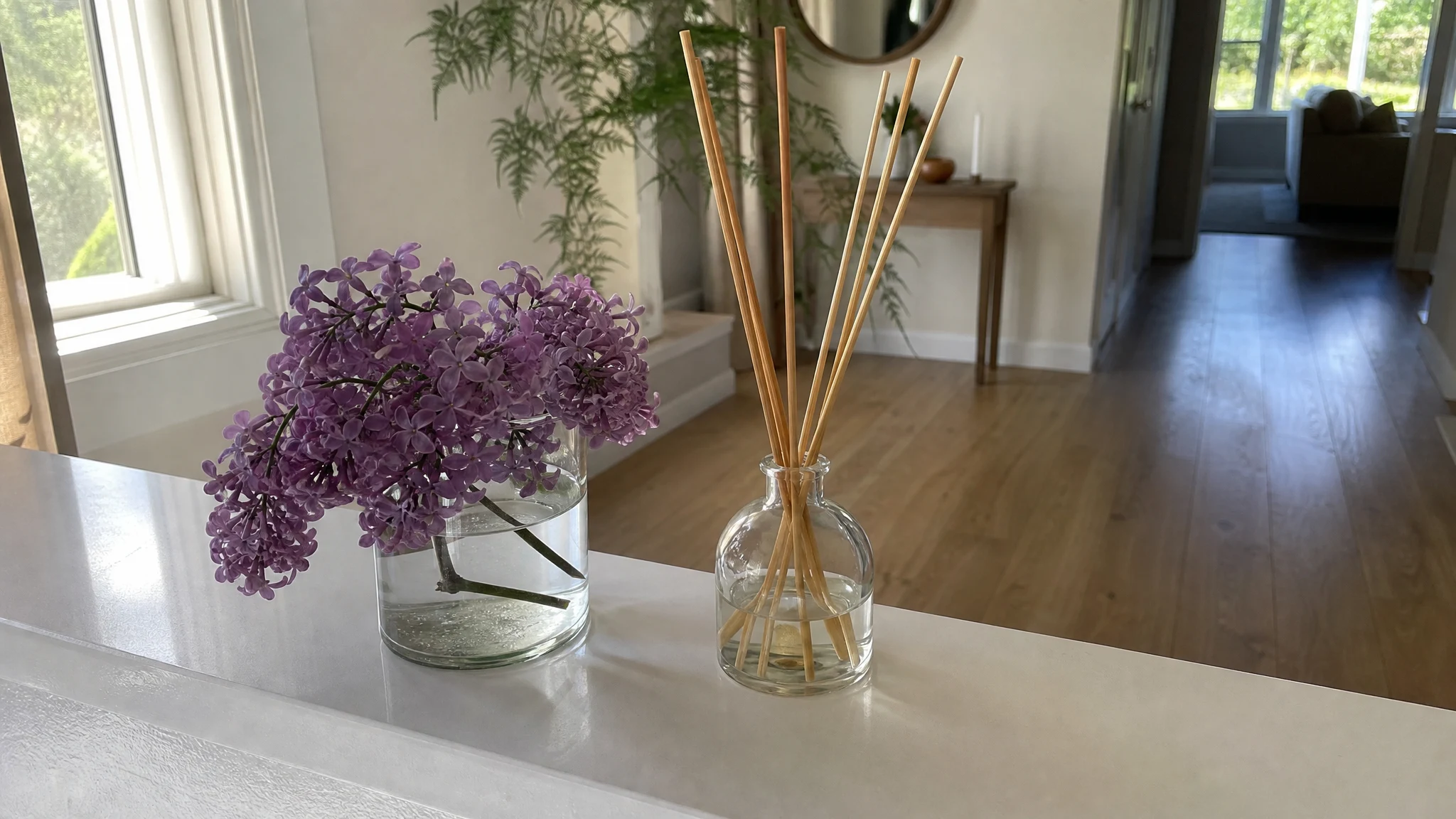
DIY Lilac Reed Diffuser: Base, Ratios and a 10 g Test Mix
Do not fill a bottle with Lilac Blossom Oil and a diffuser base until you have mixed 10 grams and watched it for a day. Our oil is a composition built to be faithful to the scent of the common lilac, nothing on the site says it dissolves in any particular diffuser base, and the published certificate of analysis says nothing about solvents. This is a formulation worked out from supplier guidance and arithmetic. We have not made or tested it.
Decide the base first, because it is the hazard
The oil is the small part of a reed diffuser. The base is 75 to 90 percent of what is in the bottle, and it is the part people skip reading about. A UK supplier of diffuser base gives a ratio of 75 to 90 percent base to 10 to 25 percent essential or fragrance oil, mixed by weight and left in a sealed container for at least 24 hours "while the blend fully solubilises" (Aromantic, undated). A US candle-supply tutorial uses 25 percent as the ceiling for the one fragrance oil in its example, 1.5 oz of oil into a 6 oz fill, and says to check each oil's own diffuser limit (CandleScience, 2026). Both are suppliers describing their own base and their own oils. Neither covers a composed lilac, so the percentage range is a starting frame, not a rating for our oil.
What the base is made of varies by product: glycol ethers, ethanol, isopropyl alcohol, or a proprietary mix. A New Zealand review of reed diffuser liquids puts the solvent at 70 to 90 percent and the fragrance at 10 to 30 percent (Cressey, N Z Med J, 2026). Poison Control notes that some reed diffuser fragrances contain up to 70 percent isopropyl alcohol and that homemade recipes can use the same ingredients (Poison Control, National Capital Poison Center, accessed 2026). So buy a base that comes with a safety data sheet, read its hazard and flash point sections for the exact grade, and keep the sheet with the batch. We do not sell bases, solvents, reeds or bottles; a candle or soap supply shop does. Carrier oils are a different route: thick oils move slowly up a reed, so ask the supplier of any oil-based "base" whether it is meant for reeds. That is reasoning, not a figure from a source.
The arithmetic, in grams
Weigh, do not measure by volume. A base and an oil have different densities, and the supplier method is to multiply the fill weight by the oil percentage and subtract for the base. For our oil, the batch on the published COA has a relative density of 0.973 at 20 C, so 1 ml is about 0.973 g, and we assume about 20 drops per ml (droppers vary; the scale is the real measure). Take a 100 g fill:
| Oil share of fill | Oil (g) | Oil (ml) | About drops | Base (g) |
|---|---|---|---|---|
| 10% | 10 | 10.3 | 205 | 90 |
| 15% | 15 | 15.4 | 308 | 85 |
| 25% | 25 | 25.7 | 514 | 75 |
Bottle sizes follow from that. One 0.5 oz bottle holds about 14.4 g, enough for one 100 g fill at 14 percent. One 1 oz bottle holds about 28.8 g: about 288 g of finished diffuser at 10 percent, or 115 g at 25 percent. A 4 oz bottle makes roughly 11 fills of 100 g at 10 percent. See the shop page for the current price per size.
Our recommendation: start at the bottom and make 10 g first
Our only stated ceiling for the oil is the skin copy: 0.5 to 2 percent in a carrier oil. A diffuser is not skin, and that number does not transfer. But a diffuser at 10 to 25 percent is five to twelve times the top of our skin range, and we have no flash point, SDS or IFRA data to put against it (none is published on the site; ask in writing before ordering, and get the answer in writing). Hence the position: use the low end of the supplier range, not the middle.
- Weigh 9.0 g of base into a small glass jar, then 1.0 g of oil (about 20 drops). That is a 10 percent mix.
- Seal it, shake, and leave it 24 hours, as the base supplier describes. Look for haze, droplets on the surface, or a film. If the oil separates, the base cannot hold it at that share, and adding more oil will not fix that.
- Only if it stays clear, scale to a full bottle and add reeds.
CandleScience's example puts 6 to 8 rattan reeds in a 6 oz fill (about 170 g). Scaling to 100 g is our reasoning; start with 4 or 5 and add if the scent is weak after a couple of days. Lilac is a heart note in our product copy and, in the shop's own words on throw, reads softer than heavier musks or woods, so judge it in a room, not at the bottle neck.
Children, pets, and the furniture
Reed diffuser liquid is a documented poisoning route for small children. In the New Zealand National Poisons Centre data Cressey reports, 94 patients had reed diffuser exposures and 77 of them (82 percent) were aged 0 to 2; exposure was exploratory behaviour in 90 percent. In the UK study he cites (754 exposures, 2010 to 2014), 94 percent involved children under five, 80 percent had no symptoms and none had severe symptoms. The same letter notes that glycol ethers and essential oils each have toxic effects at some doses and estimates that as little as 20 ml of a fluid with 30 percent essential oils may be enough to cause adverse effects (his estimate from case reports, not a measured threshold). Poison Control describes two toddlers who gagged or coughed after exposure, had chest x-rays showing possible lung inflammation, and were hospitalized, and warns of aspiration.
Our own safety copy says to keep the oil away from children and pets, and the diffuser inherits that. Put it where neither can reach, not on a low shelf, and put a warning on the bottle; CandleScience's tutorial applies a reed diffuser warning label to the base of its bottles. If someone swallows it, in the US that means the Poison Control line (1-800-222-1222) or a physician, not a recipe page. For cats and dogs, see our pet article and ask a veterinarian. Spills are a separate problem: solvent-based liquids can mark finishes, so stand the bottle on a tray and test the tray's contact area on something you do not mind losing. That is reasoning; we found no source quantifying it.
When this is the wrong project
If the goal is scent in a room without a bottle of solvent at toddler height, the live diffuser blends article covers ultrasonic diffusing, and the linen and room spray recipe avoids the reed base entirely. For storing leftover oil, see how to store lilac oil. The COA for the batch we publish shows appearance, smell, density, refractive index and optical rotation, and no more; it is at /docs/lilacoil-coa.pdf.
Make the 10 g jar first, read the base's data sheet, and keep the bottle out of a child's reach.
Lilac Blossom Oil
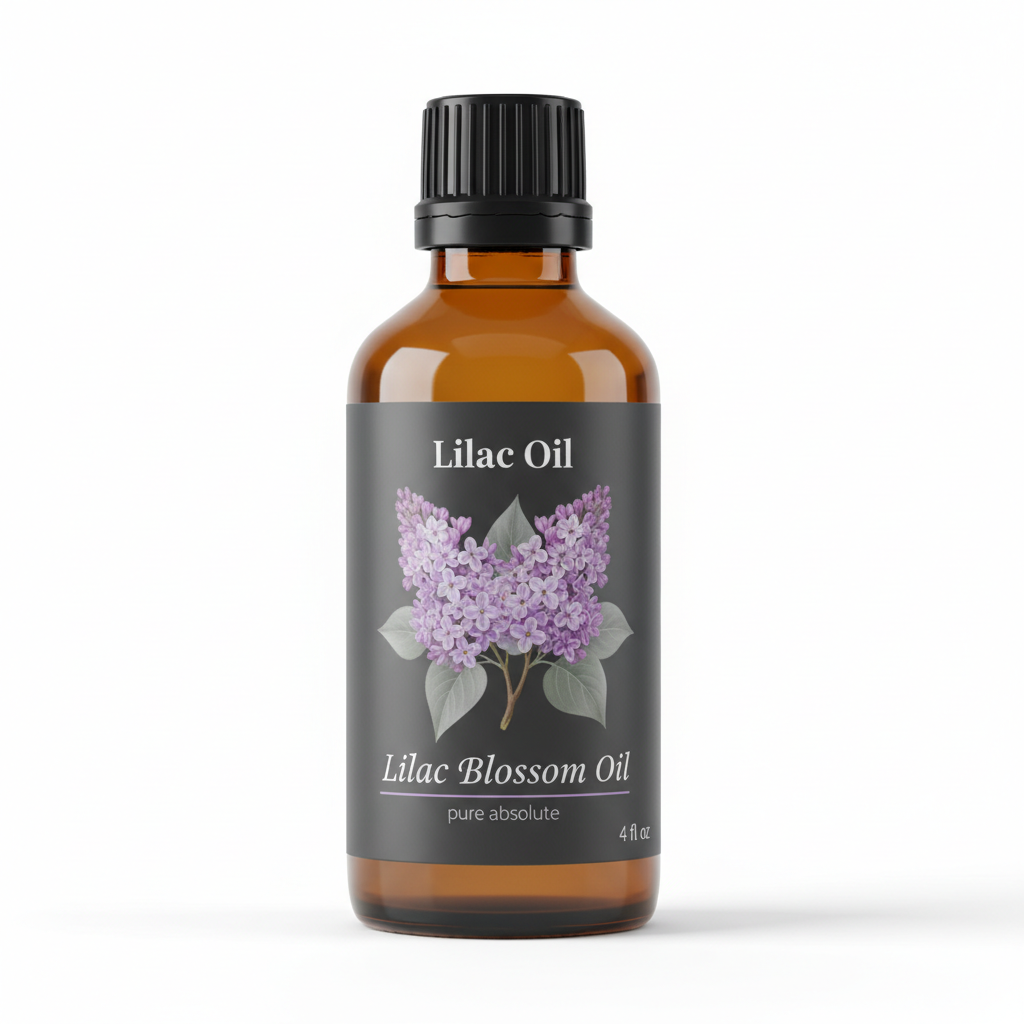
Lilac Blossom Oil from our own shop, in sizes from 0.5 oz to bulk.
From $15.99
Shop Now →Sources & Further Reading
- Cressey P, 2026. Reed diffusers: a potential cause of poisoning in young children in New Zealand. N Z Med J 139(1637):164-166. nzmj.org.nz/vol-139-no-1637
- Poison Control (National Capital Poison Center). Reed diffusers: household risk. poison.org/articles/reed-diffusers-potential-household-risk
- CandleScience, 2026. How to make reed diffusers. candlescience.com/learning/how-to-make-reed-diffusers
- Aromantic. How to make a reed diffuser. aromantic.co.uk/blogs/recipes