
What Blends Well With Lilac? 12 Partners for the Spring Floral
Lilac is one of the most recognizable scents of spring: powdery, green, and softly floral, with a cool freshness that synthetic recreations rarely capture. If you've invested in a quality lilac absolute or a true-to-flower lilac fragrance oil, you already know how singular it smells on its own. But lilac also has a generous, collaborative nature in the bottle. It shares well. The right pairing can deepen it, brighten it, or anchor it so it lasts longer in a blend.
This guide covers 12 of the best floral blending partners and complementary notes for lilac oil. For each one, you'll find context on why the pairing works aromatically, how to approach the ratio, and a practical takeaway you can use right away. If you want to go further with technique, our ultimate craft guide to making and blending with lilac covers the full process in detail.
A Quick Note on Lilac Oil and How It Behaves
Pure lilac essential oil does not exist in commercial quantities. Lilac flowers do not yield usable oil through steam distillation. What you'll find on the market are lilac absolutes (solvent-extracted, rare, and expensive), reconstituted lilac accords (built from individual aromatic molecules), and lilac fragrance oils (skin-safe synthetic blends designed to match the flower). Each behaves a little differently when blending, so always test your specific product in small batches before committing to a larger formula.
Lilac sits at the intersection of floral, green, and slightly powdery. It has top-note freshness but also a soft, lingering middle. That dual character is exactly what makes lilac oil pairings so interesting: you can push it in several directions depending on what you blend it with.
-
1. Rose Absolute or Rose Fragrance Oil
Rose is the classic companion for lilac, and the pairing holds up for a reason. Both are soft, powdery florals, but they occupy slightly different aromatic spaces. Rose brings a warmer, almost honeyed depth that grounds lilac's cooler, greener character. Together, they read as a full garden in bloom rather than a single flower.
The ratio matters here. Lilac can easily be swallowed by a strong rose, so start with a 60:40 lilac-to-rose ratio and adjust from there. A Bulgarian rose absolute will push the blend romantic and rich. A lighter Damask rose fragrance oil keeps things airier and more springlike.
Practical takeaway: This pairing works beautifully in candles and room sprays. Layer them with a small percentage of a green top note (violet leaf or cut grass accord) to keep the blend from feeling too heavy.
-
2. Violet Leaf Absolute
Violet leaf absolute is one of the most underused ingredients in home fragrance, and it may be lilac's single best partner. It smells green, watery, and slightly earthy, like the stem of a flower rather than the bloom itself. When you add a small amount to lilac, the overall accord suddenly smells more like standing next to an actual lilac bush.
The key word is "small." Violet leaf is potent, and at high concentrations it can veer into something almost metallic. In a lilac blend, start at 5 to 8 percent and work upward carefully. You want it to feel like a supporting note, not a feature.
Practical takeaway: Violet leaf is especially effective in diffuser blends where you want lilac to smell naturalistic rather than perfumey. Check our 8 lilac diffuser blend recipes for specific formulas that use this technique.
-
3. Sandalwood
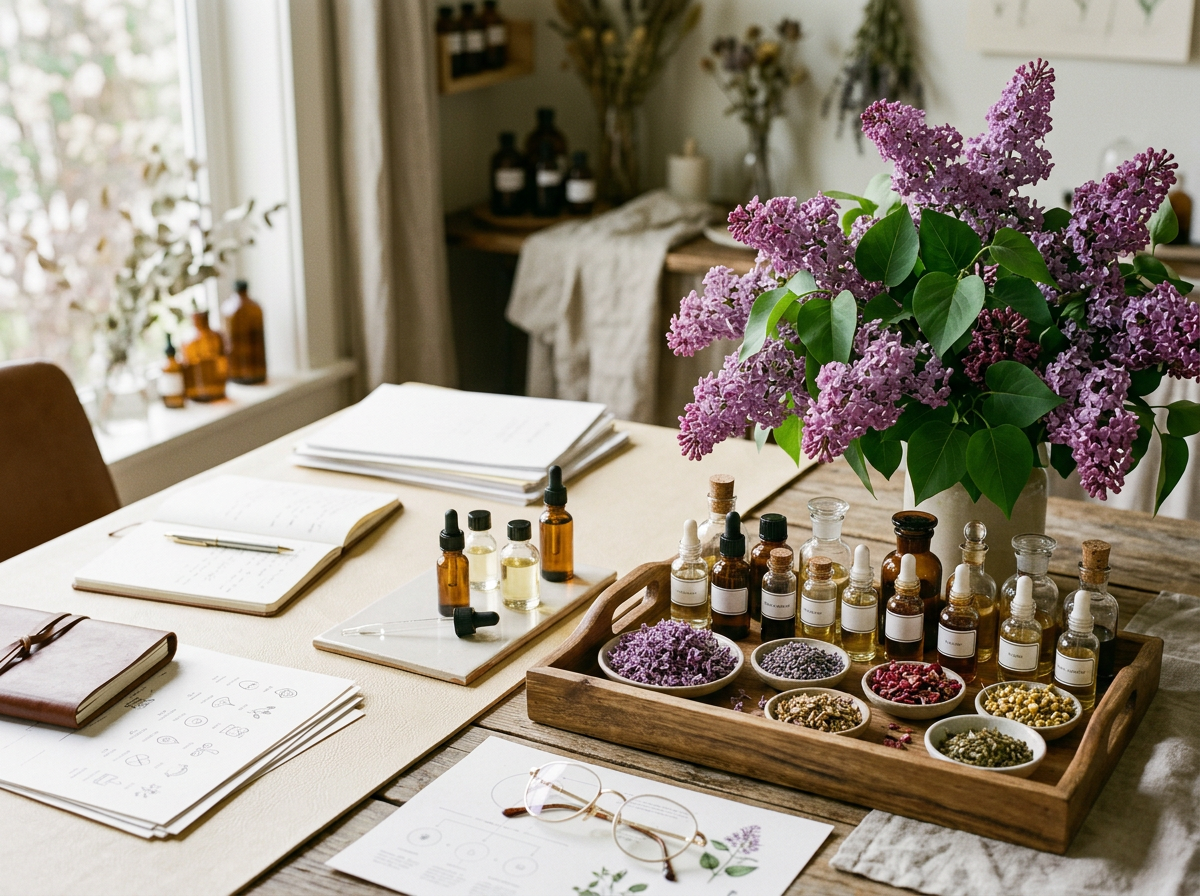
Sandalwood is one of the most reliable base notes for any floral, and it pairs with lilac in a particularly pleasing way. The creamy, woody warmth of sandalwood softens lilac's powdery edge without competing with its floral character. The result has staying power: lilac top notes lift off first, and the sandalwood holds the impression for much longer.
Australian sandalwood tends to be drier and more accessible in price than Mysore or Hawaiian varieties, and it works very well here. A 70:30 lilac-to-sandalwood ratio is a reasonable starting point for a personal fragrance or linen spray. Increase the sandalwood if you want more longevity on skin or fabric.
Practical takeaway: Sandalwood is the go-to fixative for lilac blends. If you've noticed your lilac scent fading too quickly in candles or sprays, a sandalwood base is often the solution.
-
4. Jasmine Absolute or Sambac
Jasmine and lilac sit on opposite ends of the floral spectrum. Jasmine is heady, indolic, and warm. Lilac is cool, green, and powdery. Used together, they create a contrast blend that smells complex and more dimensional than either does alone. It's a bolder pairing than rose, and it suits evening fragrances and richer candle profiles well.
Jasmine sambac (the smaller, more intensely sweet variety) tends to harmonize better with lilac than grand jasmine, which can overpower it. Keep jasmine at no more than 30 percent of the blend unless you specifically want it to dominate. A small addition of white musk at the base will help the two notes merge smoothly.
Practical takeaway: This combination works particularly well in wax melts and oil diffusers for evening use. The warmth of jasmine fills a room in a way that cool lilac alone does not.
-
5. Bergamot Essential Oil
Bergamot is a citrus with a notable floral quality, which makes it an unusually good bridge between the fruit and flower families. It lifts lilac, adds brightness to the opening of a blend, and gives the overall accord an airy, springlike quality that works well in daytime or room fragrance applications.
Because bergamot is a true essential oil (cold-pressed from the rind of the bergamot orange), it evaporates quickly. In a diffuser blend, that's fine: it creates a sparkling top note that transitions down to the lilac heart. For skin-safe products, use bergapten-free bergamot to avoid photosensitivity concerns, and follow standard dilution guidelines.
Practical takeaway: A blend of bergamot, lilac, and sandalwood is one of the simplest and most satisfying spring fragrance accords you can build. Start at a 20:60:20 ratio and adjust to taste.
-
6. White Musk
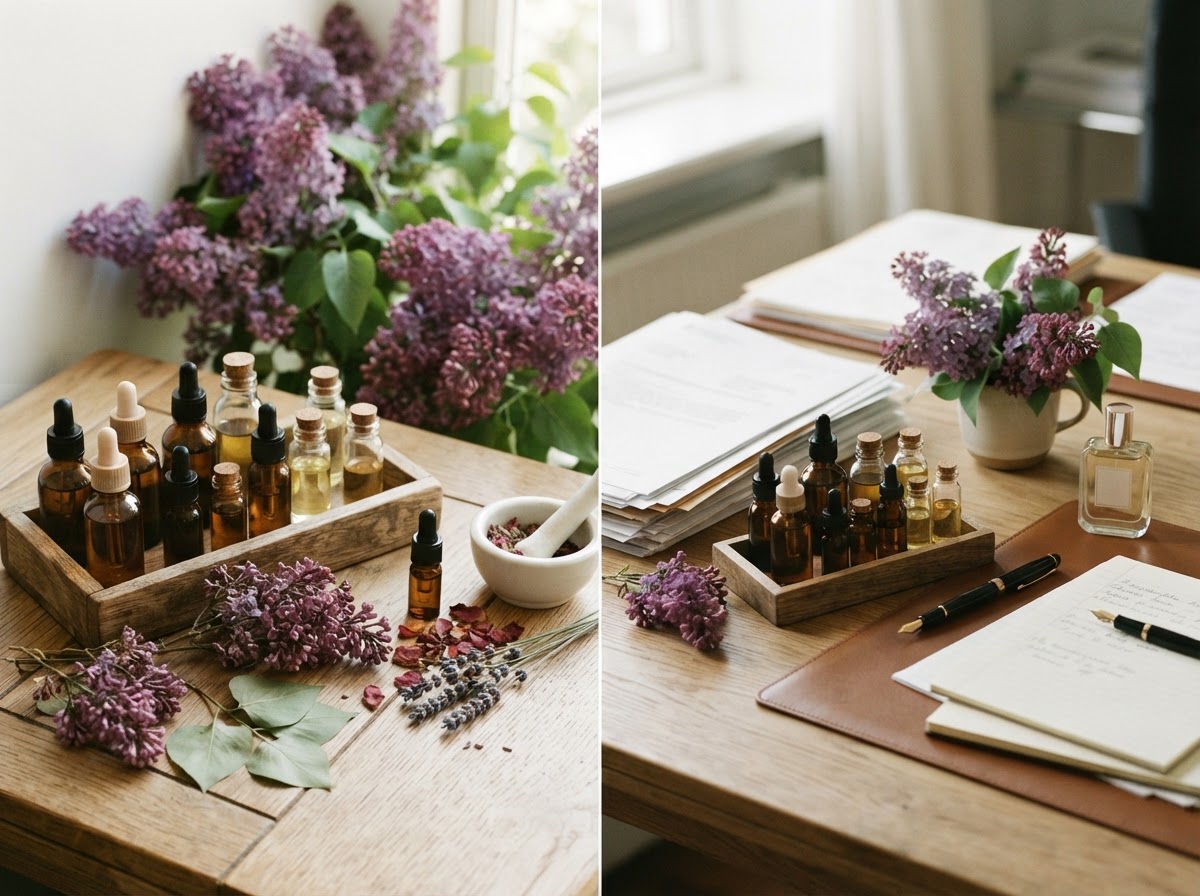
White musk is not a floral note, but it belongs on this list because of the role it plays structurally. It extends and softens floral blends, adds a clean, skin-like quality, and helps disparate ingredients feel like a cohesive whole. Lilac can sometimes smell a little sharp or isolated at high concentrations. White musk rounds it out.
Synthetic musks are the standard here: look for ingredients like galaxolide, habanolide, or ethylene brassylate in fragrance-grade musks. The percentages are typically low (5 to 15 percent of a blend), but the effect on the overall accord is significant. Lilac blends well with musky bases across many product formats.
Practical takeaway: If a lilac blend smells good in the bottle but somehow flat in use, try adding a small amount of white musk. It often closes the gap between a formula that's almost right and one that actually works.
-
7. Peony Accord
Peony is, like lilac, a spring flower that does not yield a true essential oil. Peony accords are built synthetically and tend to smell fresh, rosy, and slightly aqueous. When you pair a peony accord with lilac, the result reads as a bouquet rather than a single flower: the two florals blur at the edges in a way that feels natural and unforced.
This is a good choice for lighter applications: linen sprays, room mists, and reed diffusers. The combination is fresh without being sharp, floral without being heavy. Equal parts lilac and peony accord is a reasonable starting point, though many blenders give lilac a slight majority to keep its distinctive character in the lead.
Practical takeaway: Lilac and peony is an excellent combination for spring-themed products. Add a small amount of cucumber or green tea accord to push the freshness further, or a touch of rose to add depth.
-
8. Cedarwood
Where sandalwood is creamy, cedarwood is dry, pencil-shaving sharp, and clean. It provides a different kind of structural base for lilac: one that emphasizes the green and fresh qualities of the floral rather than its powdery side. The contrast is interesting and slightly unexpected.
Atlas cedarwood and Virginia cedarwood behave differently in blends. Atlas is softer and more balsamic, making it a gentler choice for romantic or classic floral profiles. Virginia cedarwood is sharper and more linear, pushing the blend toward a cleaner, more contemporary feel. Both work; the choice depends on the direction you want.
Practical takeaway: Try cedarwood as the base in a diffuser blend where you want lilac to smell crisp and fresh rather than powdery. It's a particularly good choice for morning routines or workspaces.
-
9. Hyacinth Accord

Hyacinth and lilac are botanical neighbors in the spring garden, and they share enough aromatic DNA to blend almost seamlessly. Hyacinth accords are green, watery, and intensely floral, with a slight rubbery edge at high concentrations. At lower percentages, they amplify lilac's freshness and add a realistic garden quality that's hard to achieve any other way.
This is a pairing for those who want their lilac blend to smell as true-to-flower as possible. Hyacinth is not subtle, so keep it at 15 to 25 percent of the blend and let lilac lead. The combination works well during the actual three-week lilac season, when you want your home fragrance to echo what's blooming outside.
Practical takeaway: Lilac plus hyacinth plus a touch of violet leaf is one of the most realistic spring garden accords in home fragrance. It's worth building a small test batch to explore.
-
10. Vetiver
Vetiver is an earthy, smoky, rooty base note that might seem like an unlikely partner for a delicate spring floral. Used sparingly, though, it gives lilac a grounded, complex quality that keeps the overall blend from reading as too sweet or too simple. It's a technique borrowed from fine perfumery: a small amount of something unexpected often adds more interest than a lot of something predictable.
The ratio needs to be careful. Vetiver is strong and persistent. In a lilac blend, 5 to 10 percent vetiver is usually plenty. More than that and it starts to pull the composition toward the earth and away from the flower. Haitian vetiver tends to be slightly softer and more approachable than Javanese varieties, making it an easier starting point.
Practical takeaway: A small amount of vetiver transforms a simple lilac fragrance into something more sophisticated. This pairing suits candles and personal fragrance blends intended for later in the day rather than morning use.
-
11. Yuzu or Lemon Essential Oil
Citrus top notes give any floral blend an immediate lift, and they work especially well with lilac because they echo the natural brightness already present in the flower. Yuzu has an additional pithy, tart quality that makes it slightly more interesting than straight lemon, but both are good choices depending on what you have available.
Because citrus essential oils evaporate quickly, their main job in a blend is the opening impression. They make lilac smell vibrant and alive in the first few seconds, before settling into the heart of the composition. In a diffuser, that quick brightness is refreshing. In a candle, the citrus may not be as noticeable after a burn, so adjust expectations accordingly.
Practical takeaway: A blend of yuzu, lilac, and white musk makes an excellent spring room spray. Mix at roughly 25:55:20 and adjust to suit your nose.
-
12. Tonka Bean Absolute
Tonka bean is warm, sweet, and slightly almond-like, with a vanilla-adjacent quality that adds softness to any blend it enters. Paired with lilac, it creates something that sits between floral and gourmand: not sweet enough to be edible, but warm enough to feel comforting and luxurious. This is a combination that works particularly well in evening or bedtime wind-down routines.
Tonka bean is a fixative as well as a fragrance note, which means it helps slow the evaporation of the lighter lilac notes and extends the overall lifespan of the blend. A 10 to 20 percent tonka content is typical. Pair it with sandalwood or white musk at the base and you have a genuinely complex, lasting floral fragrance.
Practical takeaway: Lilac, tonka bean, and a touch of vanilla absolute is a crowd-pleasing combination for candles and bath products. It's approachable, warm, and consistently well-received across a wide range of preferences.
Building Your Own Lilac Blends: A Few Principles
A good starting point for any lilac blend is a clear idea of what you want the finished scent to say. Fresh and green? Reach for violet leaf, hyacinth, bergamot, or yuzu. Soft and romantic? Rose, jasmine, tonka bean, and sandalwood move in that direction. Modern and clean? White musk, cedarwood, and peony accord will take you there.
Keep your test batches small (1 to 3 ml total) and take notes on every formula you try. Scent memory is unreliable, and what smells perfect one afternoon may seem off the next morning after your nose has reset. Give blends at least 24 hours to settle before making final adjustments. Fragrance molecules interact over time, and a blend that smells angular right after mixing often softens considerably after resting.
The 12 partners listed here are starting points, not rules. Some of the most interesting lilac oil pairings come from unexpected combinations. Use this list as a launching pad, keep good records, and let your nose lead the way.