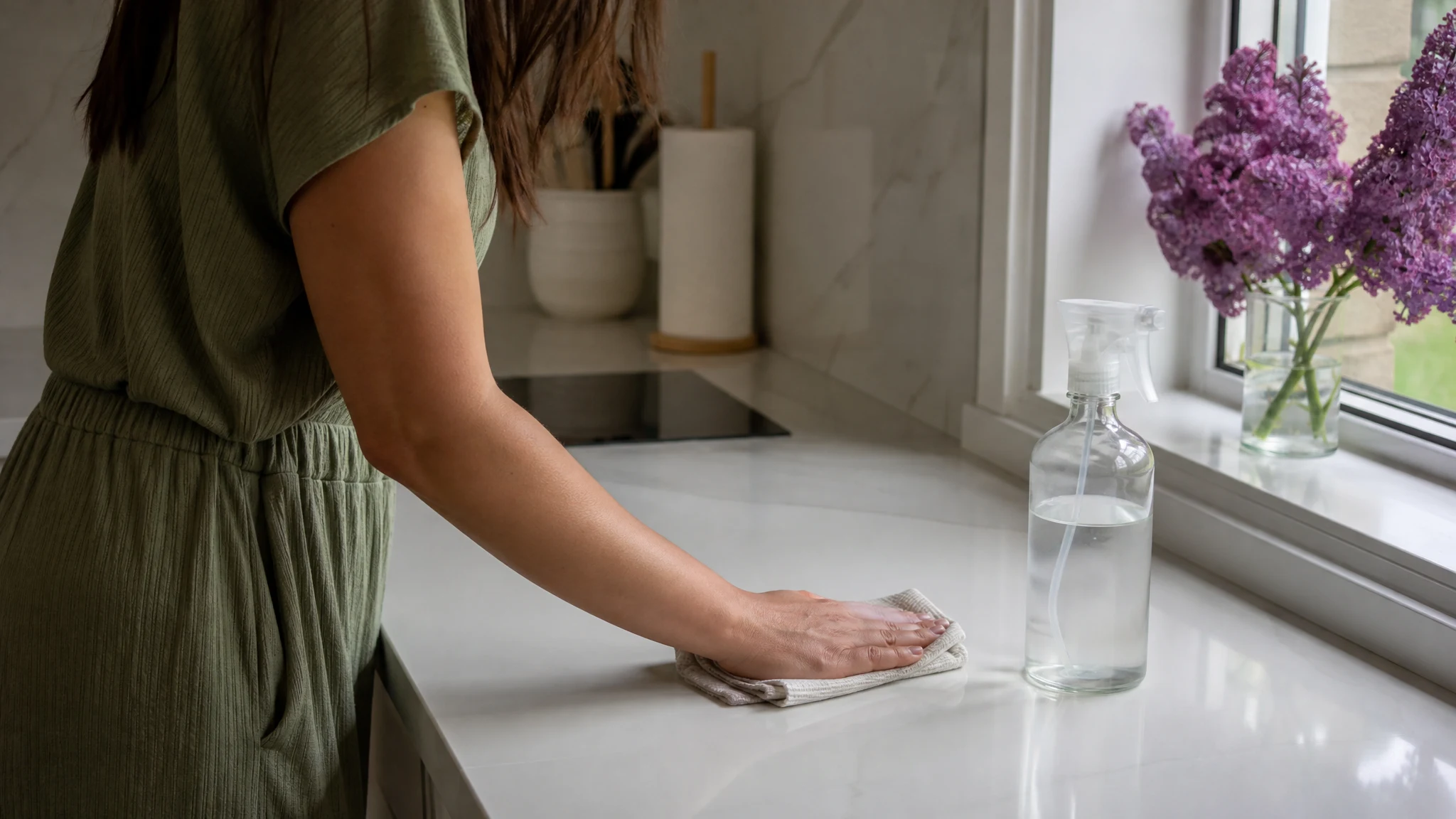
DIY Lilac Cleaning Spray: Scent Is Not Cleaning Power
Lilac oil makes a cleaner smell like lilac. It does not make the cleaner clean, and it does not make it a disinfectant. The cleaning is done by the soap or detergent and the wiping. So the useful questions are about the other ingredients: what the surface can take, what the soap does in your water, how much oil floats on top, and what you must never mix it with. This is a formulation worked out from published guidance and arithmetic. We have not made or tested it.
Decide what you are cleaning before you choose the base
Stone is the surface people damage with a recipe from the internet. Fila, a stone-care manufacturer, says vinegar, lemon, cola, wine and limescale removers are slightly acidic and damage the shiny finish on marble and polished natural stone; light damage looks matte, serious damage looks like white stains that are rough to the touch (Fila Solutions, undated). The page addresses marble and polished stone only; it does not mention limestone or travertine, so it does not say what happens to them. That is the reason this recipe contains no vinegar. If you have stone, keep acid out entirely, and ask the stone's installer or manufacturer what they approve.
Wood is the second one. A castile-soap company's own all-purpose guidance lists sealed or painted wood as fine and says to avoid waxed wood (Bronner, 2012). Read the label on your floor finish. Glass and sealed counters tolerate this kind of spray; anything oiled, waxed or unsealed does not belong in this article.
The base: a soap in water, and the water matters
The same source's all-purpose spray is 2 tablespoons (30 ml) of liquid castile soap in 16 oz (500 ml) of water, sprayed and wiped with a damp cloth. That is about 6 percent soap by volume. Two cautions from the maker. First, castile soap is an alkaline soap, and vinegar is an acid; mixed, they produce what the maker calls a "whitish, curdled, oily-feeling mess" that cannot clean grime or oil. The maker says order and agitation do not change that, and recommends using them one after the other, not together (Bronner, 2011, updated 2026). Second, castile soap reacts with minerals in hard water, forming a cloudiness that is harmless but can leave a film on shiny surfaces; distilled or reverse-osmosis water avoids it, and a synthetic detergent does not react with hard water in the same way. So buy distilled water for the spray, and if your tap is hard and the surface is glossy, consider a detergent-based cleaner instead. We sell neither; a grocery or hardware store does.
What to claim, and what the EPA says
Say it smells like lilac. Make no germ claim of any kind. The EPA treats a cleaning product as a pesticide, and so requires registration, if its claims imply it mitigates a pest: sanitizing, disinfecting or sterilizing, or controlling bacteria that cause odors. Claims limited to removing dirt, dust, soap scum or stains, or deodorizing on its own, are generally not pesticidal, but the page says claims are judged as a whole, and a catalog or website that lists cleaners beside pesticides can create an implied claim (EPA, updated 2026). The EPA's registration manual defines antimicrobial pesticides as products intended to "disinfect, sanitize, reduce, or mitigate growth or development of microbiological organisms" and says antimicrobial substances used on inanimate surfaces are generally subject to FIFRA (EPA Pesticide Registration Manual, ch. 4, updated 2026). Our oil is sold for scent, with the FDA statement on the site and no medical claim. The same discipline applies to your spray: it is a scented soap solution. If you want to sell a cleaner or make a germ claim, take it to a regulatory consultant or a product-safety attorney before you label anything. Note also that the soap maker above says vinegar is not an effective disinfectant, so swapping vinegar in would not buy a claim either.
How much oil, in grams
We found no cleaning-product scent guide with a published usage rate for a lilac composition, so this is reasoning from our own figures. The batch of the oil on our COA has a relative density of 0.973, so 1 ml is about 0.973 g, and we assume about 20 drops per ml (weigh if you can). A 500 ml bottle holds about 500 g of mostly water:
| Oil share | Oil (g) | Oil (ml) | About drops |
|---|---|---|---|
| 0.5% | 2.5 | 2.6 | 51 |
| 1% | 5.0 | 5.1 | 103 |
| 2% | 10.0 | 10.3 | 206 |
Our only stated percentage is the skin copy, 0.5 to 2 percent in a carrier oil. A cleaner is not that, but your hands wet themselves with it, so we use the number as a ceiling and not as a target: start at 0.5 percent or below. A 0.5 oz bottle (about 14.4 g, about 296 drops) is enough for about five 500 ml bottles at 0.5 percent. Lilac is a heart note and, in the shop's words about florals, reads softer than musks or woods, so do not push the load up to compensate. It will fade as the water and the soap dominate, which is a property of dilution, not a defect.
The oil floats: test 100 ml first
Oil and water separate. Soap helps carry some oil into the water, but we have no evidence for how much it carries for this composition. Make a 100 ml test: 100 ml distilled water, 6 ml of soap, and 0.5 g of oil (about 10 drops, which is 0.5 percent). Shake it, leave it a day, and look for beads or a film on top. If it separates, a solubilizer is the usual answer (a polysorbate sold by soap supply shops, used at the rate its own data sheet gives), and we cannot give you a rate for our oil. Shake the bottle before each use. Spray a cloth and wipe, rather than spraying a room: a fine mist hangs in the air and you breathe it.
What you must never mix, and who must stay away
Poison Control's rule is blunt: never mix household cleaning products, because it can produce poisonous fumes. Its examples are an acid toilet cleaner with bleach, which forms chlorine fumes, and ammonia with bleach, which can release chloramine; it describes vinegar as a mild acid generally safe around children and pets, but the "never mix" rule still applies (Poison Control, spring cleaning). So this spray goes on a surface that has been rinsed after any bleach product, not onto one still wet with it. The same page says to store cleaners in cabinets with child-resistant latches, and calls an unlocked low cabinet one of the most dangerous places.
Our own safety copy says to keep the oil away from children and pets, and a bottle of scented soap is no exception. The soap maker's own page adds that tea tree oil can be toxic to pets, which shows how much the choice of oil matters around animals; it says nothing about lilac. For lilac around cats and dogs, ask a veterinarian and see our pet article. If a child swallows any of it, call Poison Control or a physician. The site publishes no SDS, allergen declaration or IFRA certificate; if you need one, ask in writing before ordering and get the answer in writing.
For a lighter way to scent fabric and rooms, see the linen and room spray recipe; for other uses, the uses article; for diffusing, the diffuser blends. Keep the first bottle at 0.5 percent, make the 100 ml test, and make no claim beyond the smell.
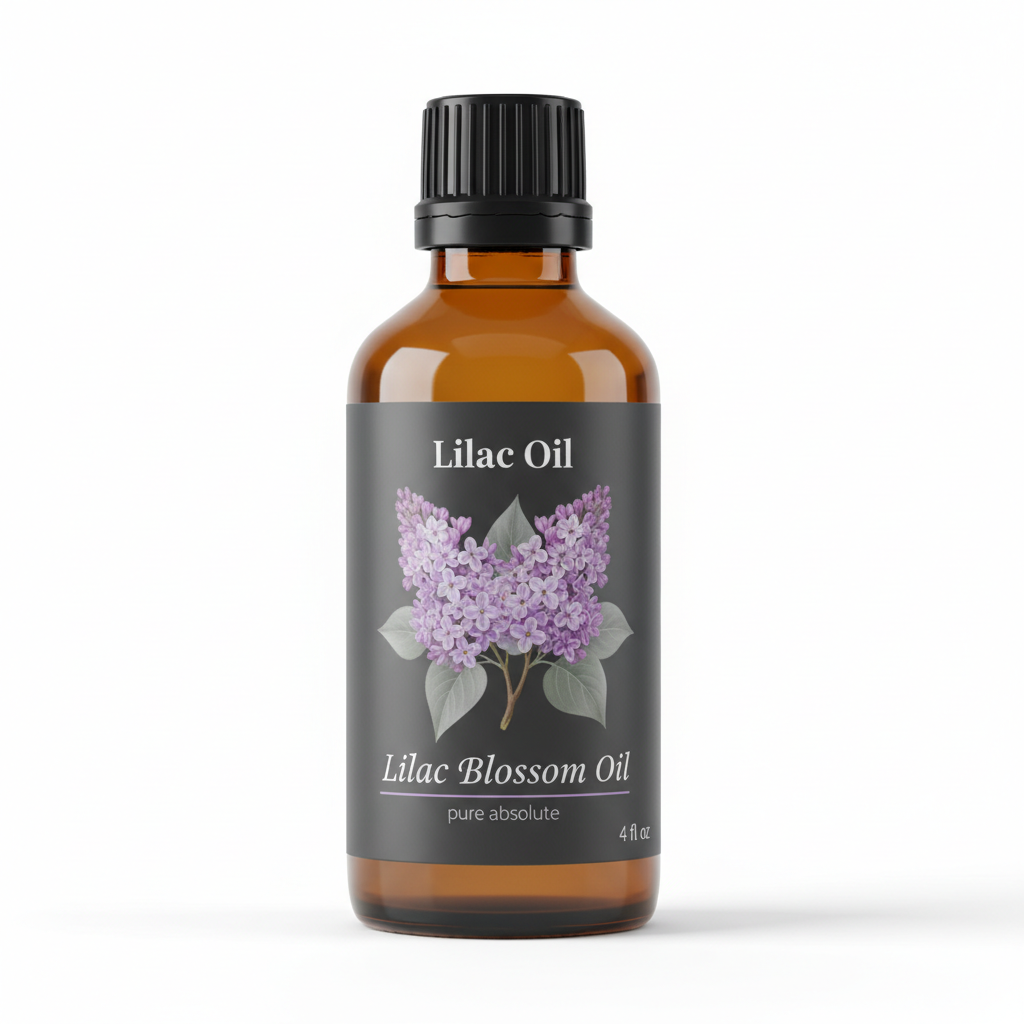
Lilac Blossom Oil
Lilac Blossom Oil from our own shop, in sizes from 0.5 oz to bulk.
From $15.99
Shop Now →Sources & Further Reading
- US EPA, 2026. Determining if a cleaning product is a pesticide under FIFRA. epa.gov/pesticide-registration
- US EPA, 2026. Pesticide Registration Manual, chapter 4: additional considerations for antimicrobial products. epa.gov/node/33523
- Fila Solutions. Acid etching: vinegar, lemon, cola, wine, limescale removers. filasolutions.com
- Bronner L, 2012. Dilutions cheat sheet for Dr. Bronner's liquid castile soap. lisabronner.com/dilutions-cheat-sheet
- Bronner L, 2011 (updated 2026). A word of caution about vinegar and castile soap. lisabronner.com/a-word-of-caution
- Poison Control (National Capital Poison Center). Top tips for a safe spring cleaning. poison.org/articles/spring-cleaning