
Enfleurage at Home: The Old-World Way to Capture Lilac Blossoms
Lilac refuses to behave like other flowers. Steam distillation, the workhorse method behind most essential oils, destroys the delicate volatile compounds that give lilac its signature sweetness before they can be collected. That is precisely why genuine lilac essential oil is essentially a myth, and why nearly every "lilac essential oil" on the market is a fragrance blend rather than a true botanical extract. If you want to capture the real scent of Syringa vulgaris in a usable form, enfleurage is the closest thing available to you.
Enfleurage (ahn-fluh-RAHZH) is a French cold-process technique refined in the perfume workshops of Grasse during the 18th and 19th centuries. The principle is almost embarrassingly simple: fat absorbs fragrant molecules. By layering fresh blossoms onto a bed of odorless fat, then replacing spent blooms with fresh ones repeatedly over several weeks, you gradually build up a richly scented pomade. That pomade can be used as-is or washed with alcohol to produce what perfumers call an absolute.
The process demands patience more than skill. Lilac season is short. If you want to try making the most of those three fleeting weeks, enfleurage is one of the most rewarding ways to extend the bloom long past its natural window.
What You Will Need
The materials list is short, but quality matters at every point. Substitutions are possible, and notes on each one appear below.
Equipment
- Two shallow glass or enamel trays or dishes (a 9x13-inch glass baking dish works well)
- A silicone spatula or palette knife
- A fine-mesh strainer or cheesecloth
- Several wide-mouth glass jars with tight-fitting lids
- A kitchen scale accurate to at least one gram
- Small labels and a permanent marker
- Optional: a second set of trays to allow rotation without disturbing the first batch
Fats
- Lard (leaf lard, not rendered with additives): The traditional choice. Highly odorless when properly rendered, with excellent absorption capacity.
- Vegetable shortening (non-hydrogenated, refined coconut or palm): A vegan-friendly alternative. Refined coconut oil works but has a lower melting point, so keep your workspace cool.
- Beef tallow (rendered and deodorized): Historically common, still effective, and firm enough to handle warm rooms better than lard.
Avoid flavored fats, salted butter, or any fat with a strong natural odor of its own. The fat is your blank canvas.
Botanicals
- Fresh lilac blossoms, collected at peak bloom (see harvesting notes below)
- Plan to collect in waves over 10 to 21 days
Optional (for making an absolute)
- High-proof ethyl alcohol: perfumer's alcohol, Everclear (190-proof), or similar neutral spirit
- A small separatory funnel or a clean glass pitcher
Harvesting Lilac Blossoms Correctly
The quality of your finished pomade depends almost entirely on blossom quality at harvest. Fragrance is most concentrated in the early morning, after dew has evaporated but before midday heat begins to drive volatiles off into the air. Aim to harvest between 7 and 10 a.m.
Select florets (the individual small blossoms within a cluster) that are just fully open, not yet past their prime. Browning tips, wilted petals, or blossoms that have already dropped pollen freely are past their peak. Use clean, dry scissors to snip small clusters or individual florets directly into a clean, dry bowl. Work quickly.
Do not rinse the blossoms. Water is the enemy of this process. Any moisture introduced to the fat tray will encourage mold and short-circuit the absorption. If blossoms are dusty, a very gentle shake is sufficient.
Step-by-Step: Lilac Enfleurage at Home

Step 1: Prepare Your Fat Layer
Start with approximately 200 to 300 grams of fat per tray. If the fat is solid at room temperature, warm it gently until just barely liquid, then pour a thin, even layer (roughly 5 to 8 mm deep) into each tray. Allow it to solidify completely at room temperature before proceeding. Do not refrigerate to speed this up; sudden temperature changes can cause condensation.
Once set, use your palette knife to score a crosshatch pattern lightly across the surface. This increases surface area and improves contact with the blossoms.
Step 2: Place the First Layer of Blossoms
Arrange fresh lilac florets in a single layer across the surface of the fat. They should be close together but not deeply buried or piled. You want maximum surface contact, not compression. A rough guideline: enough florets to cover the fat surface without significant overlap.
If you are using two trays, stack them carefully (fat-side facing the blossoms between them) to create a sealed chamber. This is the traditional chassis approach used in Grasse. If you are using a single open tray, cover it loosely with cheesecloth or a clean kitchen towel to keep out insects and debris while still allowing air circulation. Do not seal it airtight.
Step 3: Let the Fat Work (24 to 48 Hours)
Set the tray in a cool, shaded spot. Ideal temperature is between 60 and 72 degrees Fahrenheit (15 to 22 degrees Celsius). Too warm and the fat may soften excessively or grow rancid more quickly. Too cold and absorption slows significantly.
After 24 hours, check the blossoms. They will appear wilted and translucent, having given up much of their scent to the fat. In warmer conditions or with exceptionally fragrant blossoms, 24 hours is sufficient. In cooler conditions, wait a full 48 hours.
Step 4: Remove Spent Blossoms and Add Fresh Ones
Lift or brush the spent florets off the fat surface using your fingertips or a soft brush. Work gently. The goal is to disturb the fat surface as little as possible, though some minor mixing is fine. Lightly re-score the surface if it has become smooth again, then place a fresh layer of blossoms.
Repeat this process every 24 to 48 hours for as long as your lilac bush continues to bloom. More rounds mean a richer, more intensely scented pomade. A total of 10 to 20 rounds is not unusual for serious practitioners, though even 5 or 6 rounds will produce a noticeable result.
Log each round in a small notebook: date, number of hours, approximate quantity of blossoms, and any observations about temperature or blossom quality. This record becomes invaluable next season.
Step 5: Store the Finished Pomade
Once the bloom season ends and your final round of blossoms has been removed, scrape the pomade into a clean glass jar. Seal tightly and label with the date and number of rounds completed. Store in a cool, dark location. A properly made pomade, kept cool and protected from light, may remain usable for one to two years, though its scent profile will evolve over time.
The pomade itself can be used directly as a scented body balm (at very low quantities, blended into a suitable carrier), stirred into unscented lotion, or used to fragrance wax melts and candles. For more ideas on working with lilac-scented materials, see our guide to making and blending with lilac.
Step 6 (Optional): Washing the Pomade to Make an Absolute
This step transforms the scented fat into a liquid absolute, which is more versatile for perfumery and blending work.
- Gently warm the pomade until liquid.
- Combine with an equal volume of high-proof alcohol in a clean glass jar. The ratio is typically 1:1 by weight.
- Seal and shake vigorously for several minutes.
- Repeat shaking once or twice daily for three to seven days, storing at room temperature between sessions.
- Refrigerate for 24 to 48 hours. The fat will solidify and separate from the alcohol.
- Strain or decant the alcohol layer away from the solid fat. The alcohol now holds the fragrant molecules.
- Allow the alcohol to evaporate partially in an open glass dish (in a well-ventilated space, away from any heat source or flame) until you reach your desired concentration. Or use the diluted form directly as a botanical perfume spray.
The resulting liquid is your lilac absolute, made entirely by your own hands from blossoms you harvested yourself.
Tips for Success
Choose Your Fat Carefully
Any trace of existing odor in the fat will become part of your finished product. Source the highest-quality, most neutral fat you can find. Leaf lard from a butcher who renders it fresh is a different product entirely from grocery-store shortening.
Moisture Is the Enemy
Wet blossoms, humid trays, or condensation from refrigeration can introduce mold within days. If you notice any gray or green spots in the fat, that batch is compromised. Start fresh.
Temperature Control Matters
If your home runs warm in summer, consider placing the trays in a wine cooler, a basement, or a cool pantry. An ambient temperature that stays consistently below 70 degrees Fahrenheit will significantly improve your results and slow any rancidity.
Not All Lilacs Are Equal
Fragrance intensity varies widely by cultivar. The classic purple Syringa vulgaris tends to be more fragrant than many modern hybrid varieties, which were often bred for color or disease resistance rather than scent. White-flowered varieties like 'Mme. Lemoine' are also notably fragrant. If you have access to multiple varieties, test a small batch from each before committing your full supply of fat.
Label Everything
Date, cultivar (if known), round number, temperature conditions. You will not remember these details next season, and they are exactly what you will want to know.
What to Expect from Your Finished Product
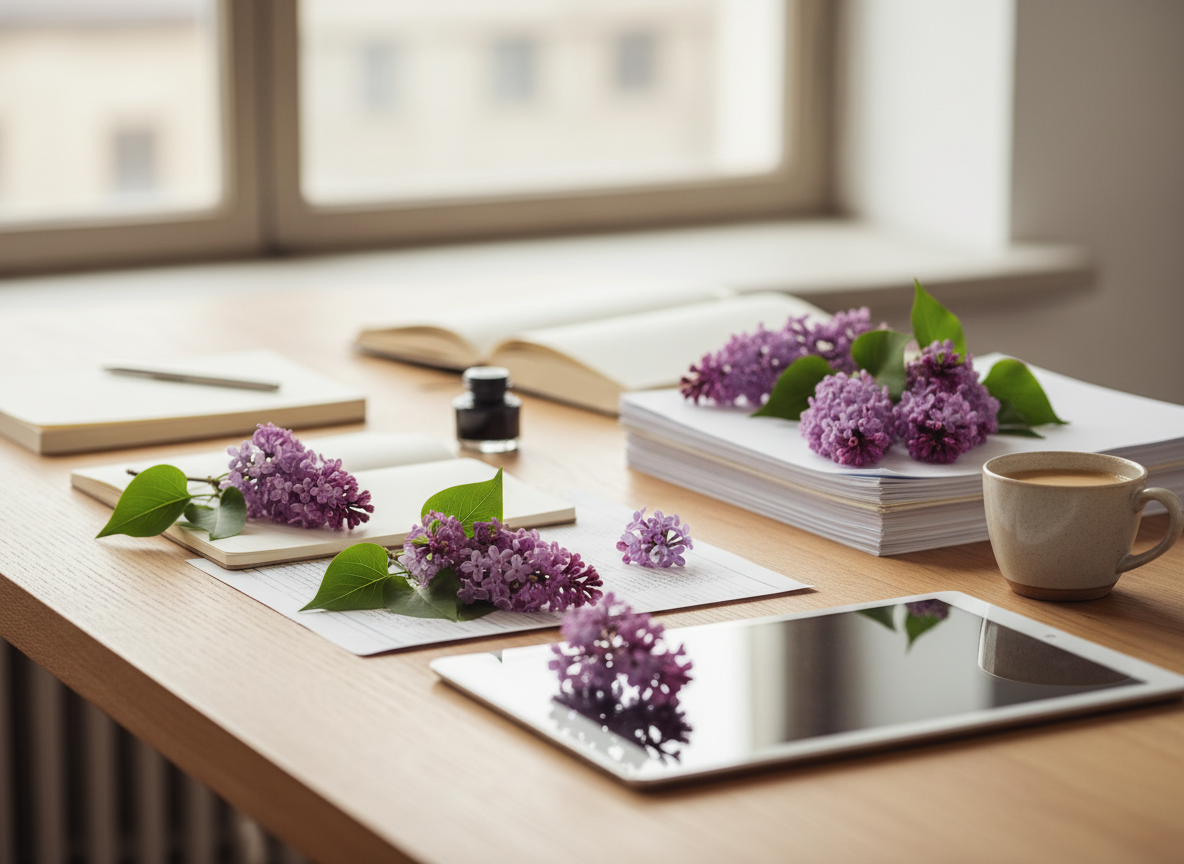
Honesty serves everyone better than hype here. Home enfleurage produces a subtler result than the concentrated absolutes available from professional perfume houses, which work with industrial quantities of blossoms and controlled conditions over many years of refinement. Your pomade will carry a genuine, soft lilac character: floral, slightly green, and unmistakably spring-like. Some batches are remarkably beautiful. Others are faint. Variables including blossom freshness, fat quality, temperature, and the number of rounds completed all influence the outcome.
People who practice lilac enfleurage at home consistently report that even modest results are deeply satisfying, in a way that purchased fragrances simply cannot replicate. There is something in the process itself, the slow accumulation of spring into a jar, that carries its own value regardless of the final concentration.
For ideas on what to blend your pomade or absolute with once it is ready, our article on what blends well with lilac covers twelve botanical partners worth exploring.
Safety Notes for Skin Use
Before applying any homemade pomade or absolute to skin: Perform a patch test by applying a small amount to the inner forearm and waiting 24 hours. Discontinue use if redness, itching, or irritation occurs. When using the absolute (alcohol-washed version) in a perfume application, dilute to no more than 1 to 2 percent in a carrier. Homemade products have not been tested for stability or allergen content. Consult a qualified healthcare provider if you have any concerns about skin sensitivities or if you are pregnant or nursing.
Enfleurage is slow work. It asks you to pay attention to a plant on its own schedule, to show up with fresh blossoms every morning for two or three weeks, and to trust a process that has been working reliably for centuries. The lilac will not wait for you to be ready. But if you are, the season is brief, and the window is open right now.