Fragrance Oil Flash Point Explained for Candle Makers
A flash point is a handling and shipping classification of the liquid in the bottle. It is not a statement that your candle is safe or unsafe, and it is not the temperature at which a fragrance "burns off". Our Lilac Blossom Oil has no flash point published anywhere on this site, and the COA does not contain one, so a maker who pours candles to sell should ask for it in writing before ordering.
What the number is, from the regulations
The flash point is the lowest temperature at which a liquid gives off enough vapor to ignite briefly when an ignition source is applied. The rules that give the number weight are about transport and consumer-product hazard labels:
- For shipping, US hazmat rules define a Class 3 flammable liquid as "a liquid having a flash point of not more than 60 C (140 F)" (49 CFR 173.120, read 2026-10-27). The same section names the closed-cup methods ASTM D56 and ASTM D93 for measuring it.
- For consumer products under the Federal Hazardous Substances Act, "extremely flammable" means a flashpoint at or below 20 F (minus 6.7 C), and "flammable" means above 20 F and below 100 F (37.8 C) (16 CFR 1500.3, read 2026-10-27). A mixture is excluded if a component with a flashpoint at or above 100 F makes up at least 99 percent of its volume.
- ASTM D93, the Pensky-Martens closed-cup method, covers petroleum products from 40 to 370 C. Its public scope page (ASTM International, D93-20) describes flash point as one factor in overall flammability hazard, not a complete fire-hazard assessment; we read only that page, not the standard.
Notice what those three do not say. None sets a candle pouring temperature, and none says anything about oil already dissolved in wax.
Where to find it on an SDS
Under OSHA's Hazard Communication rule, a safety data sheet carries sixteen numbered sections, and 29 CFR 1910.1200(g)(2) lists Section 9 as "Physical and chemical properties". The mandatory content list in Appendix D (a 2012 copy hosted by Purdue University) gives Section 9's items as appearance, odor, odor threshold, pH, melting point, initial boiling point and range, flash point, evaporation rate, flammability, flammability limits, vapor pressure, vapor density, relative density and more. OSHA says it does not enforce sections 12 to 15, so those can be thin; Section 9 is not one of them.
That list also shows what our published COA has. It gives a relative density of 0.973 at 20 C, which is one Section 9 item. It does not give a flash point, a boiling point, a vapor pressure or any other. It is a certificate for appearance, smell, relative density, refractive index and optical rotation and shows no more. The site publishes no SDS, so nothing here can be read off one.
Reading a number: a worked example
Suppose an SDS for some fragrance oil read: "Flash point: 62 C (143.6 F), closed cup." This is a made-up figure to practice with; it is not our oil.
- Check the method. Closed cup is the method the shipping rules name. A figure with no method printed is half a number; ask which one.
- Convert if needed: 62 x 1.8 + 32 = 143.6 F.
- Compare with the shipping line: 62 C is above 60 C, so not a Class 3 flammable liquid by that definition.
- Compare with the consumer line: 143.6 F is above 100 F, so not "flammable" under 16 CFR 1500.3.
- Read the rest of the sheet. A 58 C oil (136.4 F) would fall under the 60 C shipping line, which changes how a supplier ships it, not what your candle does.
A carrier rule shows how a threshold bites in practice: a candle supplier says oils with a flash point of 141 F or less cannot be shipped through USPS, and that a gel-wax maker recommends flash points over 170 F for its gel wax (CandleScience support, undated). Those are that seller's statements about a carrier and a product, not rules we checked at the source.
The fear: "I added oil above its flash point"
This is where sellers disagree, and the disagreement is worth reading. CandleScience says adding fragrance to wax above its flashpoint "will not cause it to combust." A UK supplier says flash point is "not the temperature at which the fragrance 'burns off'", that scent loss follows boiling point instead, and that the flash point "is not a guide for wax mixing temperatures" (Supplies for Candles, undated). A third seller, Makesy, says in an August 2020 article by "makesy experts" that adding fragrance above the flashpoint can change its composition and lose lighter molecules. None of the three cites a test, a standard or a measurement.
Reasoning from the definitions above, rather than from any test of ours: the flash point is measured on the neat liquid in a closed cup with an ignition source applied. Oil stirred into 250 g of wax is a small share of the mixture, so the vapor over the melt is a different case from the vapor over the neat oil. That is why the first claim sounds plausible. It is an inference; it does not make a handling error harmless, and it says nothing about fragrance loss or note balance, which is the second and third sellers' point. We cannot referee them with a source.
The practical position is simpler than the argument. Add oil at the temperature your wax maker prints; Golden Brands 464, for example, says 185 F (85 C) with two minutes of stirring (CandleScience page). Treat the oil's flash point as the figure for storage, transport and a fire in the pouring room, with the lid on and the heat off. Read the wax sheet for the temperature, not the SDS.
What this means for our oil
Our oil is a composition of botanical extracts and infused aromatics built to be faithful to the scent of the common lilac, sold neat. We do not publish its flash point, an SDS or an IFRA certificate, and we state no safe pouring temperature, load or burn behaviour for it. If you pour candles for sale, ask in writing before ordering for the flash point, the test method (closed cup or not) and the SDS, and get the answer in writing; ask the same of any supplier, ours included. Make one small test before a batch. Our bulk page says the oil "reads softer than heavier musks or woods" like most florals, and recommends testing at small scale first, which is the shop's guidance, not a result.
For what to do with a faint candle see what to check before adding more oil; for what the label on a sold candle must carry, see candle warning label requirements; for a line-by-line read of the documents, see how to read a fragrance oil COA and SDS, and for testing before a bulk order, testing a fragrance oil before buying bulk. Legal questions about shipping or classification go to a transport or product-safety professional, not to a candle blog.
Treat the flash point as a number you are entitled to have in writing, and the wax maker's sheet as the thing that sets your pouring temperature.
Lilac Blossom Oil
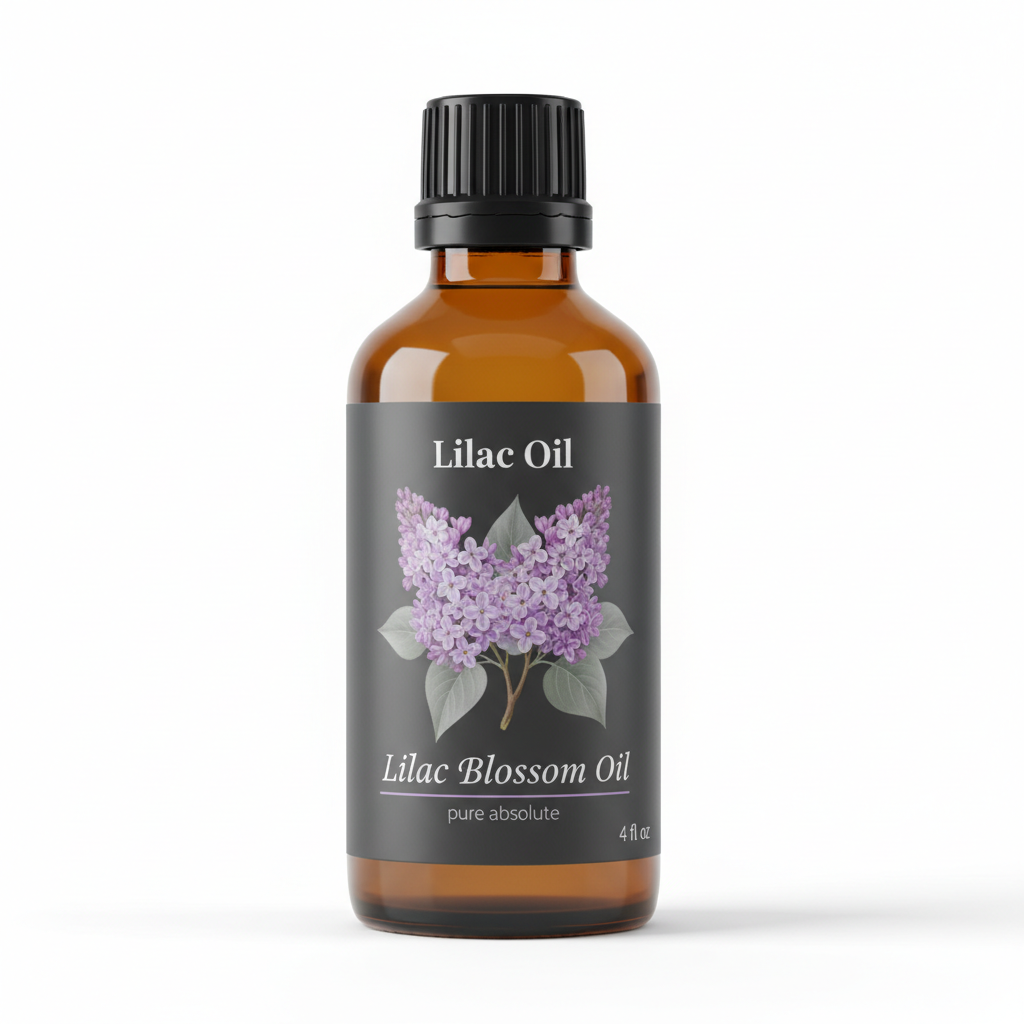
Lilac Blossom Oil from our own shop, in sizes from 0.5 oz to bulk.
From $15.99
Shop Now →Sources & Further Reading
- US Government, 2026 (current eCFR, read 2026-10-27). 49 CFR 173.120, Class 3, definitions. ecfr.gov/title-49/173.120
- US Consumer Product Safety Commission, 16 CFR 1500.3, definitions (current eCFR, read 2026-10-27). ecfr.gov/title-16/1500.3
- ASTM International. D93, Flash Point by Pensky-Martens Closed Cup Tester (D93-20 page, abstract only). store.astm.org/d0093-20
- OSHA, 29 CFR 1910.1200(g)(2), and Appendix D (copy hosted by Purdue, 2012). physics.purdue.edu 29CFR1910_1200 Appendix D
- CandleScience, undated. What does the fragrance flashpoint mean? support.candlescience.com
- Supplies for Candles, undated. Flash points explained. suppliesforcandles.co.uk/flash-points-explained
- Makesy, 2020. Fragrance flashpoints explained. makesy.com/blogs/news/fragrance-flashpoints-explained
- CandleScience, undated. Golden Brands 464 Soy Wax page. candlescience.com/wax/golden-brands-464-soy-wax