Testing a Fragrance Oil Before You Buy Bulk: A Staged Plan
Do not buy bulk lilac oil until one batch has survived your full curing period and a second lot has matched it. That is a purchasing rule, not a quality claim about any oil: it protects you from the two ways bulk goes wrong, a formula that never worked in your product and a lot that differs from the one you tested. The sizes make the staging cheap, and the arithmetic below shows how far each size goes.
Stage one: the smallest bottle, and what it can and cannot cover
The shop's own bulk page says testing your fragrance load at a small scale before committing bulk oil to a full candle or soap batch "is worth the extra step," and the wholesale page offers sample bottles so you can "evaluate it in your own product before you commit to volume." We have not made or tested any candle, soap or lotion with this oil, so you are the test. Here is what 0.5 oz (about 14.4 g, using 0.973 g per ml and 28.8 g per oz) can fund.
For a candle, the loads must come from your wax maker, not from us. As one example of a published range, CandleScience's lab notes for its EcoSoya CB-Advanced soy wax recommend 6% to 9% fragrance and a curing time of at least three days (CandleScience, 2026). That is one wax's range, quoted as arithmetic input; it is not a load for our oil, for which we publish none. For a jar holding 8 oz of wax (226.8 g), 6% is 13.6 g of oil and 9% is 20.4 g. So 0.5 oz makes about one candle at 6% and less than one at 9%. That is not enough for a wick test, because CandleScience's container-candle guide says to make two or three candles with different wick sizes in the same series (CandleScience, 2026). Three candles at 9% take 61.2 g, a little more than a 2 oz bottle (57.6 g); a 2 oz bottle covers three candles up to about 8.5%.
For a skin product, our own copy says to dilute to 0.5% to 2% in a carrier oil and patch test first. At 2%, 14.4 g of oil makes 720 g of finished product; at 0.5% it makes 2,880 g. A 30 g trial jar at 2% uses 0.6 g of oil, so the sample bottle covers 24 of them. Those are quantities, not a safety finding: we hold no skin-test data, and a product you sell needs its own assessment from a qualified cosmetic safety assessor.
Stage two: the pilot, one to sixteen ounces
| Bottle | Oil (g) | 8 oz candles at 6% | 8 oz candles at 9% |
|---|---|---|---|
| 0.5 oz | 14.4 | 1.1 | 0.7 |
| 1 oz | 28.8 | 2.1 | 1.4 |
| 2 oz | 57.6 | 4.2 | 2.8 |
| 4 oz | 115.2 | 8.5 | 5.6 |
| 8 oz | 230.4 | 16.9 | 11.3 |
| 16 oz | 460.8 | 33.9 | 22.6 |
The table assumes a 226.8 g wax fill and the two ends of the example range above. Pilot means a full production-style run at 4 to 16 oz of oil, with the final wax, jar, wick, dye and label, held through the entire curing period and burn routine. Our wick post gives the burn routine, and the soy candle post covers the pour. Curing time is your wax's number: CandleScience's burn test guide says to wait at least 24 hours, its CB-Advanced notes say at least three days, and its notes show cold throw checked at 24 hours and 3 days, burn tests beginning after one week, and frosting checked at 24 hours, one week and 30 days, with very minor frosting at six months on that wax. Another wax will have different numbers, so use the data sheet for yours.
Decide the pass criteria before you pour
Write them first, or you will adjust the test to fit the result. A candle passes when the wick routine ends with a full melt pool and no repeated heavy soot, the scent reads clearly cold at 24 hours and again at the end of curing, and nothing frosts, sweats or discolors by the time you would ship it. A skin product passes when the patch test on a small area is clean and the product is unchanged in color, smell and texture after your intended shelf period. The shop's guidance on shelf life is "typically 1 to 2 years" when stored capped, cool and dark, which is a storage statement, not a test result.
What to log, every time
| Field | Example entry |
|---|---|
| Bottle lot number (printed on the label) | Copy exactly |
| COA received for that lot | Yes or no, and its best-by date |
| Oil weight and wax or base weight | Grams, from the scale, not drops |
| Load, temperature added, pour temperature | Percent, degrees |
| Dye, wick, jar | Maker and size |
| Pour date and curing end date | Dates |
| Observations at each check | Melt pool, flame, soot, throw, frosting |
| Verdict | Pass, fail, adjust, and why |
Stage three: the second lot, then pounds
The shop says every size comes from the same standard and the same lots, and the bottle carries a lot number. Read that as a statement of intent, not a guarantee, and use the lot number to check it. The COA we publish is for one batch, LILIBCUNINC001A, relative density 0.973 against a window of 0.950 to 0.990. Ask for the COA that matches the lot on your bottle. Then do two cheap checks of your own. Weigh 20 ml: the published batch predicts 19.46 g at 20 C, and the whole window allows 19.00 to 19.80 g, so this catches a gross difference but not a subtle one. And keep a sealed sample from the first lot to smell beside the second.
Keeping reserve samples and recording lots is standard cosmetic-manufacturing practice: FDA's inspection checklist for cosmetics asks whether reserve samples of approved lots are kept "for the specified time period" and "stored under conditions that protect them from contamination or deterioration," that containers are labeled with identity and lot identification, and that batch records note "kinds, lots and quantities of material used" (FDA, cosmetics GMP checklist, current as of 2025). That checklist is for cosmetics. Applying it to candle testing is our inference, but the habit costs a small bottle.
Only after the second lot matches do you move to pounds. At the 6% to 9% example range, 1 lb (453.6 g) fills about 22 to 33 eight-ounce candles and 5 lb about 111 to 167. Our pricing post shows how that changes cost per candle, and the COA and SDS post covers the written questions to ask first. Candle makers should note that the site publishes no flash point, SDS or IFRA certificate for the oil, so ask in writing before pouring candles for sale. See wholesale and bulk for the larger sizes, and which first bottle to order.
A test that ends in a clean pass on lot one and a matching smell on lot two has earned a bulk order. One that skips either has not.
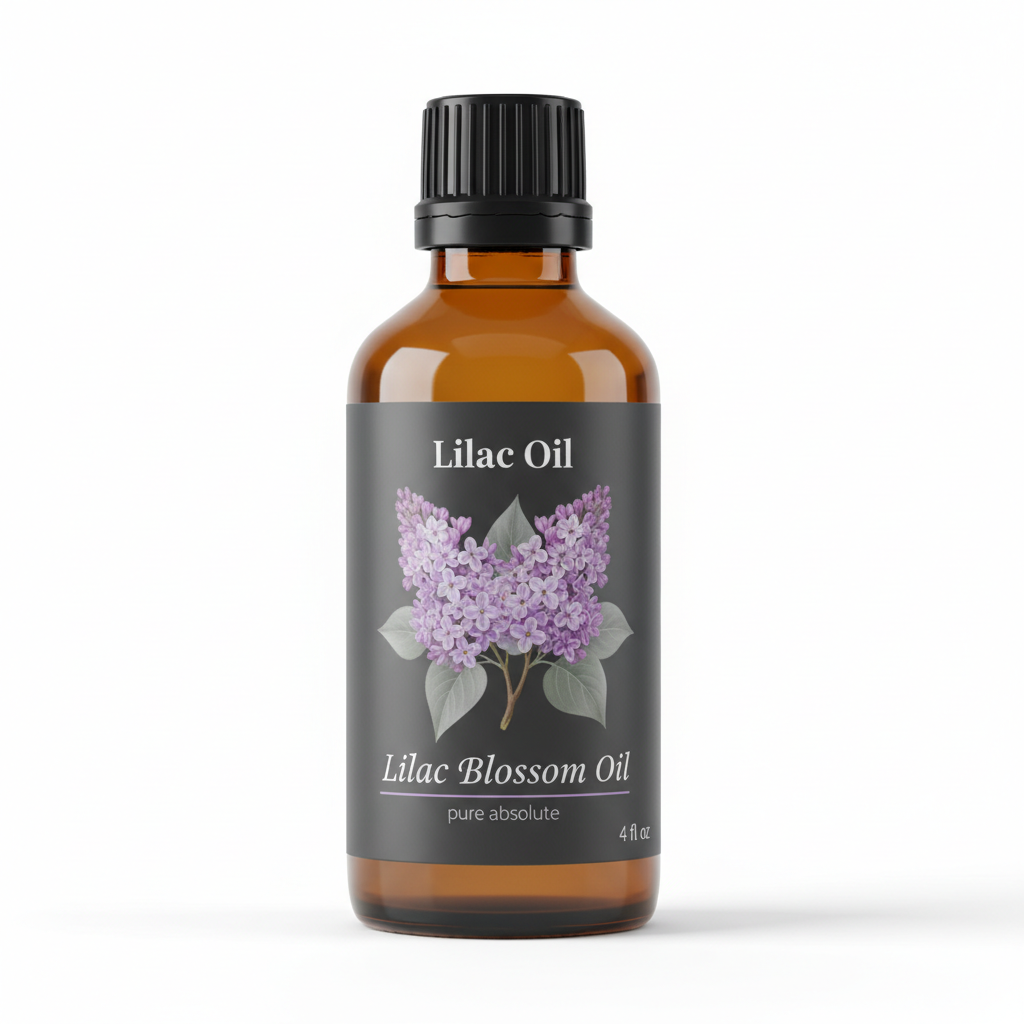
Lilac Blossom Oil
Lilac Blossom Oil from our own shop, in sizes from 0.5 oz to bulk.
From $15.99
Shop Now →Sources & Further Reading
- CandleScience, 2026. Lab notes: EcoSoya CB-Advanced soy wax. candlescience.com/lab-notes-ecosoya-cb-advanced
- CandleScience, 2026. How to properly wick container candles. candlescience.com/wicking-container-candles
- CandleScience, 2026. How to conduct a burn test. candlescience.com/how-to-conduct-a-burn-test
- U.S. FDA, 2025. Good manufacturing practice (GMP) guidelines/inspection checklist for cosmetics. fda.gov/gmp-checklist-cosmetics