
How to Price Lilac Candles: Cost Formula and Margin
Price a lilac candle from a cost formula and a margin, not from what the shelf next to you charges. The oil is one line in that formula, and whether it is a big line or a small one depends on a number you have to bring: the price per ounce on the shop page for the size you buy. We do not quote that number here, so every dollar figure below is an assumption chosen to show the arithmetic, written out and labeled as such.
The formula, and the two ways people get it wrong
Cost per candle is wax plus oil plus wick plus jar plus label plus labor plus a share of overhead. Packaging, freight, lids and shipping cartons belong in the same sum. Oregon State University's professional education team says the same for a food product: "Packaging, labor, overhead, and freight all belong in your true cost of goods sold" (Oregon State PACE, undated). That is a food article, so read it as a general accounting point, not a candle benchmark.
The first mistake is leaving out labor because it is your own time. The second is confusing markup with margin. Penn State Extension defines gross profit margin as gross profit divided by sales price, and shows that a 30% markup on a 1.00 item sells at 1.30 but earns only about 23% margin; a true 30% margin needs a price of 1.44 (Penn State Extension, updated 2026). To price for a margin, divide cost by one minus the margin: price = cost / (1 - margin).
The oil line, worked from grams
Fragrance load is a percentage of wax weight. For the weight of oil in one candle: wax grams times load. The shop prices oil by size, and 1 oz is about 28.8 g (1 ml about 0.973 g, 29.57 ml per oz), so oil cost = load x wax grams / 28.8 x price per ounce. For pounds it is load x wax grams / 453.6 x price per pound. Take a jar holding 8 oz of wax (226.8 g). We state no load for our oil; the wax maker's range is the input. CandleScience's lab notes for one soy wax recommend 6% to 9% (CandleScience, 2026), so the arithmetic uses both ends. Oil per candle is 13.6 g at 6% (0.47 oz) and 20.4 g at 9% (0.71 oz). Your own test settles the real load, and wick and dye choices can move it (see our wick post), so treat load as a variable.
Now the assumed rest of the candle, all illustrative: wax two dollars a pound, so one dollar for half a pound; wick fifty cents; jar and lid three dollars; label fifty cents; labor fifteen minutes at twenty dollars an hour, five dollars; overhead share one dollar. Everything except the oil comes to 11.00 dollars. Add the oil at three assumed prices per ounce: say the oil costs two, ten or twenty dollars an ounce.
| Assumed oil price per oz | Load | Oil per candle (dollars) | Total cost (dollars) | Oil share of cost |
|---|---|---|---|---|
| two dollars | 6% | 0.95 | 11.95 | 7.9% |
| two dollars | 9% | 1.42 | 12.42 | 11.4% |
| ten dollars | 6% | 4.73 | 15.73 | 30.0% |
| ten dollars | 9% | 7.09 | 18.09 | 39.2% |
| twenty dollars | 6% | 9.45 | 20.45 | 46.2% |
| twenty dollars | 9% | 14.18 | 25.18 | 56.3% |
The common advice that fragrance is rarely the biggest cost line is only true at the top of that table. In this example the oil passes the largest other line (labor, 5.00) at about 10.58 dollars per ounce at a 6% load and 7.05 at 9%, and it equals all the other lines combined at about 23.28 dollars an ounce at 6% and 15.52 at 9%. The labor figure is itself an assumption. The point to take away is a method: put your own price per ounce, your own tested load and your own labor into the formula, and see where you land, instead of trusting a rule about which line is largest. Load is the one input you control directly, and cost moves in proportion to it: a candle that performs at 6% costs a third less in oil than one that needs 9%.
How a larger bottle changes the line: the formula is the same, with the shop's price per ounce or per pound for that size, and the volume pricing that the wholesale page mentions changes only the last term. Read the current price for each size on the shop page and substitute. Check the wax fill by weighing it: a jar labeled 8 oz may hold a different weight of wax, and every figure above scales with that weight.
From cost to price, and the number of candles you must sell
Take the middle case, total cost 15.73 dollars. A 50% target margin gives a price of 15.73 / 0.5 = 31.46 dollars, a 100% markup. If you instead apply a 50% markup you get 23.60 dollars, which is only a 33.3% margin. A 30% margin lands at 22.47 dollars, a 42.9% markup. The wax, jar and labor are the same in each case; only the arithmetic differs.
The U.S. Small Business Administration gives the break-even formulas: break-even units = fixed costs / (sales price per unit - variable cost per unit), and contribution margin = (sale price per unit - variable cost per unit) / sale price per unit, and suggests adding about 10% to the analysis for the unexpected (SBA, calculate your startup costs). Assume fixed costs of 300 dollars a month (market fees, insurance, software), and count the overhead share as fixed, so variable cost per candle is 14.73. At the 31.46 price, the contribution is 16.73 and break-even is 300 / 16.73, about 18 candles a month. At 23.60 it is 8.87 per candle and about 34 candles. Do not count overhead twice: it is either in the per-candle cost or in the fixed costs, not both.
Leave room for failure: test candles and discarded batches are real cost. The staged approach in testing before bulk is partly a pricing tool, because a failed pilot at a small size costs a fraction of a failed bulk pour.
Pick the oil for performance, then price it
If the oil is one of the larger lines, that is an argument for choosing it carefully and finding the load that works, not for swapping it for a cheaper one that throws less. Our guidance is to settle wax, wick and scent behavior first, as in scenting soy candles, then run the numbers. For a full lilac line the next step is planning a spring collection. Candle makers should also ask in writing for the oil's flash point and safety data before pouring candles for sale, because the site publishes none; see how to read a COA and SDS.
We have not poured, priced or sold a candle with this oil, and the figures here are a worked method, not a market report. Substitute your own.
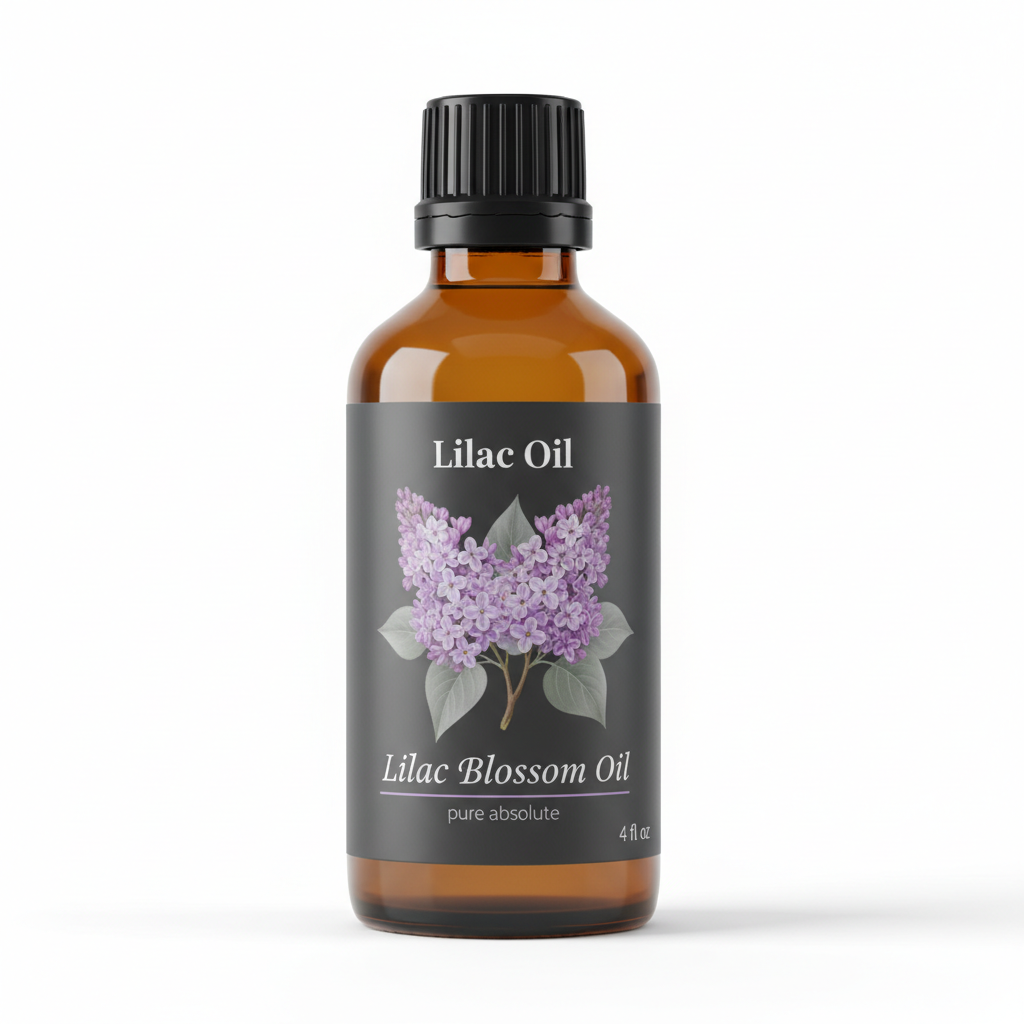
Lilac Blossom Oil
Lilac Blossom Oil from our own shop, in sizes from 0.5 oz to bulk.
From $15.99
Shop Now →Sources & Further Reading
- Penn State Extension, 2026. What's the difference between markup and profit? extension.psu.edu/whats-the-difference-between-markup-and-profit
- U.S. Small Business Administration. Calculate your startup costs (break-even and contribution margin). sba.gov/calculate-your-startup-costs
- Oregon State University PACE. How to price a food product. blog.pace.oregonstate.edu/how-to-price-a-food-product
- CandleScience, 2026. Lab notes: EcoSoya CB-Advanced soy wax. candlescience.com/lab-notes-ecosoya-cb-advanced