How to Color Lilac Candles: Dye Amounts and Wick Effects
Lilac is a pale color, and the usual mistake in coloring a lilac candle is adding too much dye. A pale violet needs a small amount of colorant, and every extra drop is also extra material for the wick to carry. Color is the last variable to add, after the wax, the wick and the scent are settled, and this post gives the amounts and the arithmetic from dye makers' published guidance.
Pick the shade first, and expect soy to run pale anyway
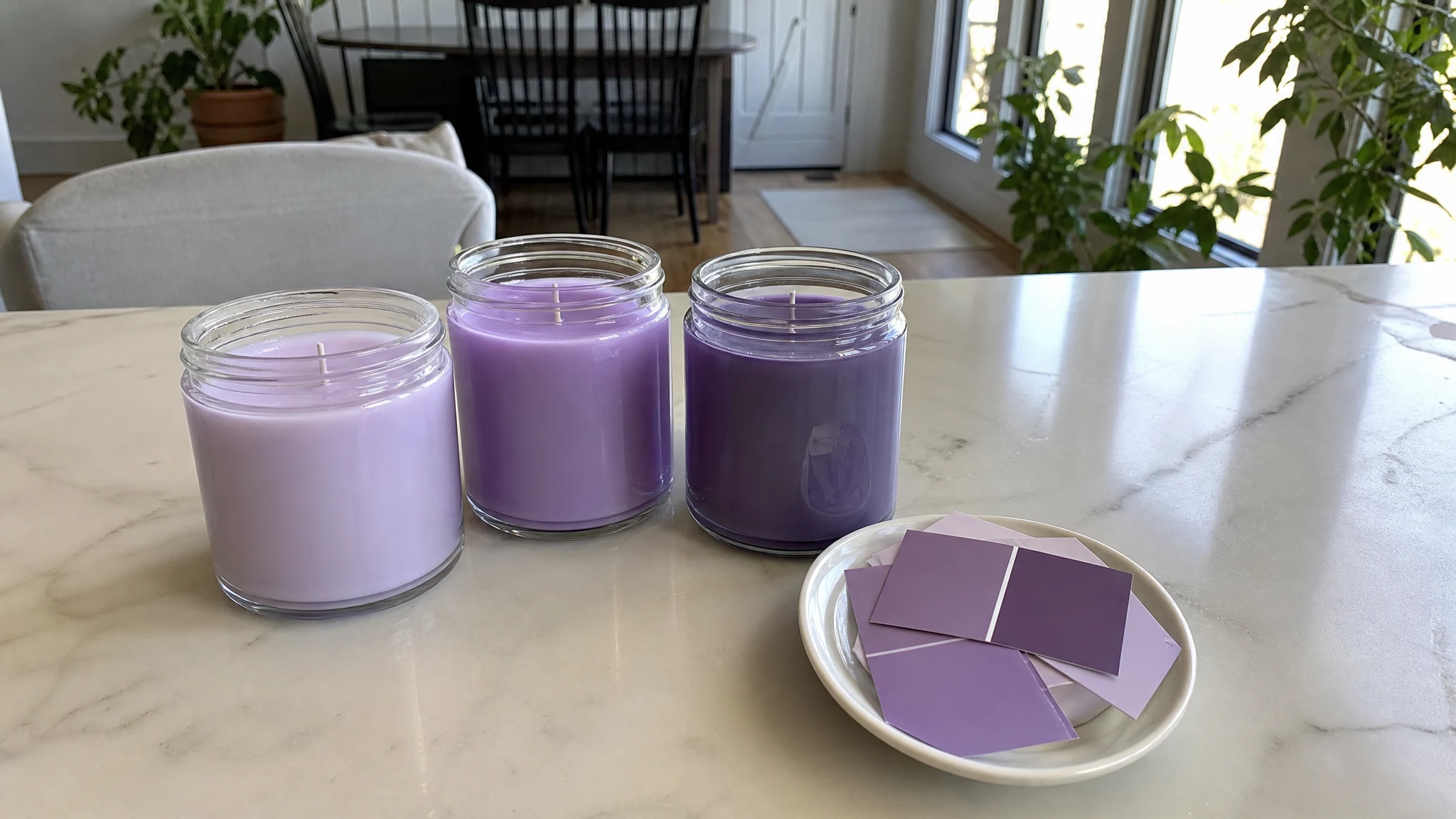
Decide what you want to see in the cooled candle before you open a dye: a barely-there lavender-white, a clear lilac, or a deeper purple. The shade sets the quantity, and the wax pushes the result. NorthWood Candle & Craft, a supplier, says paraffin gives bright, bold colors with less dye, while soy "tends to produce pastel shades no matter how much dye you use" (NorthWood, 2023). For a flower whose whole identity is soft and pale, that is not a handicap. It is a reason to stay at the low end of every range below.
What the dye makers say per pound
| Supplier (year) | Dye form | Published guidance |
|---|---|---|
| Village Craft & Candle (product page) | Purple chips | 1 chip per 500 g (1 lb) of wax for medium shades; maximum 2 chips per pound, for darker colors only |
| NorthWood (2023) | Chips | Generally 1 per pound; natural waxes such as soy and coconut blends may need up to 5 per pound |
| NorthWood (2023) | Liquid | 1 to 2 drops per pound of paraffin; soy and coconut generally 2 or more drops for bright colors |
| Nature's Garden (2026) | Liquid | Do not use more than 10 drops per pound, or the candle may smell chemical |
These figures are for each maker's own product and are not interchangeable. The chip numbers show it: one supplier caps its chips at 2 per pound while another says up to 5 for soy, because a chip is a different concentration in each brand. Use the sheet that came with the dye you bought, and treat the others as a sanity check on the order of magnitude. None of them is a figure for our oil or about our oil, and none was written for lilac.
The arithmetic, including the drop problem
Take a batch of ten jars each holding 8 oz of wax by weight: 10 x 226.8 g = 2,268 g, which is 5 lb. At the medium-shade guidance of 1 chip per pound, that is 5 chips, and at the 2-per-pound ceiling 10 chips. For a liquid dye at 1 drop per pound, the batch takes 5 drops. The reasoning is straightforward but it exposes a trap: one 8 oz candle is half a pound, so at 1 drop per pound it needs half a drop. You cannot measure that, so you color the whole batch and pour from it.
If you are coloring a single test candle, Nature's Garden suggests diluting liquid dye 1:1 with vegetable oil for pastel shades and small batches. Reasoning from that, a 1:1 dilution halves the strength per drop, so one drop of the dilution is half a drop of dye, which is exactly the dose for one 8 oz candle at 1 drop per pound. The ceiling of 10 drops per pound, by the same arithmetic, is 5 drops of neat dye in that single candle, and for a pale lilac you should be nowhere near it.
Why dye is a wick problem before it is a color problem
Dye is not inert in the burn. Nature's Garden says excess color "can cause the wick to become clogged" and can add smoke, weaken scent throw and reduce the melt pool; it also warns that crayons can start a candle smoking and clog wicks. CandleScience's wick guide says to "size up by one wick size when adding moderate to heavy color" to keep a full melt pool, and NorthWood says depending on the amount you may need to "wick up," with each color behaving differently. Our wick post gives the test routine. The consequence for lilac is useful: because pale shades use little dye, the wick may not need to move at all, but you only know that from a burn test of the colored candle, not the white one. NorthWood's rule is blunt: test each wick, wax, color and fragrance combination, with more care for powdered pigments such as mica.
The pale-color trap: our oil is a yellow liquid
The published COA for the batch we list gives the appearance standard as "yellow liquid" and the result as "complies." That is all it says about color: there is no intensity scale or color number on it, so it tells you nothing about how much tint a given load adds. Reasoning from the line, an oil that is yellow in the bottle can add some yellow to white or cream wax, and soy starts off creamy rather than white. A pale violet sits opposite yellow on a color wheel, so a small amount of violet dye may look grayer rather than brighter where the oil has tinted the wax. That is a possibility to check, not an observation: we have not poured a candle, tinted or otherwise, with this oil.
The practical order that follows is to settle the scent load first and the shade second, so the tint is judged with the oil already in the wax. In the pot, Village Craft advises adding the dye before the fragrance so the color distributes evenly, and recommends testing a cooled sample first. Make a small pour: a little dye first, then the fragrance at your intended load, then cool a spoonful or a small jar on a white surface, and judge in daylight after it sets. Adjust the dye, not the oil, to correct the shade, and write each amount down. The soy candle post and weak throw post cover what the oil does once it is in the wax.
Temperature and the safety paperwork
NorthWood says to add chips when the wax reaches about 185 F (85 C) and not to add them to wax hotter than 225 F, stirring until no specks remain; liquid dye goes in once the wax is fully melted. Your pot may be near 185 F while dissolving chips, so be careful about when the oil goes in. The site publishes no flash point, safety data sheet or IFRA certificate for our oil, and we state no safe pour temperature or fragrance load for it. Ask in writing before ordering and again before pouring candles for sale; the flash point post explains why. Dye, wax and jars come from a candle supply shop, not from us; we sell only the Lilac Blossom Oil. Nature's Garden notes that its dyes are not for cosmetic use, so keep candle dye out of any skin product.
Recommendation in one line: choose the shade, use the least dye your maker's sheet allows, add it before the oil, and burn-test the colored candle. The oil itself is on the shop page when you are ready to scent.
Lilac Blossom Oil
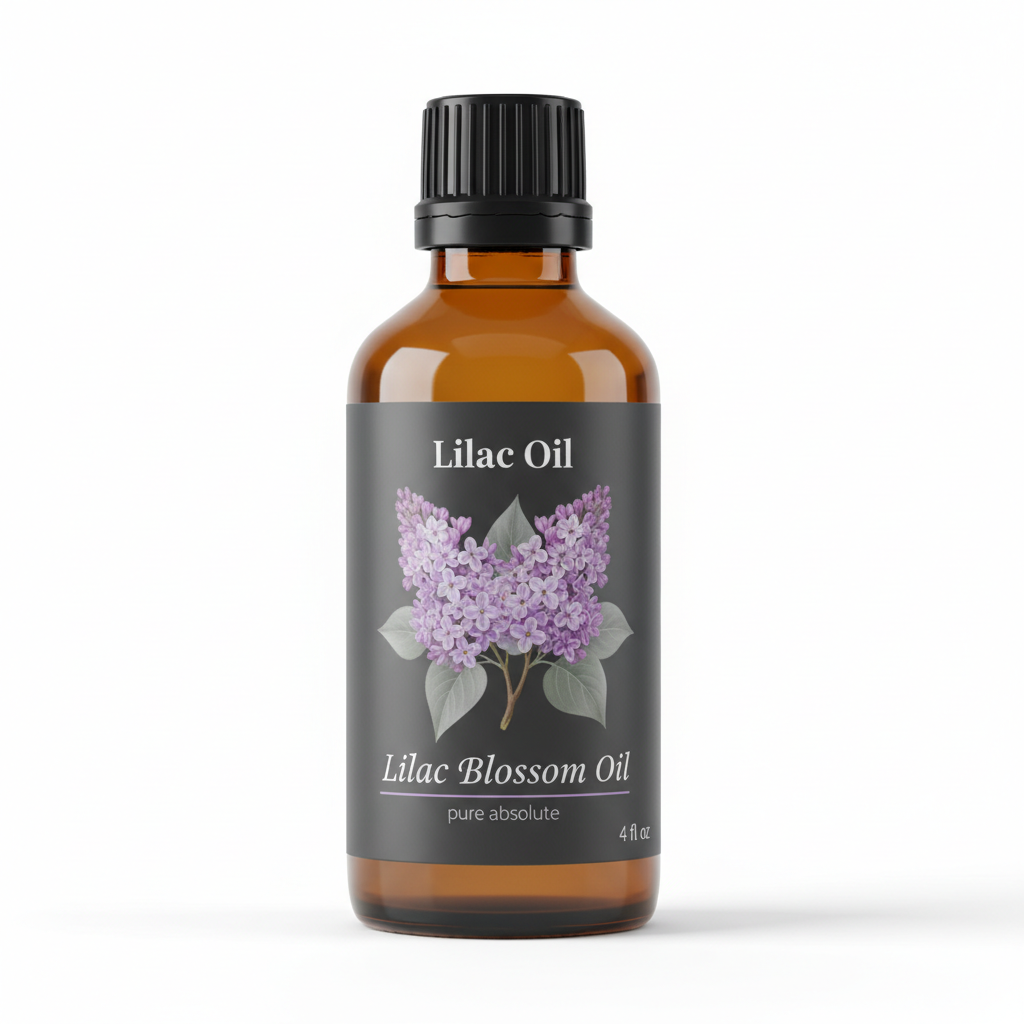
Lilac Blossom Oil from our own shop, in sizes from 0.5 oz to bulk.
From $15.99
Shop Now →Sources & Further Reading
- NorthWood Candle & Craft, 2023. How to use candle dye. northwoodcandleandcraft.com/how-to-use-candle-dye
- Nature's Garden, 2026. How to color candles. naturesgardencrafts.com/color-candles
- Village Craft & Candle. Color dye chips, purple (product page). villagecraftandcandle.com/color-dye-chips-purple
- CandleScience, 2026. Candle wick guide. candlescience.com/learning/wick-guide