Lilac Oil Dilution Chart: 0.5% to 2% by Batch Size
A dilution chart is arithmetic, not clearance. Below, a batch size and a percentage turn into millilitres, drops and grams of Lilac Blossom Oil, and the chart stops at 2% because that is the highest skin figure our own copy gives. Nothing on this page says a given percentage has been assessed for your product.
Pick the product, find the row, weigh, then test
The order matters more than the numbers. First decide what you are making and how much (a 10 ml roller, a 30 ml bottle of body oil). Then read the row. Then weigh the oil rather than count drops. Last, patch test the finished mixture. Our skin copy is 0.5% to 2% in a carrier oil, start at the low end, patch test first, keep away from eyes, children and pets, external use only.
The chart
Percentages here are of total volume. The oil's relative density on the published COA is 0.973 at 20 C (batch LILIBCUNINC001A), so 1 ml of oil weighs about 0.973 g. Drops assume about 20 per ml, which varies with the dropper and with a thick oil, so treat drops as a way to check the weighed number. The carrier is whatever remains of the total: a carrier's density is not cited here, which is why the chart works in millilitres of total.
| Total batch | 0.5% oil | 1% oil | 2% oil |
|---|---|---|---|
| 10 ml roller | 0.05 ml, 1 drop, 0.05 g | 0.1 ml, 2 drops, 0.10 g | 0.2 ml, 4 drops, 0.19 g |
| 30 ml (about 1 oz) | 0.15 ml, 3 drops, 0.15 g | 0.3 ml, 6 drops, 0.29 g | 0.6 ml, 12 drops, 0.58 g |
| 60 ml | 0.3 ml, 6 drops, 0.29 g | 0.6 ml, 12 drops, 0.58 g | 1.2 ml, 24 drops, 1.17 g |
| 100 ml | 0.5 ml, 10 drops, 0.49 g | 1.0 ml, 20 drops, 0.97 g | 2.0 ml, 40 drops, 1.95 g |
| 250 ml | 1.25 ml, 25 drops, 1.22 g | 2.5 ml, 50 drops, 2.43 g | 5.0 ml, 100 drops, 4.87 g |
To make 30 ml at 2%, measure 29.4 ml of carrier and add 0.6 ml of oil (about 0.58 g). The one-ounce figure in our copy, roughly 3 to 12 drops per ounce of carrier, is the 30 ml row.
Why the 10 ml row is the one that goes wrong
At 10 ml, 0.5% is 0.05 ml, which is a single drop at about 20 drops per ml. One drop more or less moves you by a full 0.5 percentage point. Four drops is 2%, and a fifth drop makes it 2.5%, which is over our stated ceiling. On the weighing side, a kitchen scale that reads to 0.01 g has a resolution of about 20% of the 0.049 g you are trying to hit. The practical advice that follows from this arithmetic: make the 10 ml roller in a larger batch (30 ml at 0.6 ml, or 60 ml) and decant, or measure the oil with a graduated pipette. The rollerball perfume oil post covers that product.
How far one bottle goes
A 0.5 oz bottle holds about 14.79 ml, or 14.4 g. At 2% in 30 ml batches (0.6 ml each) that is roughly 24 batches; at 0.5% (0.15 ml each) it is roughly 98. This is volume arithmetic only. See the shop page for the current price per size.
Two ways the drop count misleads
The first is the unit trap. Twenty drops is about 1 ml, which is 0.97 g of oil. Put twenty drops into a 30 ml bottle and you have made roughly 3.3% (1 divided by 30), above our 2% figure, even though "20 drops per ounce" sounds modest. The second is the carrier-first habit: filling a bottle with carrier to the neck and then adding oil makes the batch larger than you planned, which dilutes the oil slightly, so the real percentage ends up a little lower than the row says. That error is small and runs in the low direction, but it is a reason to measure the total, not the carrier.
A stock solution for small batches
If you make 10 ml at a time, make a 10% stock once: 1 ml of oil into 9 ml of carrier in a clean amber bottle. The sums then use millilitres of stock instead of drops of oil. For 10 ml at 0.5%, use 0.5 ml of stock (0.05 ml of oil); at 1%, 1 ml; at 2%, 2 ml, with the rest carrier. This is arithmetic from the chart above, not a tested procedure, and a stock bottle should be labelled with the date and percentage. Our bulk page recommends keeping working amounts in smaller airtight bottles, and the same applies to a stock. Percent by weight, as opposed to by volume, needs the carrier's density, which you can read from the carrier supplier's data sheet; the volume chart is close enough for a 0.5% to 2% oil only if you accept that approximation.
Why there is no "higher for rinse-off" column
Many charts add columns for rinse-off or soap. We do not, and the reason is the mechanism, not caution for its own sake. The International Fragrance Association's Guidance for the Use of IFRA Standards (51st Amendment, 2023) divides finished products into twelve categories. Fine fragrance is Category 4, body lotion is 5A, and bar soap and other rinse-off products are Category 9. Limits are set per restricted ingredient within a category, so the figure for a fragrance depends on what is in it, and the guidance describes the Certificate of Conformity as a document issued by the fragrance mixture's maker confirming use "up to a certain concentration" in a stated product type. Our oil is a composition with undisclosed contents and no published IFRA certificate or allergen declaration, so no category limit can be calculated from the outside. A rinse-off figure would be a number we cannot back.
Other makers do publish rates. They are for their materials, not ours. In a soap-maker's blog post (Soap Queen, Bramble Berry's blog, undated page) the suggested rates are 0.7 ounces per pound of cold process soap batter, about 4.4% by weight, and 0.3 ounces per pound of melt and pour, about 1.9%, described as general, medium-strength amounts. A melt and pour base maker's listing for one transparent base gives a maximum of 1% fragrance. Those figures differ by a factor of four for the same craft, which shows how much depends on the product being made. They are not limits for our oil. If you plan to sell a product above our 2% figure, ask in writing for the documentation you need before ordering and get the answer in writing. A cosmetic chemist is the right person to judge the formula.
The patch test closes the loop
DermNet's 2023 article on cosmetics allergy says to test a new cosmetic by placing a small sample on the inner wrist or elbow and watching for 24 to 48 hours, and says an allergic rash usually appears more than 12 hours after exposure and peaks around 48 hours. Test the diluted mixture you actually made, at the strength you chose. If the skin reddens, itches or burns, wash it off and stop. A person with a known fragrance allergy, eczema or a skin condition should ask a dermatologist or physician before using any new scented product. For the full discussion of allergy and labelling, see using lilac oil in skin and body products. For soap batches, where the sums change because the base is part of the weight, see cold process and melt and pour.
We sell the oil only; carrier oils, bottles, droppers and scales come from a craft supply shop or pharmacy. The figures above have not been checked against a batch we made, because we have not made one.
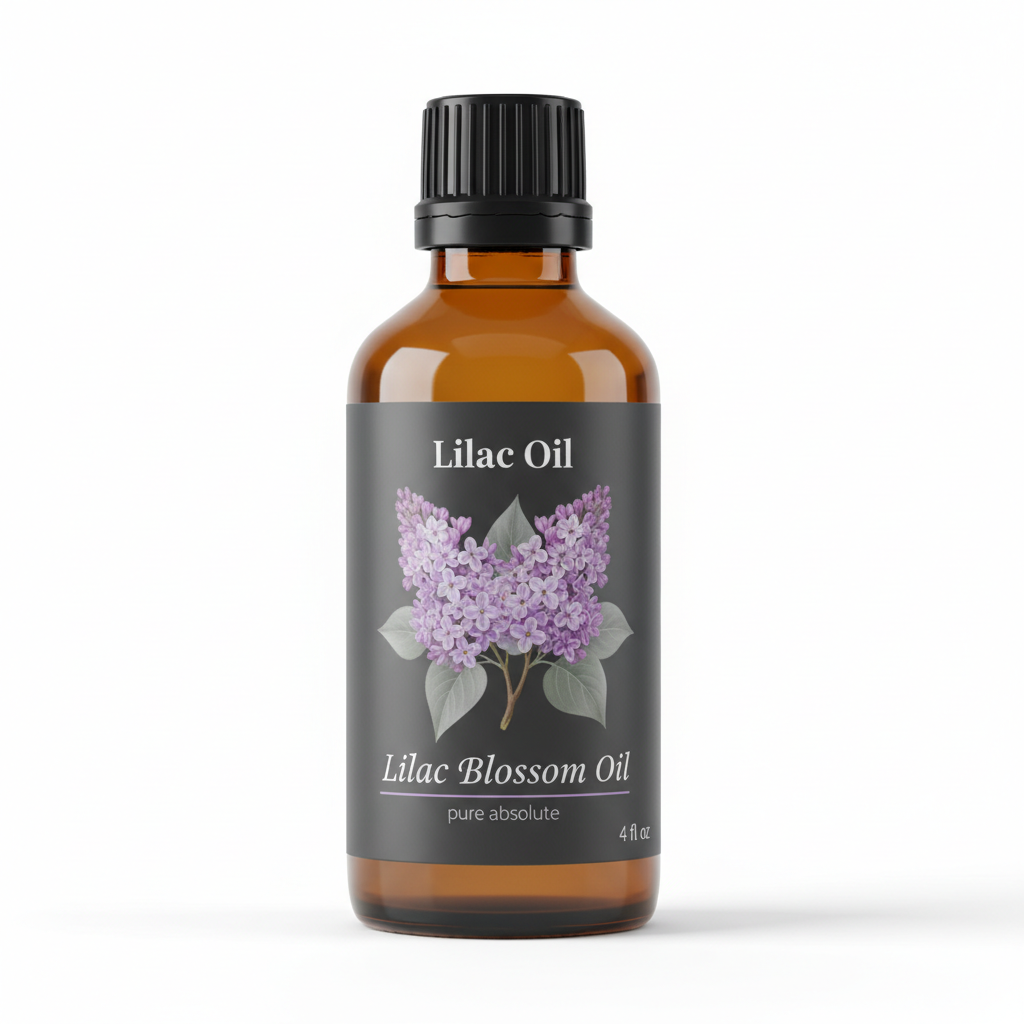
Lilac Blossom Oil
Lilac Blossom Oil from our own shop, in sizes from 0.5 oz to bulk.
From $15.99
Shop Now →Sources & Further Reading
- IFRA, 2023. Guidance for the Use of IFRA Standards, 51st Amendment. ifrafragrance.org
- DermNet, 2023. Cosmetics allergy. dermnetnz.org/topics/contact-reactions-to-cosmetics
- Soap Queen (Bramble Berry), n.d. How to use the fragrance calculator. soapqueen.com
- Stephenson, n.d. No Sweat Transparent Melt & Pour Soap (retailer listing of the base specification). voyageursoapandcandle.com