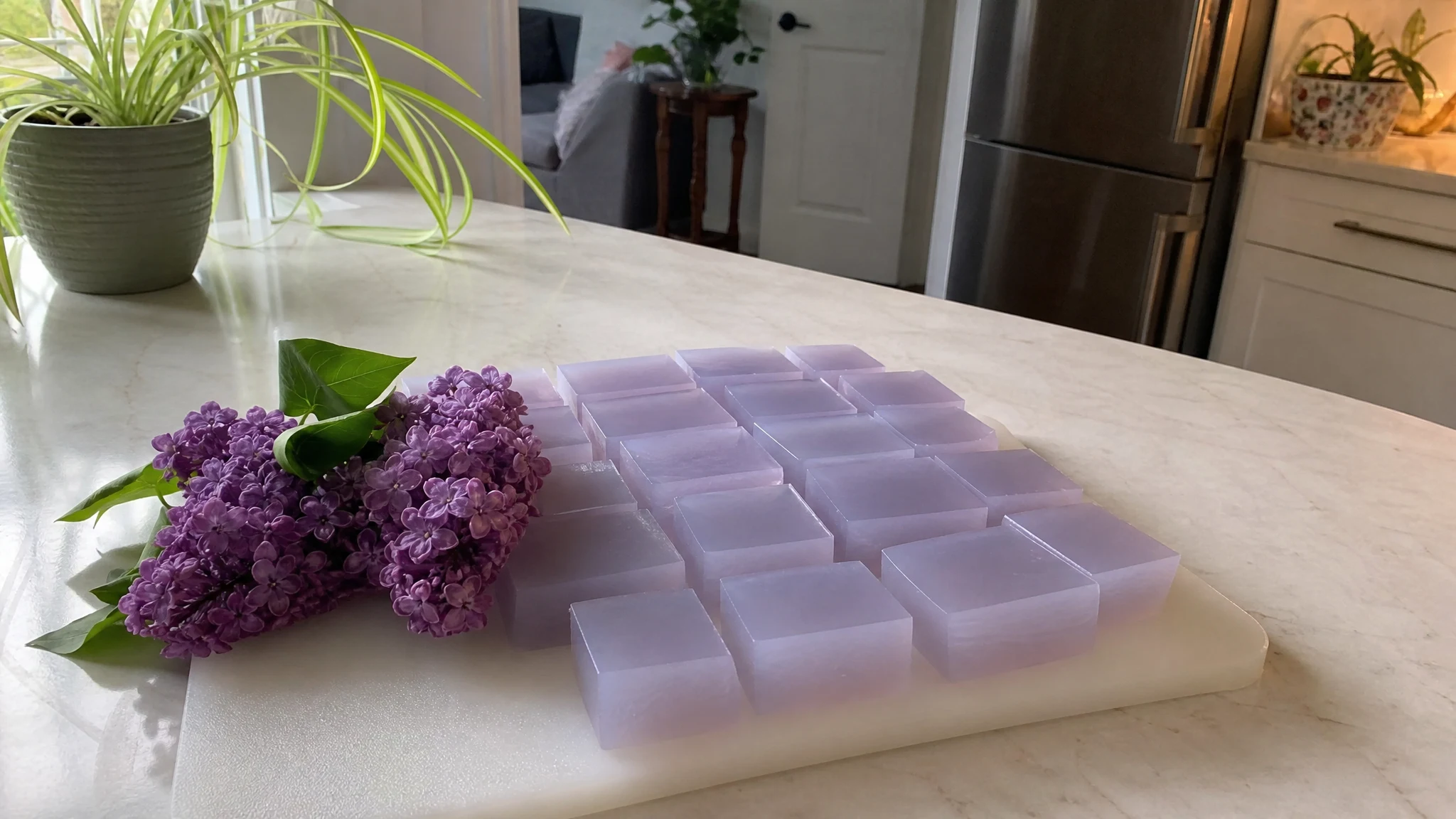
Melt and Pour Lilac Soap: Scent at the Base Maker's Rate
With melt and pour soap, the base maker sets how much fragrance you can add, and we do not. Read the specification of the base you bought, stay at or below its number, and do not go above 2% of the soap weight for Lilac Blossom Oil without written documentation from us, because 2% is the highest skin figure in our own copy. There is no lye in this method, which is why it suits a first batch.
Step 1: choose the base, and read its sheet
Melt and pour bases are partner materials from a craft or soap supply shop; we sell only the lilac oil. The one base specification we read for this article is a retailer's listing for Stephenson No Sweat Transparent Melt & Pour Soap. It gives a melting temperature of about 75 C (149 F), a pouring temperature of 68 to 72 C (154 to 162 F), a maximum fragrance addition of 1%, and a maximum of 3% total additives including fragrance, adding that excess "may affect the colour, clarity and stability of the finished bars." It warns that boiling or overheating "may darken the soap." Other bases will differ, which is the point: the numbers below are for that one base, so replace them with the ones on your own base's sheet. Reasoning from the maker's ceiling, 1% is the working limit for that base, not our 2%.
Step 2: weigh, and do the sums
Grams of oil equal grams of base times the percentage. Our oil's relative density on the published COA is 0.973 at 20 C (batch LILIBCUNINC001A), so 1 g is about 1.03 ml, and at roughly 20 drops per ml, about 21 drops. Drops are a cross-check; weigh the oil.
| Base weight | 0.5% oil | 1% oil (that base's maximum) | 2% (our ceiling, needs a base that allows it) |
|---|---|---|---|
| 100 g (one bar) | 0.5 g, about 10 drops | 1.0 g, about 21 drops | 2.0 g, about 41 drops |
| 250 g | 1.25 g, about 26 drops | 2.5 g, about 51 drops | 5.0 g, about 103 drops |
| 500 g | 2.5 g, about 51 drops | 5.0 g, about 103 drops | 10.0 g, about 206 drops |
| 1,000 g | 5.0 g, about 103 drops | 10.0 g, about 206 drops | 20.0 g, about 411 drops |
If you add a colourant, it counts toward the base maker's additive total. With a 3% additive ceiling and 1% oil, only 2% is left for everything else, which on 500 g is 10 g. A 0.5 oz bottle holds about 14.4 g, so it covers a little under three 500 g batches at 1% (5 g each), or one and a half at 2% (10 g each) if your base allows it. See the dilution chart for why the chart stops at 2% and what a category limit is.
A general guide gives a different number: a soap-maker's blog post (Soap Queen, Bramble Berry's blog, undated page) suggests 0.3 ounces per pound for melt and pour, about 1.9% by weight, as a general medium-strength amount. That is for fragrance and essential oils as a class from another seller. For our oil, the base maker's own number wins when it is lower, and 2% is the cap when it is higher.
Step 3: melt, then scent late
Cut the base into small cubes and weigh it. The base maker says to heat gradually, stir until uniform, and avoid boiling or overheating. Our site publishes no flash point or safety data sheet for the oil, so we cannot tell you how it behaves at a base's melting temperature. Reasoning from that gap and the base maker's 68 to 72 C pour window, the cautious order is to let the melted base fall into the pouring range, weigh the oil into a small clean cup, and stir it in just before pouring rather than holding scented base hot. If you want to know a flash point, ask in writing before you order and get the answer in writing; do not assume one.
The COA lists the oil's appearance standard as a yellow liquid, and the certificate says the batch complies. A transparent base may therefore take a slight tint. We have not poured the oil into any base, so that is reasoning from the certificate, not an observation.
Step 4: pour, cool, and wrap against sweat
Pour into a mould, let it set, then unmould. The base listing says the base is formulated to help reduce sweating, is suited to humid conditions and unwrapped soaps, and should be stored sealed at 5 to 30 C. The listing gives no shelf life and says results vary with humidity, additives and storage, so test the finished formulation. Its ingredient list names sorbitol and glycerin, among others. We have no source explaining the mechanism of sweating, so we leave it at the maker's statement. Reasoning from its sealed 5 to 30 C storage line, keep finished bars sealed and out of humid rooms, and expect to need that more if your base makes no anti-sweat claim.
The three usual issues, and what is sourced
Colour shift. Wholesale Supplies Plus's article on vanillin says vanillin browns on exposure to air and light, that discoloration increases as pH becomes more alkaline, and that alkaline products such as melt and pour soap can brown quickly, sometimes almost overnight. The article does not discuss floral scents, and our oil's contents are not published, so we cannot say whether it contains vanillin. Ask in writing.
Scent fade. No source read for this article measures fade of a floral in melt and pour base. The shop's own note is that florals read softer than heavier notes. That is not a test result, and the practical consequence is that you should make one bar before a tray.
Over-fragrancing. The base maker's wording is that excess additives may affect colour, clarity and stability. Going above the maker's number to get more scent is the shortcut that its own specification advises against.
Is it soap? Under FDA, probably a cosmetic
FDA's page Is It a Cosmetic, a Drug, or Both? (Or Is It Soap?) says a product is soap only if the bulk of its nonvolatile matter is an alkali salt of fatty acids, the cleaning comes from those compounds, and it is sold solely as soap; soap that meets this is regulated by the Consumer Product Safety Commission. A base whose ingredient list includes sodium laureth sulfate, a synthetic detergent, does not fit that description, and FDA's FAQ on soap says that if a product contains synthetic detergents it is a cosmetic, not a soap (our reading of the two pages, not a legal opinion). Intended use also matters: the page says aromatherapy claims such as helping a consumer sleep make a fragrance a drug. Our oil's purpose is scent, and a bar should be described the same way. If you sell, ask a product-safety attorney how to label and substantiate it, and ask a cosmetic chemist about the formula. The supplier's documentation for the oil is part of that file, so request it in writing before ordering.
This recipe has not been made or tested by us. Do a small test pour, patch test on a small area of skin first as our copy says; a dermatologist or physician should be asked first if you have eczema or a fragrance allergy. Related: skin and body products, cold process soap, and the shop page for the current price per size.
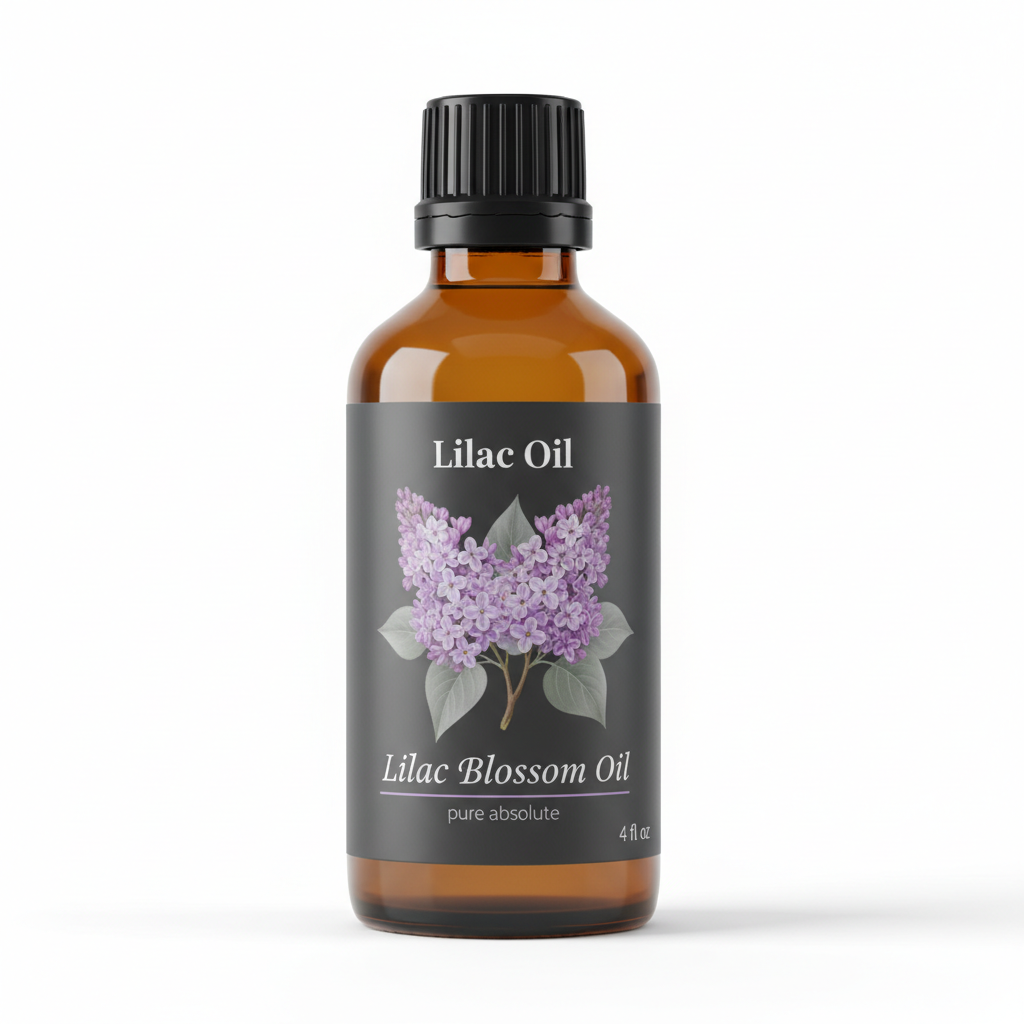
Lilac Blossom Oil
Lilac Blossom Oil from our own shop, in sizes from 0.5 oz to bulk.
From $15.99
Shop Now →Sources & Further Reading
- Stephenson, n.d. No Sweat Transparent Melt & Pour Soap (retailer listing of the base specification). voyageursoapandcandle.com
- Soap Queen (Bramble Berry), n.d. How to use the fragrance calculator. soapqueen.com
- Wholesale Supplies Plus. Understanding the vanillin villain. wholesalesuppliesplus.com
- FDA. Is It a Cosmetic, a Drug, or Both? (Or Is It Soap?). fda.gov
- FDA. Frequently Asked Questions on Soap. fda.gov