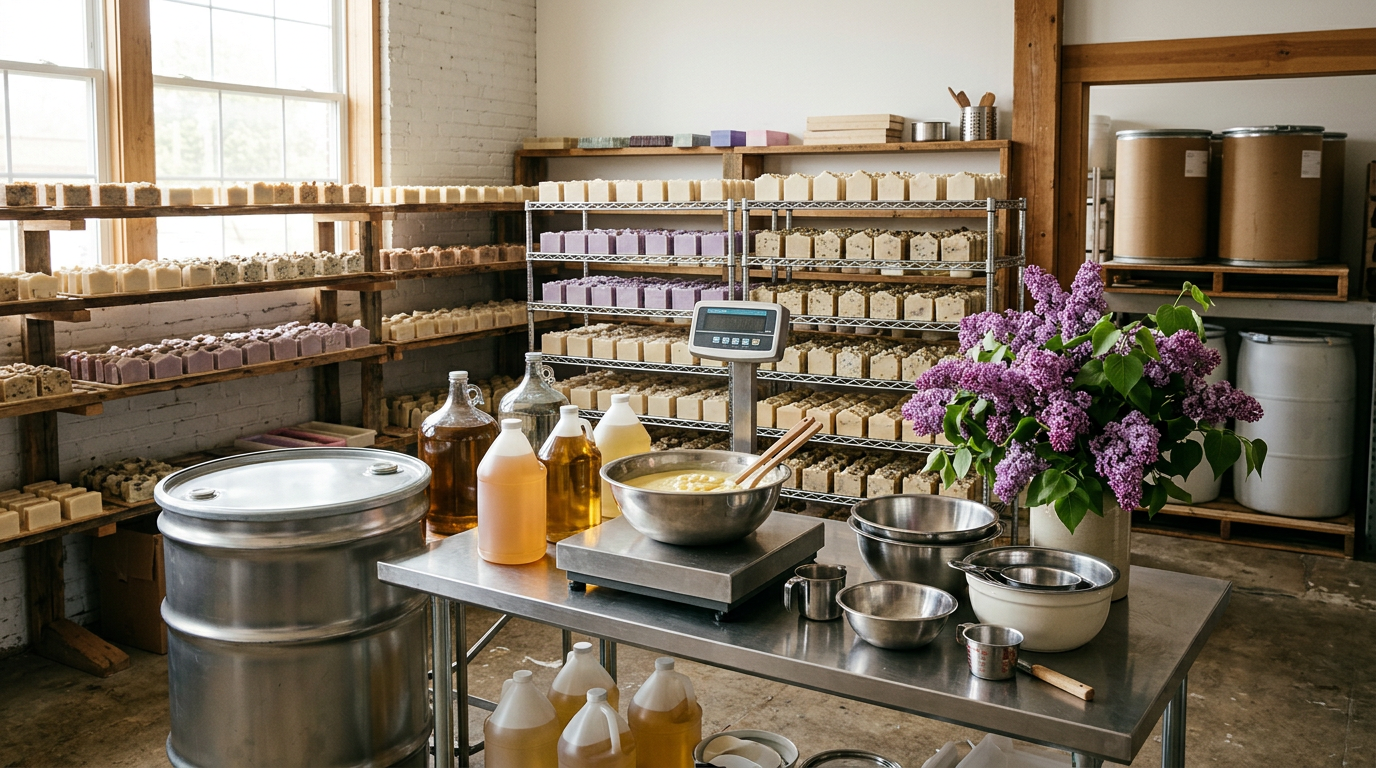
Soap makers building a seasonal spring line are one of the steadiest wholesale markets for a composed floral like this one. This page is part of our Guide to Buying Lilac Blossom Oil in Bulk.
Sample the oil in a trial batch before committing your full base oils to a production run.
A soft, powdery floral with a hint of almond sweetness translates well into a bar soap, where the scent needs to survive both the saponification process and months on a shelf before it ever reaches a customer's shower. The bulk guide for soap and candle makers walks through how this oil performs across both cold-process and melt-and-pour bases.
Soap makers ask many of the same formulation questions as candle producers, from acceleration risk in cold-process batches to discoloration over cure time, most of which are covered in our FAQ for soap and candle makers.
Cold-process soap makers generally test a new fragrance in a small trial batch first, watching for acceleration or ricing at trace before committing a full batch of base oils to it; melt-and-pour makers have an easier path since the base is already set and the fragrance is stirred in near the end of the melt.
However the base is built, a floral composition like this one should go in as the batch cools toward trace or pour temperature rather than into a hot base, which protects the top of the accord from being cooked off.
A small-batch soap maker testing a new bar typically starts at 16 oz, a seasonal production run for a spring line lands at 5 lbs or 25 lbs, and 400 lbs suits a bar line in year-round production.
See sizing from 5 lbs up on the bulk page, or contact us with your base recipe and batch size.