Making Lilac Soap or Candles? Questions to Ask First
If you make soap or candles, a new scent raises the same handful of questions every time. Here are the ones we would ask before ordering Lilac Blossom Oil, in the order they tend to come up. Where a longer post already does the arithmetic, we link it instead of repeating it. We sell only the lilac oil, so wax, wicks, lye, soap base, jars and dye come from a craft or soap supply shop.
Before you order
Is it a fragrance oil or an essential oil?
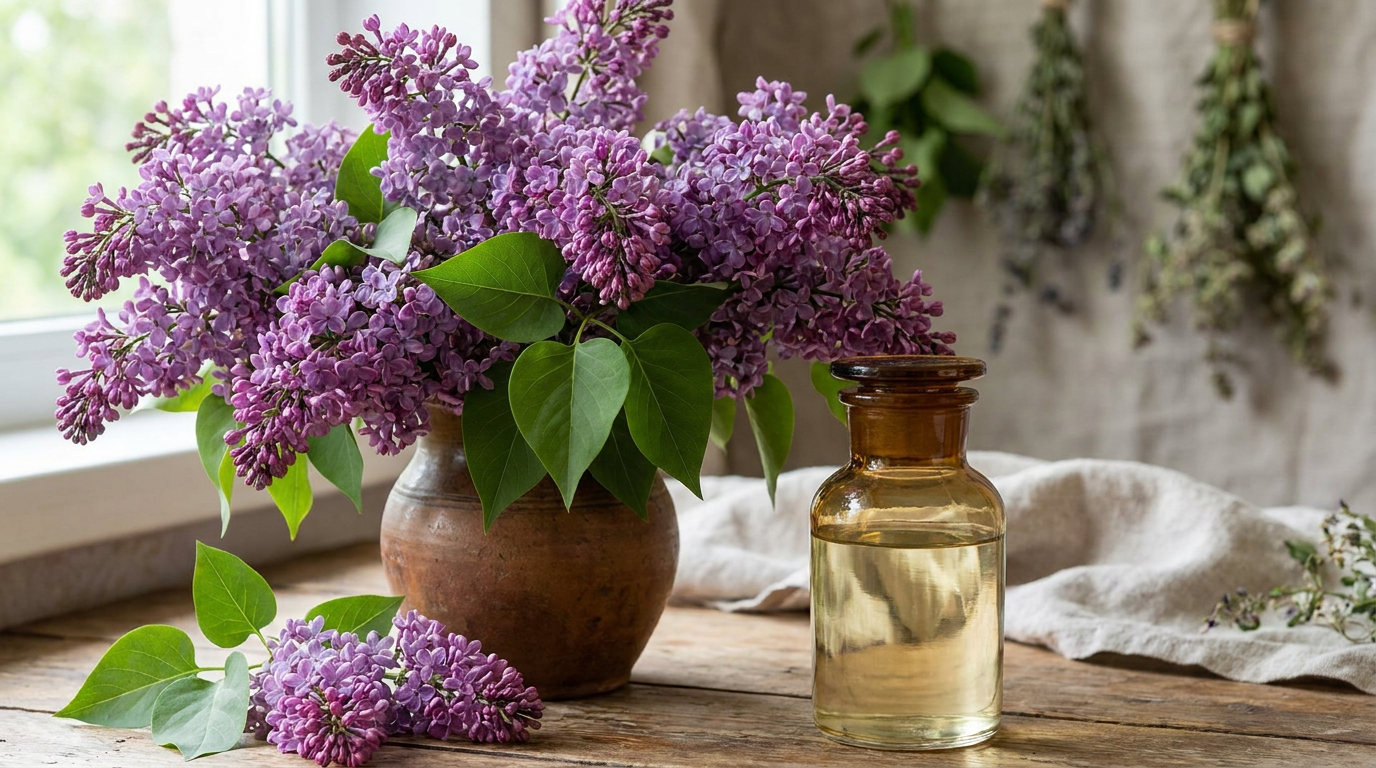
It is a third thing. Lilac Blossom Oil is a composition of botanical extracts and infused aromatics, built to be faithful to the common lilac in bloom. It is not a distillate and not an absolute, and no true lilac essential oil exists in our range. We do not publish the formula or name the extracts. Our post on fragrance oil versus crafted blossom oil compares the two.
Which documents should I have in hand?
For products you sell, three: a safety data sheet, a flash point and an IFRA statement for your product type. The Certificate of Analysis we publish covers one batch and lists appearance, smell, a relative density of 0.973, a refractive index of 1.501 and an optical rotation of -0.72 degrees. For anything beyond that, ask us in writing through the contact page before you order, and keep our answer with your batch records. IFRA explains that a Certificate of Conformity is issued for a specific mixture, at a stated concentration in a stated product type, up to a named amendment, and that it does not replace a safety assessment (Guidance for the use of IFRA Standards, IFRA). Our guide to reading a COA and SDS shows what each document does.
Which IFRA category is my product?
The same guidance sorts products by how much fragrance reaches skin. These are the placements for the products makers ask about most:
| Product | IFRA category |
|---|---|
| Bar soap | 9 |
| Body creams, oils and lotions | 5A |
| Air freshener sprays, manual | 10B |
| Pillow spray | 11B |
| Candles of all types | 12 |
Candles sit in Category 12 because skin exposure is considered negligible. A product that serves two purposes is held to the stricter category, since the guidance says the most stringent restriction applies when a mixture is used across several applications.
Soap
How is scented soap regulated?
That depends on what you call it. FDA uses the word soap for products where the bulk of the nonvolatile matter is an alkali salt of fatty acids and that are labeled, sold and represented solely as soap; those fall to the Consumer Product Safety Commission. A cleanser that does not meet the definition is a cosmetic, with its own labeling rules (Is It a Cosmetic, a Drug, or Both? (Or Is It Soap?), FDA). Which one you are is a question for a regulatory consultant or attorney.
How much per pound of soap?
Take the rate from your soap base or recipe supplier and make a small bar first. Our bulk guidance is that lilac has decent throw in cold-process soap while reading softer than heavier musks or woods, and that a small-scale test of your fragrance load is worth the extra step before committing bulk oil. Our cold process post shows the arithmetic.
Candles
How much oil per pound of wax?
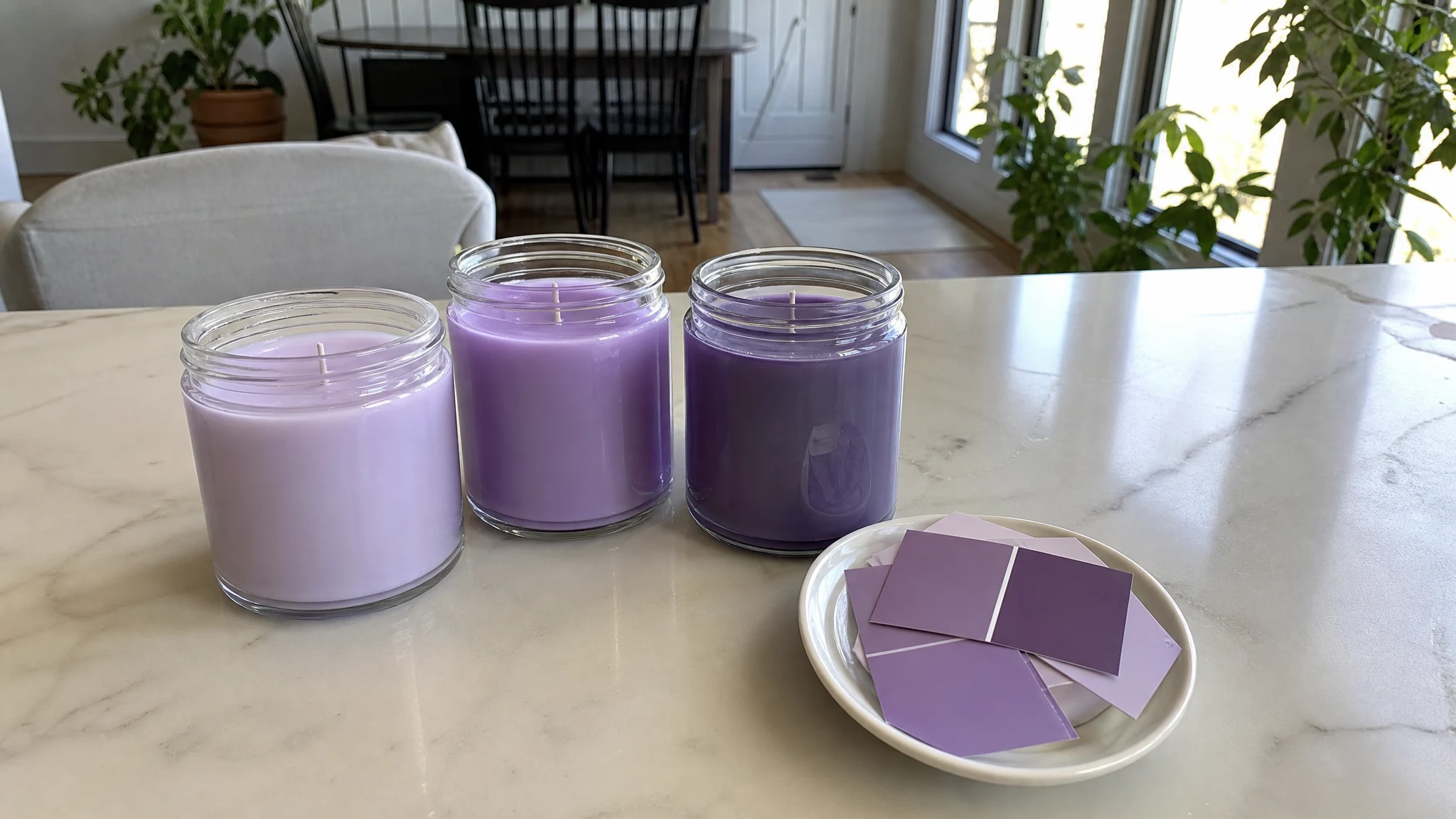
Read the ceiling on your wax maker's sheet, because it differs from wax to wax. One US supplier lists 10 percent for containers in Golden Brands 464 soy, which is 45 g of oil per 454 g of wax, and 6 percent for tealights (Golden Brands 464 Soy Wax, CandleScience). That is for that wax, not a rating for our oil. We suggest a three-candle ladder below the ceiling, worked through in our soy candle pour post, and if the result is faint, the weak throw post takes wick, cure and temperature first.
A note on patience
Soap needs weeks and candles need a cure, and a floral often smells different at day one than at week three. Pour or cut a test, label it with the date, and come back to it with fresh air in your nose. Lilac is a subtle scent, so judge it in a quiet room, not next to a pot of something strong. Keep your notes on what you tried, and you will always know which version to make again.
Ordering and lots
Can I try it before going bulk?
Yes. Our bulk page offers sample bottles in any retail size, a free consultation form and an account manager, with bulk sizes of 5, 25 and 400 lb. Start with the smallest bottle that lets you run each project once, and see the shop page for current prices. Our staged testing plan shows how.
Will every lot match the Certificate of Analysis?
The certificate we publish covers one batch, so we do not promise that every batch matches it. We adjust the blend so green stem, almond sweetness and a musky base stay in balance from batch to batch, and a lot number is carried on every bottle. For makers, our suggestion is to write the lot number on every batch sheet, keep a small retained sample of each lot, and ask us in writing about a lot before a large run.
How should I store it between batches?
Keep it tightly capped in a cool, dark place. We describe the typical shelf life for floral oils as 1 to 2 years. For bulk, keep the sealed container and decant working amounts into smaller airtight bottles. Our storage post goes into why heat and sun matter for a floral.
A good answer on paper before the pour saves a lot of wax and lye afterwards, so ask early, ask in writing and keep what you are told.

Lilac Blossom Oil
Lilac Blossom Oil from our own shop, in sizes from 0.5 oz to bulk.
From $15.99
Shop Now →Sources & Further Reading
- Guidance for the use of IFRA Standards (IFRA, 51st Amendment, 2023)
- Is It a Cosmetic, a Drug, or Both? (Or Is It Soap?) (FDA)
- Golden Brands 464 Soy Wax (CandleScience)