Coloring Lilac Candles: Why Less Dye Wins
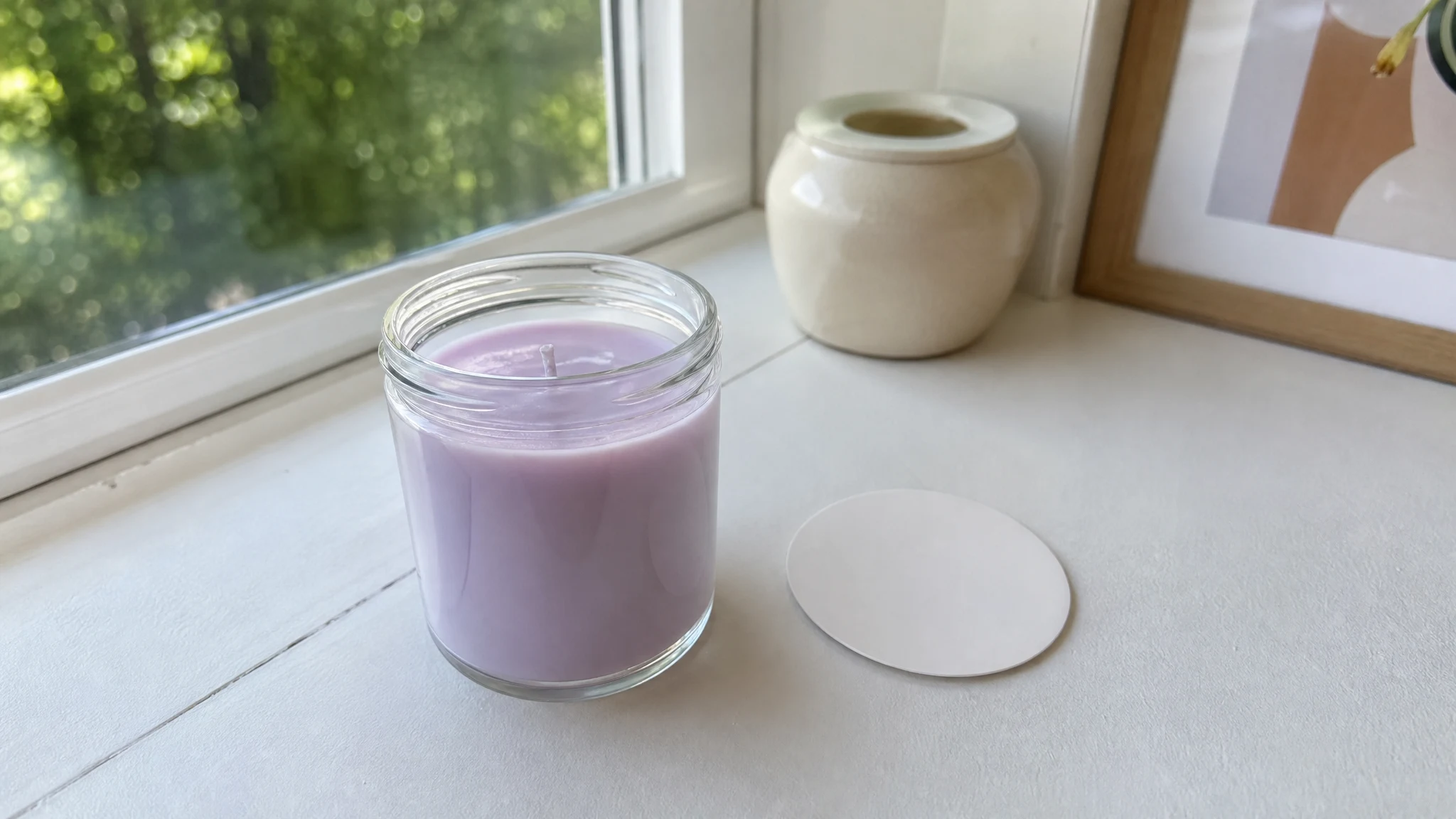
Lilac is a pale color, and the surest way to spoil a lilac candle is to reach for too much dye. A soft violet wants a whisper of colorant, not a splash, and every extra drop is also material the wick has to carry. Color is the last thing to settle, after the wax, the wick and the scent.
Start with the shade you want to see
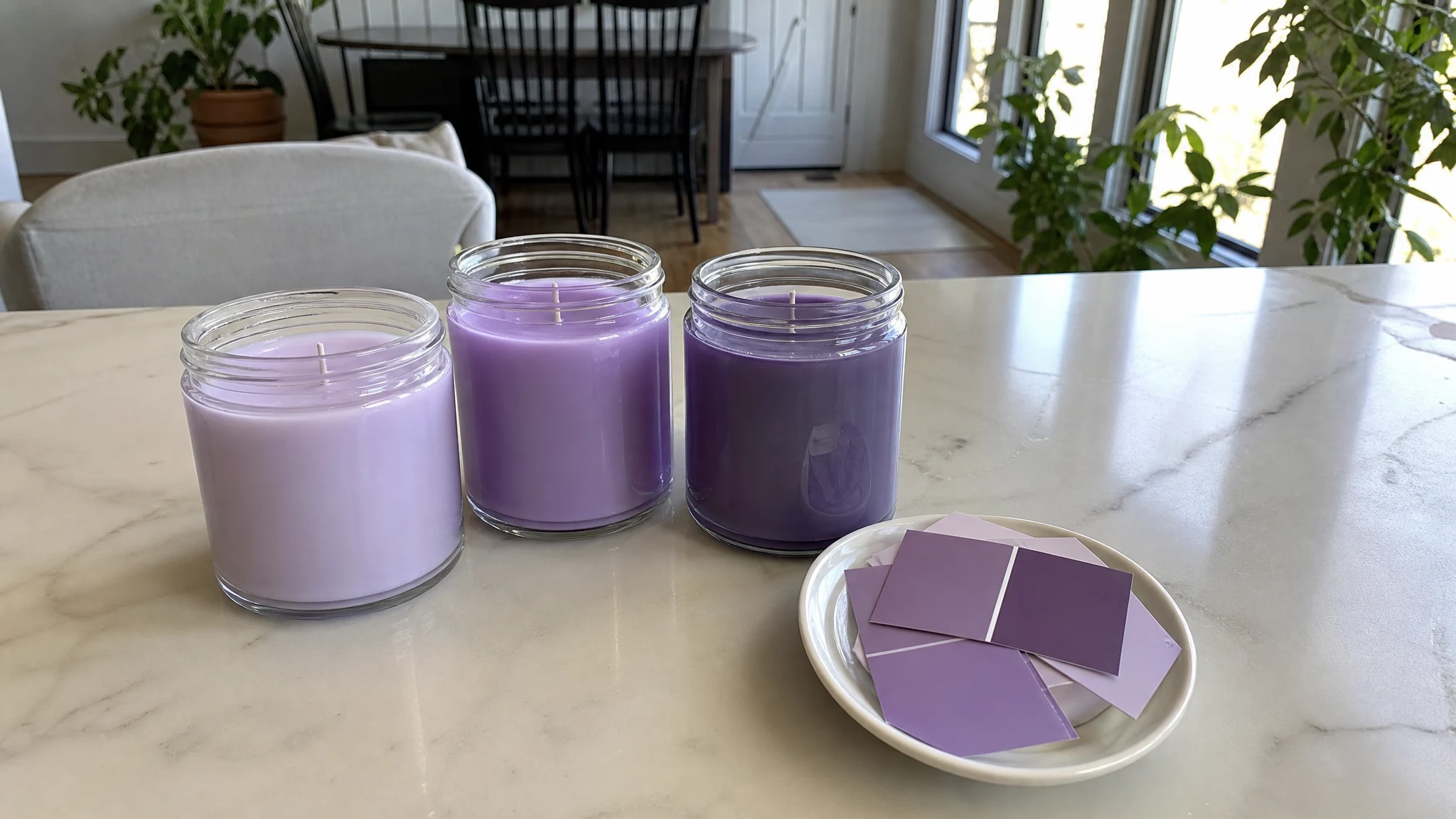
Decide before you open a bottle of dye: a barely-there lavender-white, a clear lilac, or a deeper purple. The shade sets the amount, and the wax shapes the result. One candle supplier notes that paraffin gives bright, bold colors with less dye, coconut blends come out softer, and soy tends to produce pastel shades no matter how much dye you use. For a flower whose whole identity is soft and pale, that suits lilac nicely. It is a good reason to stay at the low end of every range.
What the dye makers suggest
Dye guidance is per pound of wax and it differs by maker, because a chip or a drop is a different strength in every brand. As one supplier puts it, you usually need about one chip per pound, and natural waxes such as soy and coconut blends may take up to five. For liquid dye the same supplier suggests one to two drops per pound of paraffin and two or more for soy. Another supplier says to stay under 10 drops per pound or the candle may smell chemical. Use the sheet that came with the dye you bought, and treat these as a sense of scale.
The arithmetic, including the half-drop problem
Say you are pouring ten jars of 8 oz of wax each. That is 10 x 226.8 g, or 5 lb. At one chip per pound you need five chips. At one drop of liquid dye per pound you need five drops, and here is the catch: one 8 oz candle is half a pound, so it would need half a drop. You cannot measure that, so color the whole batch and pour from it.
For a single test candle, one supplier suggests diluting liquid dye 1:1 with vegetable oil for pastel shades and small batches. Reasoning from that, a 1:1 dilution halves the strength of each drop, so one drop of the dilution is half a drop of dye, which is the right dose for one 8 oz candle at one drop per pound. For a pale lilac, that is plenty.
Dye and the wick
Color is not inert in a burn. One supplier warns that too much dye can clog the wick, add smoke, reduce the melt pool and dull the scent throw. CandleScience's wick guide says you may need to size up by one wick size when adding moderate to heavy color, so the candle still reaches a full melt pool. Pale shades use little dye, so your wick may not need to change at all, but you will only know from burning the colored candle, not the white one. Our wick post walks through the burn test.
Judge the color with the oil already in the wax
The Certificate of Analysis for one batch of our oil lists its appearance as a yellow liquid. That is all the document says about color, so it cannot tell you how much tint a given load adds. It is reasonable to expect that a yellowish oil can warm up white or cream wax a little, and soy starts out creamy anyway. Violet sits opposite yellow on the color wheel, so a small amount of violet dye can look grayer where the wax has picked up warmth. That is a possibility worth checking rather than a rule.
The order that follows is simple: settle your scent load first, then adjust the shade. Pour a small sample with the dye and the oil at your intended load, let a spoonful cool on a white surface, and judge it in daylight. Change the dye, not the oil, to correct the color, and write down each amount. Our posts on scenting soy candles and fixing weak throw cover what happens once the oil is in the wax.
Keep a color log
Color is the one part of candle making you can fix on paper before you ever fix it in wax. Keep a small notebook, and for each test pour write down the wax, the dye, how much went in per pound, the oil load and the date. Take a photo of the cooled candle in daylight next to a plain white card, so you have a fair record of the shade.
Expect a jar of wax to look deeper than the spoonful you judged it by, because more wax stacked up means more color to look through. That is one more reason to start light. You can always add a little dye to the next batch, but you cannot take it back out of this one. After three or four pours, your notebook will show you the lilac you like best, and you can repeat it exactly instead of trying to remember it.
Temperature and paperwork
One supplier says to add dye chips when the wax is around 185 F (85 C), not hotter than 225 F, and to stir until no specks remain. Liquid dye goes in once the wax is fully melted. Follow your wax maker's sheet for when to add the oil. If you plan to sell candles, write to us through the contact page before ordering and tell us which documents you need, such as a flash point; the flash point post explains why that number matters in a hot wax pot.
Dye, wax and jars come from a candle supply shop, since we sell only the lilac oil. One supplier also notes that candle dyes are not for cosmetic use, so keep them well away from anything that goes on skin.
In short: pick the shade, use the least dye your maker's sheet allows, and burn-test the colored candle. A good lilac is a quiet color, and it rewards a light hand.
Lilac Blossom Oil
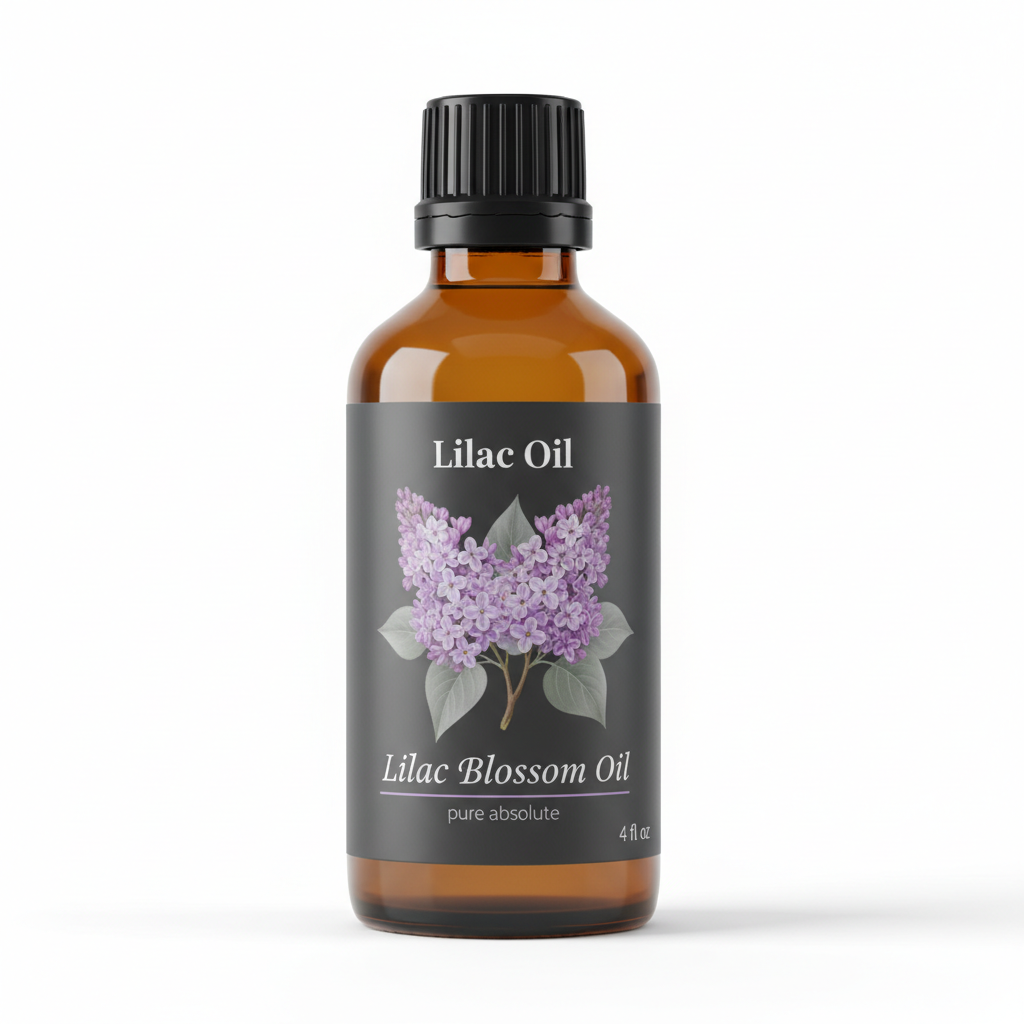
Lilac Blossom Oil from our own shop, in sizes from 0.5 oz to bulk.
From $15.99
Shop Now →Sources & Further Reading
- NorthWood Candle & Craft, How to Use Candle Dye
- Nature's Garden, How to Color Candles
- CandleScience, Wick Guide - Find The Right Candle Wick For Your Candles