How Lilac Oil Is Built: A Composed Scent Explained
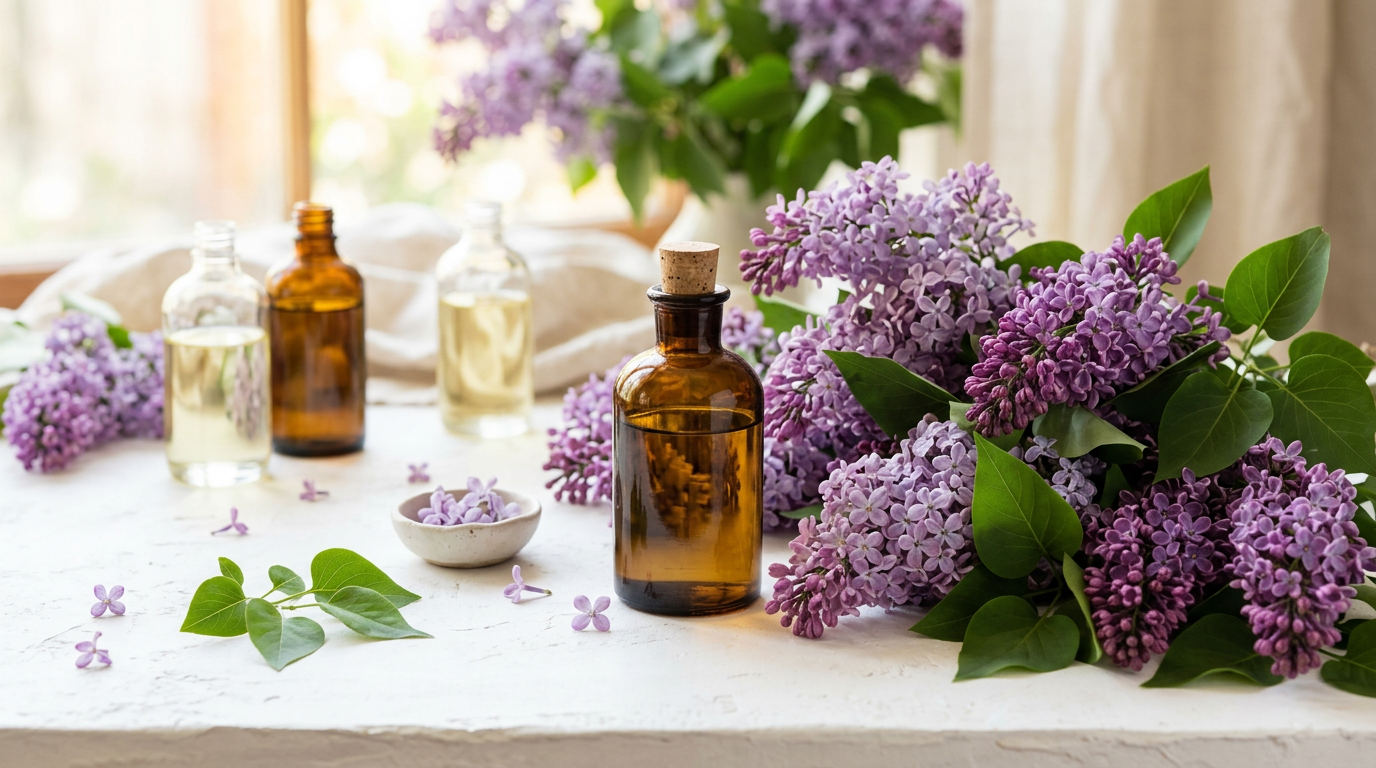
Walk past a lilac in full bloom and you meet a scent that no one has managed to bottle by simply pressing the flowers: soft, powdery, a little green, sweet in waves. Lilac keeps its fragrance to itself. That is why the oil you can buy is composed rather than squeezed, and why we think the composing is worth explaining.
Why lilac has to be composed
Perfumers call lilac one of the "mute" flowers. A retailer's guide to the lilac note puts it plainly: the clusters do not release enough essence to be distilled cost-effectively. So there is no true lilac essential oil sitting in a warehouse waiting for a label. If you want lilac in a bottle, someone has to build it. We cover the history of that problem in our posts on why there is no true lilac essential oil and lilac in perfumery.
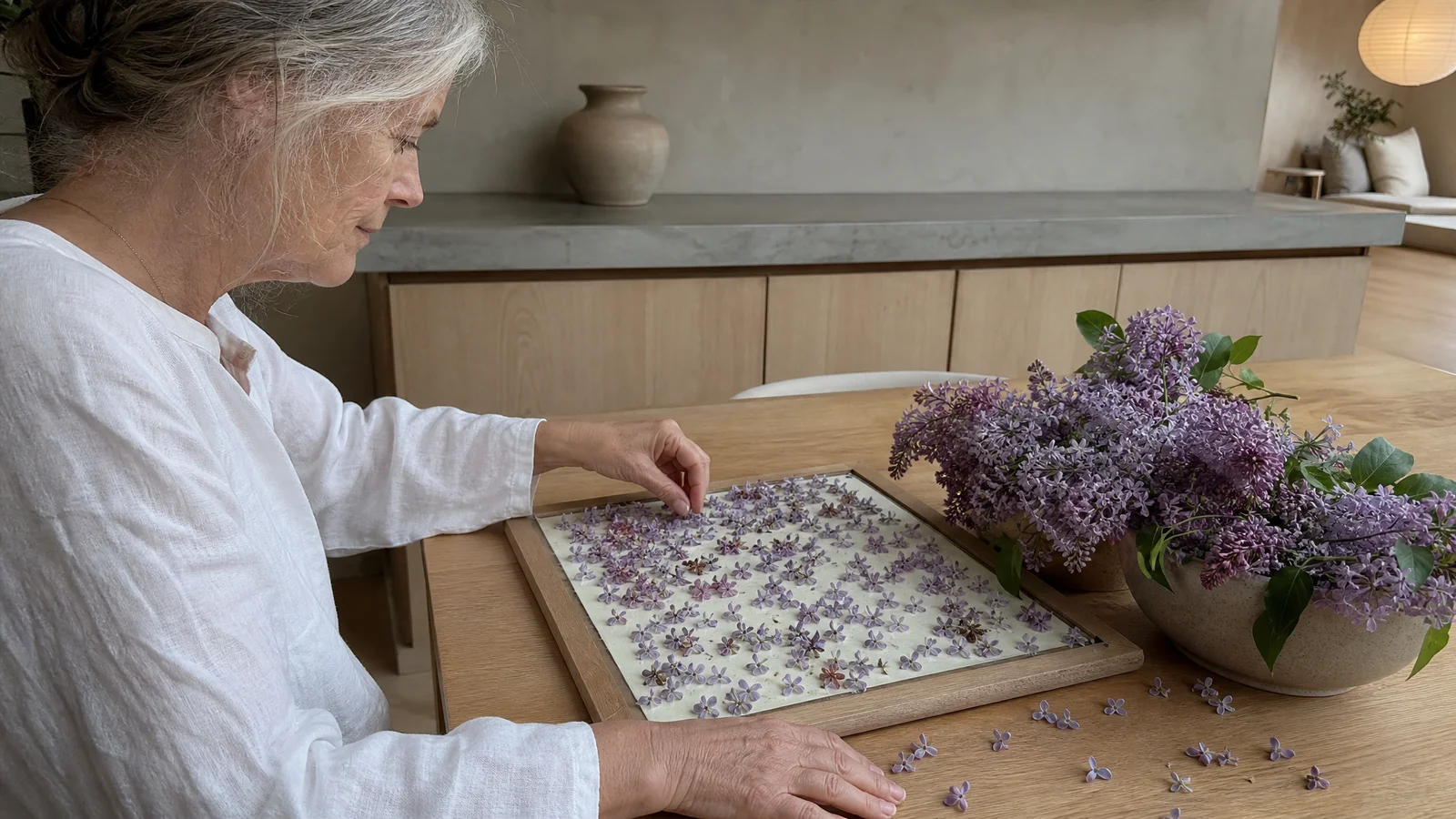
The flower does tell us what matters most. Chemists describe the lilac aldehydes as the principal olfactory molecules of lilac flowers, first isolated in 1974 from an oil of lilac flowers (Syringa vulgaris). One family of molecules carries the heart of the scent, and the rest of the smell, the green stem, the faint sweetness, the warmth underneath, gives it its life.
What an accord really is
In perfumery an accord is a set of materials balanced so the whole reads as one recognizable smell. It sounds like marketing language, but it describes something real. In a 2012 study, researchers separated the volatiles of flowering lavender, recombined chosen groups of them, and had a sensory panel judge the results. They found additive, masking and synergistic effects, and concluded that the "lavender" character was an emergent property of particular mixtures rather than the work of any single molecule.
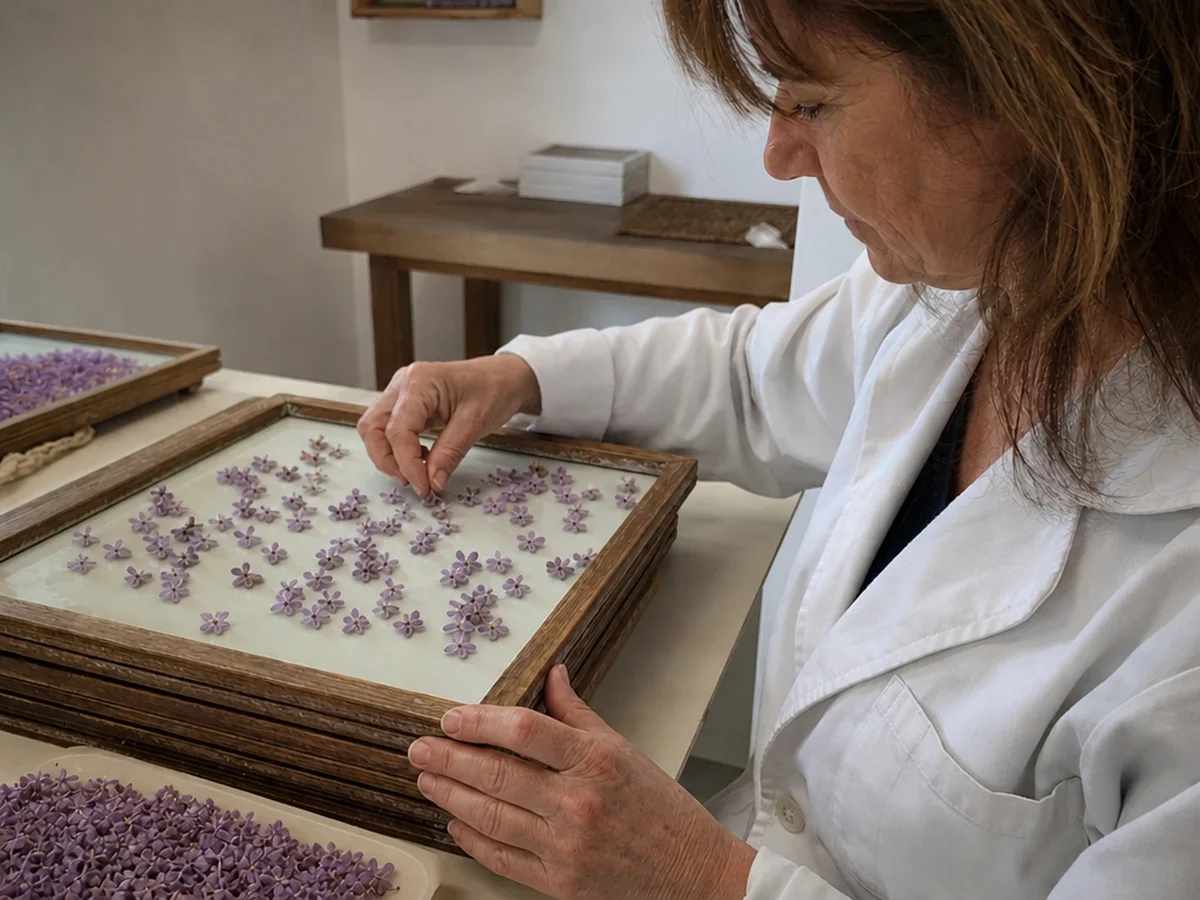
That was lavender, not lilac, but the lesson travels. A smell you call by one name comes from how its parts sit together. You cannot build a convincing lilac by turning up the loudest note. You have to listen to the balance.
How we build ours
Our Lilac Blossom Oil is a composition of botanical extracts and infused aromatics, made to be faithful to the common lilac in bloom. We choose the materials to match blooming lilac and layer them in careful proportion until the blend reads as soft, powdery lilac rather than a single note. Then we adjust, so the green stem, the almond sweetness and the clean musky base stay in springlike balance from batch to batch. It is a heart note, the middle of a scent, which is where lilac lives in perfume too.
We keep the formula to ourselves, and we are happy to be plain about what the oil is. It is not a distillate, it is not an absolute, and we do not claim a single-species origin. It is a composed lilac, and we think of that as a craft in its own right, in the same way a perfumer thinks of a good floral accord.
What is in your hand when the bottle arrives
We sell it neat, in amber glass at every size, with a lot number on the bottle. If you ever write to us about a bottle, that number is the thing to quote. The Certificate of Analysis for one batch lists appearance, smell, a relative density of 0.973, a refractive index of 1.501 and an optical rotation of -0.72 degrees. Those are physical measurements of the liquid. They describe how it behaves, not what went into it, so if you are making a product and need specifics for a formula or a label, write to us through the contact page before you order and tell us what you need.
For skin, our guidance is to dilute to 0.5% to 2% in a carrier oil, patch test a small area first, and start at the low end. Keep it away from eyes, children and pets. It is for external aromatic and cosmetic use only. Our dilution chart does the arithmetic for you.
Why we like a composed oil
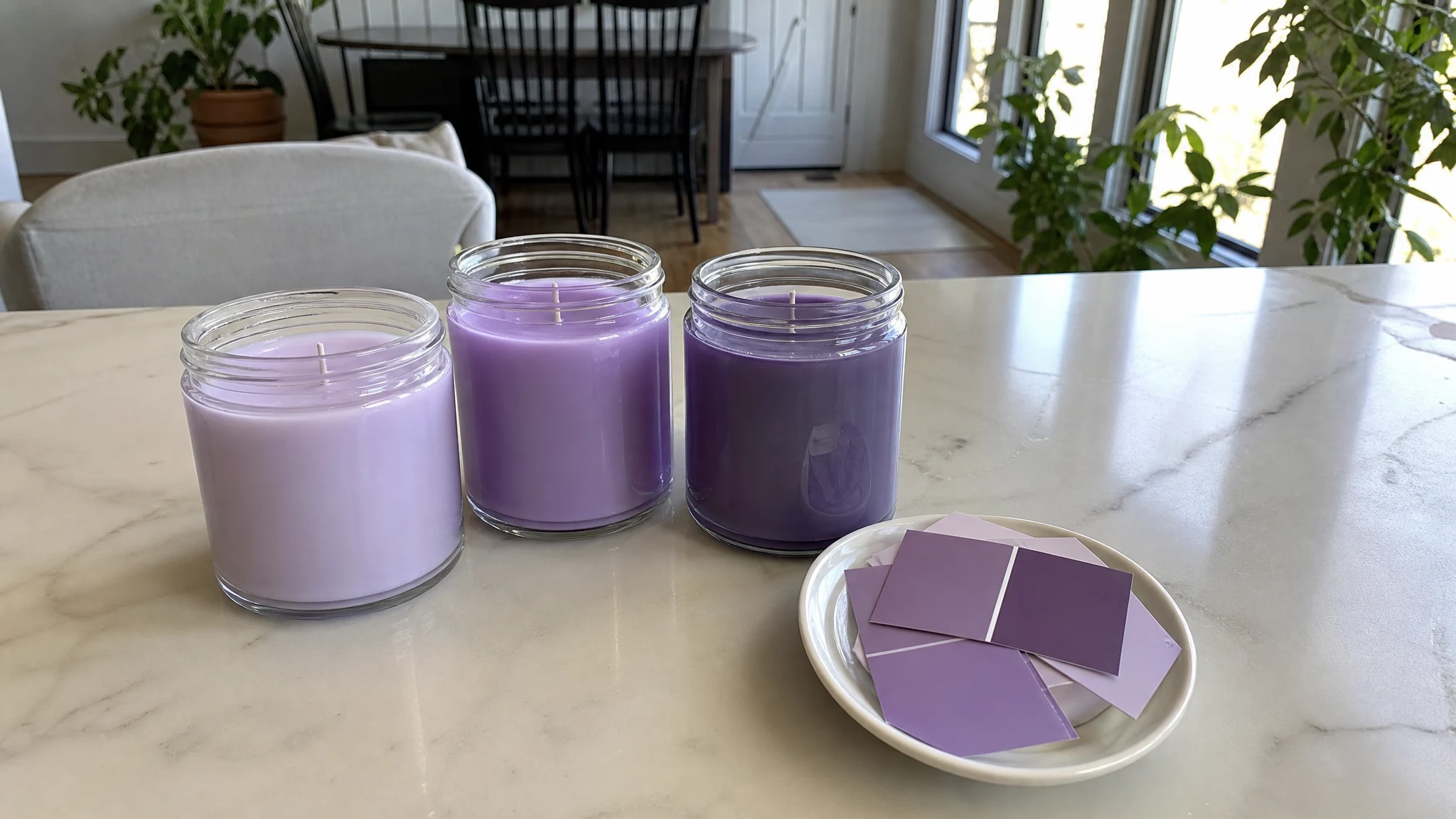
We will happily admit a bias here. A composed lilac has a quiet advantage that a cut flower never will: it is available in January. We also like that the aim from batch to batch is the same soft, powdery, springlike balance, so the bottle you open next year is meant to smell like the bottle you opened this year. For people who make things, whether candles, soaps or a bottle of body oil for a friend, that steadiness is a comfort. You plan a project around a scent you know.
A composed oil is also honest about being a craft. We would rather say plainly that someone put it together with care than hint at a flower crushed in a jar, because lilac does not work that way and the truth is more interesting.
A good way to get to know it
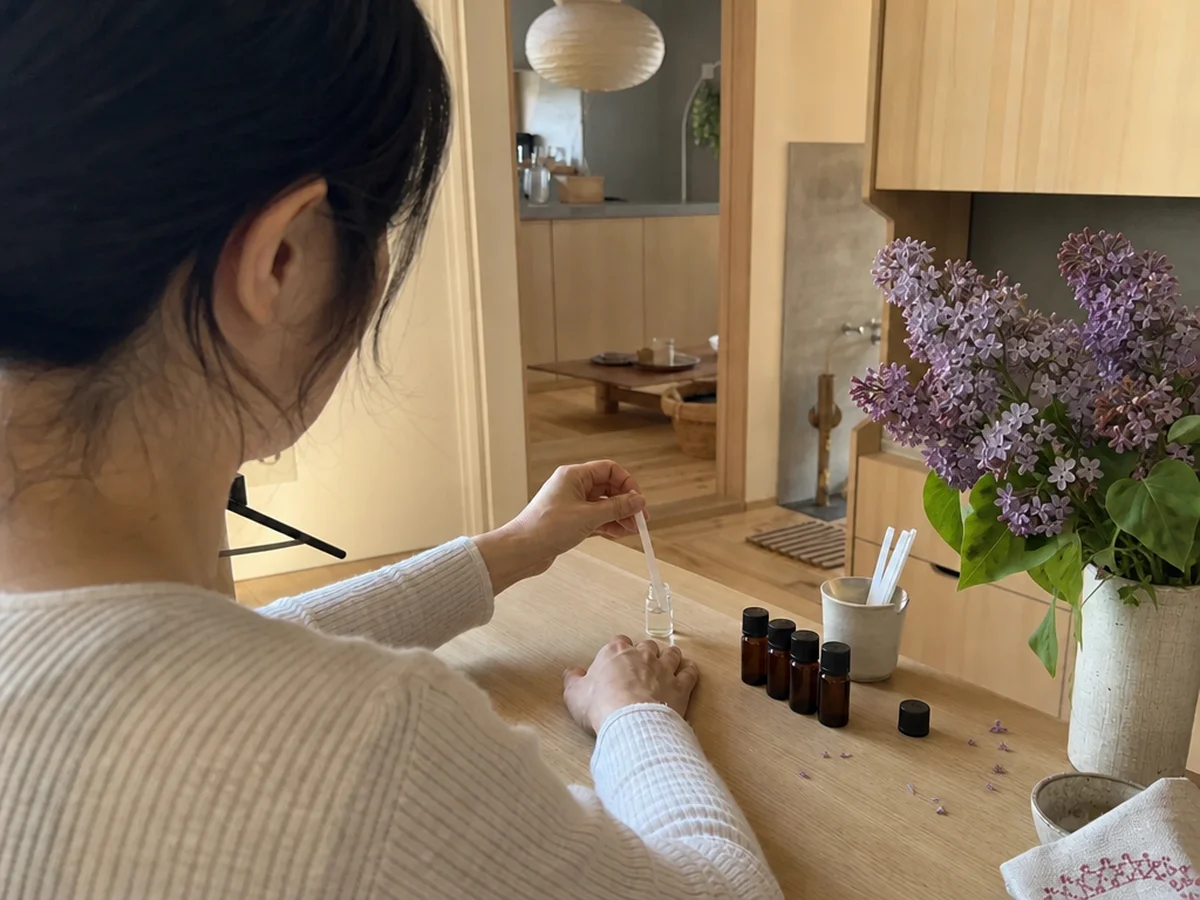
If you have a lilac nearby in May, here is a lovely small exercise. Smell a fresh cluster outdoors, then come inside and smell a paper strip with a drop of the oil. Notice what the two have in common and what is different. The flower has air and sunshine and a whole shrub behind it, so of course it will not smell exactly the same. Try it again a few days later, and you will find your nose becoming more fluent in describing lilac, which makes every project that follows easier to judge.
Smelling it the way the flower smells
A good lilac does not announce itself with one note. Put a drop on a paper strip and come back to it. The green, fresh purple-floral opening comes first, then the powdery heart, then a hint of almond sweetness, and finally the soft musk that stays. If you want to go deeper on how to describe what you are smelling, our scent profile is a good place to start.
Lilac blooms for a week or two a year, and a composed oil lets that smell visit in any month. We love that about it.
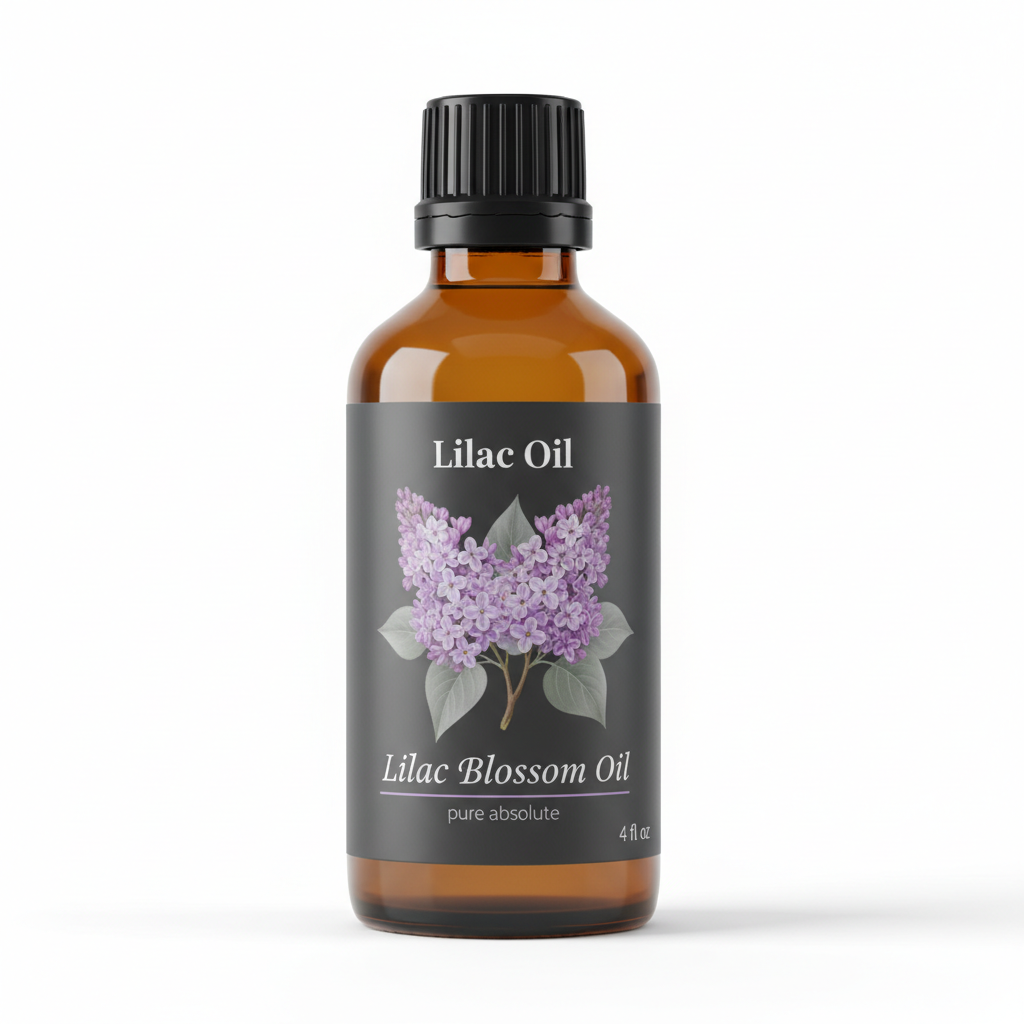
Lilac Blossom Oil
Lilac Blossom Oil from our own shop, in sizes from 0.5 oz to bulk.
From $15.99
Shop Now →Sources & Further Reading
- Tendance Parfums, Lilac perfume: guide and best picks
- Dacho V., Szolcsanyi P., 2021, Synthesis and Olfactory Properties of Seco-Analogues of Lilac Aldehydes, Molecules
- Johnson A.J., Hirson G.D., Ebeler S.E., 2012, Perceptual characterization and analysis of aroma mixtures using gas chromatography recomposition-olfactometry, PLoS One