Make Lilac Scent Last: Why More Oil Is Not the Fix
It is a familiar disappointment: you dab on a lilac scent in the morning, and by lunch it has quietly slipped away. The tempting answer is to add more oil. It is also the least effective answer, because how long a scent lasts depends far more on what surrounds the oil than on how much of it there is.
Why a heart note fades
We describe our oil as a heart (middle) note. Notes are a perfumer's shorthand for how quickly materials leave the skin, with lighter, more volatile material going first. Perfume chemist J. Stephan Jellinek put the underlying point neatly in a 1960 talk: "Perception of a perfume is possible only after some evaporation has taken place." A scent you can smell is a scent that is leaving. Wear time is simply how long it takes the part you can smell to drop below what your nose can detect.
The arithmetic of "more oil"
Here is a simple model, not a measurement. It assumes the scent leaves skin at a steady proportional rate, which real fragrance does not do exactly. Let the detectable amount halve every half-life. Start at 8 times your detection threshold and you reach it after 3 half-lives. Double the oil, and you start at 16 times: 4 half-lives. That is one extra half-life, a third longer, for twice the oil and twice the skin dose.
Now change the base so scent leaves half as fast, which is what a heavier, slower-evaporating base is meant to do. The same 3 half-lives become 6: twice as long, with the same amount of oil.
| Change | Effect in the model (starting at 8 times threshold) |
|---|---|
| Baseline | 3 half-lives |
| Double the oil | 4 half-lives, one third longer |
| Halve the loss rate (slower base) | 6 old half-lives, twice as long |
| Both | 8 old half-lives |
So the lever is the base. Our own guidance for skin is 0.5% to 2% in a carrier oil, and the model says that is the right place to spend your effort on a slower carrier, not on pushing past it.
What really helps
"Fixative" is a loosely used word. Jellinek defined a true fixative as a material that makes the others evaporate more slowly, and cautioned that something that behaves as a fixative on a paper blotter is not necessarily one on skin, in a cream or in a spray, because evaporation works differently in each. So it is wise to be a little skeptical of online lists.
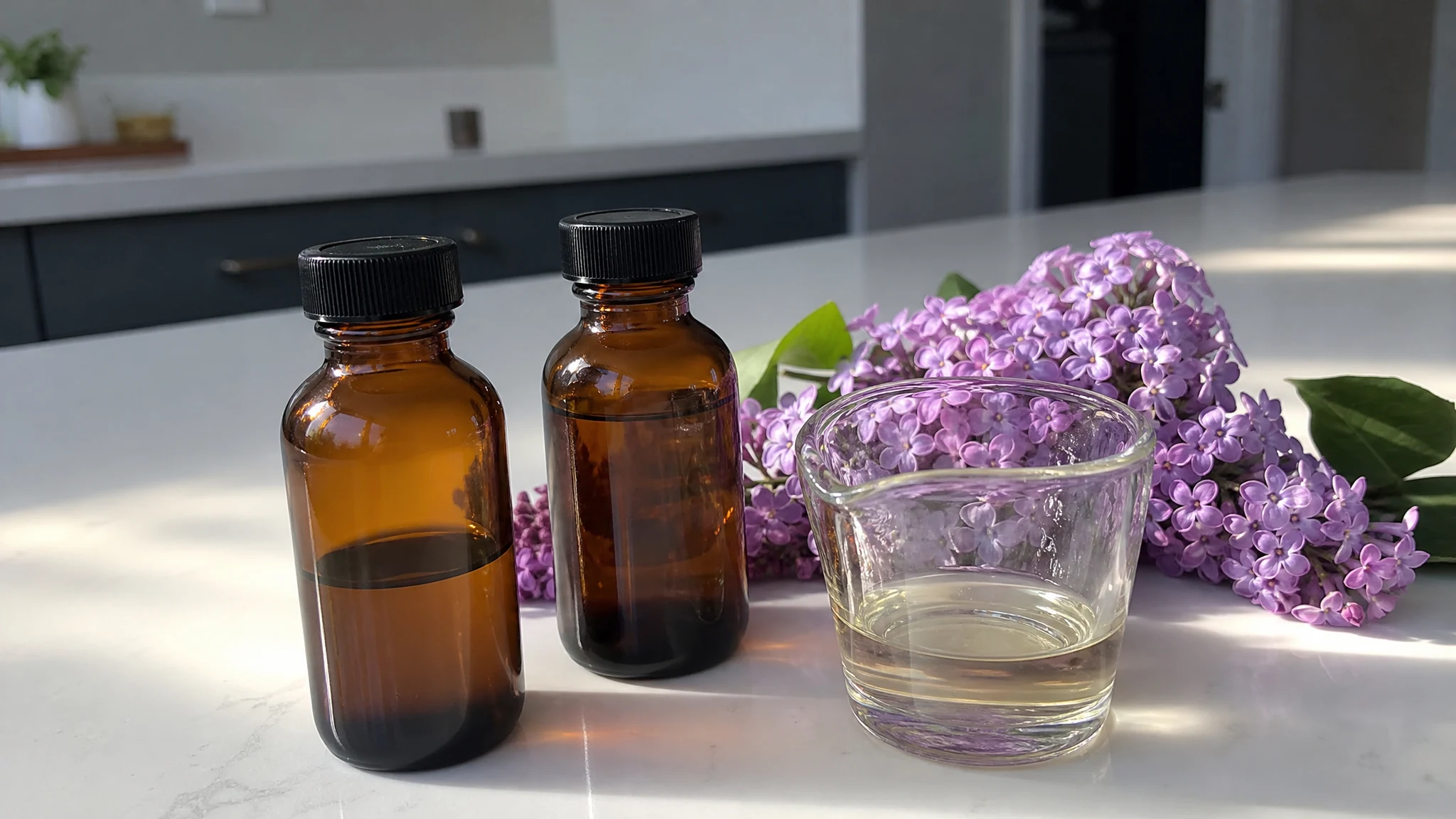
What the reasoning supports is simple. Dilute the oil in a carrier oil or balm, which holds the scent in a heavier medium. Our solid perfume and rollerball formulations are built that way. You can also blend lilac with a slower-evaporating partner; our partners post covers that, and since we sell only the lilac oil, any partner comes from another supplier and brings its own safety information. Expect a slower base to flatten the fresh top of the scent a little, which is the trade you make for staying power.
You may have read that moisturized skin holds scent longer. It sounds plausible, and an unscented lotion under the scent works as a slower base, so it is a cheap thing to try. We just have not found controlled measurements behind it, so treat it as an idea to test, patch testing the combination first.
Your nose is part of the instrument
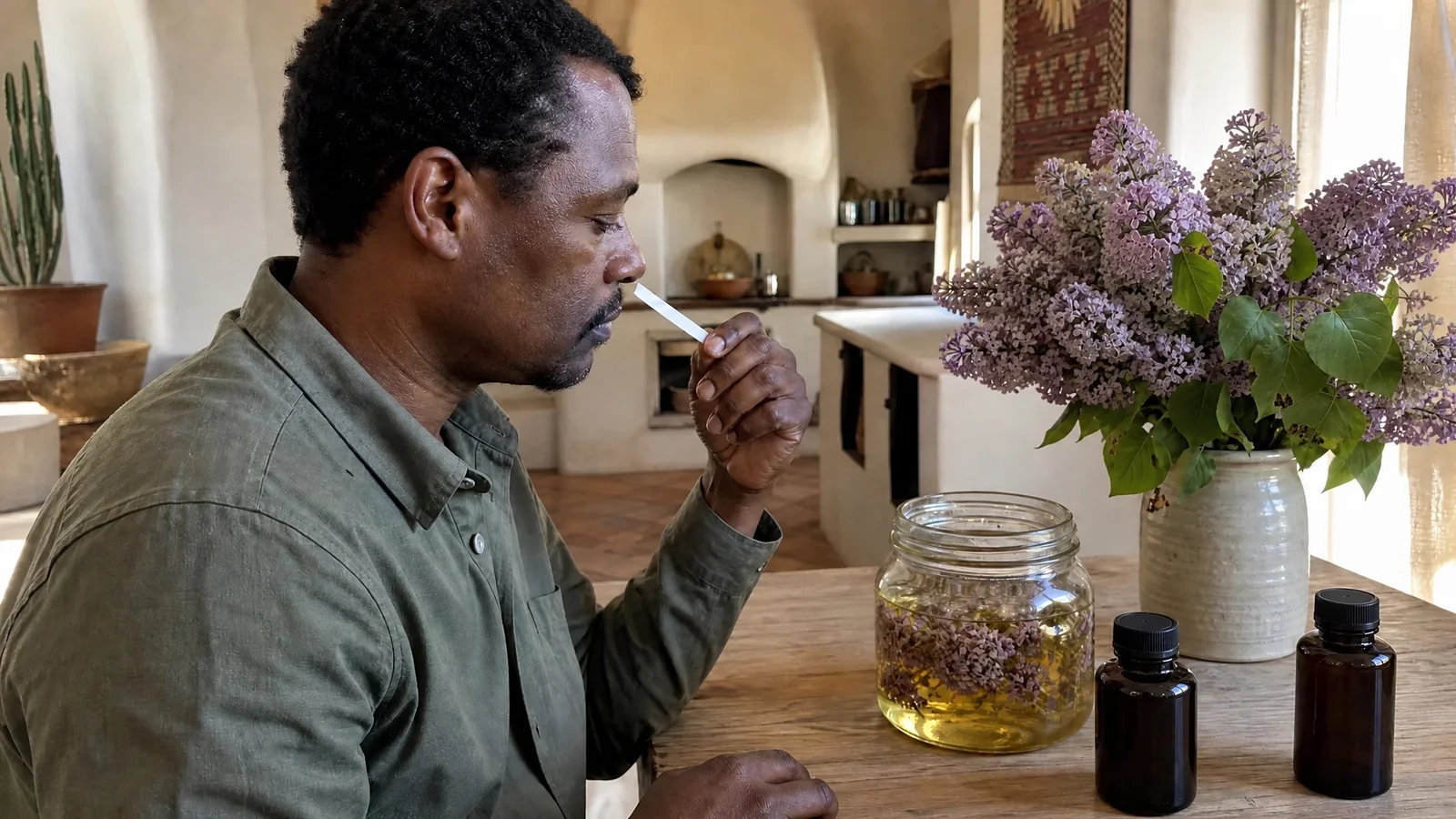
Part of "it doesn't last" is that you stop smelling it. A 2017 review of how humans habituate and adapt to odors reports that the drop in perceived intensity with repeated exposure is relatively fast. So ask someone else whether they can still smell it before you reapply. More oil on a dulled nose means more on your skin for no gain.
Where you put it matters
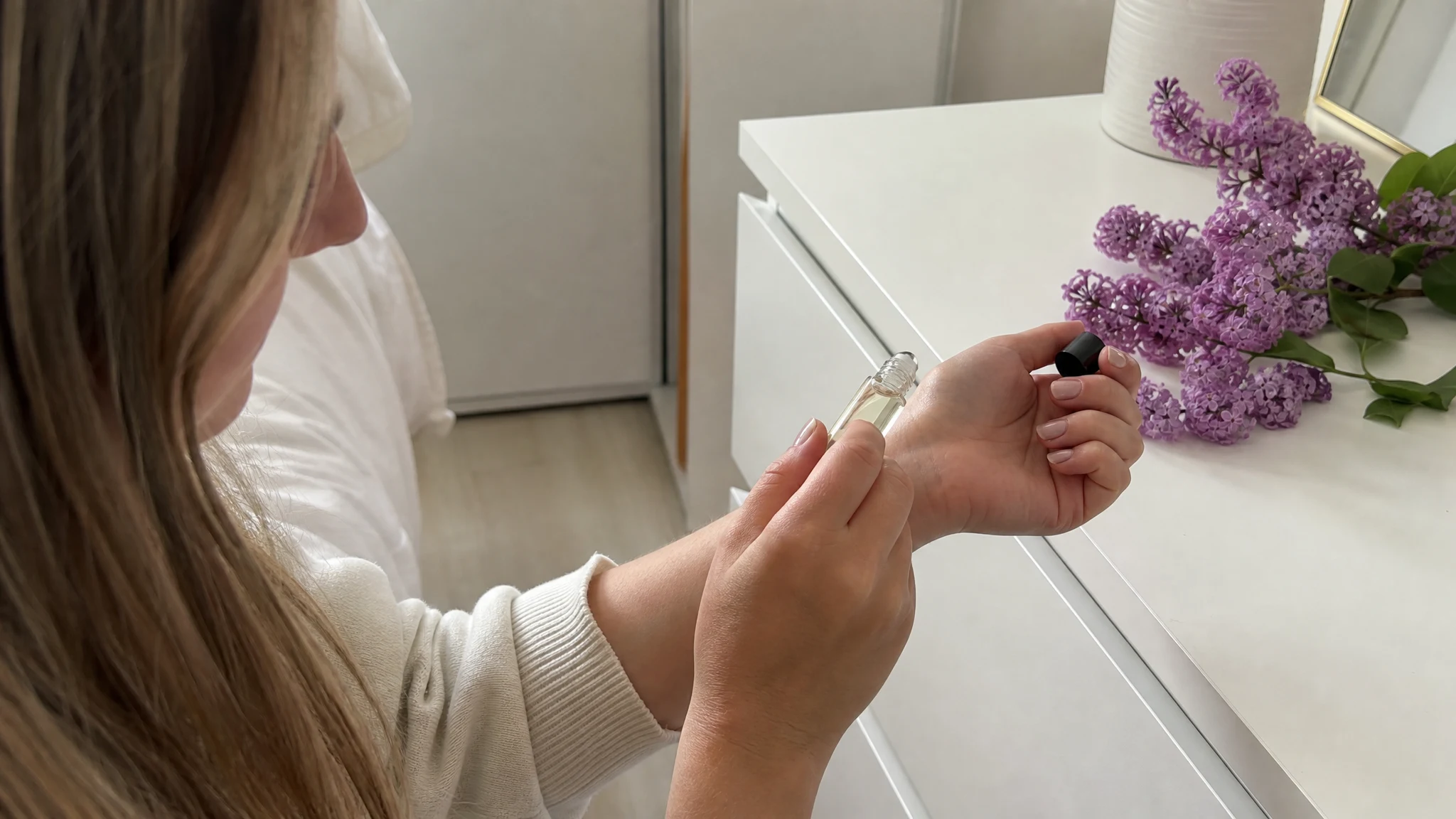
Pulse points are the classic places to wear a scent because they are warm, but warmth cuts both ways: warm skin may release a scent more quickly and so make it fade sooner. Cooler spots such as the back of the neck or the inner elbow may hold a softer, steadier presence. We would not call that a rule, just a thing to try on different days, one spot at a time, with the same amount of scent, so you can compare fairly.
Check the bottle before blaming the skin
If a lilac that once smelled right now seems weaker, the oil itself may have been through a warm summer. Heat and sun speed up drift in a composed floral scent. Smell your working bottle next to one from the sealed stock before changing a recipe. We cover the full routine in how to store lilac oil.
A simple routine
- Dilute in a carrier or balm at 0.5% to 1%, patch test first, and stay within 2%.
- Apply to clean skin once, then leave it.
- Ask a second person, not your own nose, whether it has faded.
- For longer wear, change the base, not the oil share, and expect a softer top.
Anyone with eczema, a known fragrance allergy or reactive skin should ask a dermatologist before wearing any new scent on skin. Keep it away from eyes, children and pets.
Layering without piling on
If you love lilac enough to want it all day, think in layers instead of amounts. Wear the same lilac in more than one form: a little in the morning, then a second small application at midday. A sachet tucked in a coat or bag is another way to carry a hint without adding anything to your skin. The idea is to refresh gently, not to build a cloud, and a soft lilac stays pleasant when it is applied in small sips.
Lilac is a fleeting flower, and part of its charm is that it is soft and fleeting on skin too. Give it a good base and it will stay with you a little longer.
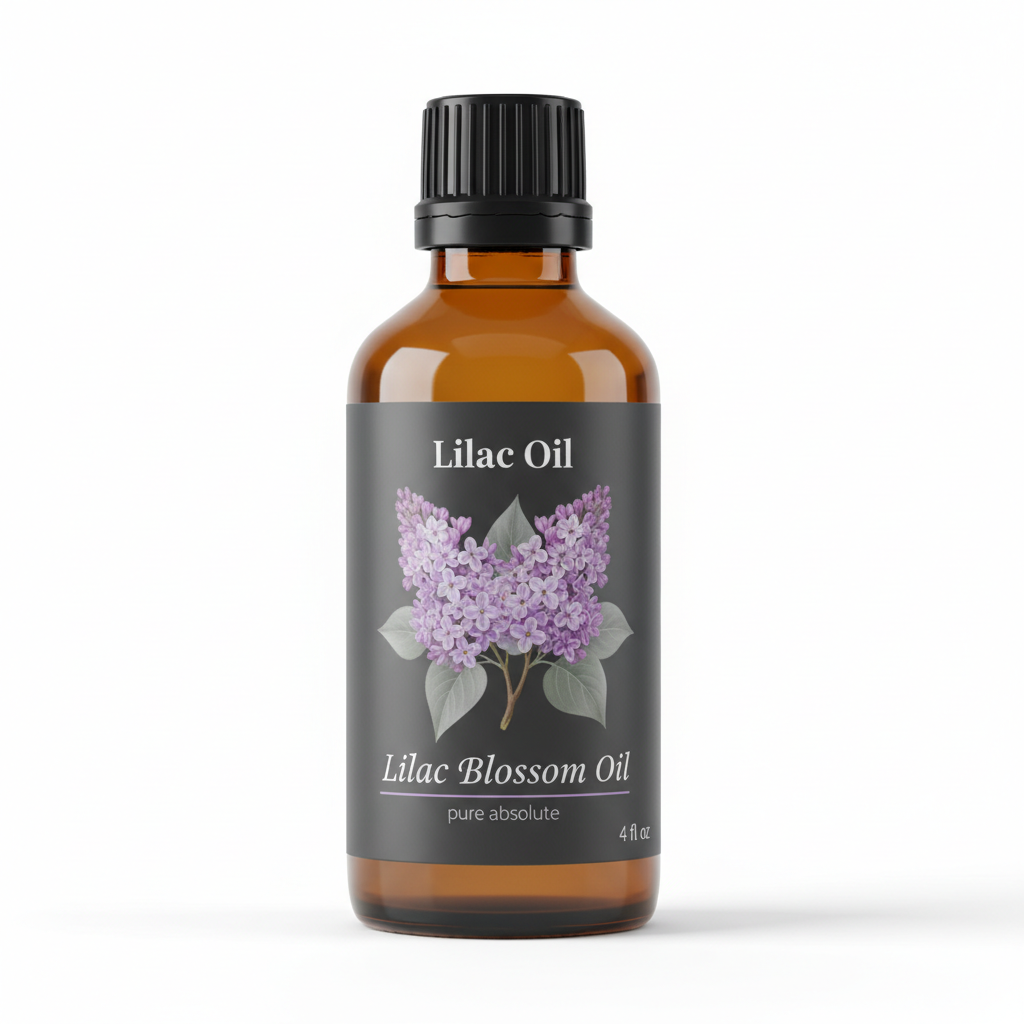
Lilac Blossom Oil
Lilac Blossom Oil from our own shop, in sizes from 0.5 oz to bulk.
From $15.99
Shop Now →Sources & Further Reading
- Jellinek J.S., 1960, Evaporation and the Odor Quality of Perfumes, Journal of Cosmetic Science
- Pellegrino R. et al., 2017, Habituation and adaptation to odors in humans, Physiology & Behavior