What Blends With Lilac Oil? Partners by Job
Lilac is a heart note, and a heart note is a good listener. It sits in the middle of a scent, holding the floral bouquet together, and what you put around it decides whether the result smells fresh, sweet, green or long-lasting. So the best question about blending is not what goes with lilac. It is what job is missing from the scent you have.
Our pairings
We suggest rose, violet leaf, bergamot, sweet orange, jasmine and ylang ylang with our Lilac Blossom Oil, and for makers working at scale, rose, violet leaf, bergamot, sweet pea, lily of the valley and neroli. That makes nine partners in all, offered as starting points and not as fixed ratios. We sell only the lilac oil, so every partner comes from a perfumery or craft supplier.
An outside view agrees with the spirit of the list. A perfume guide from Tendance Parfums says lilac most often sits in the heart of a composition, where it structures the floral bouquet, and that it is commonly blended with muguet, jasmine, heliotrope and rose, along with green notes, peach and soft bases such as musk, amber and tender woods (Lilac perfume: guide and best picks).
Sort the partners by what they do
This is our own grouping, built from our list and that guide, and meant as a way of thinking and not a rule.
| The job | Partners that could do it |
|---|---|
| Freshen the opening | Bergamot, sweet orange, neroli |
| Add a green, leafy edge | Violet leaf |
| Widen the floral heart | Rose, jasmine, ylang ylang, sweet pea, lily of the valley |
| Give it staying power | A musky, amber or woody base |
That last row deserves attention. Lilac is a relatively volatile heart note, and the same guide says its longevity depends mainly on the base of the composition. Our own aroma already includes a clean musky base, but if you want a scent to last for hours, the pairing may come from outside our list, and a perfumery supplier is the right place to ask. If a blend keeps fading, adding more lilac is rarely the answer, as we explain in making lilac scent last longer.
Thinking in a scent pyramid
Perfumers talk about top, heart and base notes, and it is a handy picture even for a small home blend. Lilac sits in the heart. Citrus like bergamot and sweet orange tend to open a scent and are noticed first, then step back. Rose, jasmine and ylang ylang sit beside lilac in the heart, and a musky or woody base sits underneath. When you plan a blend, ask whether each partner is meant to be noticed first, in the middle or last. A blend with three jobs covered and nothing doubled up usually feels easier to wear than one where everything competes.
A note on citrus partners
Bergamot and sweet orange are lovely lifts, and they come with a rule worth knowing. A 2026 review in Chemistry & Biodiversity names furocoumarin-related photosensitivity as a critical safety concern for citrus oils, attributes it mainly to bergapten, and says furocoumarins are retained almost exclusively in cold-pressed citrus peel oils and largely absent from steam-distilled ones. It adds that IFRA standards restrict the maximum use of certain citrus oils, particularly cold-pressed ones (Citrus Essential Oils: A Review of Chemical Composition, Bioactivity, Safe Use, and Potential Applications). In practice, the supplier's label or data sheet tells you which type you have, and the limits apply to your finished product, so a leave-on blend deserves a look at that paper first.
What every partner brings with it
A blend carries the care points of everything in it. For skin, we recommend diluting our lilac to 0.5% to 2% in a carrier oil, patch testing first and starting low, and each partner you add has its own guidance on top. If a blend is meant for sale, it is a new mixture and needs its own assessment. We publish no IFRA statement or allergen declaration for our oil, so ask us in writing through the contact page about what we can provide, and keep the reply with your records.
A few pairings to picture
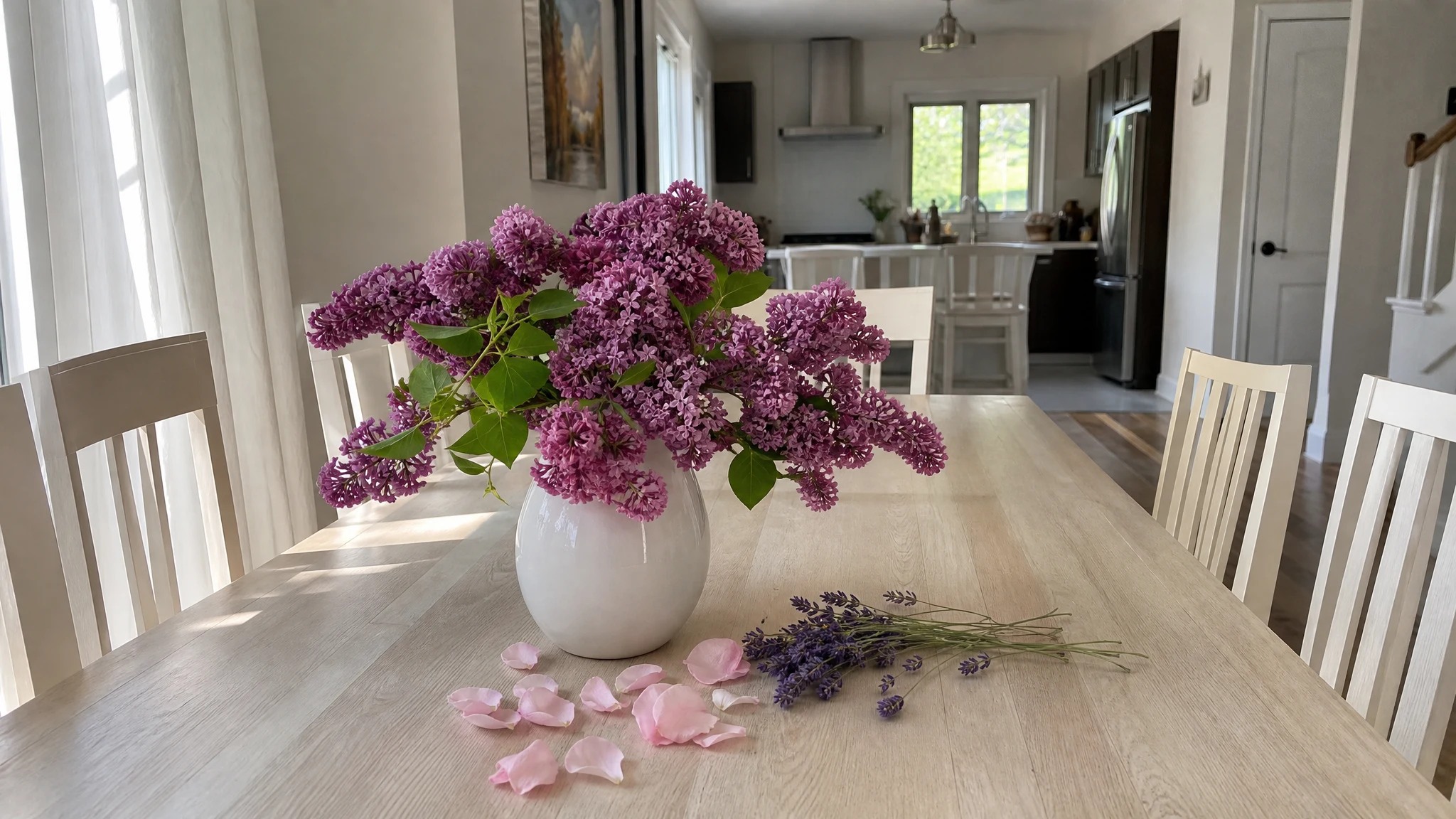
Here are some ways to imagine pairings before you mix anything. Lilac and violet leaf is a green, dewy garden path. Lilac with rose feels like a bouquet on a table. Lilac with a little bergamot is a bright window on a spring morning. Lilac with jasmine is a warm evening with the doors open. These are pictures, not recipes, and a first test should be mostly lilac with a whisper of one partner. If you cannot pick out the lilac anymore, you have gone too far, and the fix is to start again with less of the partner.
Trying a pairing without wasting oil
Choose one partner and test small. Our post on testing a lilac blend on paper gives a ladder of ratios in grams and explains why your nose tires. For a candle, the weak throw post explains why a second oil is seldom the fix, and for a home diffuser, read our diffuser post before mixing. Our dilution chart converts percentages to drops.
Skip blending for products meant for babies, children, or pet spaces, and ask a clinician first if someone is pregnant or nursing. We say to keep the oil away from children and pets.
The nicest blends we can imagine start small: one partner, one job, and a lilac that is still clearly lilac at the end of the hour. When you are ready to test one, our lilac oil is in the shop, larger sizes are on our bulk page, and our guide to buying lilac blossom oil in bulk covers what to check before buying more.
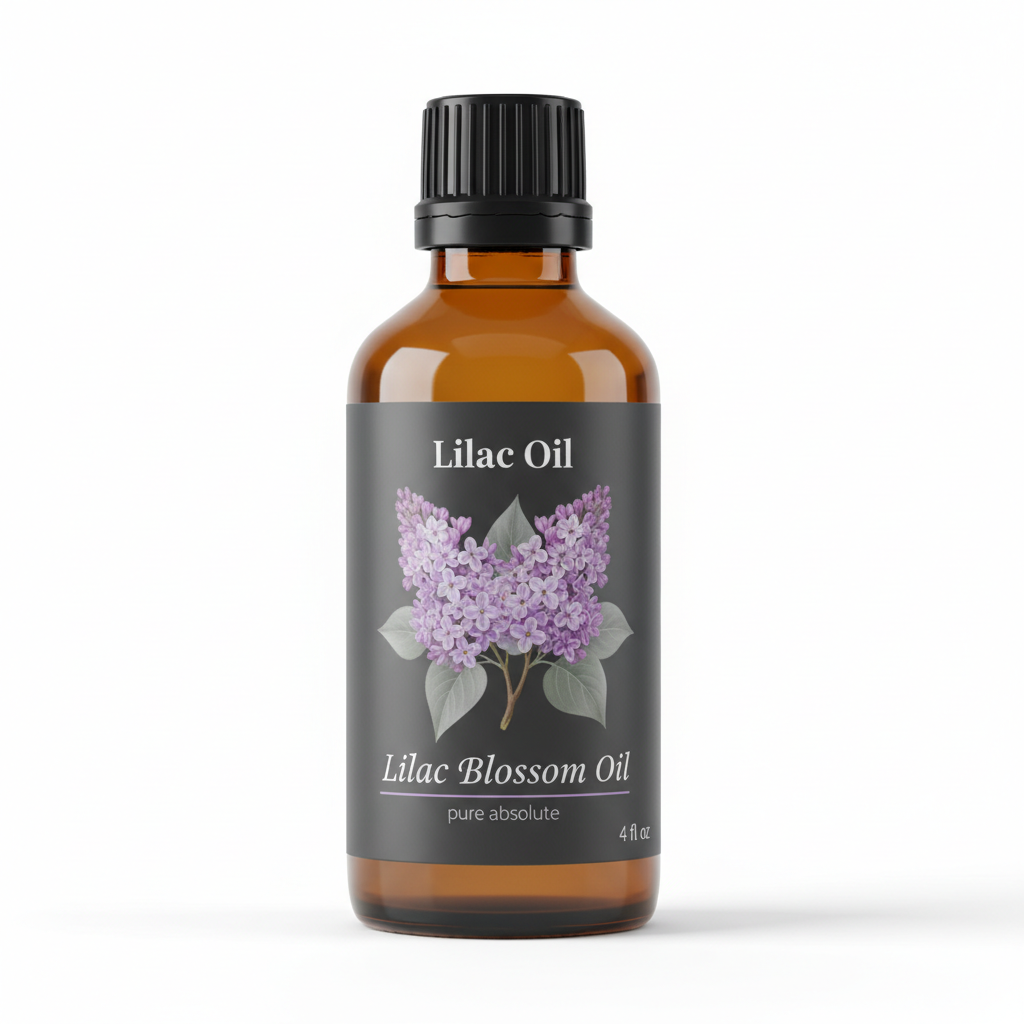
Lilac Blossom Oil
Lilac Blossom Oil from our own shop, in sizes from 0.5 oz to bulk.
From $15.99
Shop Now →Sources & Further Reading
- Lilac perfume: guide and best picks, Tendance Parfums. tendance-parfums.com
- Zhang Y, et al. Citrus Essential Oils: A Review of Chemical Composition, Bioactivity, Safe Use, and Potential Applications. Chemistry & Biodiversity, 2026. PMC13376701