Lilac Oil in a Diffuser: How Much, How Long, Fresh Air
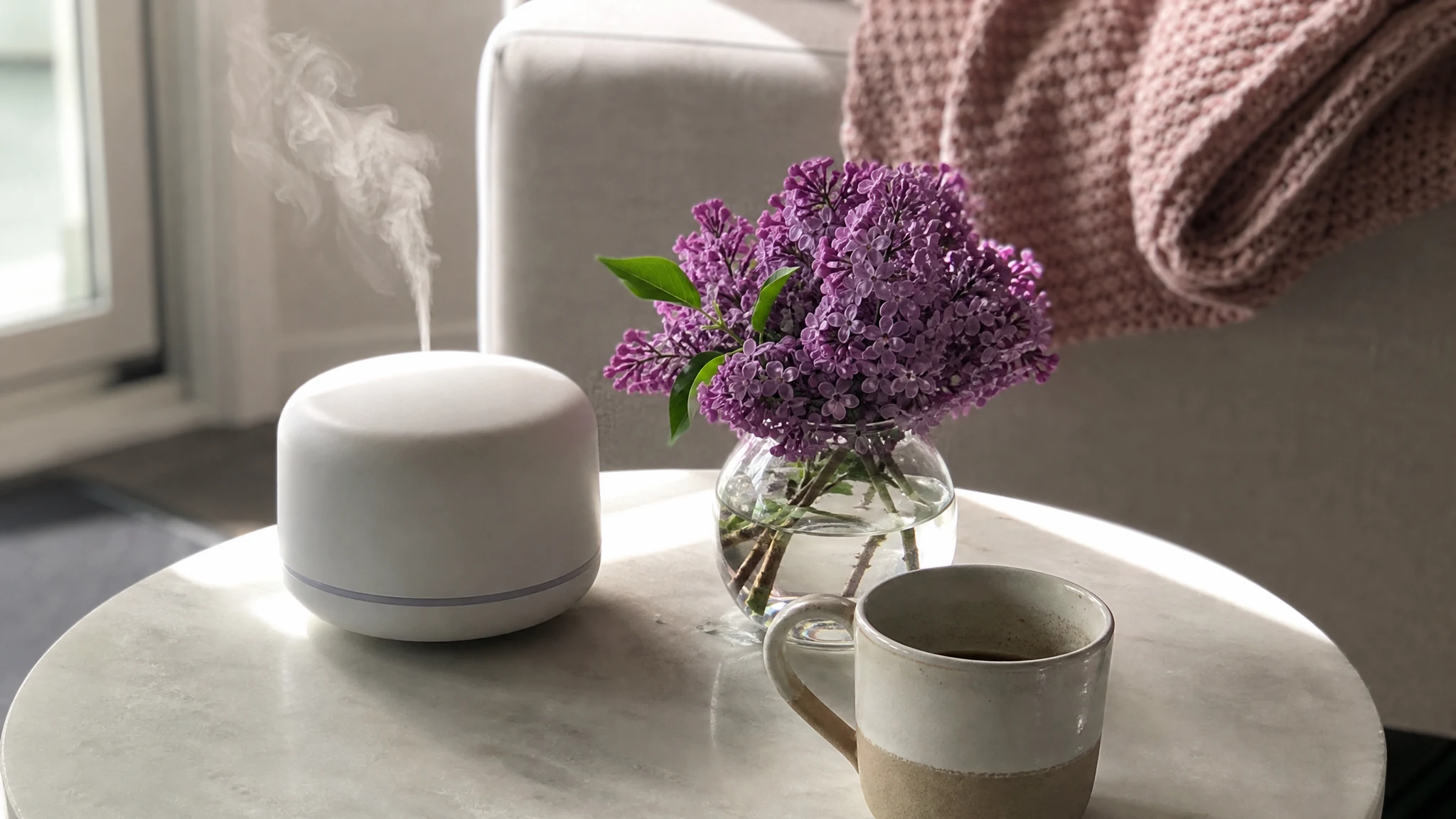
A diffuser is the easiest way to let a soft floral drift through a room, and lilac suits it: our aroma is soft, powdery and springlike, with fresh purple florals and a clean musky base. The part that deserves a little thought is the drop count. It depends on your device and its tank, so rather than a list of recipes, here is how to choose a number sensibly and keep the air in your room pleasant.
Your device manual sets the number
We mention diffuser use for Lilac Blossom Oil on our home page, and our guidance for the oil is to keep it away from children and pets and never to take it internally. Beyond that, the manual for your diffuser is the document that tells you how much oil its tank is built for. Start at the low end of the range it gives, and let the room tell you if you want more. A composed floral is rarely improved by turning it up; it is usually improved by a smaller amount and good air.
What researchers have measured about diffusers
A few careful studies have looked at what a running diffuser puts into a room. They used single oils, not lilac, so none of their numbers describe ours, but they teach a useful habit.
- In a chamber test of an ultrasonic diffuser with lemon, lavender, eucalyptus and grapeseed oils, each oil produced its own mix of volatile compounds and fine particles, and swapping deionized water for tap water raised fine particle emission fivefold for eucalyptus (Volatile organic compound and particulate matter emissions from an ultrasonic essential oil diffuser).
- In an experiment with 59 university students in a simulated office, exposure to lemon oil from a diffuser was linked with faster reaction times but worse response inhibition and memory sensitivity, and an unscented grapeseed oil showed similar effects (The impact of emissions from an essential oil diffuser on cognitive performance).
- A household simulation with tea tree oil found that volatile compounds ran well above background, with an ultrasonic diffuser staying under the applicable limits for the terpenes measured and a heat diffuser pushing several above long-term no-effect levels (Volatile organic compound and particle emissions from the use of tea tree oil in essential oil diffusers).
We read the abstracts, and our reading is modest. Results differ by oil, water and device, so it makes sense to treat a diffuser as a source of material in the air and to follow the manual's water instructions. The student study is one small experiment, but it is a fair reason to keep diffusers out of a workroom where concentration matters.
Time, air and who shares the room
Our suggestion, from that reasoning and not from any limit proven for our oil, is to run a diffuser for a while and then switch it off, with a window cracked or a door open for fresh air. If anyone in the room has asthma, or is sensitive to scent, ask their physician before you start. If you notice a headache, cough, wheeze or itchy eyes, stop, open a window and call a physician if it continues.
Pets deserve their own thought, particularly cats in a small room they cannot leave. We say to keep the oil away from pets, and our post on lilac oil around dogs and cats gathers what authorities say. Your veterinarian is the right person to ask.
Drops, bottles and arithmetic
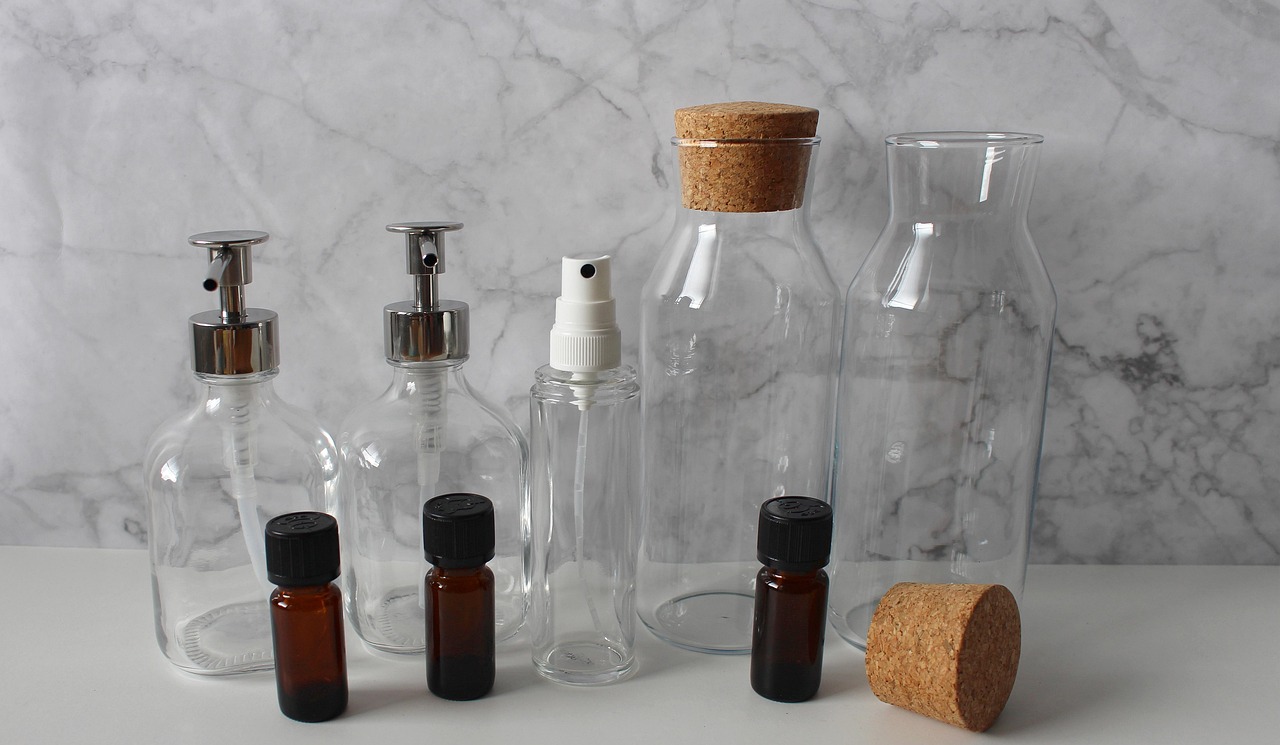
Droppers differ, so treat drops as a rough unit. On the batch on our published certificate of analysis, the relative density is 0.973, and at the common convention of about 20 drops per ml, one drop is roughly 0.05 ml or 0.049 g. A 0.5 oz bottle is about 14.8 ml, or roughly 296 drops. If your manual allowed five drops a session, such a bottle would cover about 59 sessions on paper, though that is a ceiling and not a prediction, since we say floral oils typically keep one to two years tightly capped in a cool, dark place.
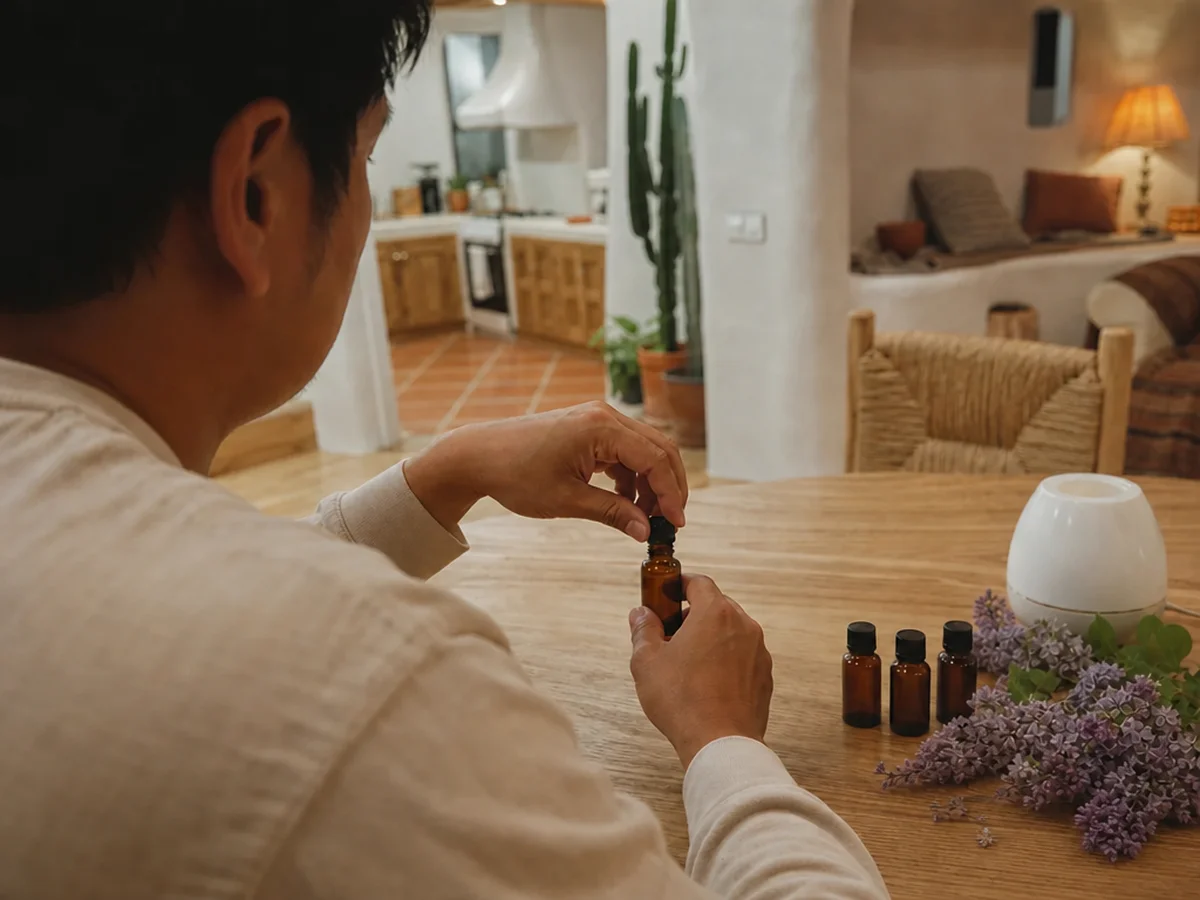
Blending in a second oil brings its own limits, so before you do, read our paper-testing method and the partners post.
Judging the room by nose
After a short session, step out of the room for a few minutes, then walk back in. That first breath is the honest one, because your nose adjusts quickly and soon stops reporting what is there. If the lilac greets you softly, powdery and springlike with a hint of green, you are about right. If it hits you at the door, you used too much or ran it too long. Adjust next time rather than turning it off and on in a hurry.
A little housekeeping helps too. Empty and rinse the tank between sessions as your manual directs, and give it a wipe so that one scent does not sit on top of another.
Before you pour
- Read the manual and use the low end of its range.
- Use the water type it asks for.
- Run it in sessions, with some fresh air in the room.
- Keep the bottle and the device out of reach of children and pets.
If you would rather have a steady background scent without a device that emits particles, a reed diffuser or wax melt is another route. Our posts on the reed diffuser and wax melts cover them. We sell the lilac oil only, so the reeds, bases, waxes and devices come from a craft supply shop.
A little lilac goes a long way in a room, which is one of the nice things about it.

Lilac Blossom Oil
Lilac Blossom Oil from our own shop, in sizes from 0.5 oz to bulk.
From $15.99
Shop Now →Sources & Further Reading
- Schwartz-Narbonne H, Du B, Siegel JA. Volatile organic compound and particulate matter emissions from an ultrasonic essential oil diffuser. Indoor Air, 2021. Europe PMC, PMID 33905580
- Du B, et al. The impact of emissions from an essential oil diffuser on cognitive performance. Indoor Air, 2022. Europe PMC, PMID 34709668
- Zisook RE, et al. Volatile organic compound and particle emissions from the use of tea tree oil in essential oil diffusers. Journal of Occupational and Environmental Hygiene, 2025. Europe PMC, PMID 41004428