Is Lilac Oil Safe for Pets? What Owners Should Know
If you share your home with a dog or a cat, a bottle of scented oil deserves a second look. We think the most useful thing we can offer is a straight picture: what veterinary sources say about essential-oil products and animals, where that evidence stops, and the simple habits that keep pets out of trouble.
Where we stand on our own oil
We do not make a pet-safety claim for Lilac Blossom Oil, and our guidance is to keep it away from children and pets. It is a composition of botanical extracts and infused aromatics, and we do not publish a formula, so there is no ingredient list a veterinarian could check against known problem compounds. That is the honest reason we say "keep it out of reach" and leave it there.
Seeing your home the way a pet does
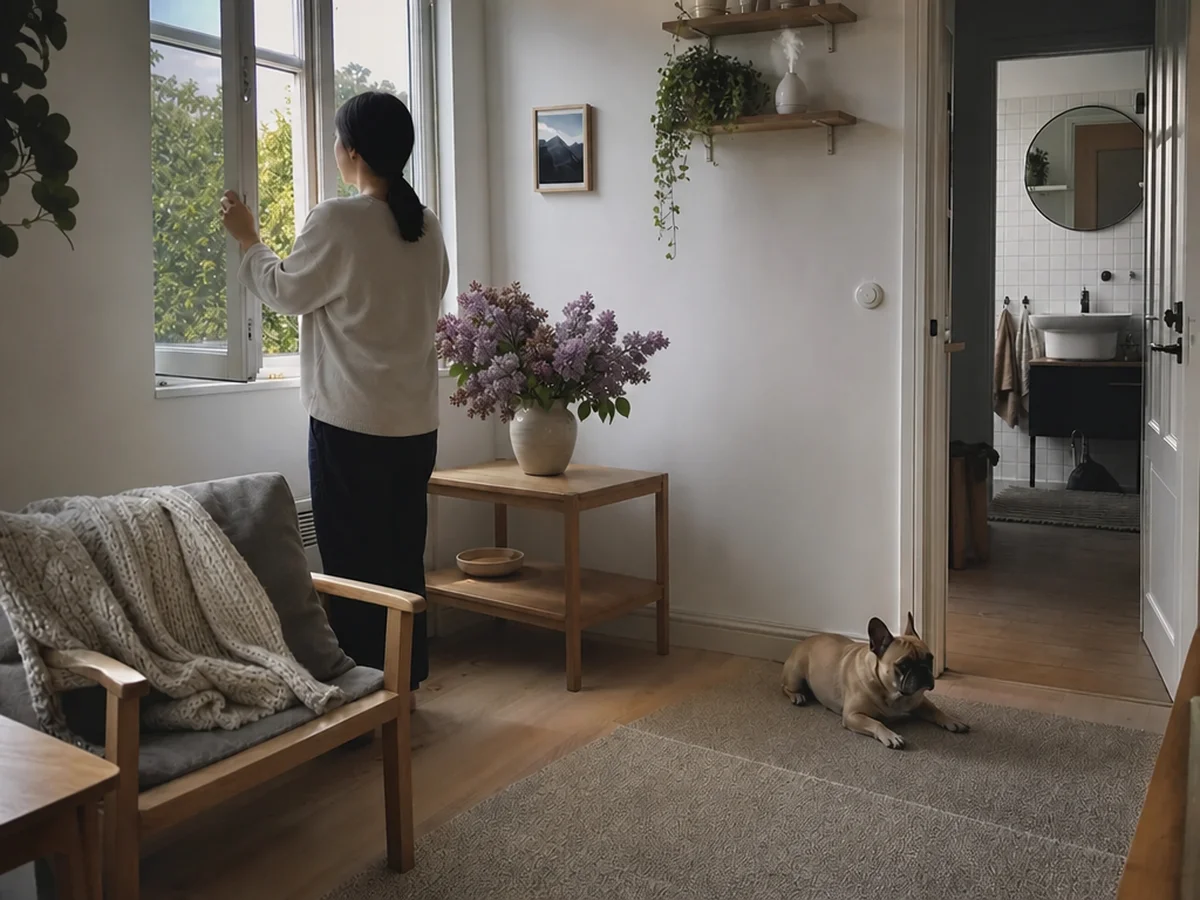
A useful habit is to walk through your house at animal height. Low shelves, open windowsills, the edge of the bath and the table where you set down your bag are all places a curious nose or paw can reach. Bottles that live at human eye level are often well within reach of a determined cat. Before you bring any scented product home, decide where it will live and make sure that place is truly out of reach.
Why cats get the extra caution
A 2026 review of essential oils used for flea and tick control in companion animals says toxicity "manifests more severely in cats than in dogs." The authors tie this to the cat's limited capacity for liver glucuronidation, which raises the risk of accumulation after exposure to phenol-rich oils. They also stress that dogs are not immune, and that "natural" does not mean safe. The review notes that pharmacokinetic data for key constituents in dogs and cats are still lacking, which is a polite way of saying that much remains unknown.
Studies like this are about oils put on animals, chiefly flea products, and not about a lilac composition floating through a room. We read them as a reason for care, not as a measurement of risk from our oil.
What poison-control records show
A retrospective study of records from the ASPCA Animal Poison Control Center looked at 39 cats and 9 dogs exposed to plant-derived flea products that contain essential oils, between 2006 and 2008. Ninety-two percent had at least one adverse effect, most began within 24 hours, and three animals died or were euthanized. Cats most often showed agitation and drooling, while dogs more often showed lethargy and vomiting. The sample is small and these were products applied to the animal, so the study tells us that oil-containing products can harm pets, not how likely harm is from any particular scent.
Practical habits for pet households
- Keep the bottle capped and high up. That keeps a curious nose or a wagging tail from reaching it.
- Leave your pet out of it. Our dilution guidance of 0.5% to 2% in a carrier oil is for human skin. Do not put oils on a coat, ears or paws without your veterinarian's advice, and keep pets from licking freshly scented skin or hands.
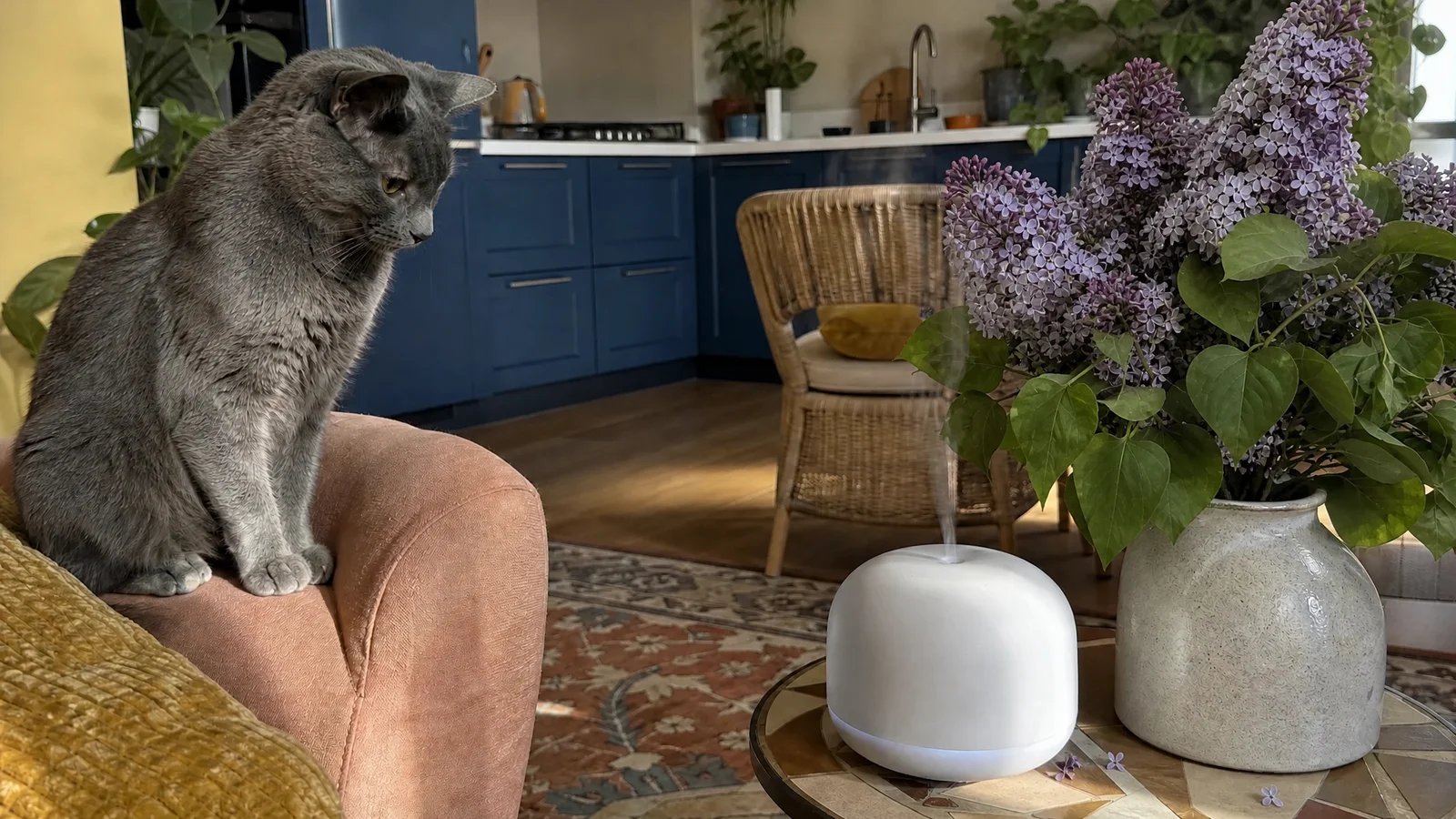
- Think about the room. We found no study measuring pet outcomes from diffusers, candles or reed diffusers scented with a lilac composition. A cat that cannot leave a scented room is a good reason to skip scenting it, and the smallest amount in a space the animal can walk away from is the gentler approach. Birds, rabbits, reptiles and fish are not covered by the sources we read, so ask an exotic-animal veterinarian before scenting near them.
- Ask for details if you need them. If your household needs an ingredient list or safety documents, ask us in writing through the contact page before you order and keep the answer to show your veterinarian.
Small habits that help
- Cap the bottle straight after use, every time, and wipe the neck so nothing is left on the outside.
- Wash your hands after handling scented oil before you pet or feed an animal.
- Wipe up spills with paper and bin them, rather than leaving a cloth where a pet can lie on it.
- Close a door on the room where you are working with the oil, and let it air out before an animal comes back in.
If your pet has been exposed
Call your veterinarian or an animal poison-control service right away, with the product name and the amount involved in hand. The ASPCA lists its Poison Control line as (888) 426-4435. Since most reactions in the poison-control study began within 24 hours, a pet that seems fine at first still merits a call.
The lilac plant is a separate question from the oil, and we did not verify its toxicity for this article, so check the plant's entry or ask your veterinarian before assuming a familiar flower is harmless. We sell an external aromatic oil, nothing more, and any pet-health question belongs with a veterinarian. For the product side of home scenting, see our reed diffuser and wax melts articles, and the skin and body article for why we give one skin figure.
Making the home feel good for everyone
Lots of households find a balance: the pleasant scent lives in a place the animals do not go, and the animals keep their favourite spots free of anything unfamiliar. If you are unsure, the simple answer is usually to scent less, and to talk to your veterinarian about your own animals, because they know them in a way no article can.
Scent is one of the pleasures of a spring home, and with the bottle stored safely and pets given room to leave, it can stay that way.

Lilac Blossom Oil
Lilac Blossom Oil from our own shop, in sizes from 0.5 oz to bulk.
From $15.99
Shop Now →Sources & Further Reading
- Bava et al., 2026, Antibiotics (Basel). Essential Oils for Flea and Tick Control in Companion Animals: A Critical Review of Efficacy, Safety, Resistance Mitigation and Integrated Pest Management
- Genovese, McLean and Khan, 2012, Journal of Veterinary Emergency and Critical Care. Adverse reactions from essential oil-containing natural flea products exempted from Environmental Protection Agency regulations in dogs and cats
- ASPCA. Toxic and Non-Toxic Plants List