Lilac Oil for Body Products: Dilution and Patch Testing
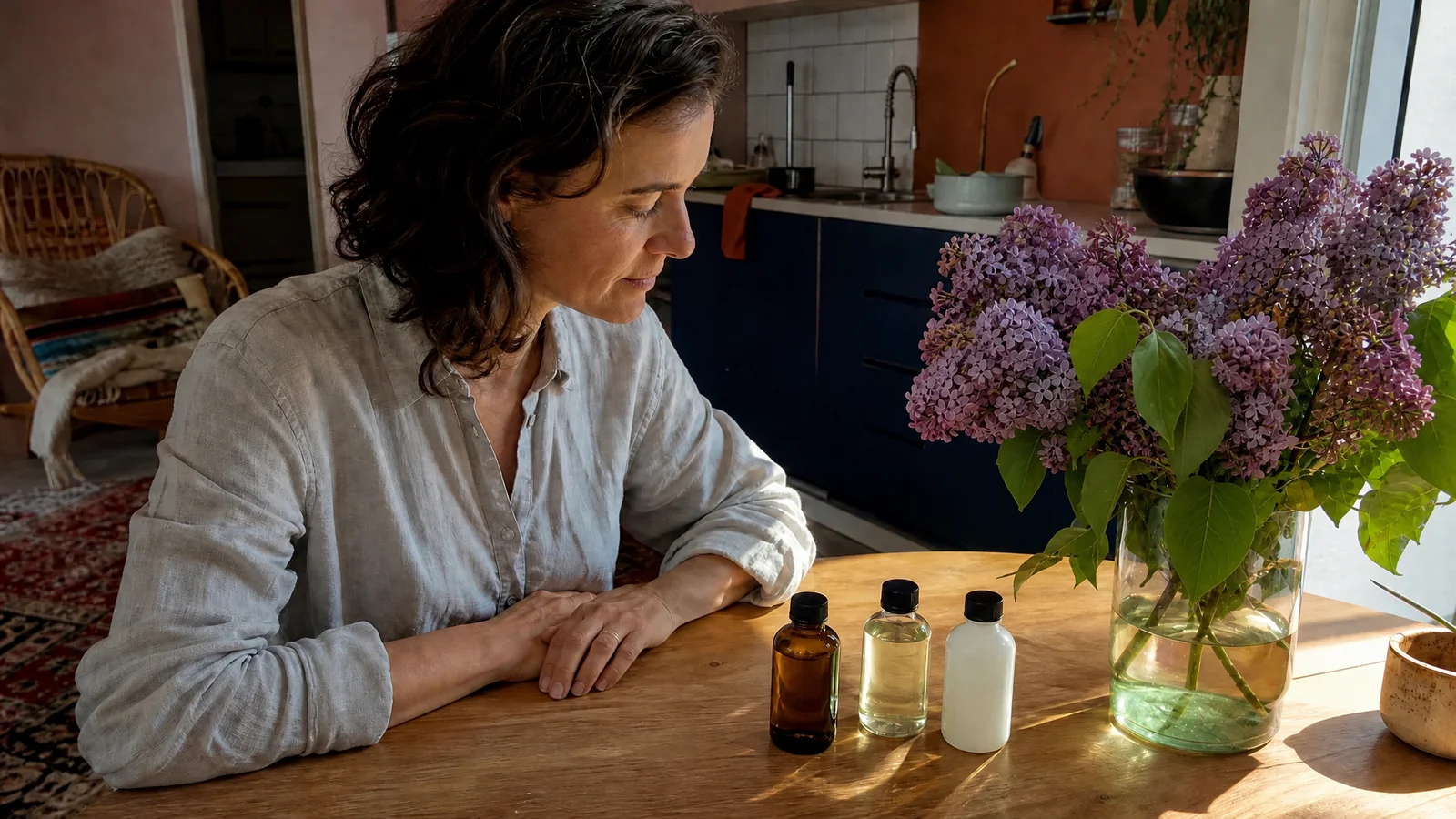
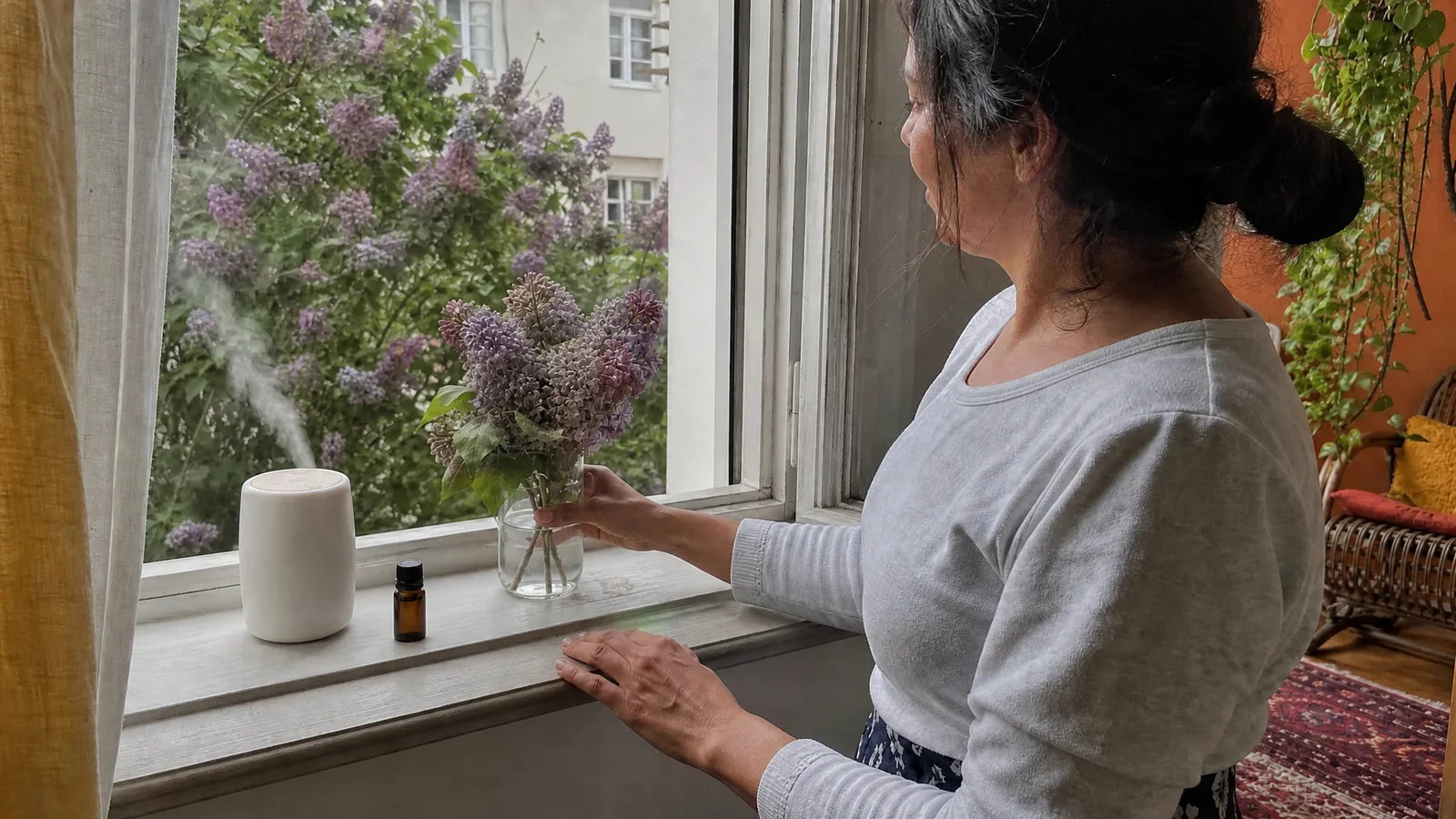
If you want to scent a body oil, balm or lotion with our Lilac Blossom Oil, our guidance is simple: dilute to 0.5% to 2% in a carrier oil, patch test a small area first, and start at the low end. That is all the dilution advice we give, and this article explains why we keep it that short and how to use it sensibly.
Why one number does not fit every formula
The skin limits people quote for fragrance come from IFRA, whose guidance for the 51st Amendment sorts finished products by how they touch the body. Fine fragrance is Category 4, body creams, oils and lotions are 5A, facial moisturizers 5B, hand cream 5C, and bar soap, shampoo, body wash and bath products Category 9. The Standards then restrict named ingredients category by category, which means a limit belongs to a formula: it is worked out from what is inside the fragrance, ingredient by ingredient.
Our oil is a composition of botanical extracts and infused aromatics, built to be faithful to the scent of the common lilac, and we do not publish a formula. So we describe 0.5% to 2% as our guidance and not as a clearance, and if your project needs more than that, such as allergen information or an IFRA statement, ask us in writing through the contact page before you order and keep the answer. IFRA notes that a Certificate of Conformity confirms one specific mixture up to one concentration in one product type and "does not replace a safety assessment," so a certificate is a starting point rather than a finish line.
How our range sits beside other guidance
The Tisserand Institute publishes dilution ranges for essential oils: 0.2% to 1% where skin is sensitive or impaired, 0.5% to 1.2% for facial cosmetics and deodorants, 1% to 3% for body oils and lotions, and 2% to 4% for bath products. The page notes that these are general guidelines and that oils with specific restrictions are the exception. Lilac is a composed scent rather than an essential oil, so those ranges are context and not a rule for ours. They do show why we say to start at the low end: lighter dilutions are the usual starting point for anything left on the skin, and our 2% is the ceiling of what we say, never a target.
How little it takes to matter
Regulators think about fragrance allergens in tiny quantities. The European Commission requires individual labelling of 56 further allergens above 0.001% in leave-on products and 0.01% in rinse-off products. Those are labelling triggers, not safe levels, and they apply to the EU market, but the arithmetic is instructive. Dose an oil at 1% into a lotion, and a single ingredient making up just 0.1% of the oil already reaches the leave-on trigger (0.001 divided by 1). At 2% in a rinse-off product, the trigger is 0.5% of the oil (0.01 divided by 2). It is a useful picture of how small amounts add up, and a good reason to keep the percentage low and ask the seller what a formula contains.
Patch testing, the practical way
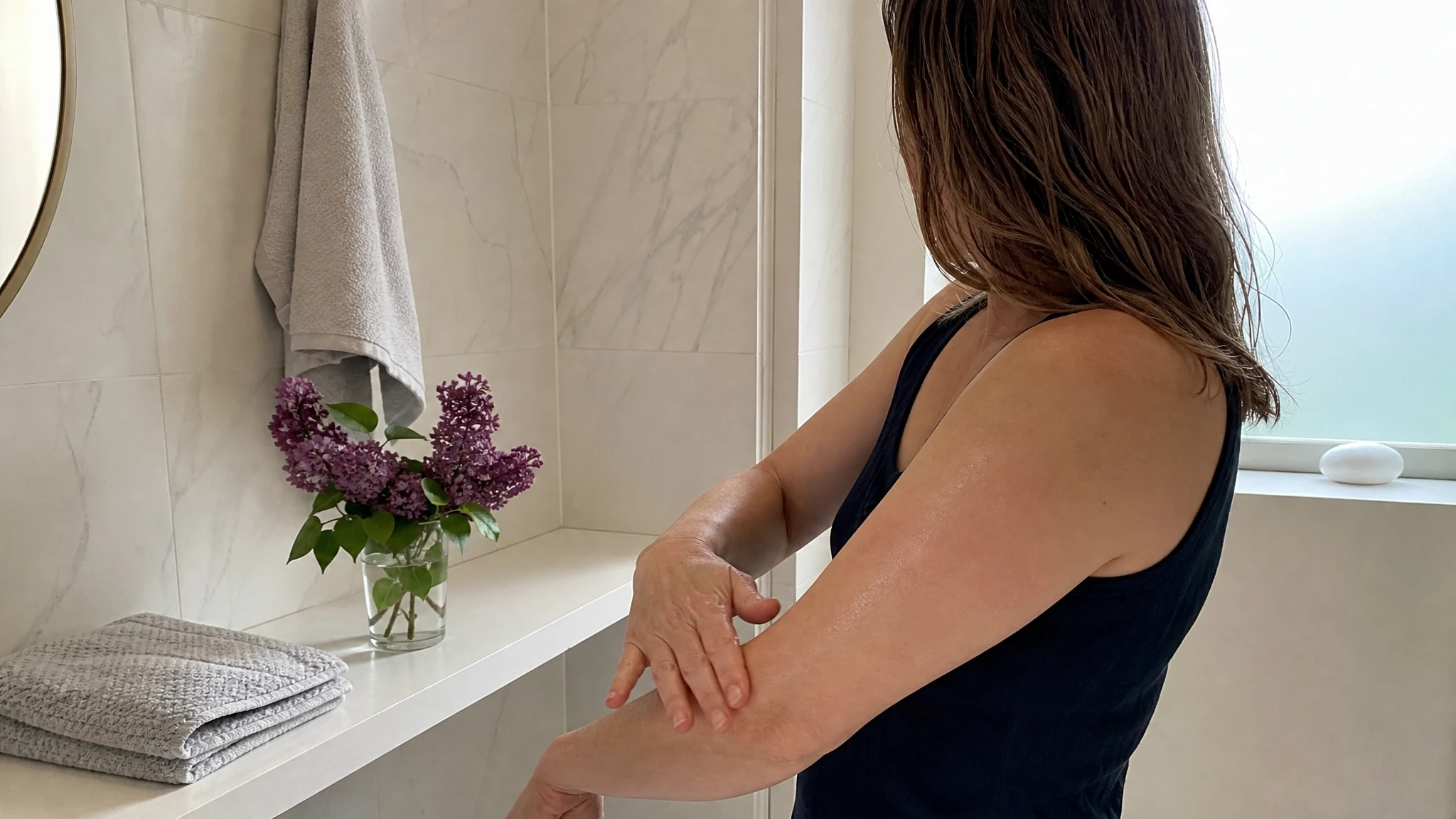
Test the finished, diluted product rather than the neat oil, on a small area such as the inner forearm, at the strength you plan to use. As a suggestion, watch the spot for a couple of days before using it more widely, since a reaction can take time to show. If your skin reddens, itches or stings, stop and ask a dermatologist. Keep our oil away from eyes, children and pets, and use it externally only. If you are pregnant, have eczema or a known fragrance allergy, or are choosing for a child, a physician or dermatologist is the right person to ask, not a product page.
Start small and keep notes
Your first batch of a scented body oil should be small, even if it feels silly. Make a little more than you need to test, label it with the date and the percentage, and use it a few times before you decide whether to go bigger. A light scent is easier to love than a heavy one, and with a soft floral like lilac, less is almost always more.
Notice how it sits on the skin after a few minutes, and whether the scent stays pleasant when you are warm. Write down what you like, and what you would change, while it is fresh.
Keeping the language on scent
FDA's guidance on whether a product is a cosmetic or a drug turns on intended use, and says claims on a website or other promotional material can change the category. We sell this oil for its scent and describe it that way. A body oil you make and sell should be described the same way: a lightly scented oil, with no promises about what it does for the body. FDA's fact sheet for small businesses adds that making cosmetics at home is not against the law, but the firm named on the label is responsible for adequate substantiation of safety.
What to buy elsewhere
We sell the lilac oil only. Carrier oils, lotion bases, preservatives, emulsifiers and soap bases come from a craft or cosmetic-supply shop, and a water-based product needs a preservative system chosen by the supplier or a chemist. For walk-throughs, try the body oil, the lotion, and our cold process soap, and use the dilution chart to turn a percentage into grams.
Light scent, careful testing and honest labels: that is how lilac belongs in a body product.
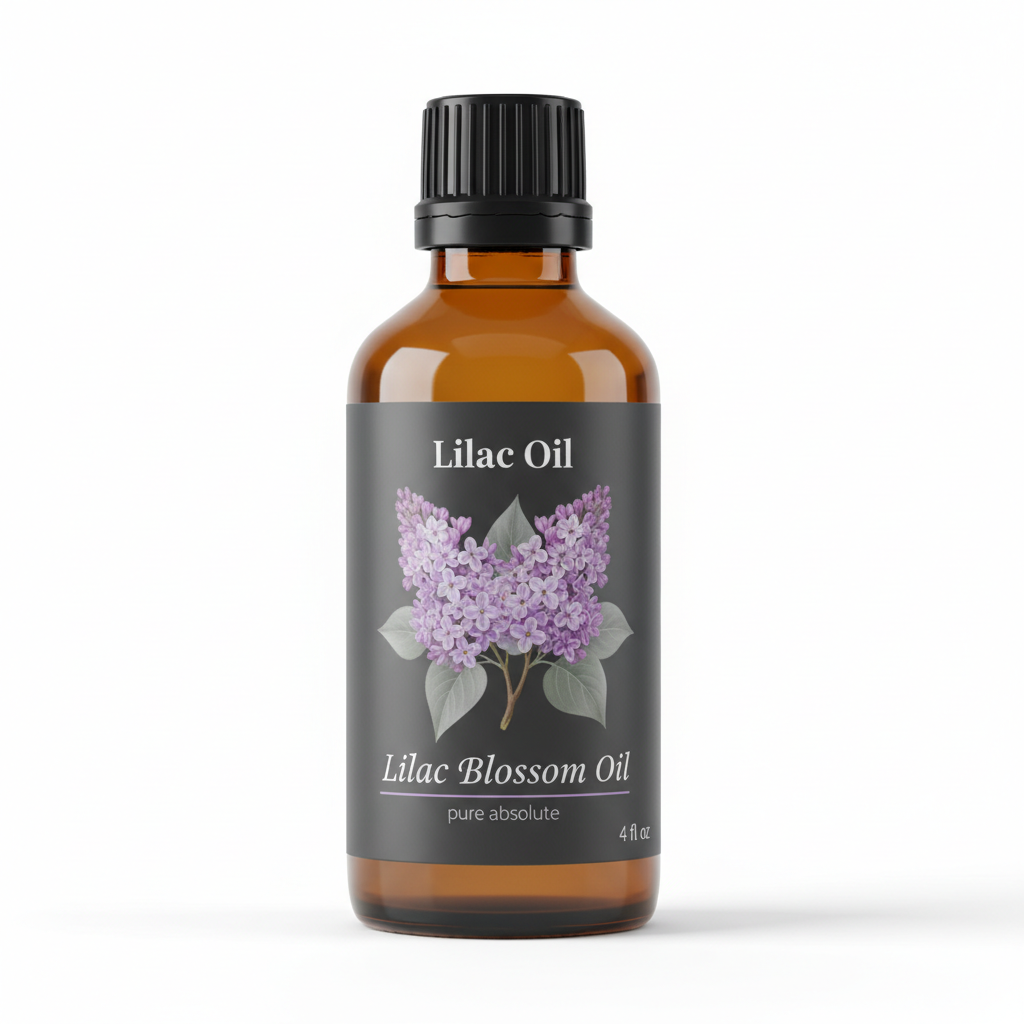
Lilac Blossom Oil
Lilac Blossom Oil from our own shop, in sizes from 0.5 oz to bulk.
From $15.99
Shop Now →Sources & Further Reading
- IFRA, Guidance for the Use of IFRA Standards (51st Amendment, June 30, 2023). ifrafragrance.org guidance PDF
- Tisserand Institute, Dilution for essential oils. tisserandinstitute.org/safety/dilution
- European Commission, Fragrance allergens labelling. single-market-economy.ec.europa.eu
- U.S. Food and Drug Administration, Is It a Cosmetic, a Drug, or Both? (Or Is It Soap?) fda.gov
- U.S. Food and Drug Administration, Small Businesses & Homemade Cosmetics: Fact Sheet. fda.gov