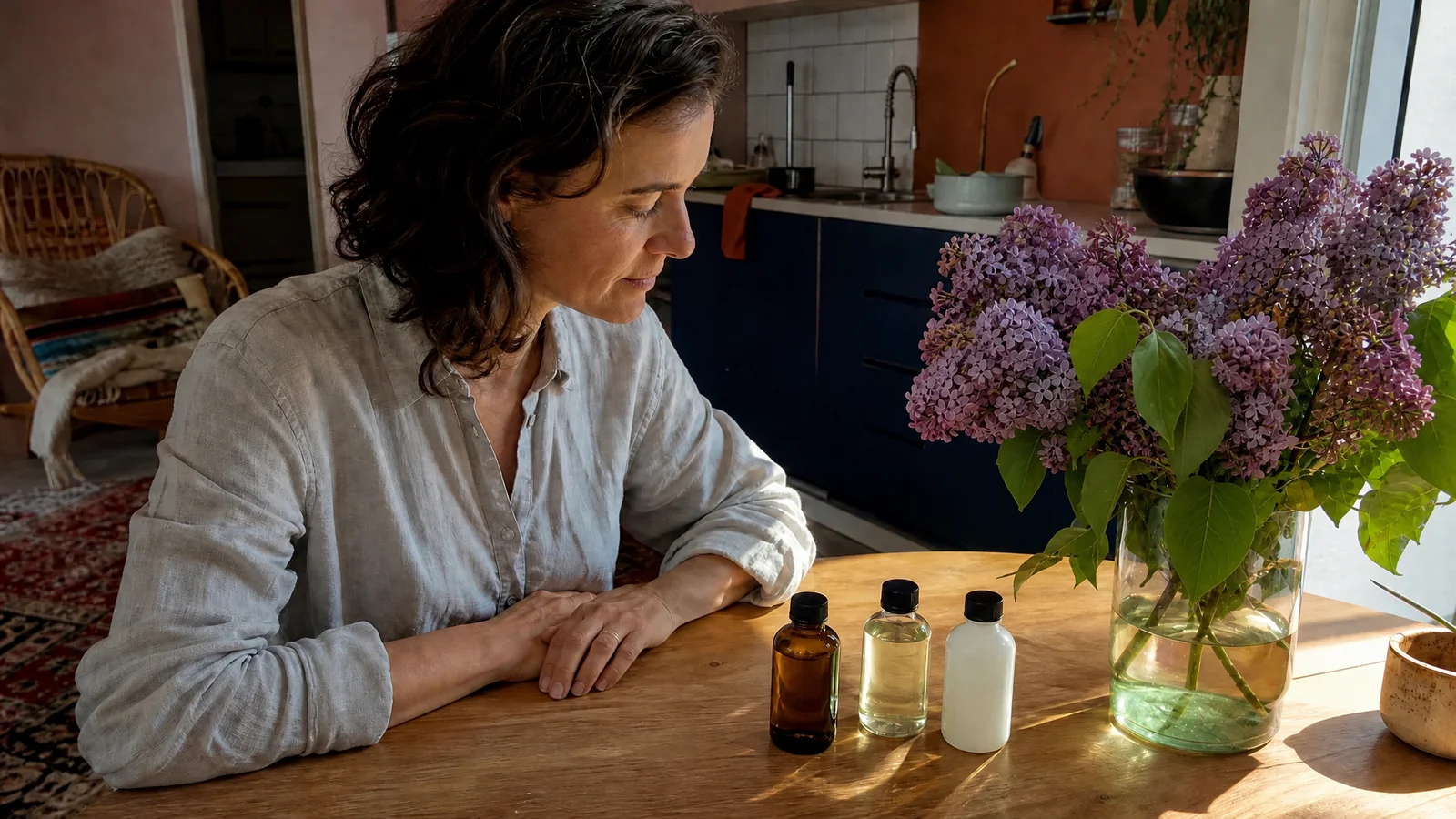
What Is Lilac Oil? Reading the Name on the Bottle
"Lilac oil" started as a way to describe a smell and became a product name. Unlike lavender or peppermint, it does not point to one plant oil with one recipe, so two bottles with the same label can be quite different things. Once you know how to read the words, you can place any bottle, ours included.
The flower has scent; the oil is another story
The blossoms do smell strongly, and researchers have started to map why. In a 2026 study of Syringa villosa, a lilac species, scientists silenced a terpene synthase gene and saw emission of (E)-beta-ocimene, the predominant volatile compound in the flowers, fall. That is a different species from the common lilac, Syringa vulgaris, and it was a gene-function experiment, not a way to make a product. It tells us the bloom has measurable scent chemistry, and it does not hand anyone a recipe for a bottle, which is why lilac scents are composed. Our piece on why there is no true lilac essential oil looks at that from the other side.
Three things the label might mean
A fragrance oil is a composed scent. FDA describes fragrance formulas as complex mixtures of many natural and synthetic ingredients, and says labeling law cannot be used to force a company to disclose them, so the label may legally say only "fragrance."
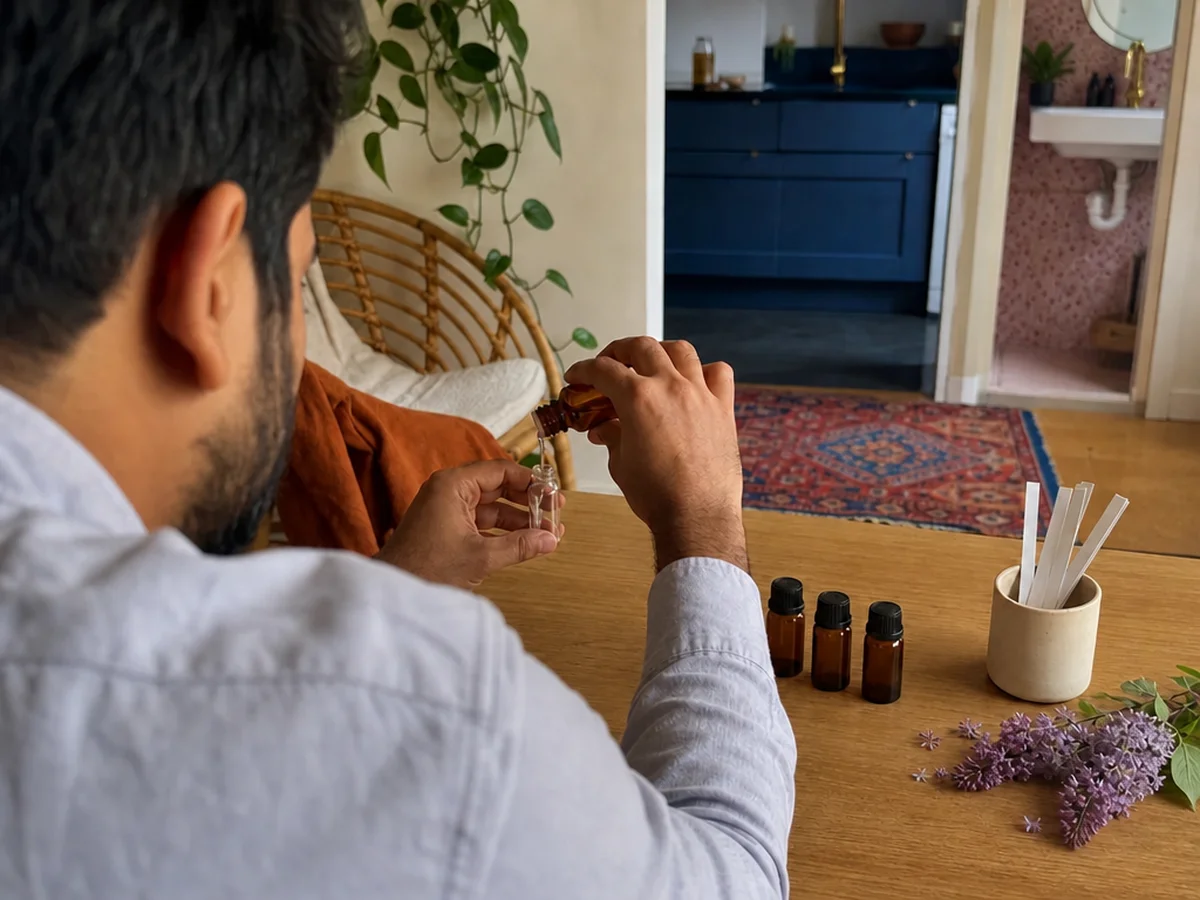
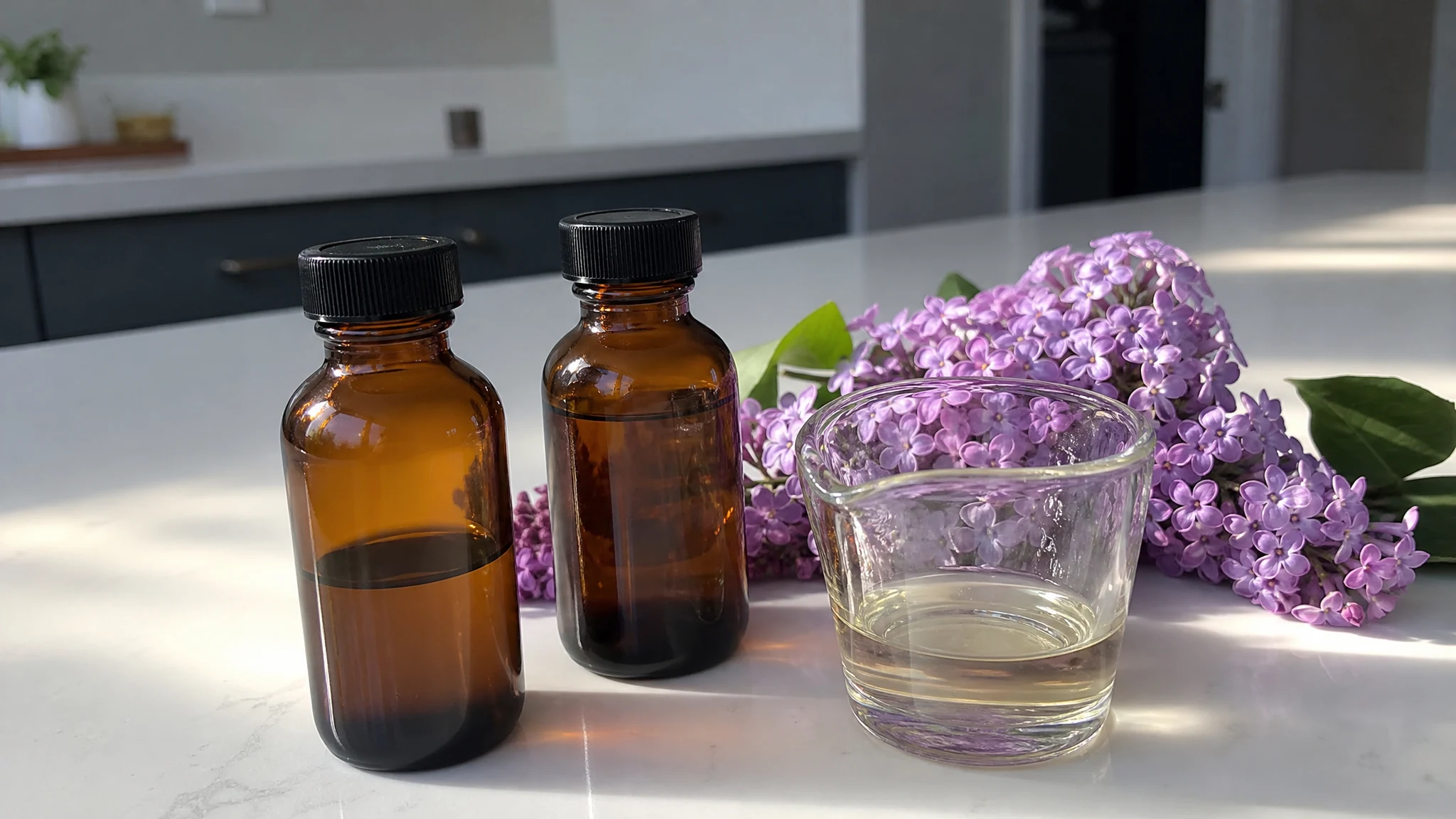
A crafted blossom oil is what ours is: a composition of botanical extracts and infused aromatics, built to be faithful to the common lilac in bloom. It is not a distillate and not an absolute, and we do not publish a formula.
An infused oil is plant material steeped in a carrier oil. We do not sell that, and it is not what is in our bottle. If a listing offers one, ask what the carrier is, since the carrier is a big part of the product. Our comparison of fragrance oil and crafted lilac oil goes into the first two in more detail.
What the ingredient line can and cannot say
US rules let a cosmetic list "fragrance" in place of each fragrance component, and they bar the word for anything that is not fragrance as consumers commonly understand it (21 CFR 701.3). A one-word entry is therefore normal. It also means the ingredient line cannot tell you whether a scent is a plant oil, a composed oil or a build from aroma molecules. IFRA's 2025 Transparency List gives a feel for the palette a perfumer chooses from: 3,691 ingredients, including 1,021 natural complex substances. It is an industry overview, not a formula for any product.
What we can tell you about our bottle
We describe the aroma as soft, powdery and springlike, with fresh purple florals, green stems, a hint of almond sweetness and a clean musky base, and we place it as a middle (heart) note. Our scent profile explores it more fully.
The Certificate of Analysis we publish is for batch LILIBCUNINC001A. It lists appearance, smell, relative density (0.973 at 20 C), refractive index (1.501) and optical rotation (-0.72 degrees), with extraction method "Blended" and parts used "N/A". It names Syringa vulgaris as the botanical name, which we read as the flower the scent is built to resemble. It does not list ingredients, so it describes how the liquid behaves, not what is in it. If you need more for a particular formula, ask us in writing through the contact page before ordering.
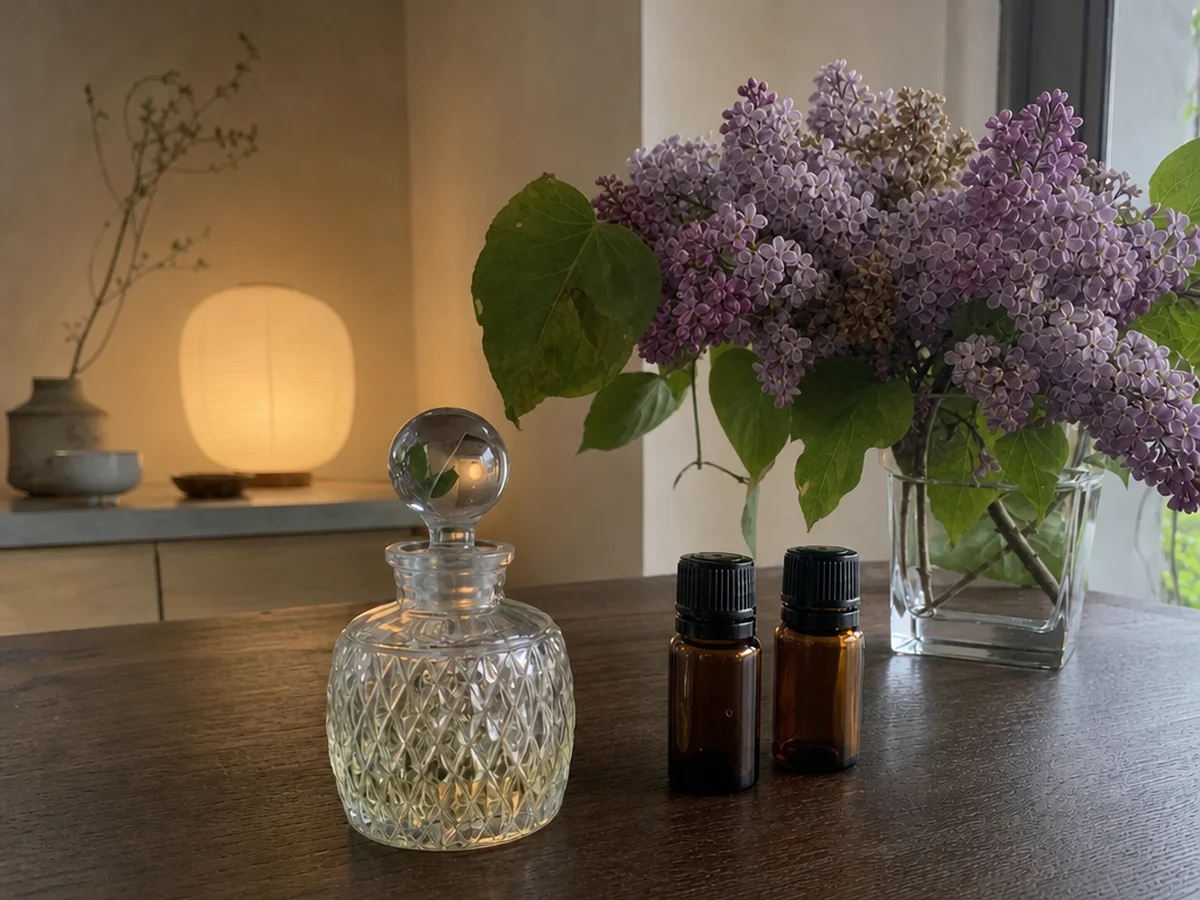
We sell it in nine sizes, 0.5, 1, 2, 4, 8 and 16 oz and 5, 25 and 400 lb, in amber glass with a lot number on the bottle.
Who it suits
Our oil suits someone who wants a lilac scent for candles, wax melts, room and linen sprays, diffusers or diluted body products. For skin, our guidance is 0.5% to 2% in a carrier oil with a patch test first, starting low. We sell it for scent, and we make no claims about mood, sleep or skin, so if those are your goals, a physician, pharmacist or dermatologist is the right person to ask. If you need a plant oil with a named origin and a published constituent report, a composed oil is not that, and you will be happier knowing so up front. For research on aromatic oils in general, our post on what the studies do and do not show explains why lilac has so little. And if you see a listing for "organic lilac essential oil," read what certification can and cannot mean first.
How we would explain it to a friend
If a friend asked what we sell, we would say it is a lilac scent in a bottle, composed with care to remind you of the flowers and meant for candles, sprays and diluted body products. We would add that there is no true lilac essential oil, so every lilac scent you meet is somebody's interpretation. Ours is a soft, powdery one. That simple, honest answer is the one we hope every seller can give.
Four questions for any bottle
- Does the seller say what the oil is, in words that match each other from page to page?
- Is a species named, and is it clear whether the bottle contains that plant or resembles it?
- Is there a document, and does it measure contents or only physical properties?
- Does the page promise a health benefit? For a scent, that is a cue for caution.
The lilac oil glossary defines the remaining terms in the order you meet them. The short version: lilac oil is a name for a scent, and what you are buying depends on how the seller describes the build and what they will put in writing.

Lilac Blossom Oil
Lilac Blossom Oil from our own shop, in sizes from 0.5 oz to bulk.
From $15.99
Shop Now →Sources & Further Reading
- Liu Y, Liu Y, Cui J, Gao R, Meng Y, Zhou X, Jin M, Shi B, 2026. Establishment of a Virus-Induced Gene Silencing (VIGS) System in Syringa villosa and Functional Characterization of the Floral Scent-Associated Gene SvTPS3. Plants (Basel). pmc.ncbi.nlm.nih.gov/articles/PMC13709108
- U.S. Food and Drug Administration, Fragrances in Cosmetics. fda.gov
- Electronic Code of Federal Regulations, 21 CFR 701.3 Designation of ingredients. ecfr.gov
- IFRA, About the IFRA Transparency List. ifrafragrance.org