What Does Lilac Smell Like? How to Judge It Yourself
Lilac smells sweet, floral and a little green, and nearly every description you will read says some version of that. But a bush in May, a cut cluster on the table, a perfumer's accord and a bottle are four different experiences, and the words stretch to cover them all. Here is how people describe lilac, what scientists have noticed about where the scent comes from, and a simple way to judge a lilac scent yourself.
The words people use
The gardening sources tend to keep it short. University of Minnesota Extension calls lilac's fragrance distinctive and sweet, and NC State Extension calls common lilac highly fragrant, adding that its pungently sweet scent can be overpowering to some people. The perfume trade has a richer vocabulary. Tendance Parfums describes the lilac note as fresh, powdery and slightly green, with a honeyed hint, and says it most often appears as a heart note, sitting between floral and green.
That is very close to how we describe our own Lilac Blossom Oil: soft, powdery and springlike, with fresh purple florals, green stems, a hint of almond sweetness and a clean musky base. The Certificate of Analysis we publish for one batch records the smell as complying with a standard of "floral, sweet, fresh", a broader description in plainer words. Together they paint the same picture, sweet and fresh at first, with the powdery softness arriving as it settles.
A few words to borrow
If you are trying to describe lilac to someone, or to yourself, a short list helps. Sweet, fresh and green get you most of the way there. Powdery and soft describe the texture. Springlike describes the mood. Almond is a small sweet edge that some noses catch and others do not. Write down the two or three words that match what you actually smell, and compare them next season; you may be surprised how steady your own vocabulary turns out to be.
Why the scent is hard to pin down
Scientists measuring lilac find that "the smell" is not one thing. A 2016 study of nine lilac species and varieties found that scent composition differed significantly between them, with beta-ocimene above 70 percent of the floral scent in three. A 2022 study of Syringa oblata found that lilac aldehyde and lilac alcohol were the most abundant terpene volatiles in its flowers. A 2021 review calls the lilac aldehydes the principal olfactory molecules of lilac and notes that the natural forms have odor thresholds one to two orders of magnitude lower than their mirror-image forms.
The practical reading, which is ours rather than the studies', is that two honest descriptions of two different lilacs can differ, and that a small amount of a very potent molecule can dominate what your nose reports while being a modest share of what an instrument measures. How loud a scent is to the nose and how much of it is present are different questions. Our posts on the aroma molecules and why lilacs smell stronger at times follow those threads further, and choosing lilacs by scent shows how plant sources word the differences between groups.
A way to smell it properly
Here is a plan we recommend, drawn from how the sources describe lilac as a light, heart-note floral. It takes a few minutes and a strip of plain card.
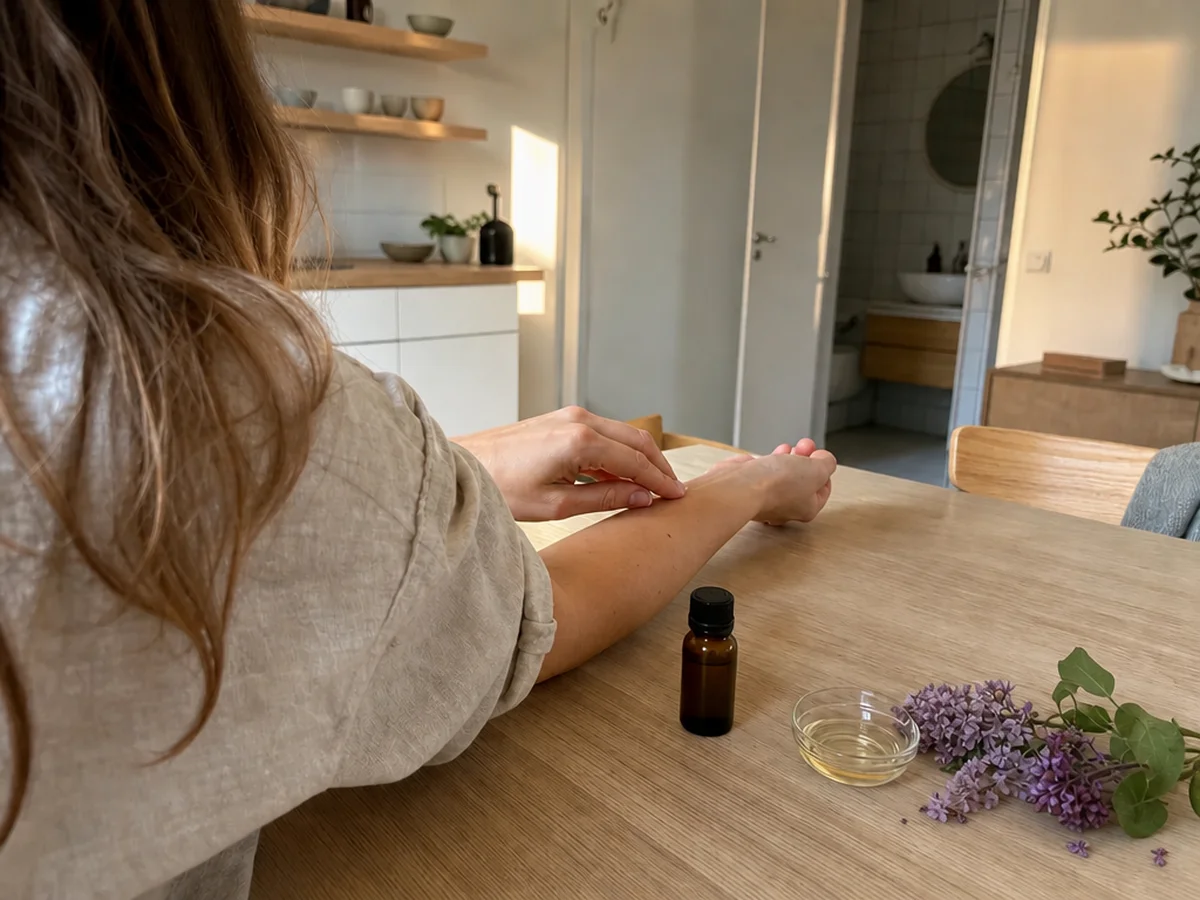
- Smell it fresh, then wait. Put a small amount on a blotter or card and smell it right away, again after a few minutes and again after an hour. A lilac heart note can read differently at each stage, so jot down what you notice.
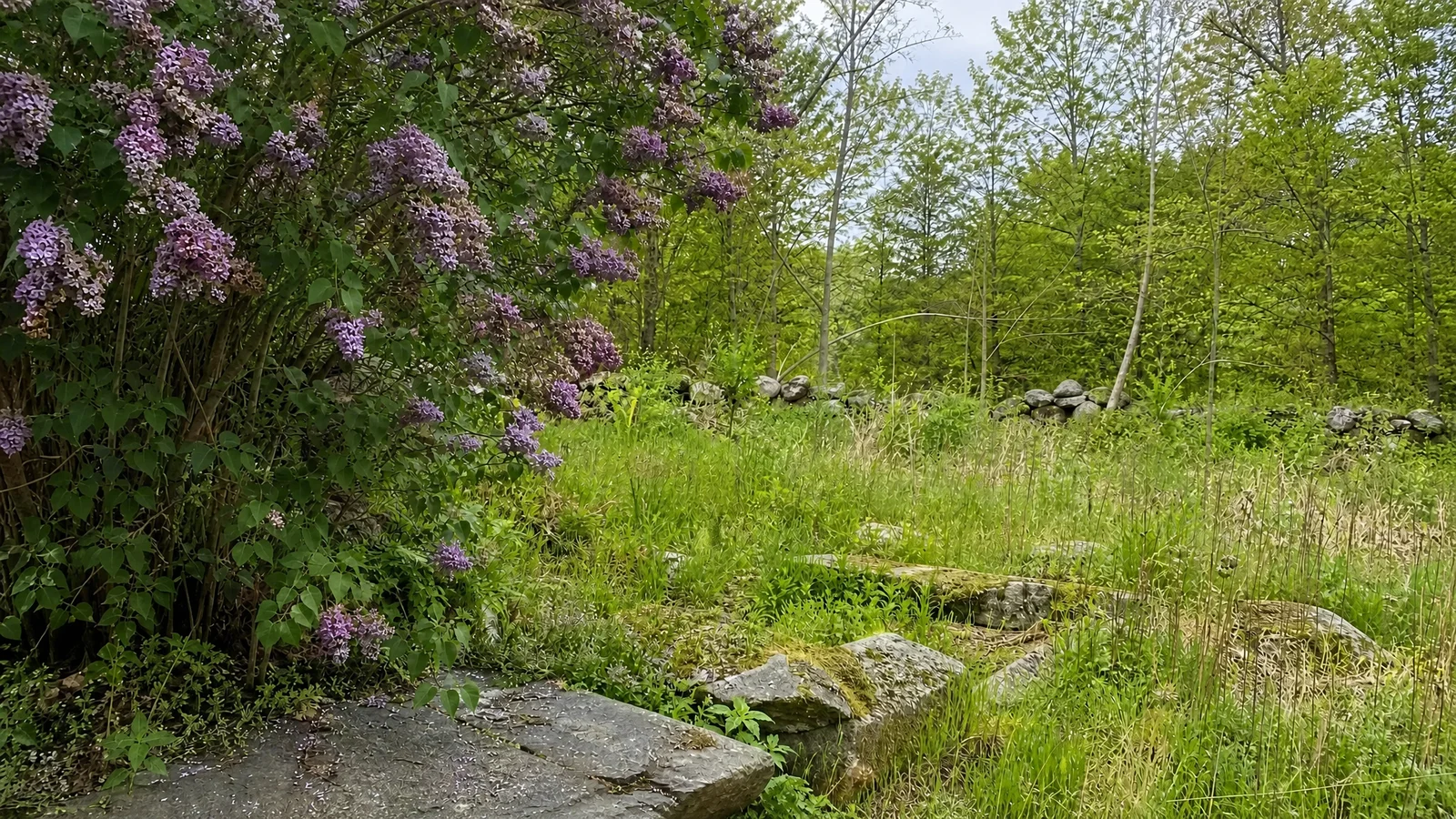
- Compare with the real thing. If lilacs are in bloom, smell a cut cluster first, remembering that cut flowers give off a different mixture from living ones.
- One scent at a time. Rest your nose between samples, because noses tire faster than we expect.
- Try it in the form you will use. A scent on a strip is not the same as the scent in a candle, a soap or a body oil. Testing a fragrance oil before you buy bulk covers the staged approach.
- Start with a small bottle. The smallest size is the easiest way to find out whether this lilac is the lilac you mean.
Lilac at different moments
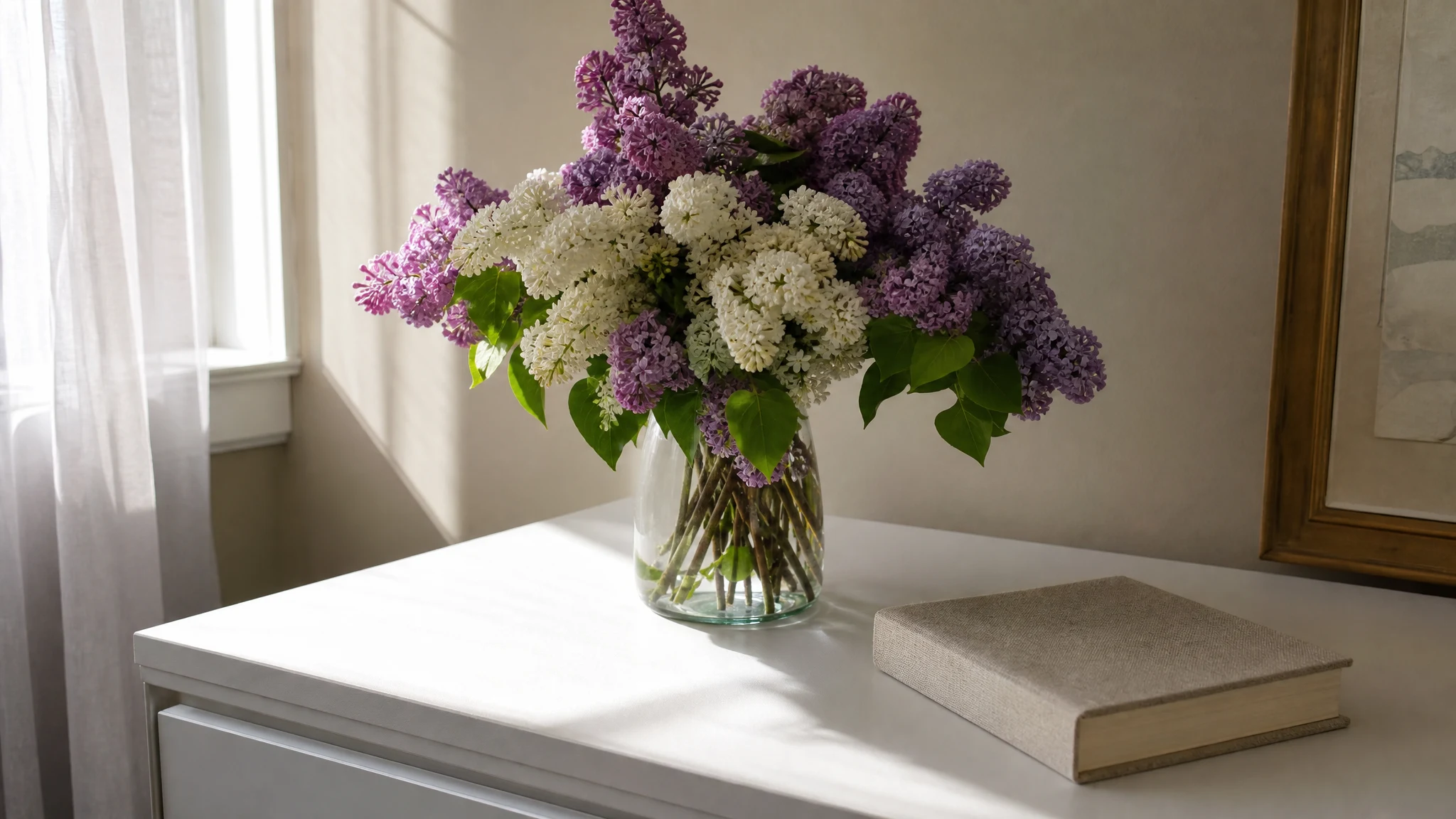
One lilac cluster can smell different depending on when you meet it. Early on a cool spring morning you may notice the green, fresh side first. As the day warms, the sweetness and powder often come forward. A bunch cut and set in water on a kitchen table can fill a small room, then seem to quiet after a day or two as the blossoms age. None of this is a rule, just an invitation to pay attention.
The same habit works with a bottle. Smell it cold, straight from a drawer, and again after it has sat in a warm room, and notice whether a little warmth makes it feel rounder and softer.
Who it suits
If you need a scent that reproduces one particular shrub exactly, no composed scent can promise that, and we would not either. Ours is a composition of botanical extracts and infused aromatics, built to be faithful to the common lilac in bloom, and what we publish about it is a Certificate of Analysis for one batch listing appearance, smell, relative density (0.973), refractive index and optical rotation. If you need more for a formula or a label, ask us in writing through the contact page before ordering. For skin, we suggest diluting to 0.5% to 2% in a carrier oil, starting low and patch testing first.
Lilac smells like itself, and words are only a way of pointing, so smell it, wait, smell it again and trust that more than any description.

Lilac Blossom Oil
Lilac Blossom Oil from our own shop, in sizes from 0.5 oz to bulk.
From $15.99
Shop Now →Sources & Further Reading
- University of Minnesota Extension, Lilacs
- North Carolina Extension Gardener Plant Toolbox, Syringa vulgaris (Common Lilac)
- Tendance Parfums, Lilac perfume: guide and best picks
- Dacho and Szolcsányi, Synthesis and Olfactory Properties of Seco-Analogues of Lilac Aldehydes, Molecules (2021)
- Chen et al., Syringa oblata genome provides new insights into molecular mechanism of flower color differences among individuals and biosynthesis of its flower volatiles, Frontiers in Plant Science (2022)
- Yang et al., Analysis of floral scent emitted from Syringa plants, Journal of Forestry Research (2016)