Why Lilac Brings Memories Back: Whitman, Scent and Season
Few shrubs carry as much feeling as the lilac. People write poems about it, plant it by farmhouse doors and remember a grandmother's yard the moment they catch a whiff. It is worth asking where that feeling comes from, and the honest answer is a mix of documented history, some solid science and a good deal of personal story.
A flower with a festival
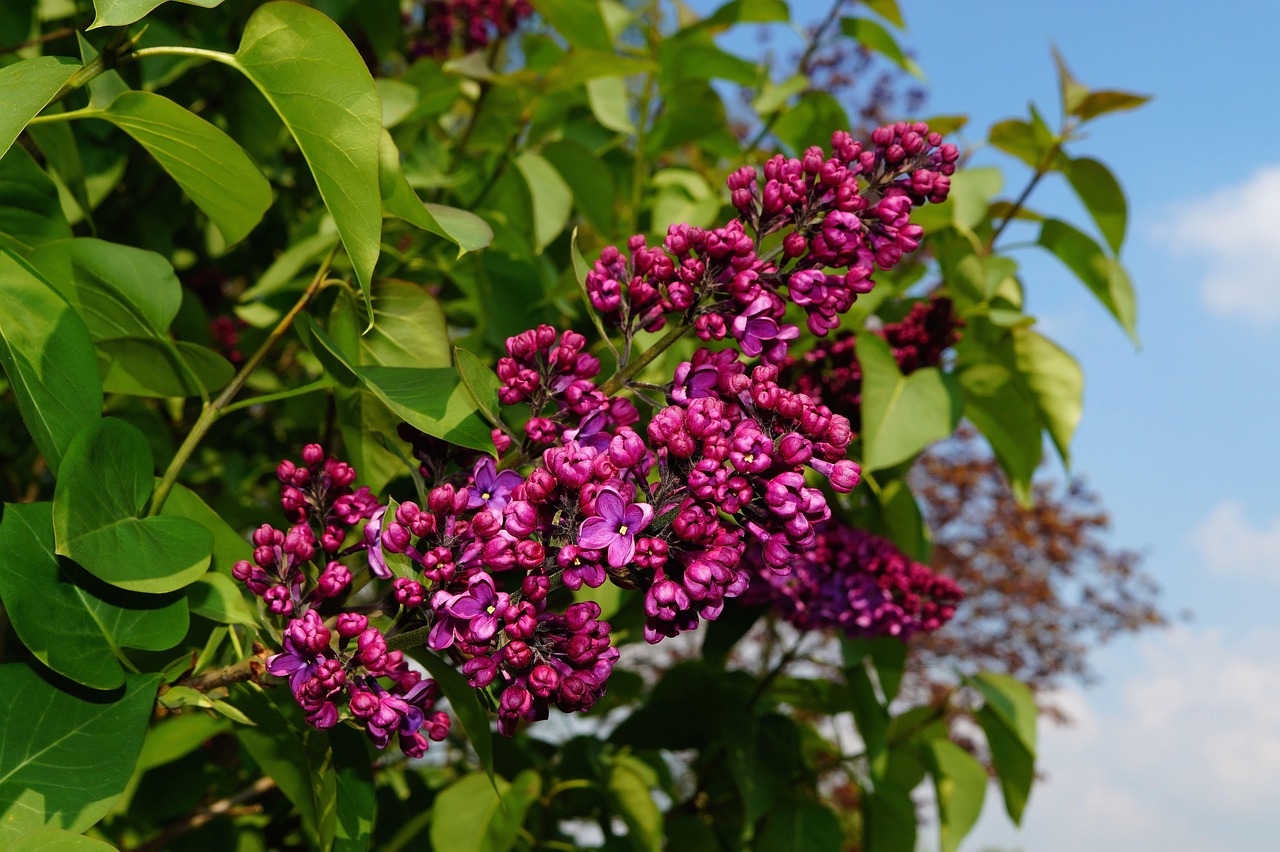
The Arnold Arboretum of Harvard University keeps 407 lilac plants representing 173 kinds, and says Lilac Sunday has been celebrated there since 1908. Few plants get an annual day at all, and a festival that has run for well over a century says something about how much people look forward to this bloom. University of Minnesota Extension notes the flowers last about 10 to 14 days, which may be part of the pull. A thing that comes once a year and vanishes in a fortnight is easy to treasure.
The first warm day of bloom
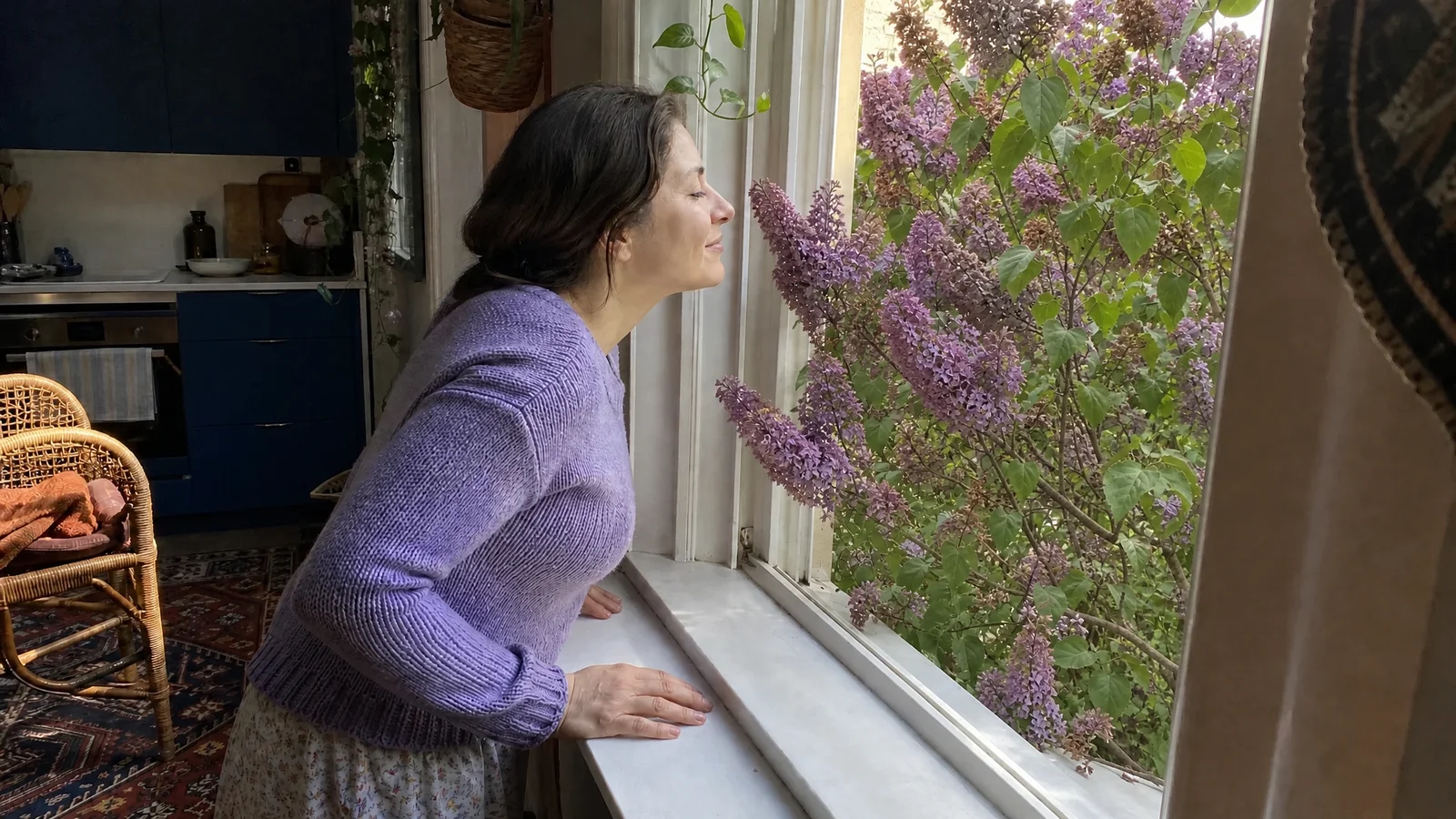
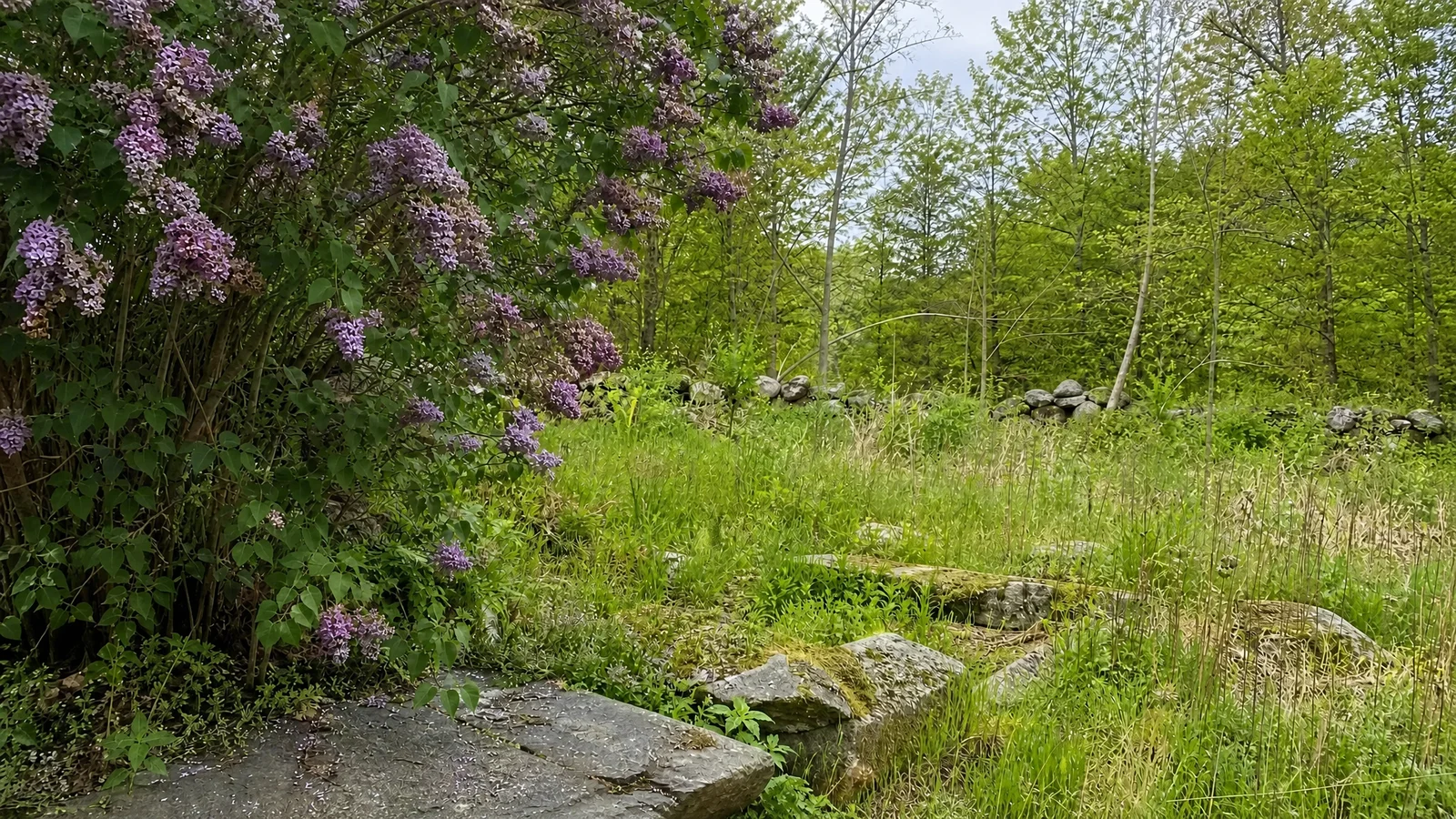
Anyone who has walked past a lilac hedge on the first warm afternoon of the season knows the feeling: you smell it before you see it, and for a moment you are somewhere else. Everyone has a different somewhere. For one person it is a porch, for another a schoolyard, for another a garden gate. That is what makes lilac such a personal flower, and why two people can stand at the same bush and remember completely different things.

The lilac in the poem
The best known literary lilac belongs to Walt Whitman. The Rosenbach museum and library records that he wrote "When Lilacs Last in the Dooryard Bloom'd" in the summer of 1865 as an elegy for Abraham Lincoln, that it first appeared in the fall of 1865 in Sequel to Drum Taps, and that it joined Leaves of Grass with the 1867 edition. It names the lilac, with the star and the bird, as one of the poem's key symbols, and the speaker closes by offering "my sprig of lilac" to the passing coffin.
We will not guess why Whitman chose lilac, because the page does not say. What the facts support is simple and moving enough: a spring flower, a particular funeral, and a gift. That is a good reason lilac can read as remembrance to anyone who knows the poem, though it does not mean it carries that meaning for everyone.
What science says about scent and memory
The idea underneath most lilac sentiment is that smells bring memories back better than other cues. A 2026 review and meta-analysis in Psychonomic Bulletin and Review pooled 18 studies on odor-evoked autobiographical memory. It found that smell cues did better than other cues on emotional intensity, pleasantness, evocativeness and the age of the memories recalled, but concluded that the results only partly support the famous Proust idea, because the advantage is selective rather than universal.
Two takeaways follow, and both are our reading of the review rather than something it says about lilac, which the studies did not test. First, a smell is a cue, and a cue works best when it matches the memory. The scent in your memory may be one particular shrub, and lilacs differ from one kind to the next, as we explain in choosing lilacs by scent and why lilacs smell stronger at times. Second, a scent can just as easily point back to a hard year as a happy one. A bottle can bring a memory back; it cannot choose which one.
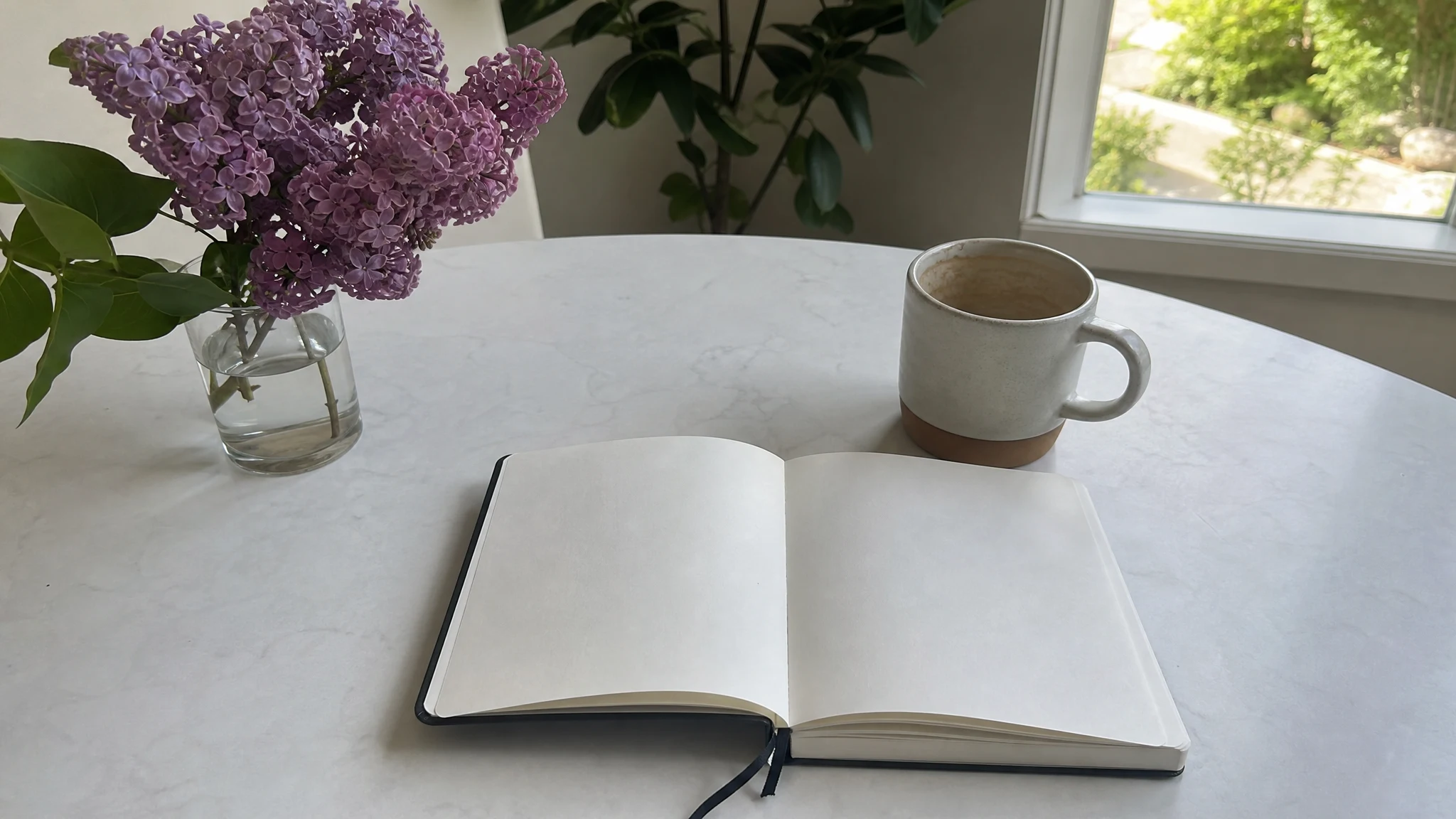
Try writing it down
A small exercise we like to suggest: next time lilac turns up, in a garden or a bottle, take a minute and write down the first thing it reminds you of. You may be surprised. The place and the person often arrive before the words do, and a few lines on a card are a sweet thing to keep or give away.
A composed lilac as an invitation
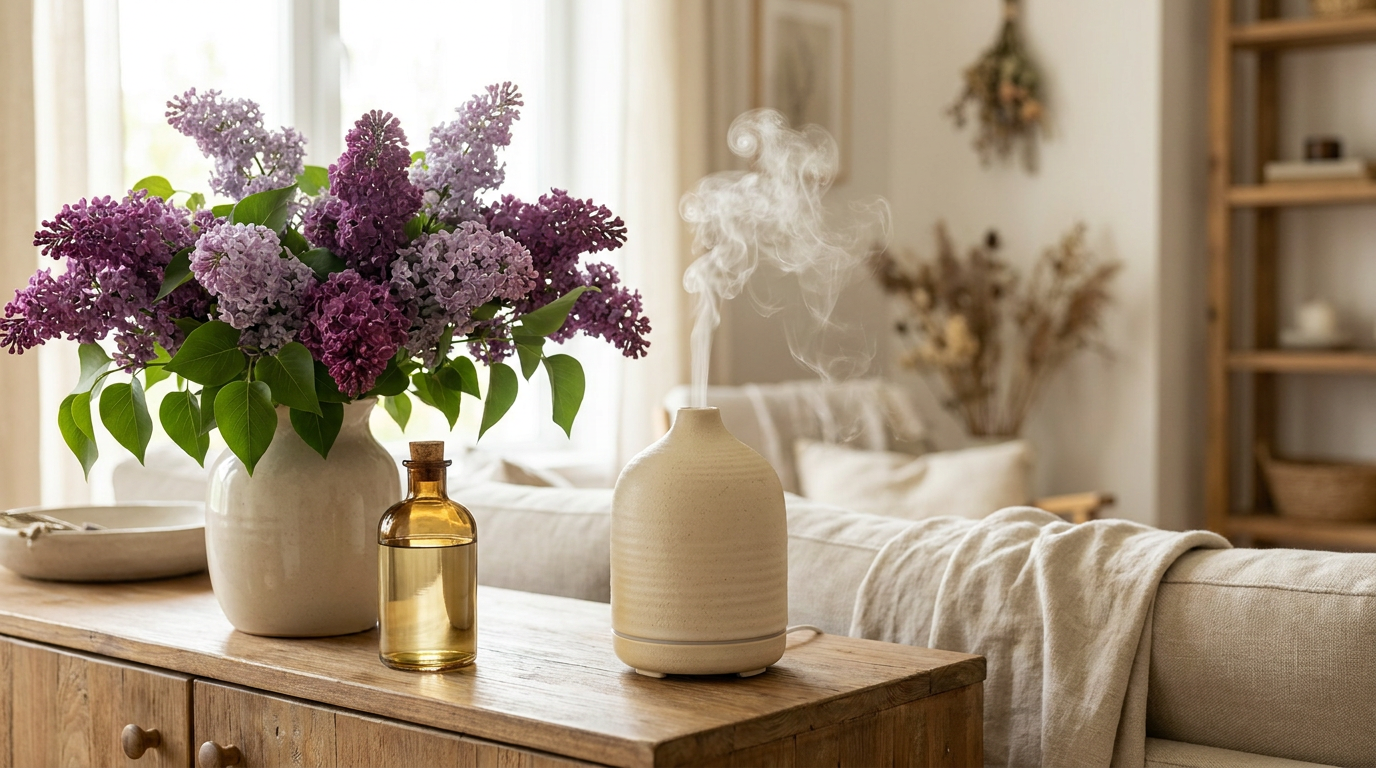
Our Lilac Blossom Oil is a composition of botanical extracts and infused aromatics, built to be faithful to the common lilac in bloom. We describe the aroma as soft, powdery and springlike, with fresh purple florals, green stems, a hint of almond sweetness and a clean musky base. It will be a close reading of lilac, not a copy of your grandmother's particular bush, and anyone who sells a composed scent as an exact copy is promising more than a bottle can deliver. Our oil is a scent and nothing more, with no claims about how it affects anyone's mood or memory.
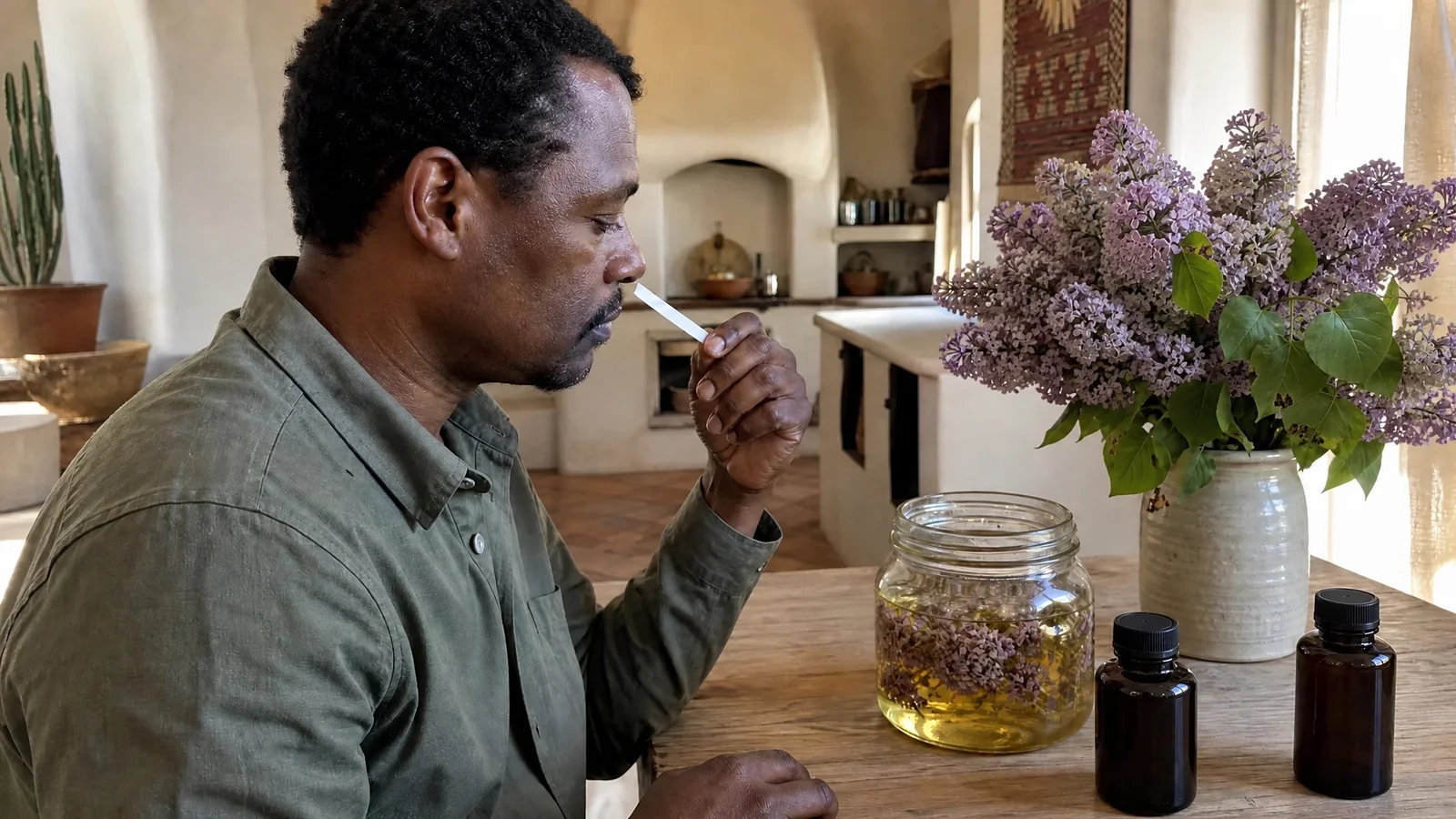
If you are buying with an occasion in mind, a wedding, a remembrance, a gift, try the smallest size first and smell it on a strip beside the real thing if the bloom is out. Testing a fragrance oil before you buy bulk lays out a sensible way to do that. For perfumery context, the history of lilac in perfumery tells how perfumers rebuild the scent, which we kept out of this essay.
Not everyone loves a strong floral, and some people are sensitive to fragrance, so it is kind to ask before scenting a shared space. For skin we suggest diluting to 0.5% to 2% in a carrier oil, starting low and patch testing first.
Sharing a scent kindly
If you are giving lilac to someone for its associations, a note about why you chose it can matter more than the bottle. Say what it reminds you of, and invite them to tell you what it reminds them of. Scent is better as the start of a conversation than as a statement.
Lilac is a reminder, more than a promise, and for most of us that is plenty.
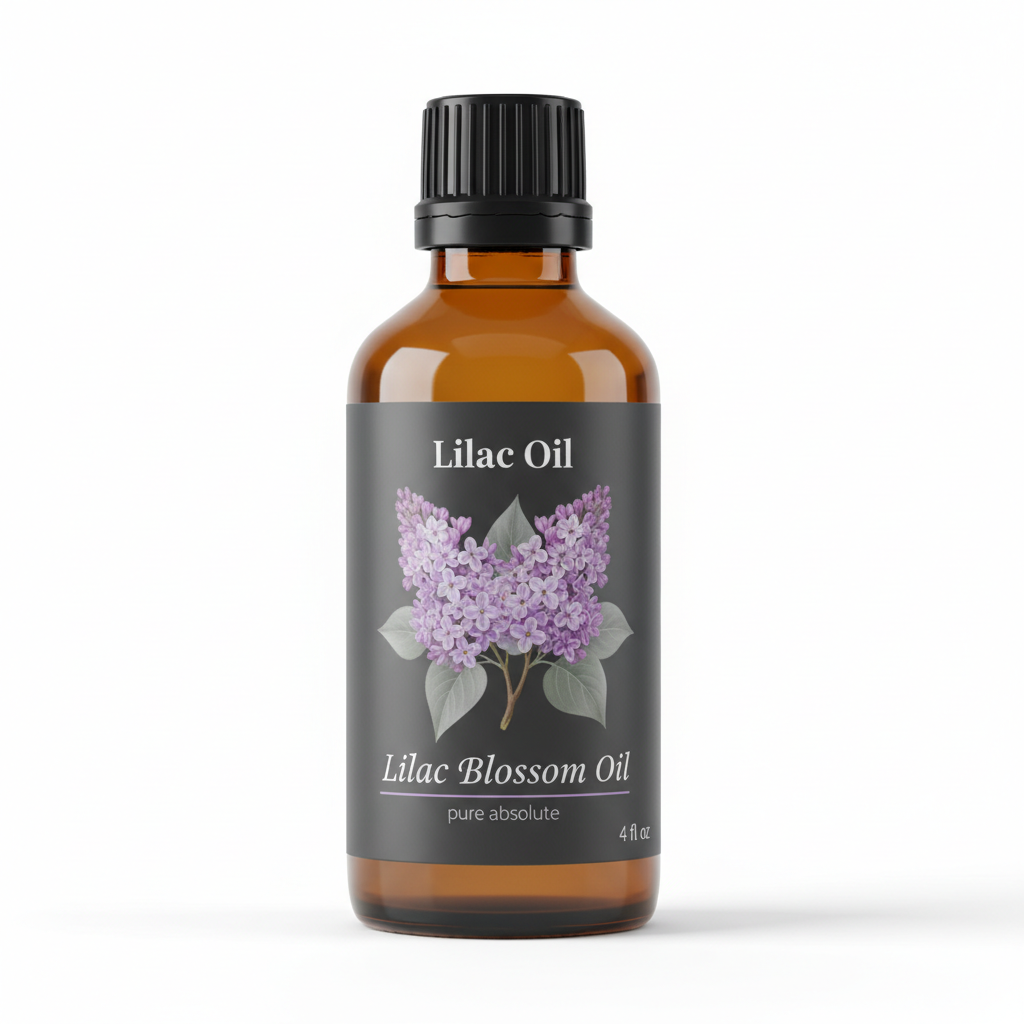
Lilac Blossom Oil
Lilac Blossom Oil from our own shop, in sizes from 0.5 oz to bulk.
From $15.99
Shop Now →Sources & Further Reading
- Arnold Arboretum, Lilac Sunday
- University of Minnesota Extension, Lilacs
- The Rosenbach, When Lilacs Last in the Dooryard Bloom’d
- Bobei, Cirneci and Podina, Is the Proust phenomenon fact or fiction? A systematic review and meta-analysis of odor-evoked autobiographical memory, Psychonomic Bulletin and Review (2026)