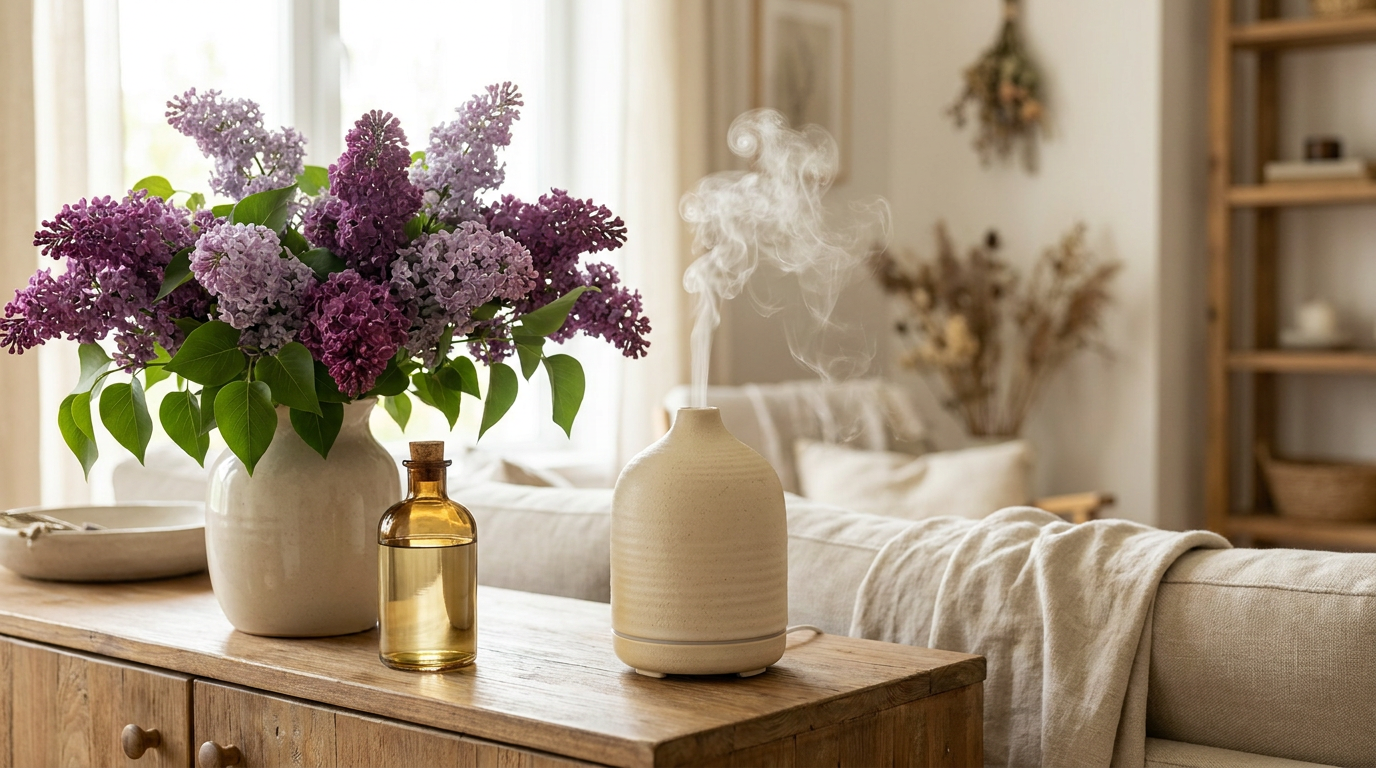
Lilac Scent Molecules: What Gives the Flower Its Smell
Ask what makes lilac smell like lilac and the honest answer is a family of molecules, a few of which are far more famous than the rest. Researchers have named the stars of the flower's scent. Naming them does not hand you a recipe, and that gap is the interesting part of the story.
The molecule with the lilac name
Lilac aldehyde is the headline. A 2021 chemistry paper calls the lilac aldehydes the principal olfactory molecules of lilac flowers and notes they were first isolated in 1974 from an oil of lilac flowers (Synthesis and Olfactory Properties of Seco-Analogues of Lilac Aldehydes, Dacho and Szolcsanyi, Molecules, 2021). Two further facts from the same paper explain a lot about lilac in perfumery. First, synthetically prepared lilac aldehydes are used almost exclusively in perfumery. Second, one natural form of the molecule, the (5'S) isomer, is detected at a concentration one to two orders of magnitude lower than its mirror-image cousin. In plain English, two samples that both contain "lilac aldehyde" can smell very different in strength depending on which versions of the molecule are present.
That detail comes into focus in a 2006 study of the flower scents of 15 plant species, which found all eight stereoisomers of lilac alcohol and lilac aldehyde, in patterns that differed from species to species, and showed that a moth's antennae responded to every one of them (Linalool and lilac aldehyde/alcohol in flower scents. Electrophysiological detection of lilac aldehyde stereoisomers by a moth, Dotterl et al., J Chromatogr A, 2006). One name, eight molecules, and a nose that can tell them apart.
Lilac is not one recipe, even in the garden
Different lilacs lead with different notes. In a study of Syringa oblata, lilac aldehyde and lilac alcohol were the most abundant terpene volatiles when researchers sampled the headspace of ground, frozen flowers (Syringa oblata genome provides new insights into molecular mechanism of flower color differences among individuals and biosynthesis of its flower volatiles, Chen et al., Frontiers in Plant Science, 2022). A 2026 paper on a different species, Syringa villosa, found a different leader, (E)-beta-ocimene, as the predominant flower volatile (Establishment of a Virus-Induced Gene Silencing (VIGS) System in Syringa villosa and Functional Characterization of the Floral Scent-Associated Gene SvTPS3, Liu et al., Plants, 2026).
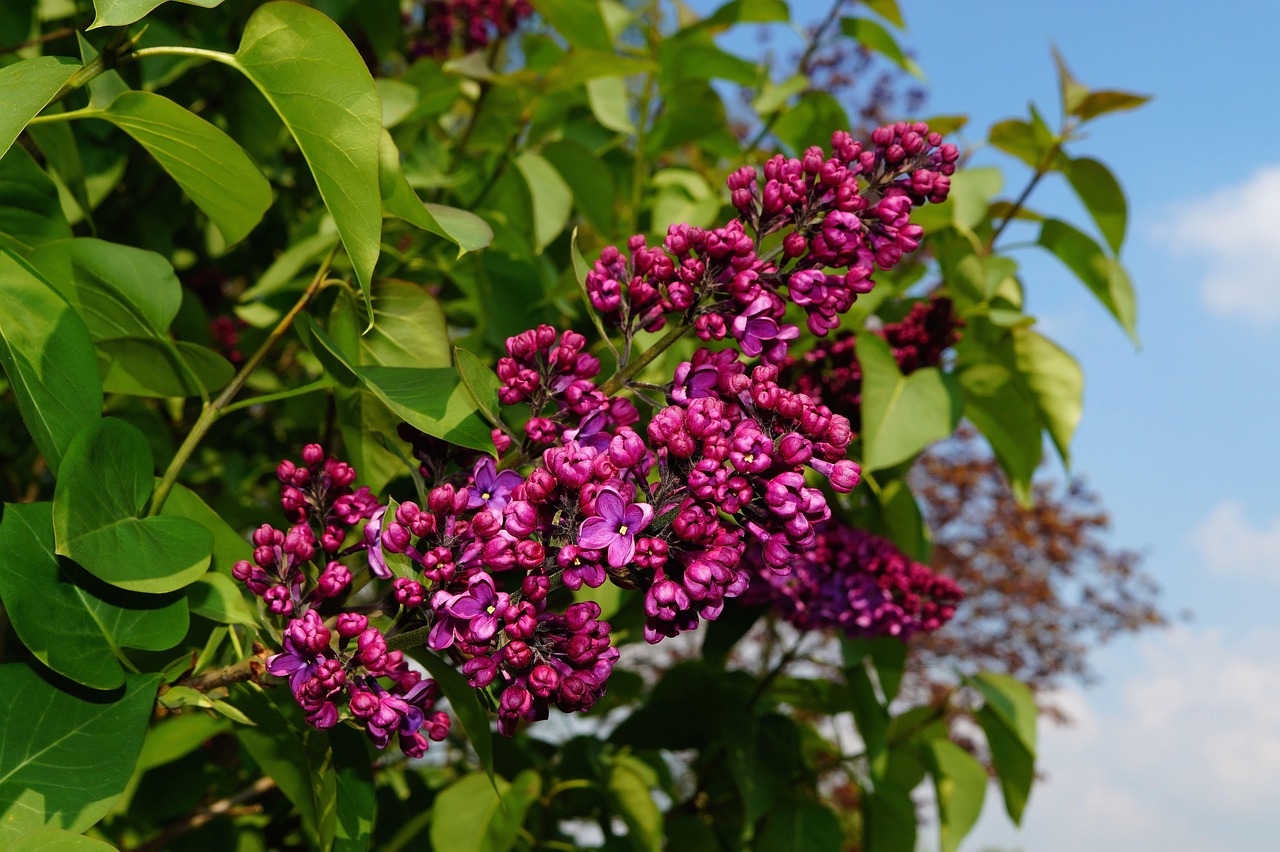
Neither is the common lilac, Syringa vulgaris, and a frozen, ground flower is not a bush in a May garden. So our takeaway is simple: when someone says lilac smells of molecule X, they are describing a species, a sampling method and a moment. Our posts on why lilacs smell stronger at some moments and on the most fragrant varieties follow the plant side of the story.
Why a lilac scent is a balance
If no single molecule is lilac, then lilac is a balance, and balance is a craft. A 2012 study took the volatiles of flowering lavender, separated them by gas chromatography, and recombined chosen groups for a sensory panel. It reported additive, masking and synergistic effects and described the lavender character as something that emerges from particular mixtures (Perceptual characterization and analysis of aroma mixtures using gas chromatography recomposition-olfactometry, Johnson, Hirson and Ebeler, PLoS One, 2012). That was lavender, and it was about analysis rather than product making, but the principle carries over nicely to lilac: the bloom lives in the proportions.
That is how we think about our own oil. Lilac Blossom Oil is a composition of botanical extracts and infused aromatics, layered in careful proportion until it reads as soft, powdery lilac rather than a single note, and adjusted so the green stem, almond sweetness and musky base stay in balance. We do not publish the formula or name the extracts. What we can say is how it smells: soft, powdery and springlike, with fresh purple florals, green stems, a hint of almond sweetness and a clean musky base.
How to use all this at your own nose
You do not need a laboratory to enjoy what the science describes. The next time you smell lilac, in a garden or from a bottle, try noticing the layers one at a time: first the sweetness that arrives at once, then the green edge, then the soft, powdery finish that lingers. Naming what you notice, even in your own words, trains your nose faster than any chemical name will. And if two lilac scents seem different from each other, that is normal, because as the studies above show, lilac was never a single smell to begin with.
What the Certificate of Analysis tells you
The Certificate of Analysis we publish for one batch lists appearance (a yellow liquid), smell (floral, sweet, fresh), a relative density of 0.973, a refractive index of 1.501 and an optical rotation of -0.72 degrees, with the extraction method given as "Blended." Those are properties of the liquid as a whole, useful for checking that a lot looks and behaves as expected. They do not name individual molecules, so we do not claim our oil contains lilac aldehyde, linalool or ocimene. If you need a component-level document, such as a GC-MS report or an allergen declaration, ask us in writing through the contact page before ordering, and our guide to reading a COA and SDS shows what each document can and cannot settle.
For skin, our guidance is to dilute to 0.5 to 2 percent in a carrier oil, start at the low end and patch test. Tisserand Institute's ranges for essential oils run from 0.5 to 1.2 percent for facial cosmetics to 1 to 3 percent for body oils and lotions, for oils without specific restrictions (Dilution for essential oils, Tisserand Institute). Ours is a composition, not an essential oil, so we begin at the lower end and suggest you do too. Anyone with a known fragrance allergy should check with a dermatologist first.
The molecules are fascinating, but the bloom lives in how they are put together, and that is the part you can only judge by smelling.
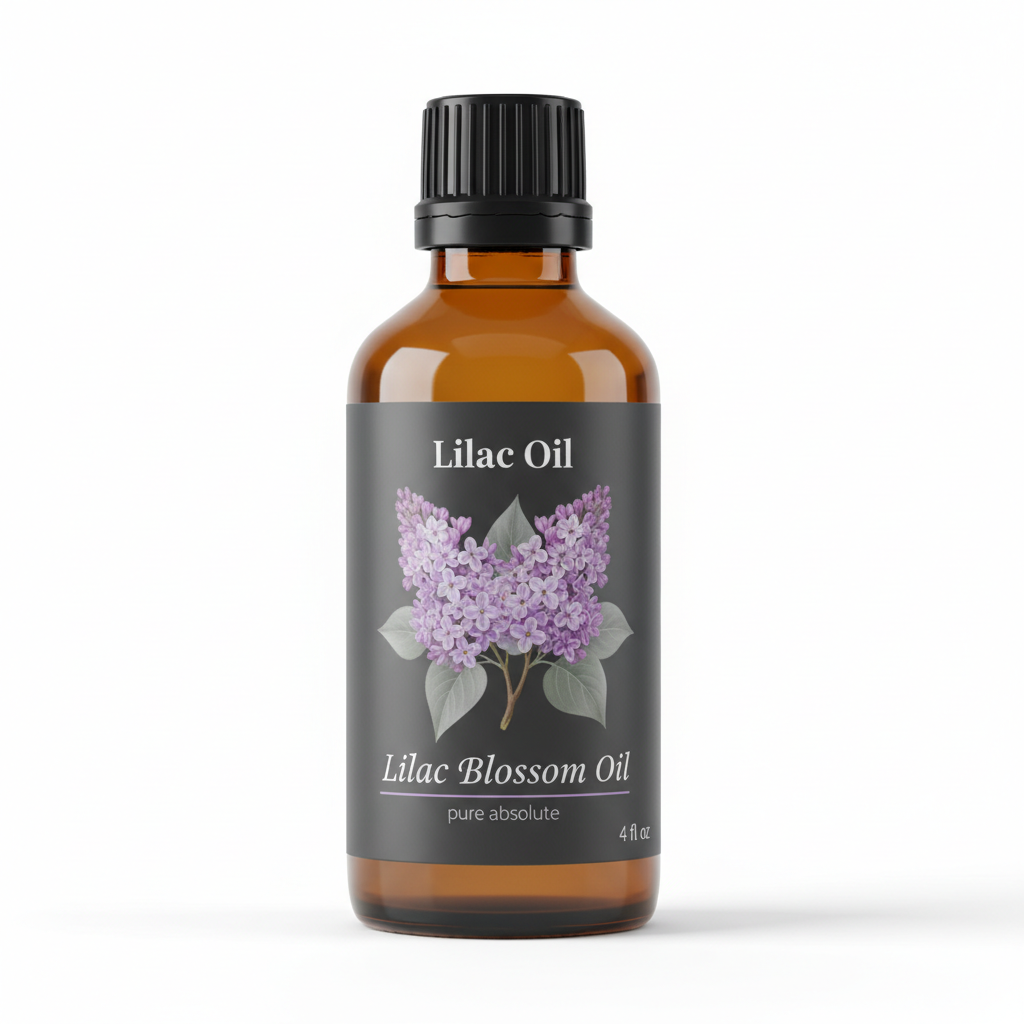
Lilac Blossom Oil
Lilac Blossom Oil from our own shop, in sizes from 0.5 oz to bulk.
From $15.99
Shop Now →Sources & Further Reading
- Synthesis and Olfactory Properties of Seco-Analogues of Lilac Aldehydes (Dacho and Szolcsanyi, Molecules, 2021)
- Linalool and lilac aldehyde/alcohol in flower scents. Electrophysiological detection of lilac aldehyde stereoisomers by a moth (Dotterl et al., J Chromatogr A, 2006)
- Syringa oblata genome provides new insights into molecular mechanism of flower color differences among individuals and biosynthesis of its flower volatiles (Chen et al., Frontiers in Plant Science, 2022)
- Establishment of a Virus-Induced Gene Silencing (VIGS) System in Syringa villosa and Functional Characterization of the Floral Scent-Associated Gene SvTPS3 (Liu et al., Plants, 2026)
- Perceptual characterization and analysis of aroma mixtures using gas chromatography recomposition-olfactometry (Johnson, Hirson and Ebeler, PLoS One, 2012)
- Dilution for essential oils (Tisserand Institute)