
Lilac Oil Glossary: Terms in the Order You Meet Them
This glossary is ordered the way a new buyer meets the words: first the paperwork that arrives with an oil, then the perfumery vocabulary, then candle terms, then skin and soap terms, then the rules that apply once your name is on a product. Each entry says what the word means, where a primary source defines it, and what it means for our lilac oil using only what our pages and our published certificate of analysis state. Where we found no formal definition, the entry says so.
The paperwork that arrives with an oil
Composed lilac oil. Our term, and the one our pages use, for a composition of botanical extracts and infused aromatics built to be faithful to the scent of the common lilac (Syringa vulgaris). Our pages say it is not a distillate, not an absolute and not a lilac essential oil, and that we will not publish a formula. See why there is no true lilac essential oil.
Certificate of Analysis (COA). A lab or supplier report for one batch, listing the tests run and the result against a stated standard. Ours is published at /docs/lilacoil-coa.pdf for batch LILIBCUNINC001A. It shows appearance, smell, relative density, refractive index and optical rotation, extraction method "Blended" and parts used "N/A". It shows no constituent list, flash point, allergen data, origin or residue data. Read it with how to read a COA and SDS.
Batch number and lot number. The identifier that ties a bottle to a batch. Our bottles carry a lot number. If you resell, keep it in your records, because it is how a complaint is traced.
Best by. The date after which the supplier no longer stands behind the batch's stated quality. The COA's best-by date is 05/31/2027. Our copy puts shelf life at typically one to two years for floral oils kept tightly capped in a cool, dark place. That is general guidance, not a promise for every bottle.
Relative density (specific gravity). The oil's weight compared with an equal volume of water. The COA gives 0.973 at 20 C (its standard: 0.950 to 0.990). Arithmetic: 1 ml weighs about 0.973 g, so 1 oz (29.57 ml) weighs about 28.8 g. That is why measuring by weight is more reliable than counting drops.
Refractive index. How much the liquid bends light, a fingerprint-style check for consistency. The COA gives 1.501 at 20 C (standard 1.480 to 1.520). It confirms the batch sits inside the printed range. It does not say what is in it.
Optical rotation. How far a liquid turns polarized light. The COA gives -0.72 degrees at 20 C (standard 0 to -10 degrees). Same caveat: an in-range number is a consistency check, not a composition.
Extraction method "Blended" and parts used "N/A". The COA's two entries that match what our explanatory pages say: the oil is composed, not extracted from a plant part. (Our shop page spec table uses different words, which is a conflict between our own pages. We do not resolve it here and ask you to treat the COA and the explanatory pages as the guide.)
Safety data sheet (SDS). OSHA's Hazard Communication Standard defines a safety data sheet as written or printed material concerning a hazardous chemical, and its Appendix D says sections 1 to 11 and 16 are mandatory while sections 12 to 15 may be included but are not mandatory (OSHA, 29 CFR 1910.1200, via eCFR). No SDS is published on our site. A buyer who needs one should ask in writing before ordering and get the answer in writing. We do not promise a specific document.
Flash point. The temperature figure used to classify a liquid's flammability. OSHA's Appendix B defines a flammable liquid as one with a flash point of not more than 93 C (199.4 F) (same source). Flash point for our oil: not published. It matters most for candles, so see flash point and candles.
IFRA Standards. The fragrance industry's risk management system for ingredients. IFRA's library lists each standard as a Restriction, Specification or Prohibition for a substance, with an amendment number and publication date (IFRA Standards Library). IFRA's page for the Standards, which showed the 51st Amendment as current and a 52nd consultation closed on 12 June 2026, also says IFRA does not itself certify compliance (IFRA, Standards and documentation).
IFRA certificate (certificate of conformity). A statement from the supplier, or an independent company, that a fragrance complies with the Standards at stated use levels. IFRA itself offers a template but says independent companies certify. No IFRA certificate is published for our oil. Ask in writing.
GC-MS report. A gas chromatography and mass spectrometry analysis that separates a fragrance into its components and lists them. Our COA is not one. No GC-MS report is published for our oil.
Allergen declaration. A list of fragrance ingredients that regulators or standards treat as allergens, with their levels. None is published for our oil. See the regulation entries below for why a brand owner needs the information from its supplier.
Trade secret (formula). FDA says fragrance and flavor formulas are the kinds of cosmetic components most likely to be trade secrets, which is why ingredient lists may say only "fragrance" (FDA, 2022). Our statement that we will not publish a formula is a business choice, and it means the documents you may need come by request.
Perfumery words
Accord. A blend of materials perceived as a single scent. A patent from Reckitt Benckiser describes a fragrance accord as the olfactive theme or character of a fragrance, and as a collection of raw materials that creates an odor a single material cannot (US 9,540,589 B2, granted 10 January 2017). A lilac scent is usually described as an accord because it is built from several materials. See inside the lilac accord and how crafted lilac oil is built.
Top, heart and base notes. The same patent says top notes are the most volatile part of the accord and the first thing usually smelled, middle notes form the "heart" and supply most of the fragrance, and base notes are the least volatile, made of the heaviest molecules, and linger longest. It gives a typical split of about 10% top, 60% middle and 30% base. That is one patent's example, not a rule, and where one tier ends and the next begins is not standardized. Our product page lists lilac oil as a heart (middle) note.
Essential oil. In everyday use, an oil obtained from a plant by distillation or by pressing. We could not read the formal definition (the standard that holds it is behind a paywall), so we use the word the way our pages do: our oil is not one. Lilac essential oil is not produced commercially, and our pages say so.
Absolute. In common trade usage, a concentrated aromatic extract made with solvents and then refined (we did not find a free formal source). Our pages say our oil is not an absolute.
Distillate. What is collected when a plant material is distilled. Our pages describe the oil as composed and not a distillate.
Fragrance oil. Trade usage for a scent oil that may be wholly or partly synthetic. We found no standards-body definition. The live post lilac fragrance oil versus crafted lilac blossom oil sets out the difference as our pages state it.
Drift. Our bulk page's word for how a composed floral scent changes over time, sped up by heat and sun. We use it as the site does and give it no number.
Candle terms
Most candle-making words are trade usage with no standards-body definition that we found. We say so where it applies, and we do not give any candle figure for our own oil. See scenting soy candles.
Fragrance load. The weight of fragrance as a percentage of the weight of wax. One retailer's guide to a soy wax says that wax has a maximum fragrance load of 10% and suggests starting at 6%, about 1 oz per lb of wax (candle-supply retailer guide to AAK 464 soy wax). Arithmetic: 1 oz in 16 oz is 6.25%, and because a fluid ounce of an oil with relative density 0.973 weighs about 28.8 g, a recipe that gives ounces of oil by volume lands a little above a recipe that gives ounces by weight. Weigh in grams. The figure is for that wax, not for our oil.
Cold throw. How strongly an unlit candle or melt smells. Hot throw: how strongly it smells while burning or melting. Both are judged by nose and neither has a standard measurement that we found. The shop's bulk page says lilac has decent throw in wax melts and cold-process soap but reads softer than heavier musks or woods, and recommends a small-scale test first. That is the shop's guidance, not a test result.
Cure time. The rest period between pouring and use. The same retailer guide reports a two-week cure as ideal for that wax, based on its own testing, with no test design given. Use your wax maker's data sheet.
Metal-cored wick. The Consumer Product Safety Commission's candle page says metal-cored wicks and candles using them must not contain lead in the core above 0.06% by weight (16 CFR 1500.17(a)(13)) (CPSC). A wick question, not an oil question.
ASTM F2058. CPSC lists it as a voluntary standard: the specification for candle fire safety labeling (same page). See candle warning label requirements.
Skin and soap terms
Dilution. The share of oil in the finished product by weight. Our own safety copy says to dilute lilac oil to 0.5% to 2% in a carrier oil for skin use and to start at the low end. Arithmetic at about 20 drops per ml (droppers vary): 0.5% to 2% of 1 oz of carrier is roughly 3 to 12 drops. See the dilution chart.
Carrier oil. A bland base oil the fragrance is diluted into for skin use. We do not sell carrier oils; buy from a supply shop or pharmacy.
Patch test. Applying a small amount of the finished, diluted product to a small area of skin first. Our copy asks for it, and keeps the oil away from eyes, children and pets. For skin reactions or pregnancy questions, ask a physician.
Cold-process soap. Soap made by mixing oils with lye and letting it set and cure. Lye is a partner material we do not sell; follow its supplier's safety instructions. See lilac cold-process soap.
Melt and pour. Soap made by melting a ready-made soap base and adding scent. See melt-and-pour lilac soap.
Not for internal use. Our stated limit: external aromatic and cosmetic use only. FDA's small-business exemption rules also carve out products intended for internal use, which is one reason the line matters.
The rules that apply once your name is on it
Cosmetic. FDA defines it by intended use: cleansing, beautifying, promoting attractiveness or altering appearance. A product intended to address disease is a drug (FDA). Our pages say the oil's purpose is scent and make no medical claim.
Fragrance (regulatory sense). 21 CFR 700.3(d): any natural or synthetic substance or substances used solely to impart an odor to a cosmetic product (eCFR).
Ingredient declaration. The ingredient list on a cosmetic label, in descending order of predominance, where "fragrance" may stand in for the fragrance ingredients (21 CFR 701.3).
Responsible person. The manufacturer, packer or distributor whose name appears on the label. That person keeps safety records and reports serious adverse events (FDA, MoCRA page).
MoCRA. The Modernization of Cosmetics Regulation Act of 2022. Its small-business exemption covers registration and listing for some businesses, not every product type (same page).
Private label. A product made by one firm and sold under another firm's brand. Our wholesale page offers it. The legal burden that follows is covered in private label lilac products.
For anything on this page that decides a safety or legal question, the answer comes from a regulatory consultant, product-safety attorney or physician, not from a glossary. Our job is to say what the oil is and what we publish about it.
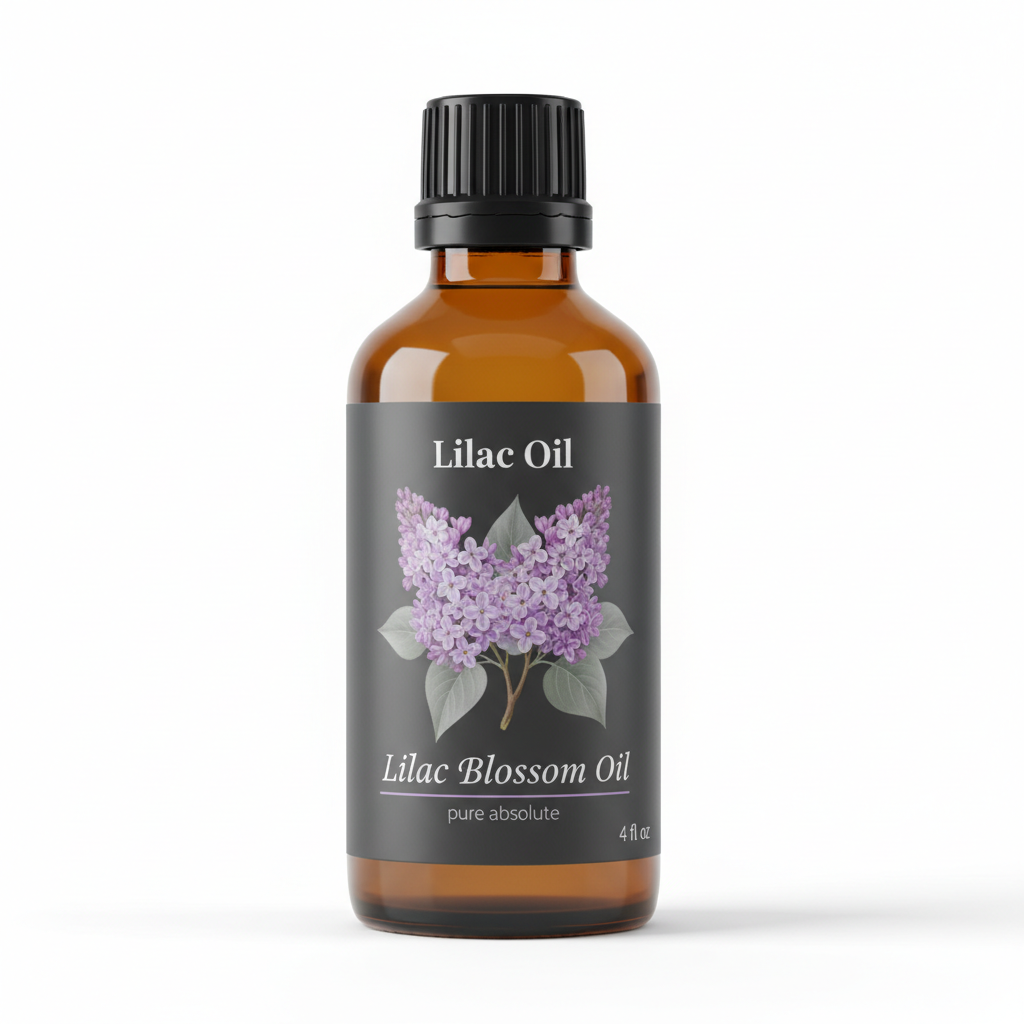
Lilac Blossom Oil
Lilac Blossom Oil from our own shop, in sizes from 0.5 oz to bulk.
From $15.99
Shop Now →Sources & Further Reading
- OSHA, 29 CFR 1910.1200, Hazard Communication (definitions; Appendix B flammable liquids; Appendix D safety data sheets). ecfr.gov/title-29/part-1910/1910.1200
- IFRA. Standards Library. ifrafragrance.org/safe-use/library
- IFRA. Standards and documentation. ifrafragrance.org/safe-use/standards-documentation
- U.S. FDA, 2022. Fragrances in Cosmetics. fda.gov/cosmetics/cosmetic-ingredients/fragrances-cosmetics
- U.S. FDA. FDA Authority Over Cosmetics. fda.gov/.../fda-authority-over-cosmetics
- U.S. FDA. Modernization of Cosmetics Regulation Act of 2022 (MoCRA). fda.gov/.../mocra
- eCFR. 21 CFR 700.3 and 21 CFR 701.3. ecfr.gov/title-21/part-700/700.3
- U.S. Consumer Product Safety Commission. Candles (business guidance). cpsc.gov/.../Candles
- Reckitt Benckiser Brands Ltd, 2017. Fragrance composition, US 9,540,589 B2. patents.google.com/patent/US9540589B2
- Candle-supply retailer guide to AAK 464 soy wax (retailer statement, not a manufacturer specification). candlescience.com/getting-started-with-aak-464-soy-wax