Testing a Lilac Blend on Paper Strips First
There is a quiet pleasure in building a lilac blend that smells like your own dooryard, and a quiet disappointment waiting for anyone who copies a recipe and finds it falls flat. We sell one lilac oil and no fixed blend, and we would encourage you to treat any lilac recipe, ours included, as a starting point. The best way to find your own is a few strips of paper and a little patience.
Why a borrowed recipe rarely travels
Scent mixtures do not simply add up. Researchers who rebuilt the aroma of flowering lavender from its separate volatile compounds found additive, masking and synergistic effects, and that the lavender character emerged from particular combinations (Perceptual characterization and analysis of aroma mixtures using gas chromatography recomposition-olfactometry). That study was about lavender, so it is an inference for lilac, but a sensible one: a pairing that sings at one ratio can bury the lilac at another, and a recipe written for someone else's oil may not carry over.
The second reason is you. Smell adapts. A review in Chemical Senses describes how repeated or prolonged exposure lowers sensitivity to an odor, and that the time course of adaptation and recovery depends on how strong the odor is and how long you smell it (Psychophysical and behavioral characteristics of olfactory adaptation). In practice, the fifth strip in a row is not telling you what the first would have.
Choose one partner and give it a job
We suggest these partners for lilac: rose, violet leaf, bergamot, sweet orange, jasmine, ylang ylang, sweet pea, lily of the valley and neroli. Rather than choosing from nine, ask what you want to change. A perfume guide from Tendance Parfums says lilac pairs with green notes, fruity touches such as peach, and soft bases such as musk, amber and tender woods, and that although lilac is a relatively volatile heart note, how long it lasts depends mainly on the base (Lilac perfume: guide and best picks). So the useful question is the partner's role: something to freshen the lilac, something to sweeten it, or something to give it staying power. Pick one role, one material, and test that before adding a second. Our post on what blends well with lilac goes through the list.
A ladder of four rungs
A ladder is the same two materials mixed in stepped ratios. Weigh them, because drops will not hold the small differences that matter. Each rung below makes 1 g of undiluted blend; the numbers are our arithmetic and a suggestion, not a tested formula.
| Rung | Lilac oil : partner | Lilac oil | Partner |
|---|---|---|---|
| A | 9 : 1 | 0.90 g | 0.10 g |
| B | 4 : 1 | 0.80 g | 0.20 g |
| C | 2 : 1 | 0.67 g | 0.33 g |
| D | 1 : 1 | 0.50 g | 0.50 g |
On the batch on our published certificate of analysis, the relative density is 0.973, so 1 g of our oil is about 1.03 ml, or roughly 20 drops per ml if you want a rough cross-check. Your partner will have its own density, which is one more reason to rely on the scale.
Smelling on paper
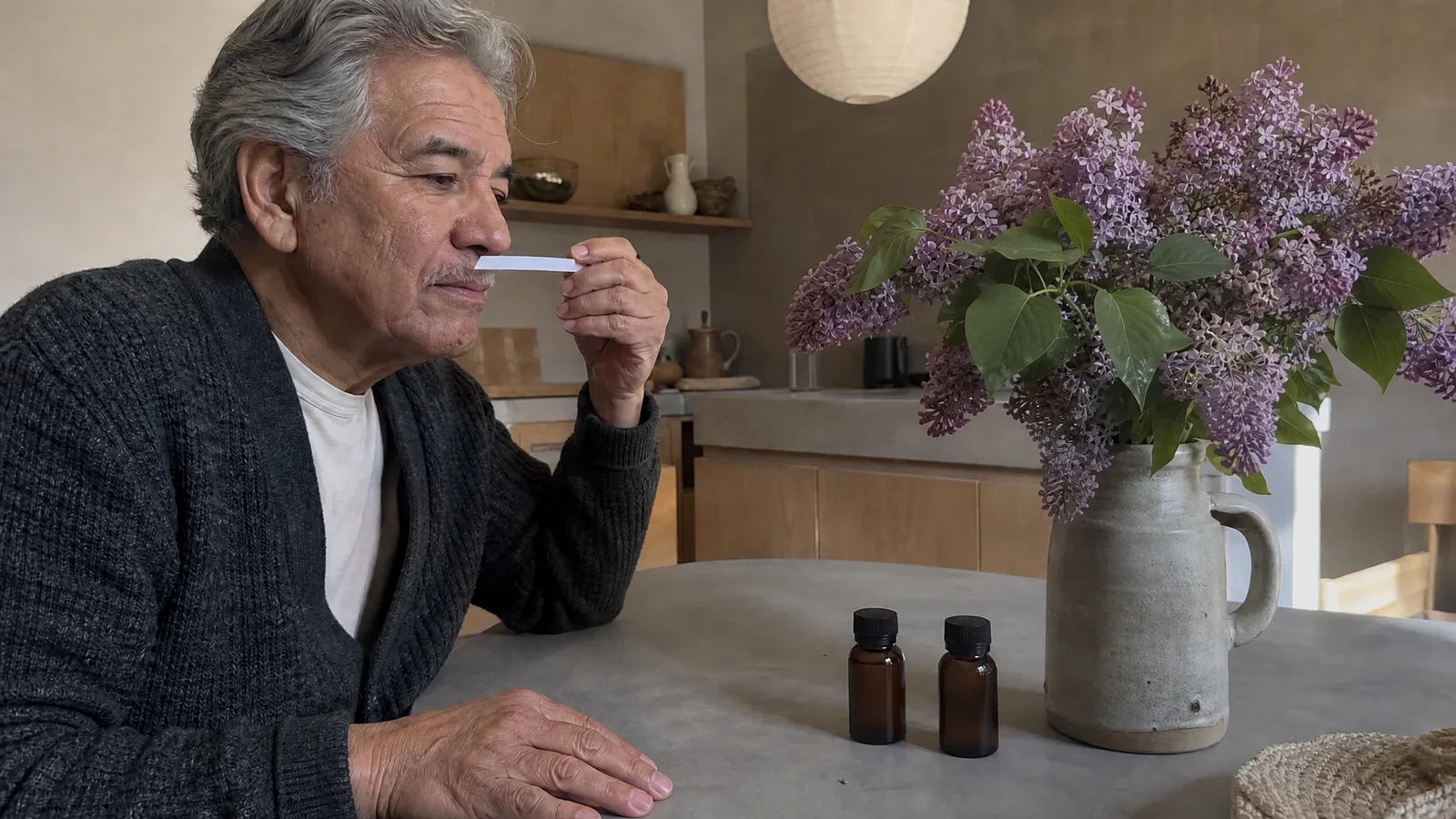
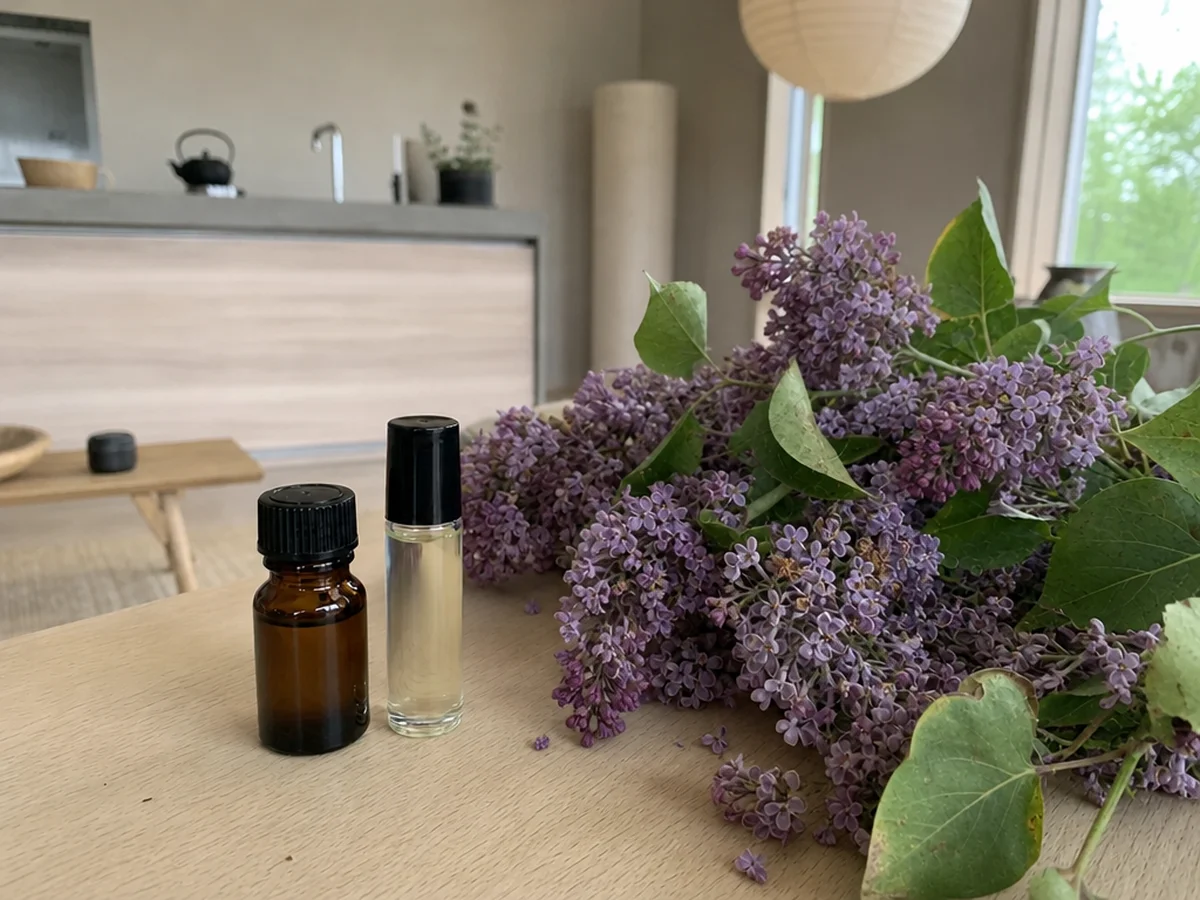
Put a small amount of each rung on its own strip of unscented blotting paper, label it in pencil, and wave it near your nose rather than pressing it there. Work through them in order, resting in fresh air between strips, and keep each session short.
- Smell each strip right away, then again after a minute.
- Come back after an hour. Lilac is a volatile heart note, so what is left of it then is revealing.
- Look again the next day, in another room, before deciding anything.
- Write one word per strip. A pattern in your own notes beats any description of ours.
If a rung has lost the lilac, step toward the lilac end. If every rung smells like the partner, choose a gentler partner or a smaller rung, not more lilac. Our post on making lilac scent last longer explains why more oil is not the answer to staying power.
Keep your strips. Pin them to a card with the rung letter and the date, and look again in a week. If one strip still smells like a garden after the others have faded, that is the one to take forward, and the card becomes a small record of how you got there.
From paper to skin
Paper tells you nothing about skin. For skin use, we recommend diluting our oil to 0.5% to 2% in a carrier oil, patch testing a small area first and starting at the low end. The Tisserand Institute's table, written for essential oils, gives 0.2% to 1% for sensitive or impaired skin, 0.5% to 1.2% for facial cosmetics and 1% to 3% for body oils and lotions (Dilution for essential oils). Ours is not an essential oil, so we would take the lower number of the two for any given use. Anyone with a fragrance allergy should ask a dermatologist. Our dilution chart turns the percentages into drops.
If you plan to sell a blend, you will need a safety assessment of the finished mixture, and we publish no IFRA statement or allergen declaration for our oil. Ask us in writing through the contact page before ordering and keep the answer in writing.
Start with one partner and four strips. If the lilac is still there after an hour, you have found something worth building on, and our guide to testing before you buy bulk shows how to scale it up carefully.
However it turns out, enjoy the process. A few strips, a pencil and an unhurried hour are all the equipment a lilac blend needs.
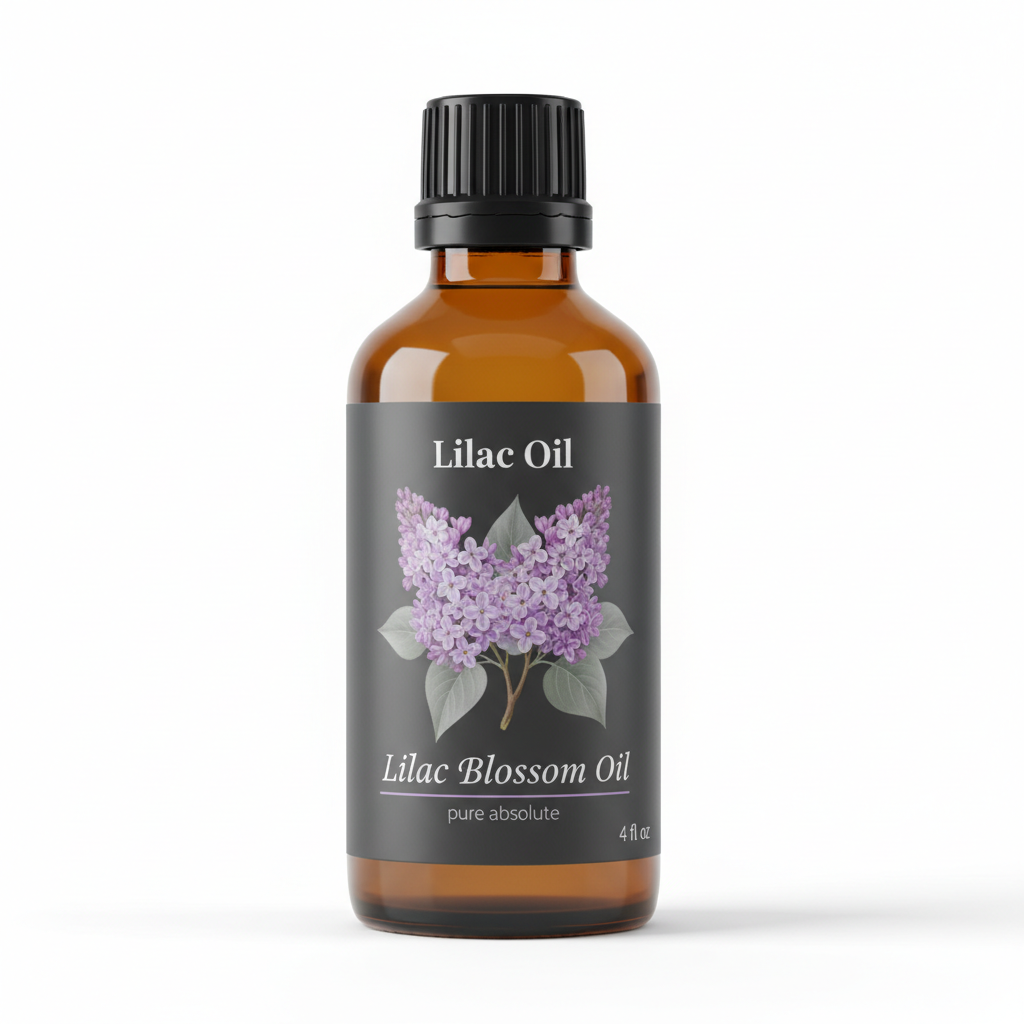
Lilac Blossom Oil
Lilac Blossom Oil from our own shop, in sizes from 0.5 oz to bulk.
From $15.99
Shop Now →Sources & Further Reading
- Johnson AJ, Hirson GD, Ebeler SE. Perceptual characterization and analysis of aroma mixtures using gas chromatography recomposition-olfactometry. PLoS One, 2012. Europe PMC, PMID 22912722
- Dalton P. Psychophysical and behavioral characteristics of olfactory adaptation. Chemical Senses, 2000. Europe PMC, PMID 10944515
- Lilac perfume: guide and best picks, Tendance Parfums. tendance-parfums.com
- Dilution for essential oils, Tisserand Institute. tisserandinstitute.org