Comparing Lilac Oil Prices: A Fair Way to Do It
Three listings say "lilac oil," and one costs five times another. The price is not telling you which is better. It is telling you almost nothing until you know what kind of thing is in the bottle and how much of it you actually use. Here is how we compare lilac oils, ours included, in a way that holds up.
Start with the type
A bottle labelled lilac may be a fragrance oil, a composition of extracts and aromatics, an oil already cut with a carrier, or something with a botanical-sounding name that does not say what it is. Ours is a composition of botanical extracts and infused aromatics built to be faithful to the common lilac. There is no true lilac essential oil in our range, and our post on why there is no true lilac essential oil explains why a listing claiming one deserves a question or two.
A short ingredient line is not a warning sign. U.S. cosmetic rules let a maker list "fragrance" in place of itemising the scent, provided it is within the meaning consumers commonly understand (21 CFR 701.3 Designation of ingredients). FDA's explanation is that fragrance formulas are the components most likely to be trade secrets (Fragrances in Cosmetics | FDA). So the label alone cannot tell you the quality, and that is why the questions you ask matter more than the number on the tag.
Cost per millilitre, then cost per batch
Bottle sizes rarely match across sellers, so divide. A 0.5 oz bottle holds about 14.79 ml and a 1 oz bottle about 29.57 ml. Take the listed price, divide by the millilitres, and you can compare any two bottles on the same footing.
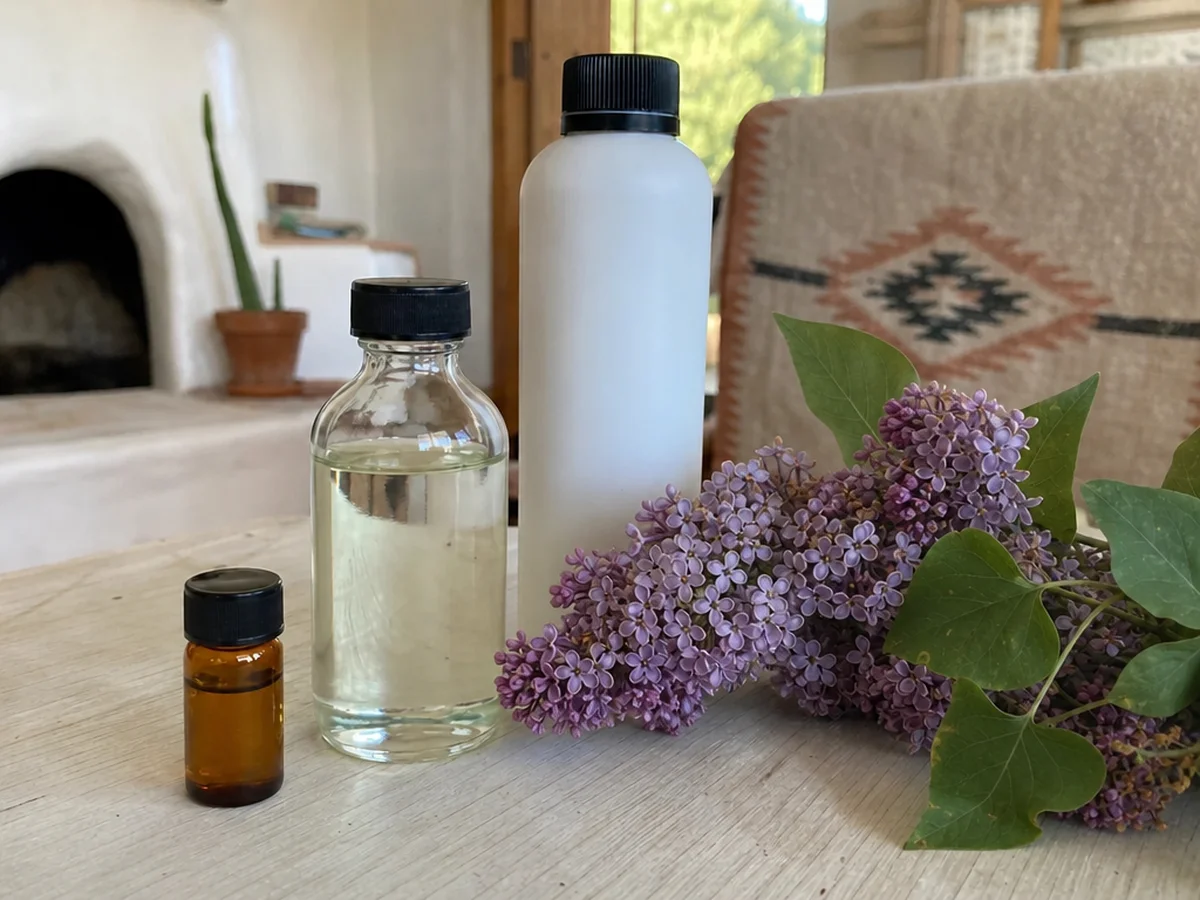
Then think in batches, because a batch is what you spend. Our guidance for skin use is 0.5% to 2% in a carrier oil, so a 30 ml bottle of body oil needs between 0.15 ml and 0.6 ml of oil. As an illustration with invented units, if oil cost 10 units a millilitre, that batch would use between 1.5 and 6 units of lilac. Next to the carrier, the container and your time, the oil is usually a modest part of a finished bottle. Our dilution chart works the same sums in grams for other batch sizes, with the density on our Certificate of Analysis, 0.973, doing the conversion.
Check strength too. A low price per millilitre may mean the oil has been diluted, so you are buying less scent per millilitre. If a listing does not say what it is cut with and at what percentage, that is a fair question to put to the seller.
A small spreadsheet beats a gut feeling
When three tabs are open and each one wants your attention, a simple table keeps you honest. Make one row per listing and fill in the same columns every time:
- What the seller calls it, and what type of product it really is.
- Size in millilitres, converted if the listing gives ounces.
- The listed price and the price per millilitre.
- Whether it is neat or cut with something, and with what.
- Which documents the seller offers, and whether they will send them in writing.
Leave a blank wherever a listing does not say. The blanks are information too. After ten minutes you will usually see that two of the three rows have gaps you cannot fill without writing to the seller, and that tells you whom to write to first.
Price falls with size, and so should your plans
Volume pricing is normal for any oil, and ours comes in nine sizes from 0.5 oz to 400 lb, all the same oil from the same lots. Our shop page has the current price for each. Before you assume the large size is the better deal, divide at each size, and check that you can use it up: we put shelf life at typically 1 to 2 years kept tightly capped in a cool, dark place. A scent you have not smelled yet is the other risk, so buy the smallest size or one of the sample bottles our bulk page offers first, and see testing before bulk for a plan.
Smell before you do the sums
Here is the advice we would give a friend. The cheapest bottle is not a bargain if you open it and do not love the scent, and the most expensive one is no bargain either. Lilac is a personal smell, tied up with gardens and grandmothers' porches, so a comparison that leaves out your own nose is missing its most important column. Order the smallest size from the sellers you are seriously considering, set the strips side by side, and choose the one you find yourself reaching for. Then do the sums on that one.
What we can show you about ours
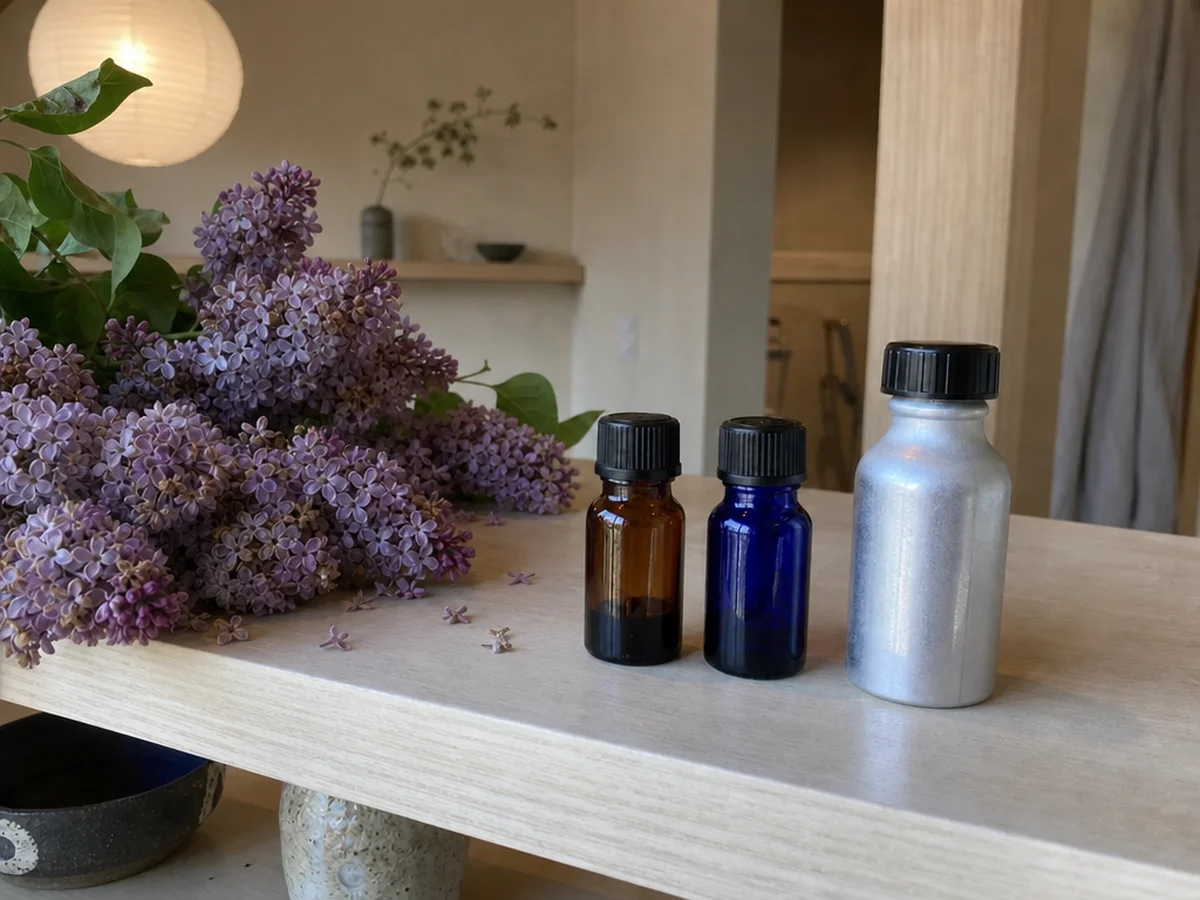
Our bottle is amber glass at every size with a lot number on it. The Certificate of Analysis we publish for one batch gives appearance, smell, relative density, refractive index and optical rotation, which makes it a consistency record rather than an ingredient list. If your product needs a safety data sheet, IFRA statement, flash point or allergen information, ask us in writing through the contact page before you order and keep the answer. Our guide to reading a COA and SDS shows how to judge the reply, whoever sends it.
So compare per millilitre, then per batch, then on what a seller will put in writing. Price comes last because it is the least informative of the lot.

Lilac Blossom Oil
Lilac Blossom Oil from our own shop, in sizes from 0.5 oz to bulk.
From $15.99
Shop Now →