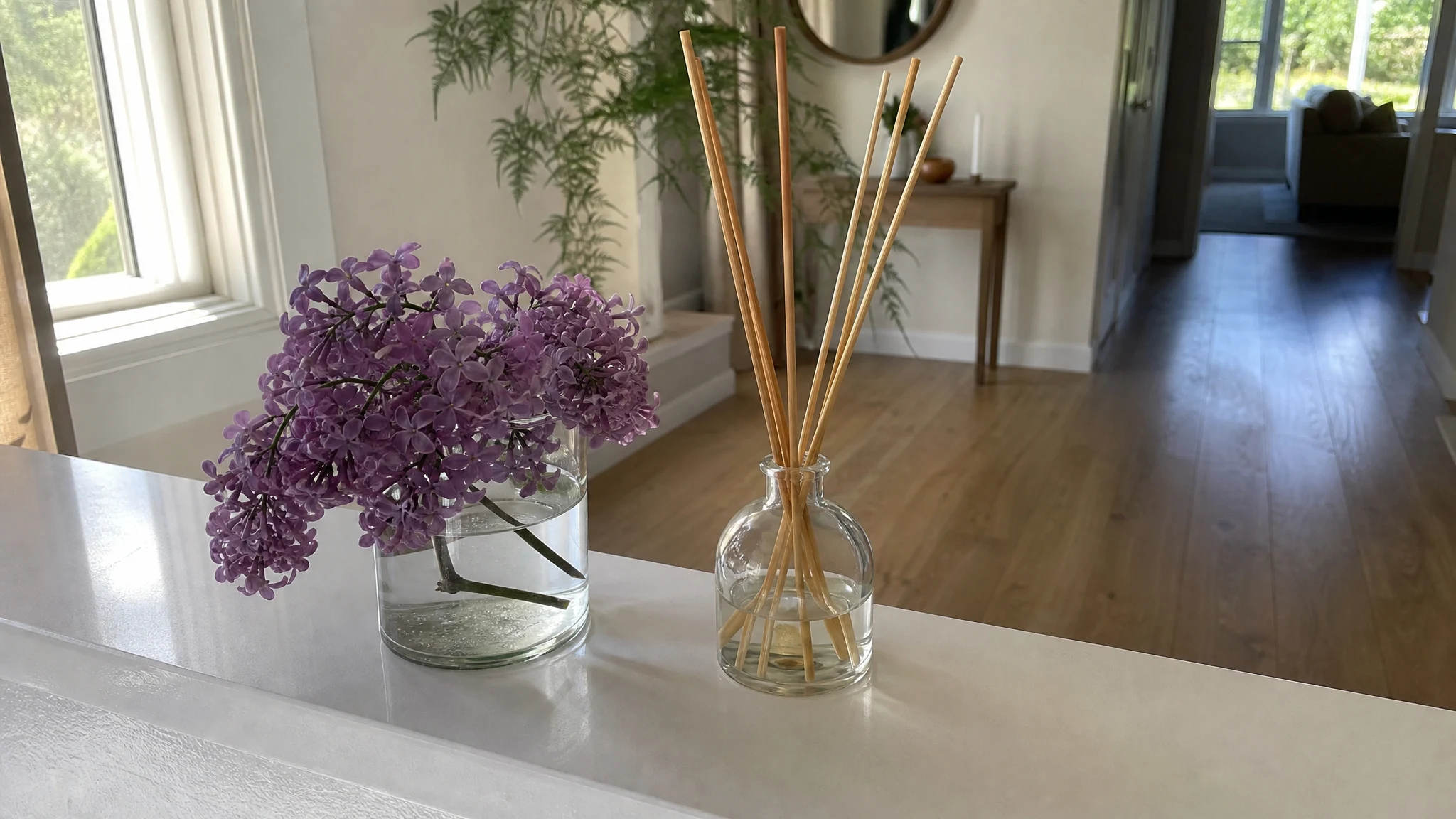
Lilac Reed Diffuser: How to Mix and Test a Small Batch
A reed diffuser is slow, quiet perfume: bamboo or rattan sticks draw the scented liquid upward, and the room takes on a soft lilac the way a hallway does when a bouquet sits on the table. The oil is only a small part of what is in the bottle, though, and the smartest first step is a ten-gram test mix, before you fill anything decorative.
What to expect from a slow scent
A reed diffuser is a patient thing. Unlike a candle or a wax melt, nothing happens the moment you set it down. The liquid has to climb the reeds, reach the top and drift into the air, so you may notice very little at first and more after a day or two. Plenty of people sniff the bottle neck, decide it is too faint, and tip in more oil on day one. We would gently ask you to resist that and let the room tell you.
Where you put the bottle matters nearly as much as what is in it. A spot with a little gentle air movement, like a hallway table or a bookshelf away from direct sun and radiators, lets the scent drift out softly. A hot windowsill or a steamy bathroom shelf tends to use up the liquid faster.
The base does most of the work
In a reed diffuser, the base is the large majority of the liquid. Candle-making supplier CandleScience, in its reed diffuser tutorial, uses a 25% fragrance load as the ceiling for the oil in its example, 1.5 oz of fragrance oil in a 6 oz fill, and tells readers to check each oil's own diffuser limit. A reed diffuser base is usually a solvent such as a glycol ether or an alcohol, or a proprietary blend, so buy one that comes with a safety data sheet and read its hazard section. We sell only the lilac oil, so base, reeds and bottle come from a candle or soap supply shop. That supplier percentage is a frame for a starting point, not a rating for our oil.
The arithmetic, in grams
Weigh everything; oil and base have different densities. The Certificate of Analysis we publish for one batch gives a relative density of 0.973, so a milliliter of our oil weighs about 0.97 g, and a dropper delivers around 20 drops per milliliter (the scale is the real measure). For a 100 g fill:
| Oil share | Oil (g) | About drops | Base (g) |
|---|---|---|---|
| 10% | 10 | 205 | 90 |
| 15% | 15 | 308 | 85 |
| 25% | 25 | 514 | 75 |
One half-ounce bottle holds roughly 14 g of oil, enough for one 100 g fill at about 14%. One ounce holds about 29 g, which is roughly 290 g of finished diffuser at 10%. Lilac is a soft heart note, so judge it in the room rather than at the neck of the bottle.
Our suggestion: the low end, in a jar first
Our skin guidance, 0.5% to 2% in a carrier, does not transfer to a diffuser, and a diffuser at 10% to 25% is many times that figure. We also do not state a flash point, so we suggest the low end of the supplier range and a small trial:
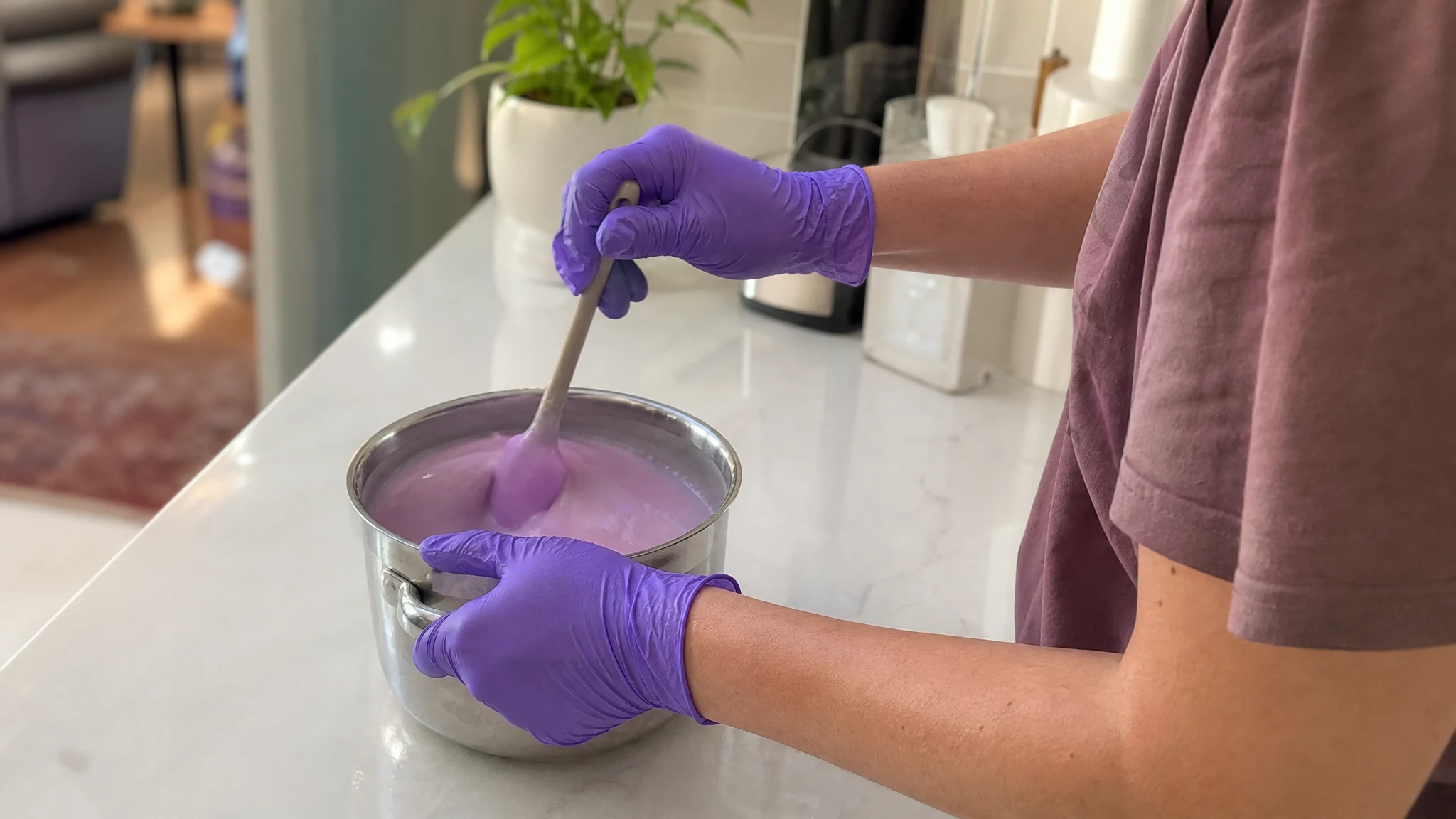
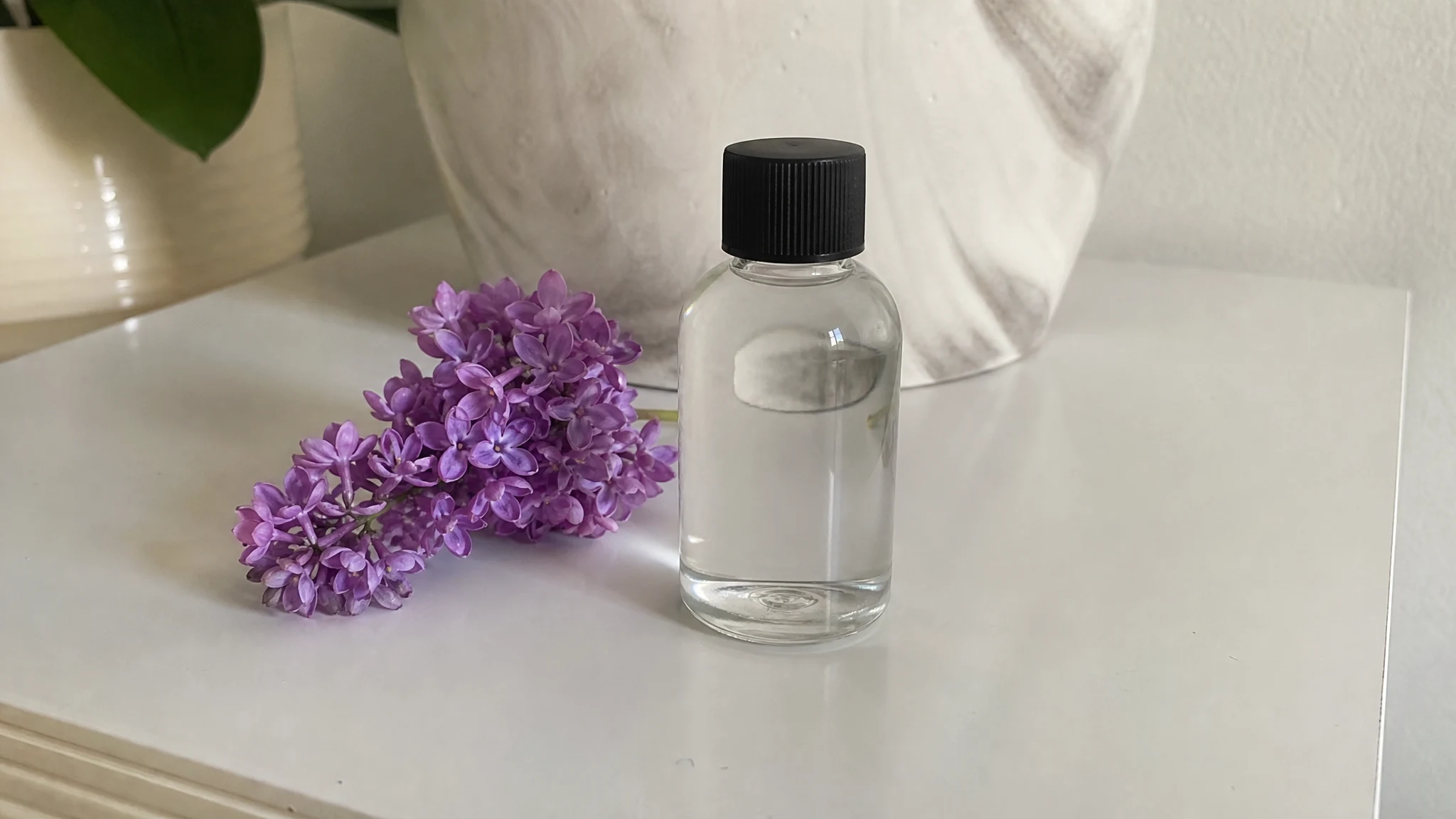
- Weigh 9.0 g of base into a small clean glass jar.
- Add 1.0 g of lilac oil, about 20 drops. That is a 10% mix.
- Seal it, shake it, and leave it overnight.
- Look for haze, droplets on the surface, or a film. If the oil separates, that base cannot hold lilac at that share, and more oil will not fix it.
- If it stays clear, scale to a full bottle and add reeds. CandleScience's example uses six to eight rattan reeds in a 6 oz fill, so for a 100 g fill start with four or five and add more if the scent is faint after a couple of days.
If you need a safety data sheet, flash point or IFRA statement for your own file, ask us in writing through the contact page before ordering and keep the answer.
Reading the room after a few days
Once your reeds are in, give the diffuser a full day before you judge it. Walk out of the room, come back in, and notice what meets you at the door. That first breath, before your nose has had time to adapt, is the honest one. Lilac is soft and powdery with a clean musky base, so you are looking for a gentle bloom in the background, not a perfume counter.
- If you can only smell it with your nose at the neck of the bottle, flip the reeds so the dry ends are down and give them a few more hours.
- If it fills the room more than you like, take out a reed or two rather than pouring anything away.
- Write the date and the mix on a label so you remember exactly what you made when you want to make it again.
Reeds are the dial you can turn: more reeds, more scent in the air; fewer reeds, a quieter room. Changing them costs nothing, which makes it a gentler fix than changing the recipe.
Keeping it safe at home
Reed diffuser liquid is a household item that small children are drawn to. Poison Control notes that some reed diffuser fragrances contain up to 70% isopropyl alcohol, that swallowing it can cause vomiting and drowsiness, and describes children hospitalized after getting into the oil. It advises keeping air fresheners in a sealed container out of children's reach, rinsing skin right away with running water, and calling 1-800-222-1222 after a swallow or eye exposure. Put the bottle on a high shelf, away from pets, on a surface that will not mind a drip.
If you would rather skip the solvent entirely, our post on using lilac in an electric diffuser is a different route, and our dilution chart covers the skin side.
A slow lilac in the hallway is worth the ten-gram wait, and a clear test jar is the signal to go ahead.
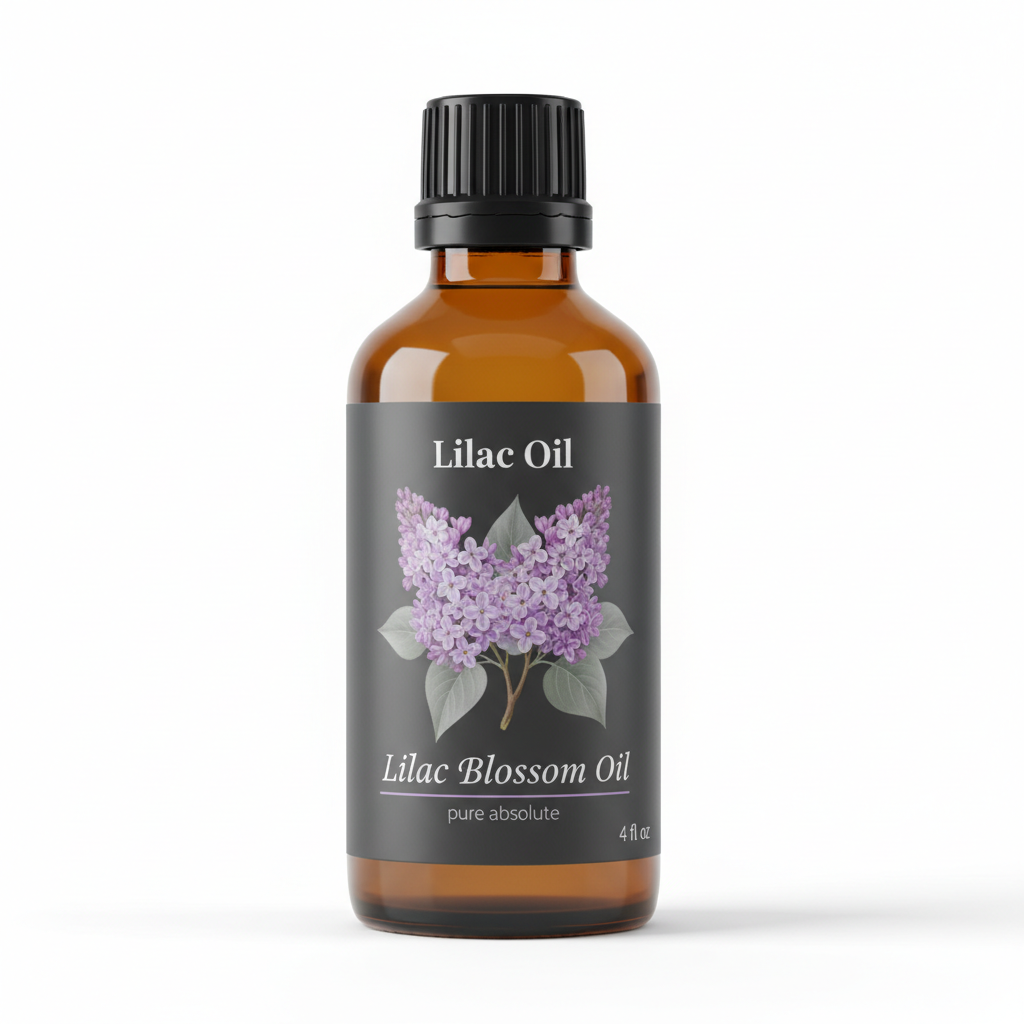
Lilac Blossom Oil
Lilac Blossom Oil from our own shop, in sizes from 0.5 oz to bulk.
From $15.99
Shop Now →Sources & Further Reading
- How to make a reed diffuser (CandleScience)
- Reed diffusers: Household risk (Poison Control)