Lilac Bath Salts: How to Scent Them the Right Way
If all you want is a lilac-scented bath, make salts, not bombs. Salts are a dry mix with one job: to carry a little oil through the tub so you step into soft scent rather than a slick of oil on the surface. Bath bombs add a chemical reaction, a binder and a drying step, and each is a place where a project can go wrong. Start simple.
Oil floats, so help it spread
Oil does not dissolve in water. The Tisserand Institute's bath safety page says not to put drops of essential oil directly into a bath and then step in, since undiluted droplets float on the surface. It suggests mixing the oil into a vegetable oil first or dispersing it with an emulsifier, and it states that neither full-fat milk nor Epsom salts properly dissolve oils. That page speaks of essential oils, and our lilac oil is a composition, but the reasoning is about oil and water, so it carries over. Plain salt is not a dispersant, which means oil scattered straight onto salt would leave droplets behind when the grains dissolve.
So our method is to blend the lilac oil into a carrier oil first, and only then fold it into the salt. We sell only the lilac oil, so salt and a lightly scented carrier come from a soap or craft supply shop. Jojoba or fractionated coconut are the less greasy choices Tisserand mentions.
The arithmetic
Our guidance is to dilute lilac oil to 0.5% to 2% in a carrier, patch test on a small area first and start at the low end. For a bath we suggest 0.5% of the finished mix. The Certificate of Analysis we publish for one batch gives a relative density of 0.973, so a milliliter weighs about 0.97 g, and about 20 drops make a milliliter.
| Batch | Oil at 0.5% | Oil at 1% |
|---|---|---|
| 200 g salt + 10 g carrier (210 g) | 1.05 g, about 22 drops | 2.1 g, about 43 drops |
| 500 g salt + 25 g carrier (525 g) | 2.6 g, about 54 drops | 5.25 g, about 108 drops |
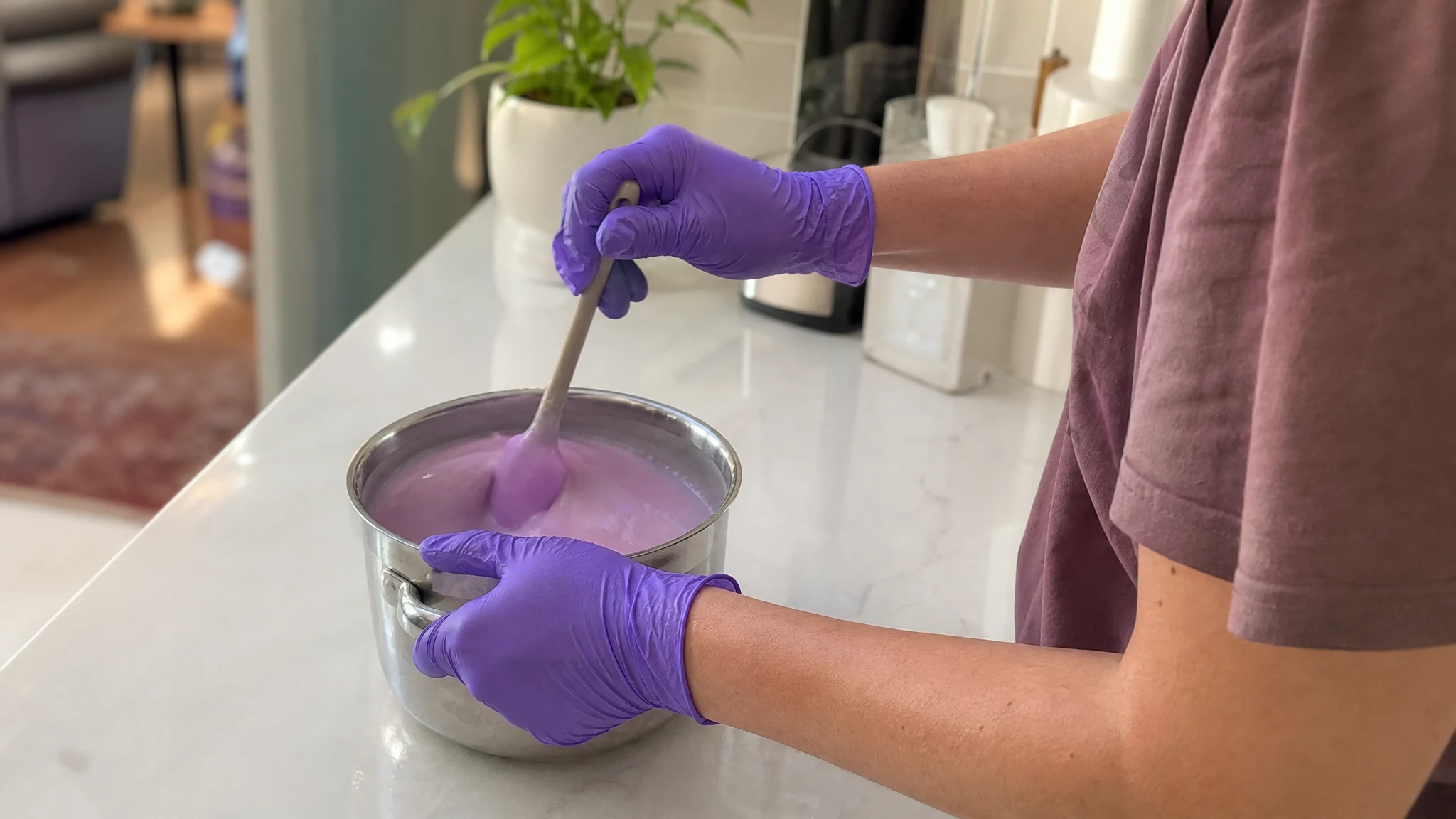
Weigh the carrier, stir the lilac oil into it, then fold that into the salt a little at a time until no wet clumps remain. Seal in a jar. A scoop of about 50 g per bath carries about 0.25 g of oil at 0.5%, roughly five drops spread through a full tub, which is very gentle, so the carrier step does more for the experience than the drop count does.
A word on solubilizers
Some makers prefer a solubilizer such as polysorbate 20 to a carrier oil, which keeps the bath from turning greasy. One supplier, Makesy, says a 1 to 1 ratio of polysorbate 20 to oil is generally enough, with a general range of 1 to 1 up to 5 to 1, and says to mix the two first and check that the blend is clear. If it turns milky, start over with more solubilizer. That is one supplier's guide to its own product, so ask your supplier for the use level in bath products.
What about bath bombs?
A bath bomb is baking soda and citric acid held together dry, with water starting the fizz. Scientific American's homemade bath bomb article gives two recipes, both with baking soda to citric acid at 2 to 1 by volume, cornstarch as a filler that moderates the reaction, a teaspoon of vegetable oil, a little water added gradually, and 15 drops of optional fragrance. The version with more cornstarch fizzed less and dissolved more slowly, and a mix that keeps puffing after mixing has too much water. For lilac, the same rule applies as for salts: pre-mix the oil into the carrier or solubilizer and add that to the dry ingredients before any water. In a 100 g bomb, 0.5% is 0.5 g, about 10 drops.
Setting the scene
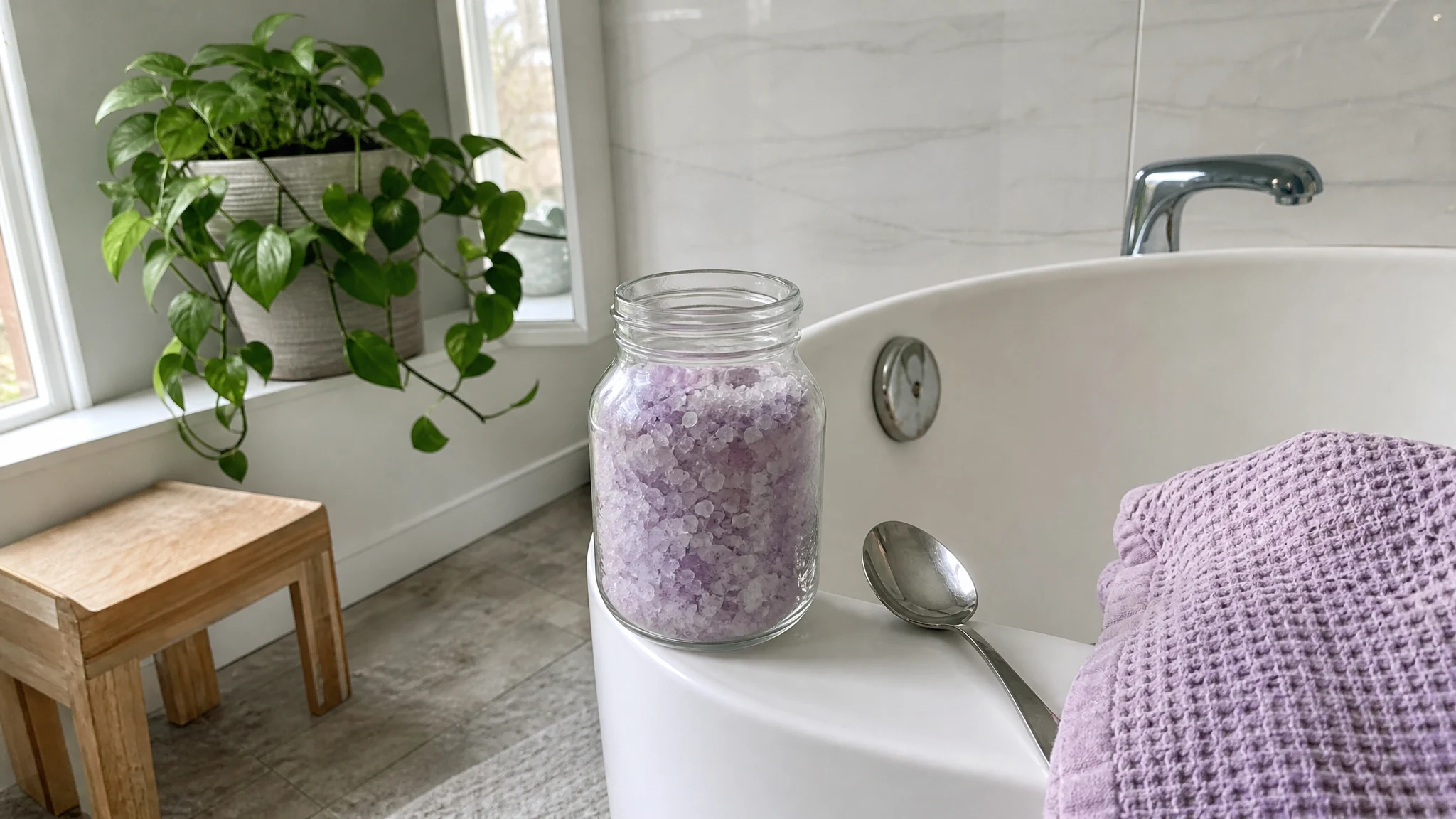
Part of the appeal of bath salts is the little ritual around them. A scoop from the jar, warm water running, the lid back on before the steam rises. Lilac suits that mood well, since it is soft and powdery rather than loud, so the scent reads as a gentle backdrop and not a perfume cloud. If you want it stronger, resist the urge to add more oil on the spot and instead make the next batch a touch higher, within the range above, and compare the two.
Jars, scoops and gifts
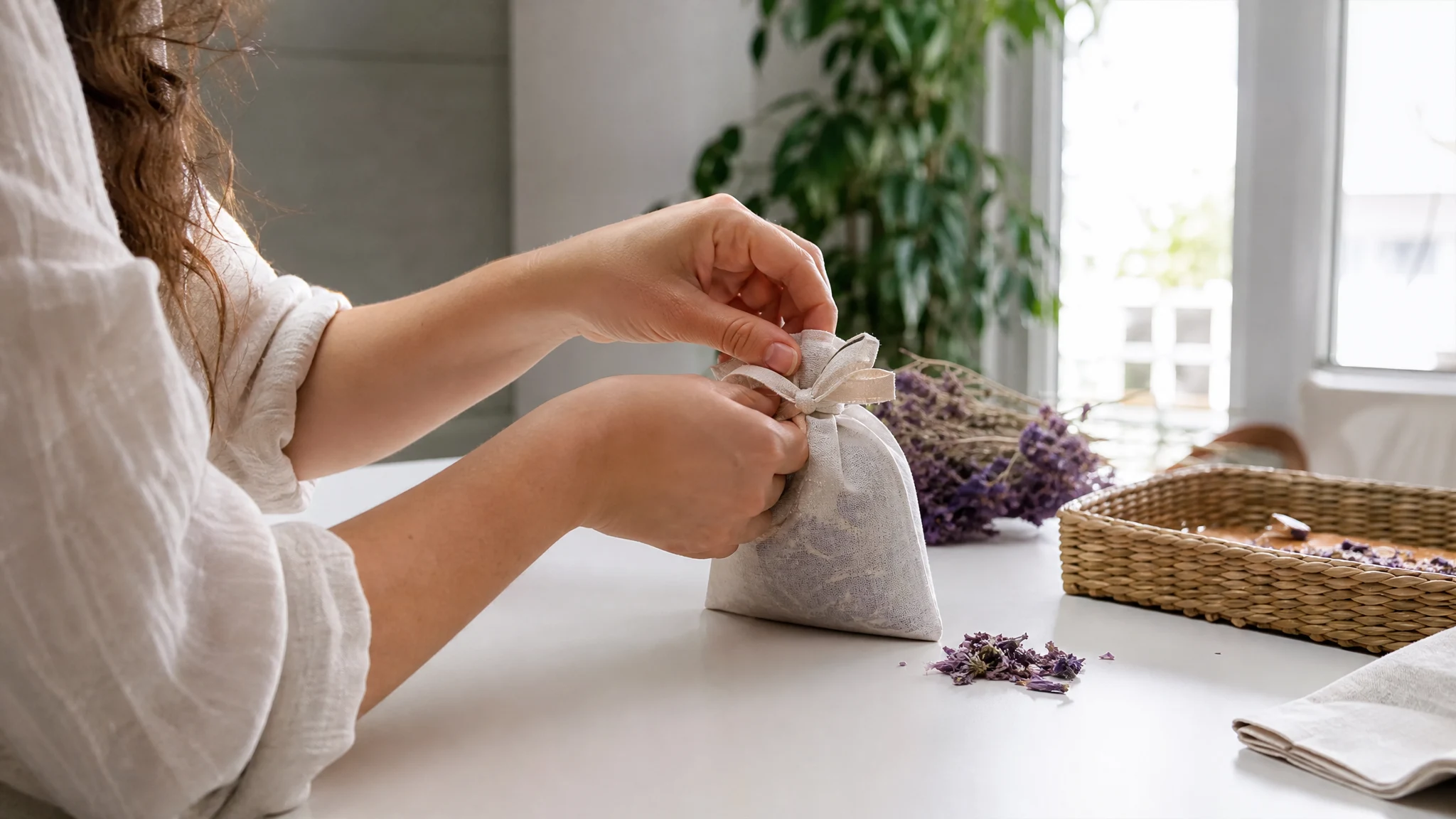
A glass jar with a tight lid is the natural home for salts, since it keeps moisture out and scent in. Use a dry scoop every time, because a damp spoon turns a loose mix into clumps. Label the jar with the date, the percentage and the lot number of the lilac oil. If you are giving a jar as a gift, add a note about the carrier you used, because a friend with a nut allergy will want to know before it goes in the tub. Small jars make lovely favors, and a handwritten tag takes a minute and says a good deal.
Safety in the tub
Fatty oils make a tub slippery, so rinse it after use and step out carefully. Anyone with eczema, a known fragrance allergy or reactive skin should check with a dermatologist before using a scented bath product. Keep it away from eyes, children and pets. Our oil is for external aromatic and cosmetic use only. If you plan to sell salts, ask us in writing through the contact page for the documentation you need.
For a quicker bath-time scent, a softly floral body oil works after the shower, and our dilution chart covers other batch sizes.
A jar of lilac salts on the tub edge is a small luxury, and a few minutes of mixing sets it up for the season.
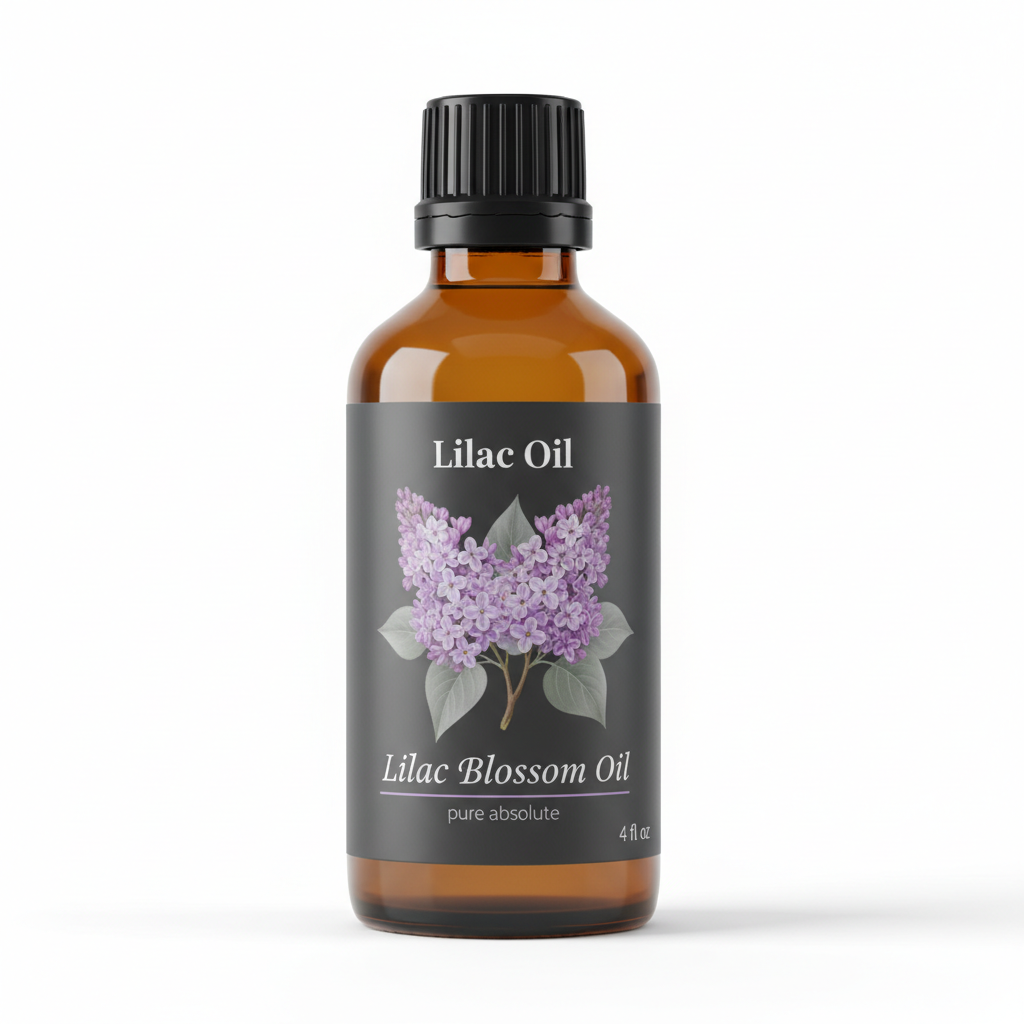
Lilac Blossom Oil
Lilac Blossom Oil from our own shop, in sizes from 0.5 oz to bulk.
From $15.99
Shop Now →Sources & Further Reading
- Bath safety (Tisserand Institute)
- Sudsy Science: Creating Homemade Bath Bombs (Scientific American)
- How to Solubilize Fragrances & Essential Oils (makesy)