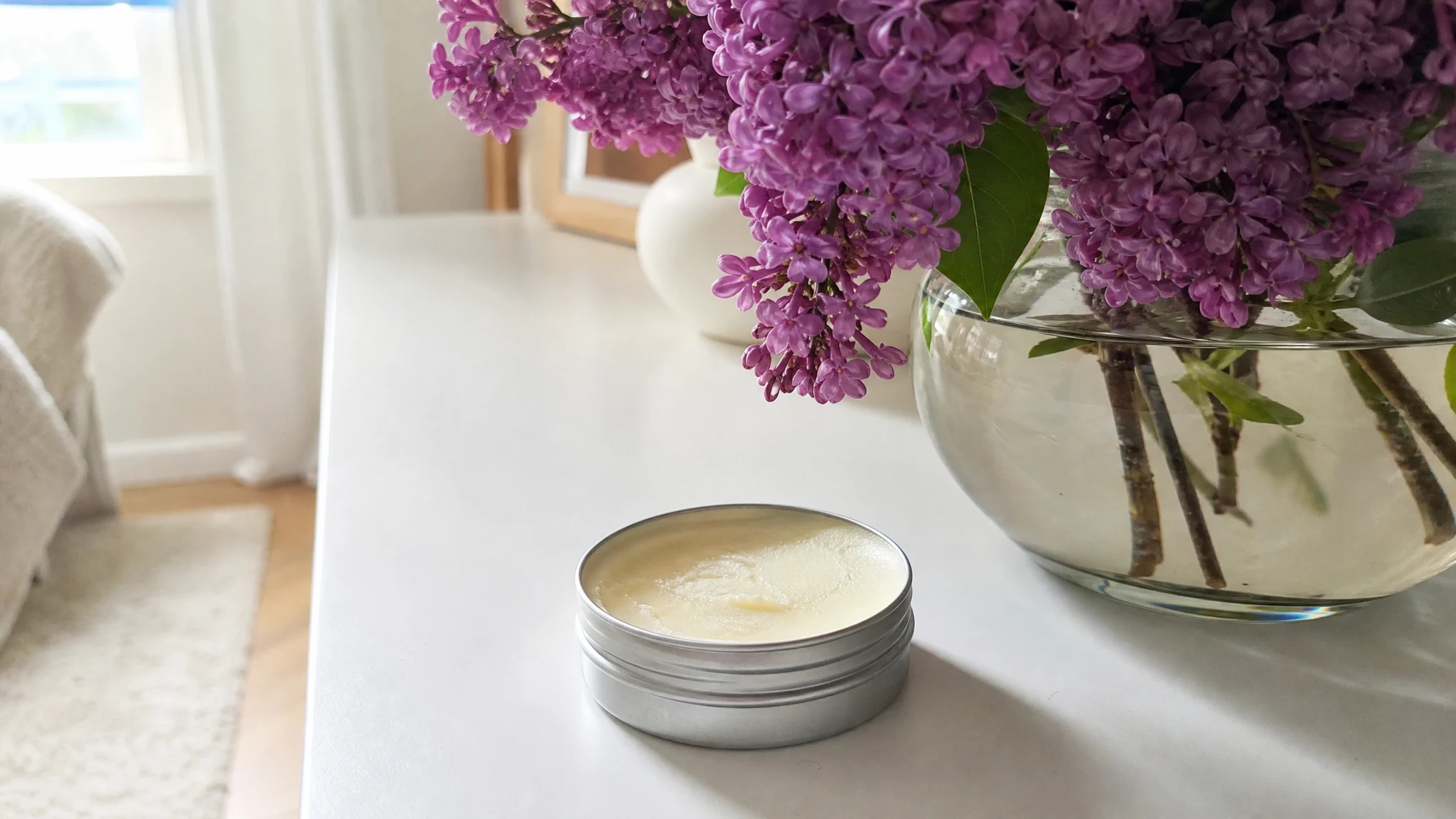
Lilac Solid Perfume: A Simple 30 g Tin Recipe
A tin of solid perfume is the quietest way to wear lilac. The scent is already spread through wax and a soft carrier, so it settles close to the skin and fades into a gentle halo that is more like a memory of the shrub than an announcement of it. It fits in a pocket, it does not spill, and the arithmetic is friendly.
Decide how much you want to smell it
Our guidance for skin is to dilute lilac oil to 0.5% to 2% in a carrier, patch test on a small area first and start at the low end. A balm at 2% smells stronger than one at 0.5%, and each step up puts more oil on your skin, so our suggestion for a first tin is 1%, moving to 2% only if the patch test is clean and the scent seems faint.
You will find solid perfume guides that go much higher. One cosmetic-ingredient retailer suggests fragrance at 5% to 15% of the combined weight of wax and carrier as a good starting point. That figure is written for fragrance oils in general, and it is two and a half to seven and a half times the top of our range. We follow the lower number for our lilac, since our oil is a composition and we do not publish its formula.
Wax, carrier and the texture you want
You need a wax to make the balm solid and a liquid carrier to soften it. We sell only the lilac oil, so buy beeswax and a carrier such as jojoba from a soap or craft supply shop. The retailer's guide gives one part wax to two or three parts carrier oil or butter by weight, and lists beeswax melting around 62 C. More carrier gives a softer, silkier balm and more wax a firmer one. A carrier that keeps well matters in a tin that rides in a bag for months, so ask the supplier how long yours lasts.
A worked 30 g batch
Take 30 g in total, one part wax to three parts carrier, with the oil at 1%. The oil is 0.3 g. The Certificate of Analysis we publish for one batch gives a relative density of 0.973, so a milliliter weighs about 0.97 g, and at about 20 drops per milliliter, 0.3 g is roughly six drops. The remaining 29.7 g splits into about 7.4 g beeswax and 22.3 g carrier.
| Oil share | Oil in 30 g | Beeswax | Carrier |
|---|---|---|---|
| 0.5% | 0.15 g, about 3 drops | 7.46 g | 22.39 g |
| 1% | 0.3 g, about 6 drops | 7.43 g | 22.28 g |
| 2% | 0.6 g, about 12 drops | 7.35 g | 22.05 g |
At this size, drops are coarse. Three drops at 0.5% is a one-drop error of a third, so weigh the oil on a 0.01 g scale if you can. This is arithmetic and a suggested method, and you will tune the firmness to your own taste.
Choosing the tin
The container is half the pleasure of a solid perfume. A small metal tin with a snug lid keeps the balm clean in a pocket, and a shallow one lets you glide a fingertip across the surface without digging. Shallow tins are easy to wipe clean; deep ones hold more but are harder to reach into. Before you pour, line them up and make sure each is clean and dry, since a stray drop of water in a balm is a nuisance you can avoid with a minute of care. A 30 g batch fills a few small tins, so decide in advance how many you want and who they are for.
The method
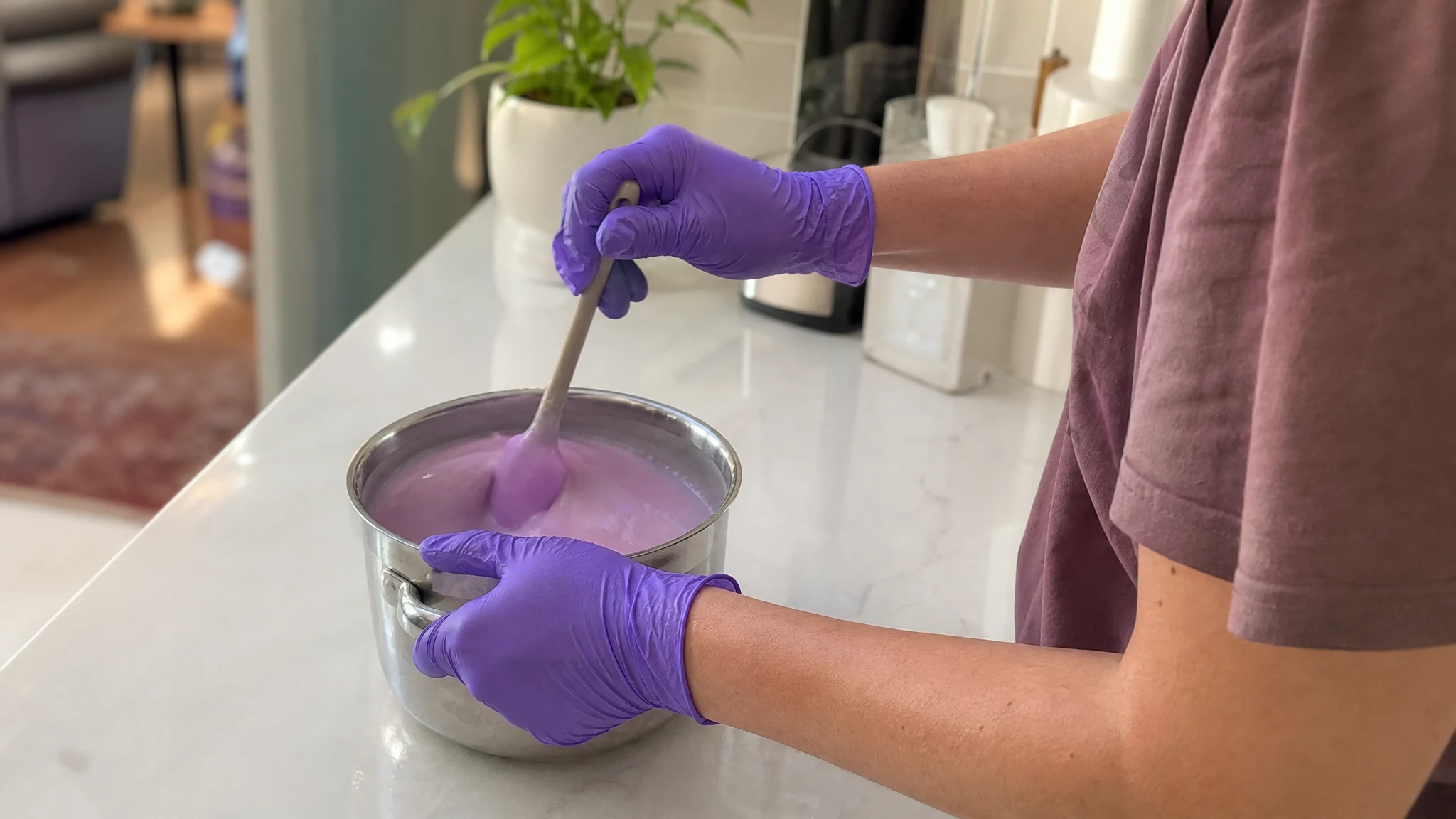
- Melt the wax and carrier together in a heatproof jar set in hot water, not over direct heat.
- Take it off the heat and let it cool a little while it stays fully liquid.
- Stir in the lilac oil. Lilac is a blend of aromatics that do not all evaporate at the same rate, and heat makes volatile material leave faster, so our suggestion is to add it at the lowest temperature at which the base still pours.
- Pour at once into clean tins and leave them undisturbed until they set.
Wearing it
Solid perfume is meant to be touched lightly. Warm a fingertip on the surface, then press it to the inside of the wrist or behind the ear, and stop there. Because the balm sits on the skin, the scent stays close, so you will notice it mostly when you lift your wrist or turn your head. For a softer effect, a single press is plenty; if you want a little more, add a second press rather than rubbing in more. Notice how it changes through the afternoon, from fresh and green toward the powdery, musky base as it settles.
Carry one tin in a bag and keep another at home. A tin you can find easily is a tin you will use.
Storing and dating the tin
Date every tin. We describe a typical shelf life of one to two years for the oil when kept tightly capped in a cool, dark place, and your wax and carrier have their own dates, so use the shortest of the three. Heat is the other thing to avoid: a tin left in a hot car or a sunlit bag can soften, and the scent can drift. Anyone with eczema, a known fragrance allergy or reactive skin should check with a dermatologist before wearing a scented balm, and the oil is for external use only, away from eyes, children and pets.
IFRA classes fine fragrance, solid perfume included, as Category 4, generally applied to neck, face and wrists. If you plan to sell tins, the FDA's small-business fact sheet notes the legal responsibility for safety and labeling is yours. Ask us in writing through the contact page for the documentation you need and keep the written reply. For a liquid version, the lilac rollerball is a one-drop-at-a-time cousin, and our dilution chart has more batch sizes.
Stir slowly, pour into a tin you love, and you will have a little jar of May for the coming year.
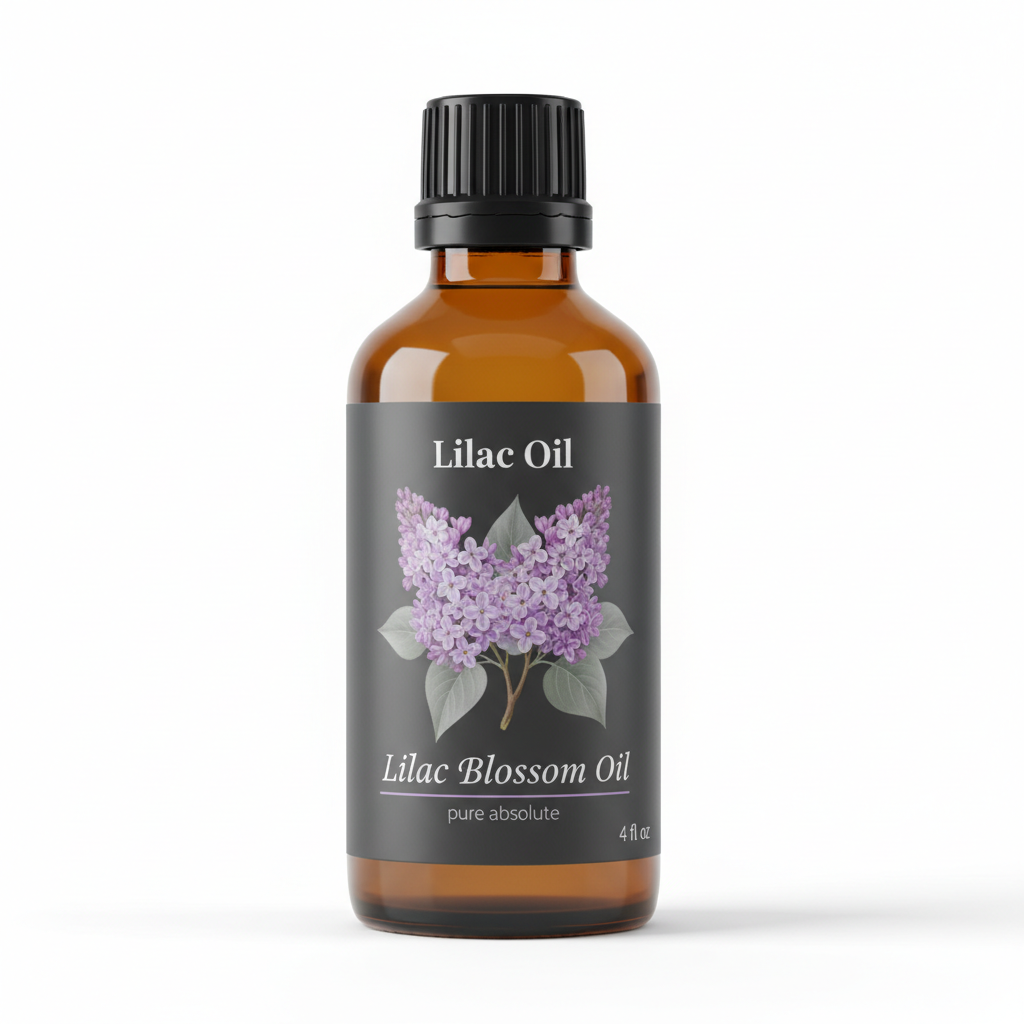
Lilac Blossom Oil
Lilac Blossom Oil from our own shop, in sizes from 0.5 oz to bulk.
From $15.99
Shop Now →