Lilac Oil Labels Decoded: What Each Line Tells You
Pick up any bottle of scented oil and the label looks authoritative. In fact the rules behind it ask for fewer things than most shoppers assume. Knowing which lines are required, which are voluntary and which questions no label can answer turns a quick glance at a bottle into real information.
The lines the rules actually require
US cosmetic labeling sits in Part 701 of Title 21 of the Code of Federal Regulations. These rules apply to a cosmetic in package form sold to consumers. Whether a bottle of scent material sold to makers counts is a regulatory call we will leave to you and your advisers, so read the table as a yardstick you can hold against any bottle.
| Label line | What the rule says (21 CFR) | What it tells you |
|---|---|---|
| Statement of identity | 701.11: the front panel carries a statement of identity, by common or usual name, a descriptive name, or an obvious fanciful name | What kind of product the seller says it is |
| Name and place of business | 701.12: the manufacturer, packer or distributor, with a phrase such as "Distributed by" when it is not the maker | Who stands behind the bottle |
| Net quantity | 701.13: weight, measure or count; fluid measure for liquids, stated at 68 F (20 C) | How much is in the bottle |
| Ingredient declaration | 701.3(a): descending order of predominance, except that fragrance or flavor may be listed as fragrance or flavor | That a scent is present |
The ingredient line is the one most often misread. The regulation says fragrance or flavor "may be listed as fragrance or flavor." FDA explains why: fragrance and flavor formulas are complex mixtures of many natural and synthetic ingredients, the labeling law cannot be used to make a company disclose trade secrets, and FDA does not have the same legal authority to require allergen labeling for cosmetics as for food. A one-word "fragrance" is the lawful default, not a trick.
Reading net contents with a little arithmetic
For a liquid, the rule calls for fluid measure, so a bottle of oil is a volume. A 0.5 fl oz bottle is about 14.79 ml. The batch on our Certificate of Analysis has a relative density of 0.973 at 20 C, so that volume weighs about 14.4 g. If another seller lists grams or ounces by weight, compare on one basis before deciding which bottle holds more. A fluid ounce and an ounce of weight are different measures for any oil that is not the density of water. Our 5, 25 and 400 lb sizes are weights; a pound is 453.6 g, so at 0.973 a pound of our oil fills about 466 ml. Our post on comparing lilac oil prices uses the same conversions.
Lines nobody has to print
Several things shoppers look for first fall outside those four sections.
- A lot number. Ours is carried on the bottle, and it is what we ask you to quote if you write to us about one.
- A best-by date. The Certificate of Analysis for one batch shows 05/31/2027, and we say oil kept capped, cool and dark typically lasts 1 to 2 years.
- A species name. That Certificate names Syringa vulgaris as the botanical name. Our oil is a composition built to be faithful to the common lilac, so we do not describe it as lilac material in a bottle.
- Quality words. Words like "natural" or "therapeutic" are not defined by these sections for a scent. We stick to botanical grade, no additives or fillers, and nothing medical.
- A dilution line. Ours is simple: for skin, 0.5% to 2% in a carrier oil, patch test first, keep away from eyes, children and pets, external use only.
For people who react to scents
For anyone sensitive to fragrance, a bare "fragrance" on a label is not much help. A 2021 review notes that fragrances are the most frequent chemicals causing contact dermatitis, that avoiding perfume means avoiding all scented goods, and that vague "perfume" or "fragrance" listings make diagnosis and prevention harder. If that describes you, the label is a starting point for a conversation with a dermatologist or allergist, not an answer.
How our label reads
We sell our oil neat as one product in nine sizes, from 0.5 oz to 400 lb, in amber glass with a lot number on the bottle. We describe it as a composition of botanical extracts and infused aromatics, not a distillate and not an absolute. The Certificate of Analysis for one batch gives appearance, smell, relative density 0.973, refractive index 1.501 and optical rotation -0.72 degrees. Those are measurements of the liquid and not an ingredient list, and our walk through reading a COA and SDS shows what each line means.
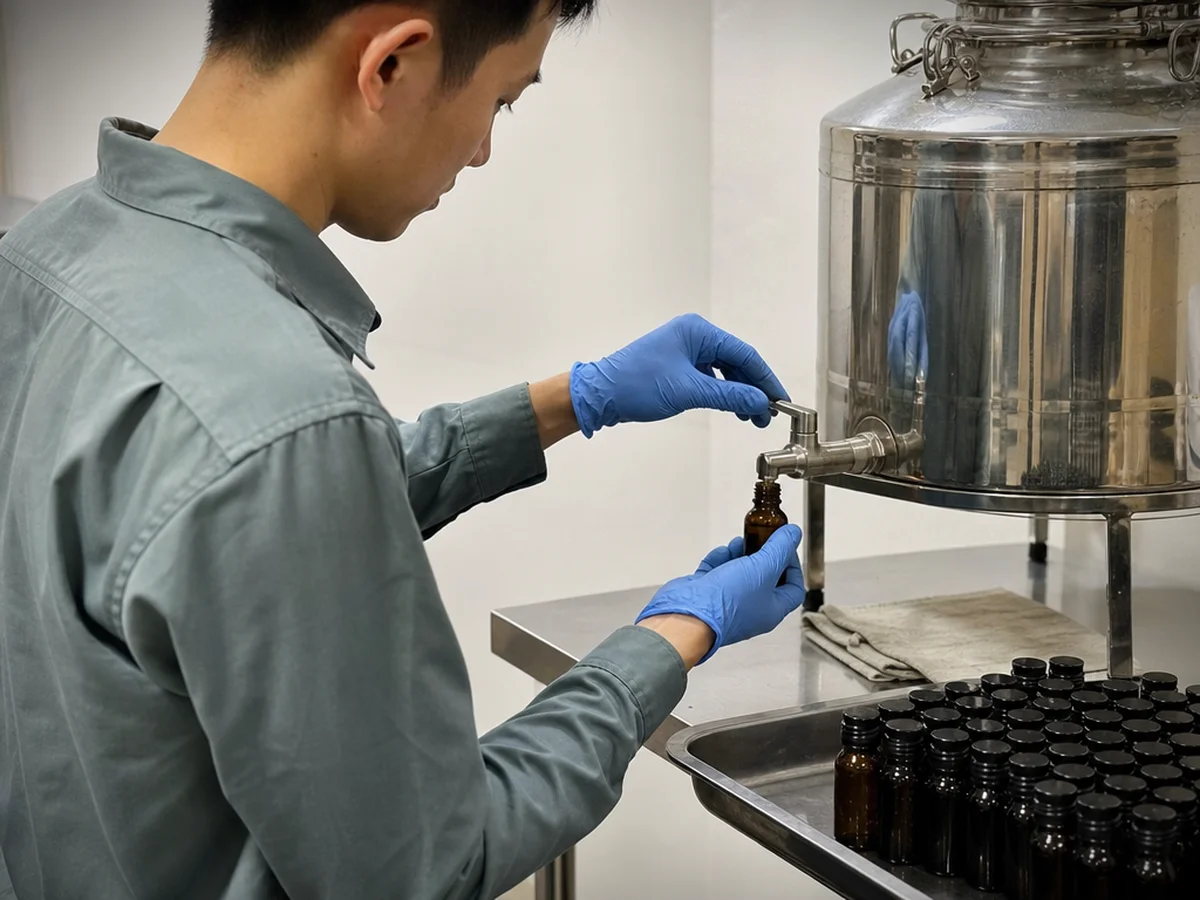
If you are making a product that carries your own name and label, write to us through the contact page before ordering, say what you need, and keep the answer in writing.
A short order for reading any bottle
- Read the identity line and see whether the word names a type: composition, fragrance oil, essential oil or infused oil. Our shopper's checklist starts there.
- Convert the net contents to one unit.
- Find the lot number and any date wording.
- Compare the dilution line with a source you can check, such as our dilution chart.
- List what you need that a label never shows, and ask for it.
Keep a small notebook of the bottles you read. After a handful, you start to see which sellers answer plainly and which leave the interesting lines blank, and that pattern is worth more than any single label.
A label is only a start, and the best part of buying is often the first friendly email.
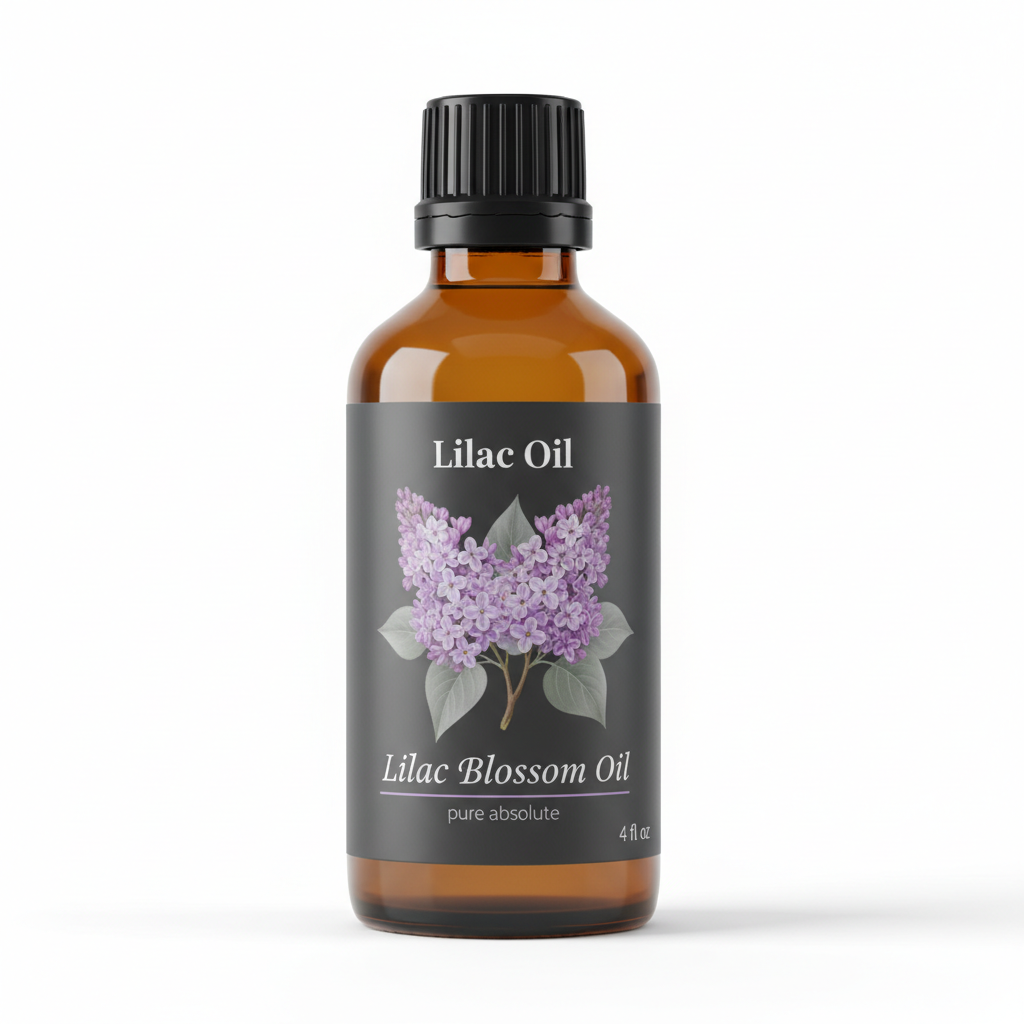
Lilac Blossom Oil
Lilac Blossom Oil from our own shop, in sizes from 0.5 oz to bulk.
From $15.99
Shop Now →Sources & Further Reading
- eCFR, 21 CFR Part 701 - Cosmetic Labeling
- FDA, Fragrances in Cosmetics
- Pastor-Nieto M.A., Gatica-Ortega M.E., 2021, Ubiquity, Hazardous Effects, and Risk Assessment of Fragrances in Consumer Products, Curr Treat Options Allergy