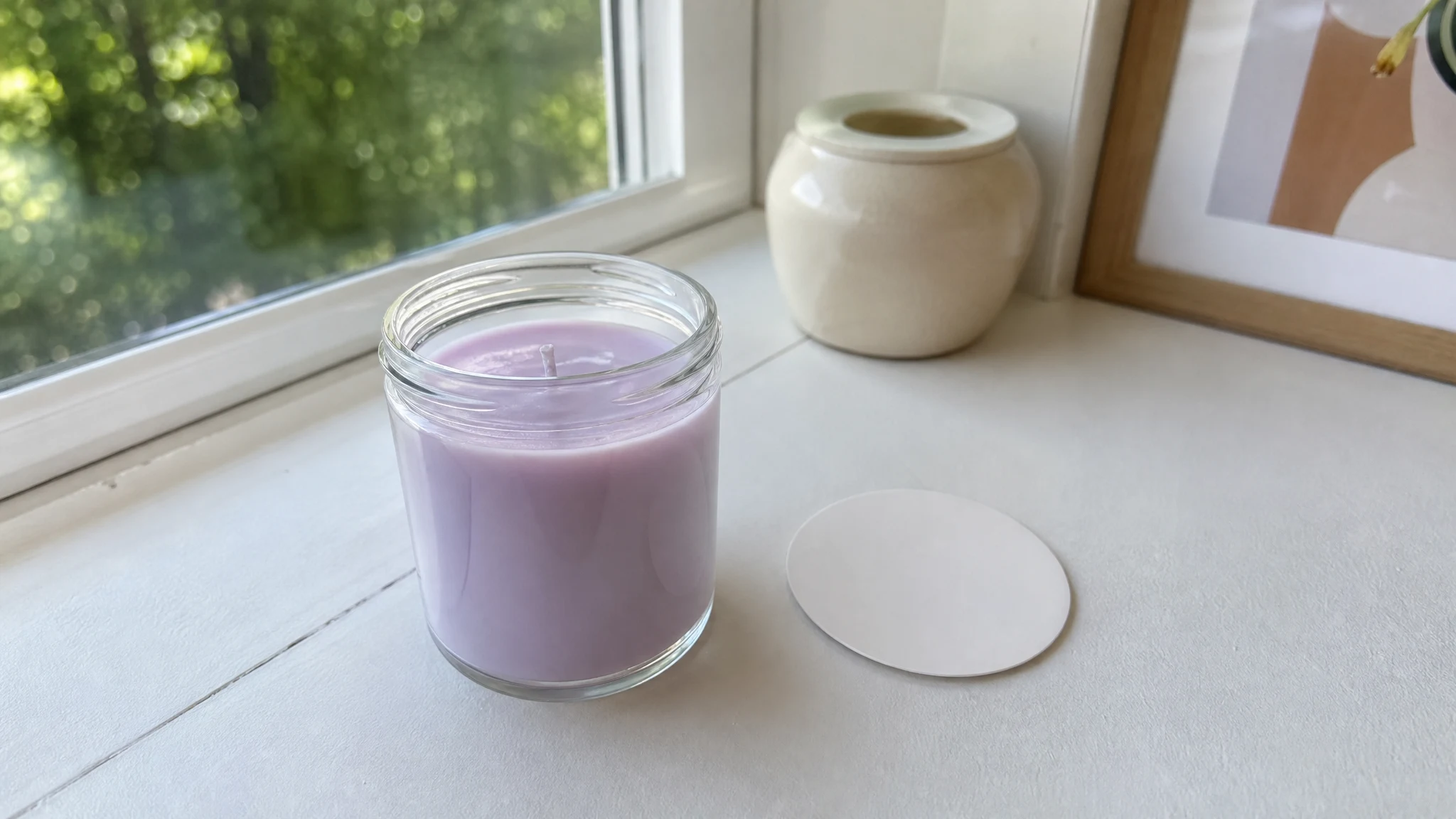
Candle Warning Labels: What Is Law and What Is Standard
A candle's warning label does a quiet but serious job, and it is worth knowing which parts of it are the law and which are a voluntary standard before you design one. We cannot write your label for you, since that is work for a product-safety attorney or a testing lab, but we can draw the map.
What the law asks for
The Consumer Product Safety Commission's guidance for candle businesses points to two federal rules. The first is about wicks: a metal-cored wick, and any candle using one, must not have lead in the core above 0.06% by weight (16 CFR 1500.17(a)(13)). The second is that candles which contain a hazardous substance, as defined under the Federal Hazardous Substances Act (FHSA), must carry cautionary labeling.
That second rule is the one people often misread. It does not say every candle needs an FHSA label. It says a candle that contains a hazardous substance does. In the regulation (16 CFR 1500.3), a hazardous substance is one that is toxic, corrosive, an irritant, a strong sensitizer, flammable or combustible, and that may cause substantial personal injury or illness during customary or reasonably foreseeable handling or use, including reasonably foreseeable ingestion by children. Whether a particular scented candle meets that test depends on its materials, and the answer is a legal determination for an attorney or accredited lab, not a seller of oil.
Where the voluntary standard comes in
CPSC's page also lists ASTM candle standards, including F2058 for fire safety labeling, as voluntary industry consensus standards. ASTM's own page shows F2058-07(2021) as the active edition and states its scope: fire safety information placed on candle units of sale, plus requirements for retailers and distributors, and it says it does not intend to address any other labeling requirements. The full standard is sold by ASTM, and we have not reproduced its wording, because candle labels copied from competitors can be wrong or out of date. If you label candles for sale, buy it and follow it.
Voluntary does not always mean optional. A retailer or marketplace can write a standard into its vendor agreement, so read the terms before you sign.
It helps to think of a label as the last step of a chain. Wax, wick, container and fragrance each come with their own facts, and the label summarizes what the finished candle does in ordinary use and in foreseeable misuse. The more of that chain you have in writing, the less guesswork a label requires, and the easier a conversation with a lab or attorney becomes.
Why a label is more than a sticker
It is easy to treat the label as the last box to tick, but a good one is part of the candle. Think about where your customer will look first. A warning tucked under a jar, in type too small to read, is not doing its job, and neither is one printed on a curled wrap that peels after a week near a warm window. When you design yours, make a mock-up and hold it at arm's length next to the finished candle. Can you read it without squinting? Does it stay put if you rub it with a thumb?
It also helps to keep every version of your label, with the date and a note of what changed. When you adjust wax, wick or container, you will want to know which label went on which batch. A tidy label file is the sort of habit that makes a later conversation with a lab or an attorney a short one.
What your fragrance supplier gives you
A label has to reflect what is in the candle, so it starts with your suppliers' documents. A safety data sheet is the baseline: OSHA's rule has 16 sections, with Section 2 for hazards and Section 9 for physical and chemical properties, which is where the flash point lives. Flash point explained and how to read a fragrance oil COA and SDS walk through both.
For our oil, the Certificate of Analysis we publish for one batch gives appearance, smell, relative density (0.973), refractive index (1.501) and optical rotation (-0.72 degrees). If your candles need a flash point, a safety data sheet or an IFRA statement, ask us in writing through the contact page before you order, and keep the answer with your records.
A sensible order of work
- Decide what you are making: container candle, pillar or melt. Wax melts have their own article, how to make lilac wax melts.
- Gather documents for the wax, wick (metal or nonmetal core), fragrance and container.
- Ask an attorney or testing lab whether FHSA cautionary labeling applies to your exact candle.
- Buy ASTM F2058 and follow it for the fire safety warning.
- Test the candle itself, not just the label. What to check when a lilac candle will not throw helps with the performance side.
Before you print a full run
- Print one sheet on plain paper and read every word aloud, slowly.
- Stick it on a finished candle and view it in ordinary room light, not under the work lamp.
- Ask someone who has never seen the candle to tell you what the label says to do.
- Only then order a full roll of labels.
The label belongs to whoever sells the candle, and once you have these pieces in order, drafting it becomes a much calmer job.

Lilac Blossom Oil
Lilac Blossom Oil from our own shop, in sizes from 0.5 oz to bulk.
From $15.99
Shop Now →Sources & Further Reading
- U.S. Consumer Product Safety Commission. Candles (business guidance)
- ASTM International. F2058 Standard Specification for Candle Fire Safety Labeling
- eCFR. 16 CFR 1500.3, Definitions
- OSHA. 29 CFR 1910.1200, Hazard Communication