How to Scent Soy Candles With Lilac Oil
Lilac is a soft floral, and a soft floral rewards a careful pour. The scent you lose in a candle rarely vanishes in the wax pot. It slips away between the pot and the room, and the usual causes are on the wax maker's sheet: temperature, load, cure time and wick. Here is one pour, in order, with the arithmetic done for you.
Know the character before you pour
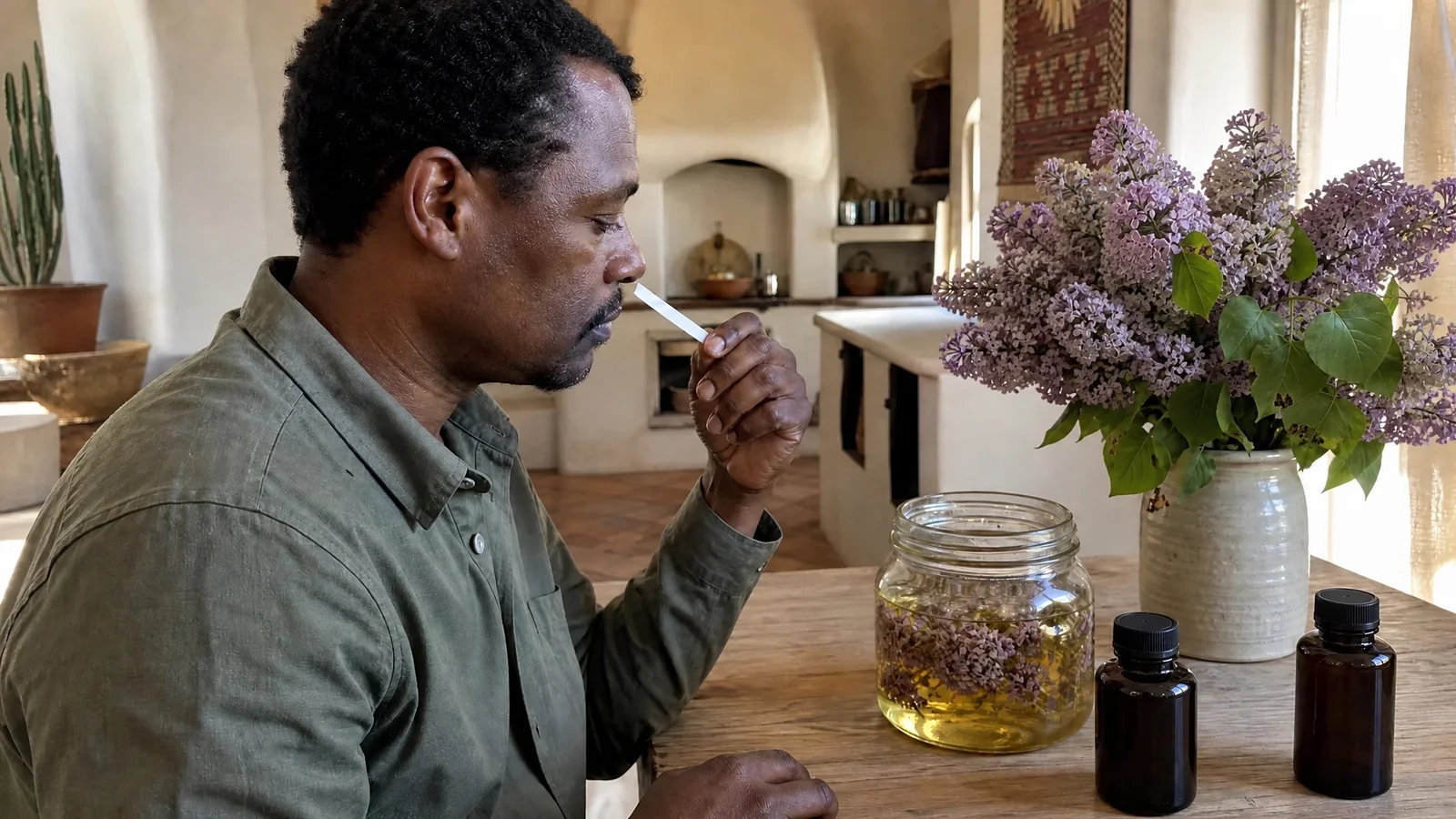
We list Lilac Blossom Oil as a middle, or heart, note, and our bulk guidance says it has decent throw in wax melts and cold-process soap while reading softer than heavier musks or woods. A perfume retailer describes lilac in general the same way, as a relatively volatile heart note whose longevity depends mainly on the base of the composition (Tendance Parfums, Lilac perfume: guide and best picks). So the goal is a candle that smells like a lilac hedge a few steps away, not a room filled to the corners. Pouring in more oil than the wax can hold will not get you there.
Ask for the paperwork first
If you are pouring candles to sell, you will want the oil's flash point and safety data sheet, plus an IFRA statement for your product. We publish a Certificate of Analysis for one batch, which covers appearance, smell, relative density, refractive index and optical rotation. For the other three, ask us in writing through the contact page before you order, and keep our answer with your batch records. IFRA places candles of all types in Category 12 because skin exposure is expected to be negligible, so a fragrance ingredient is not restricted in the finished candle (IFRA, Guidance for the use of IFRA Standards). Our flash point explainer shows how makers think about flash point and add temperature.
One pour, step by step
The specification below is for Golden Brands 464 soy wax from a US wax supplier; other waxes differ, so read yours. The page lists a melt point of 113 F, fragrance added at 185 F (85 C) with a two-minute stir, a pour at 135 F (57.2 C), and a two-week cure. Its load is 10 percent for containers (45 g of oil per 454 g of wax) and 6 percent for tealights, by wax weight (CandleScience, Golden Brands 464 Soy Wax).
- Weigh the wax, not the jar. Loads are weight to weight.
- Heat to the wax maker's add temperature and take the pot off the heat. The page lists adding fragrance at another temperature among the causes of weak throw.
- Add the oil and stir for two minutes. Our reasoning: a hot pot is where a volatile floral leaves fastest, so have the oil weighed and the wick set before the heat goes on.
- Cool to the pour temperature. If the top comes out rough, the page suggests pouring 5 to 10 F hotter next time.
- Cure two weeks before you judge, and write the pour date on the jar. Choosing a wick is covered in our wick size post.
Moving the add temperature down to protect a delicate scent is a call for the oil's flash point, so hold to the wax maker's figure until you have that number.
The load arithmetic
The batch on our Certificate of Analysis has a relative density of 0.973, so 1 ml of oil weighs about 0.97 g, and a 1 oz bottle holds about 28.8 g. For a 1,000 g wax batch:
| Load | Oil (g) | Wax one 1 oz bottle covers (g) |
|---|---|---|
| 4% | 40 | 720 |
| 6% | 60 | 480 |
| 8% | 80 | 360 |
| 10%, the container ceiling above | 100 | 288 |
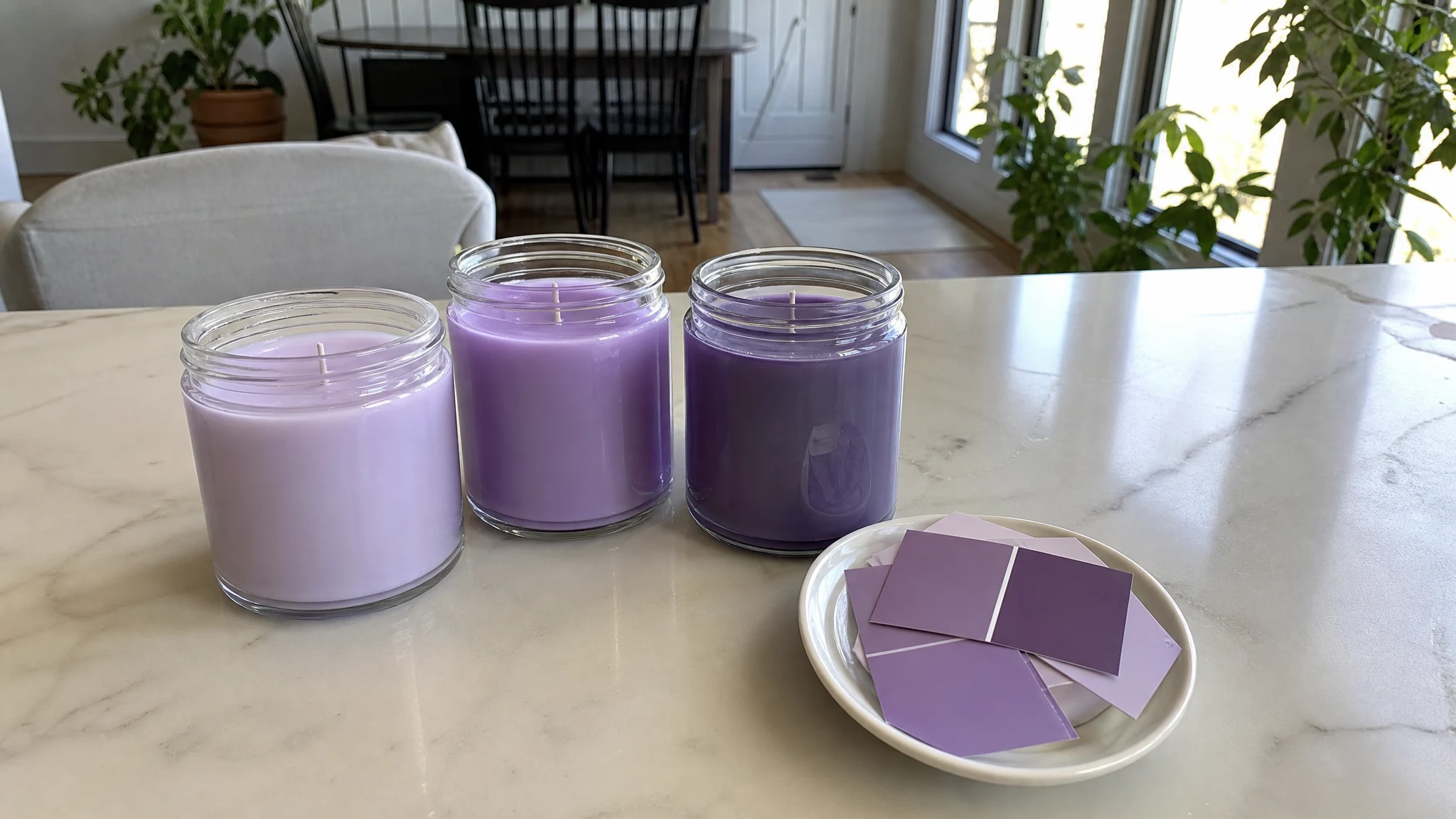
Rather than choose a load from a table, we suggest a three-candle ladder: three 100 g test candles at 4, 6 and 8 percent (4 g, 6 g and 8 g of oil), identical wicks, one pour, labeled on the base. That uses 18 g, about 60 percent of a 1 oz bottle. If the 8 percent candle is no louder than the 4 percent one in a room, the lever is the wick and the cure, not the oil, and our weak throw post takes those in order. A supplier of candle materials notes that going past a wax's maximum can lead to poor burning and fragrance seeping out of the candle (Wholesale Supplies Plus, help page on maximum fragrance load), so stay under your wax maker's ceiling.
Burn it in fresh air
A candle is combustion indoors, so ventilation matters. A 2026 chamber study burned a paraffin candle with 6 percent lavender essential oil under different humidity and air exchange rates and found that higher ventilation lowered the estimated toxicity of the emitted polycyclic aromatic hydrocarbons, and the authors concluded ventilation is important (Emissions of Polycyclic Aromatic Hydrocarbons (PAHs) from the Use of Scented Candles Under Different Environmental Conditions, Chen et al., Toxics, 2026). It was paraffin and lavender, not soy and lilac, so we take the general point: burn in a ventilated room, trim the wick, and stop if it soots. Anyone with asthma should check with a physician before scenting a bedroom.
Pour day is also a good day for a quiet kitchen. Set out your weighed wax, oil, thermometer and labeled jars before anything gets hot, keep a notebook beside them, and give the first sniff of the finished candle a few days rather than a few minutes. A soft floral rewards patience.
We sell only the lilac oil, so wax, wicks, jars and dye come from a candle supply shop. Weigh first, add at your wax maker's temperature, cure the full two weeks, and let the ladder tell you where lilac sounds best.
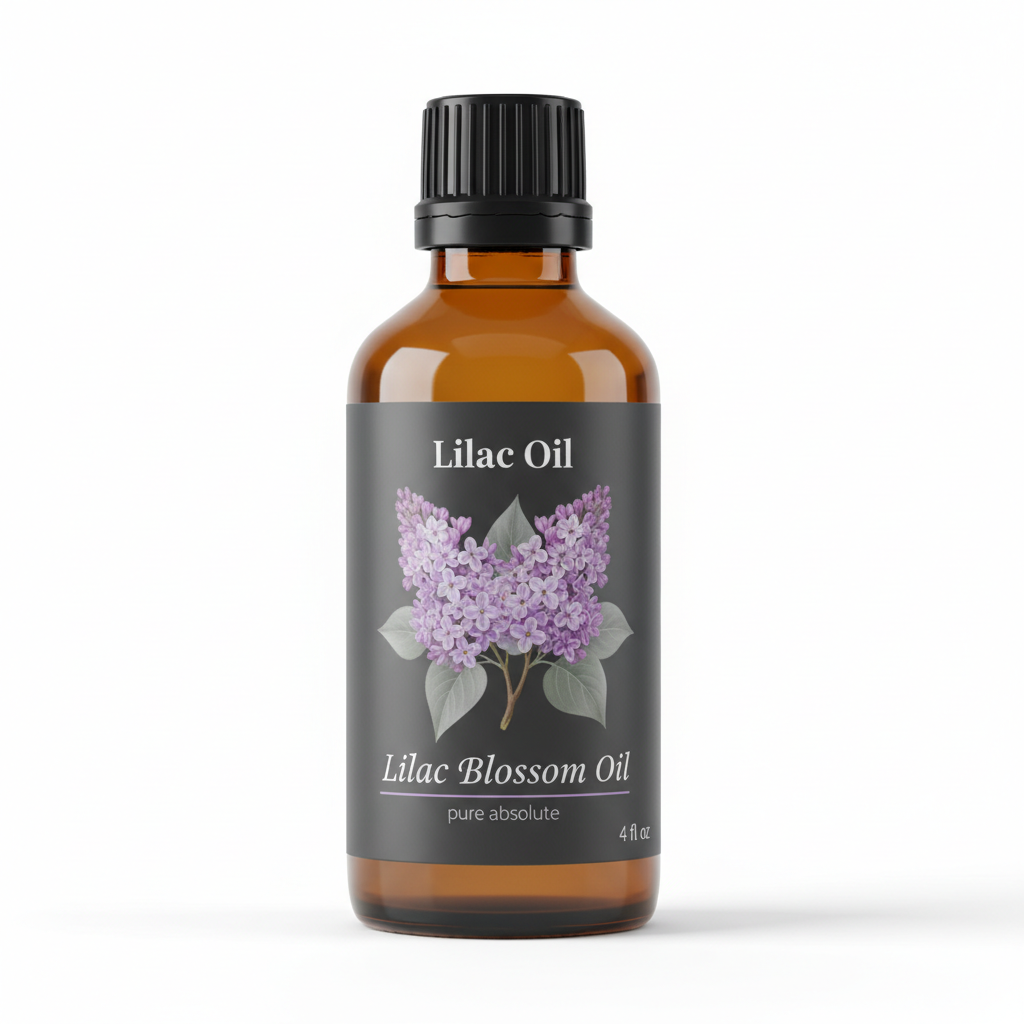
Lilac Blossom Oil
Lilac Blossom Oil from our own shop, in sizes from 0.5 oz to bulk.
From $15.99
Shop Now →Sources & Further Reading
- Golden Brands 464 Soy Wax (CandleScience)
- Lilac perfume: guide and best picks (Tendance Parfums)
- Guidance for the use of IFRA Standards (IFRA, 51st Amendment, 2023)
- Emissions of Polycyclic Aromatic Hydrocarbons (PAHs) from the Use of Scented Candles Under Different Environmental Conditions (Chen et al., Toxics, 2026)