Wick Size for Lilac Soy Candles: A Burn Test Guide
When a lilac candle tunnels down the middle or the scent seems to vanish, the wick is the first thing to look at, not the oil. A wick chart is a very good starting point for your wax and jar, but it is only a starting point, and the best way to use it is to follow it with a proper burn test.
Start with the jar, and read the fine print on the chart
CandleScience's wick guide opens with the variables that matter most: wax type and candle diameter. You find your wax, measure your container's inner diameter, and read the wick series where they meet. Then comes the footnote most reproduced charts leave out. The guide says its test candles were made without color and with 1.2 ounces per pound, or 7.5%, of fragrance oil. Dyed or heavily scented candles, it says, may need a larger size than the guide recommends.
That percentage is easy to check: 1.2 divided by 16 ounces is 7.5% of the wax weight. For a jar holding 8 oz of wax (226.8 g), 7.5% is 17.0 g of fragrance, and 1 oz per pound (6.25%) is 14.2 g. The gap is under 3 g, which shows how fine the line is between the chart's assumption and the point where you start moving the wick. A chart that does not say what load and color it assumed is a chart you cannot adjust, so we would not size from it.
What fragrance and dye do to your choice
CandleScience's guide to wicking container candles puts the adjustment simply: wick up one or two sizes if you use more than 1 oz of fragrance per pound of wax (about 28 g per 454 g), a dense fragrance, or a lot of dye or dark color. Wick down a size or two for less fragrance, a thin fragrance or no dye. The wick guide explains the mechanism: heavy, dense, viscous scents are harder for the wick to pull up, giving a weak flame, while lighter citrus or floral oils flow easily and might make the same wick burn hot.
Lilac is a floral, so a sensible approach is to bracket. Test the chart's size, one size up and one size down, and let the burn decide. If you dye your candles too, our post on coloring lilac candles explains why dye pushes you toward a bigger wick.
A burn test you can copy exactly
CandleScience's basic burn test is specific enough to follow as written:
- Cure the finished candle at least 24 hours before testing, and record the wax, fragrance, load, dye, wick and container.
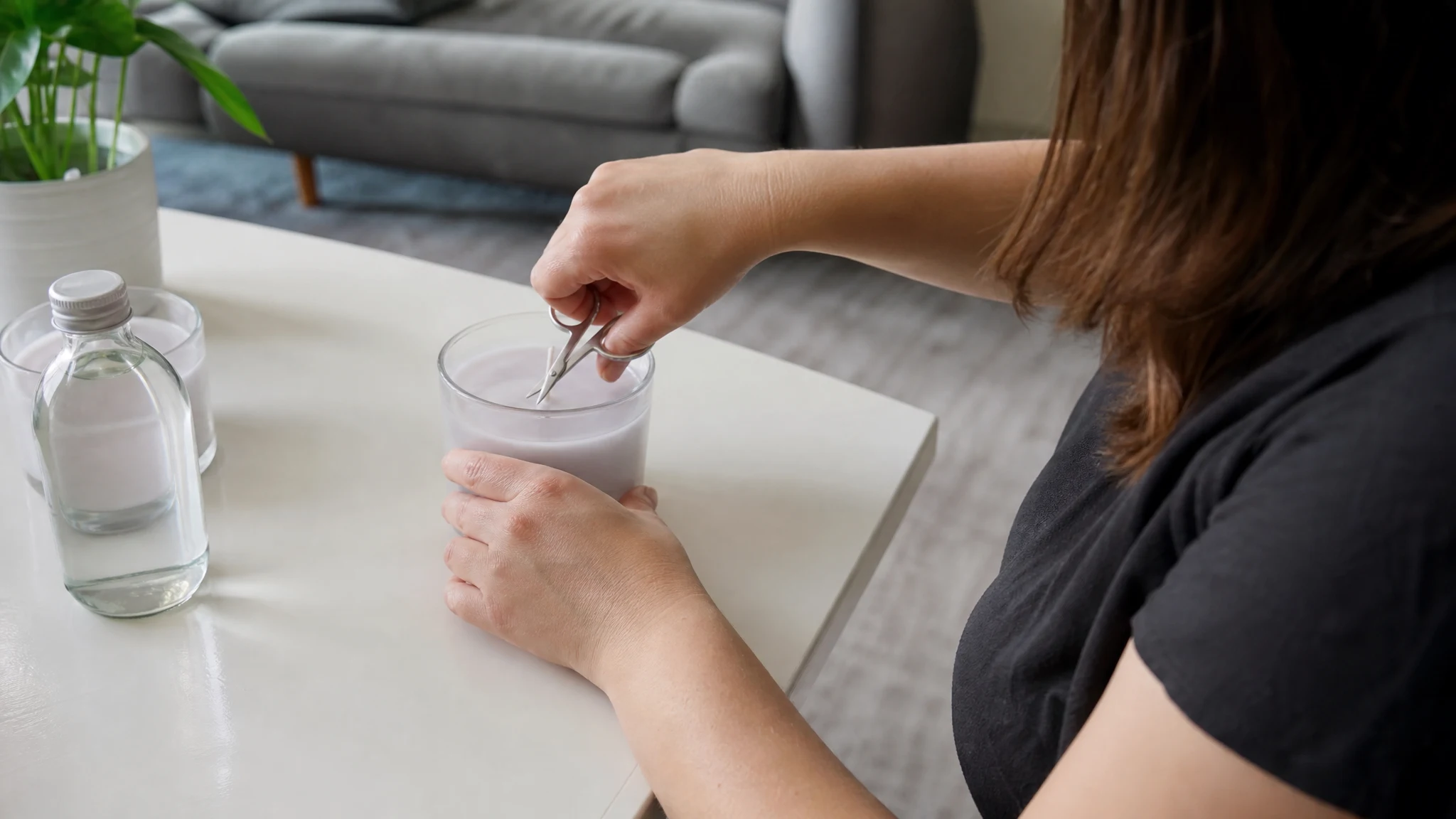
- Trim the wick to 1/4 inch (6 mm) before every lighting.
- Check each hour and record what you see. Extinguish after four hours, let the candle cool for at least five, and repeat until 1/4 inch (6 mm) of wax remains.
- Wait until at least the fourth burn cycle before drawing conclusions about the wick.
For the trial itself, the container-candle guide says to move up or down within the same wick series before trying a different one, since jumping between series gives confusing results.
Reading what you see
| What you see | Likely reading | Move |
|---|---|---|
| Tunneling, small flame, weak scent | Under-wicked | Wick up one size |
| Ring of unmelted wax after the fourth cycle | Under-wicked | Wick up |
| Mushrooming, tall flame, hot jar, fast burn-down | Over-wicked | Wick down |
| Flame about 1 inch, melt pool edge to edge | Well matched | Keep, then judge throw |
Treat that as a sensible way to read the supplier's advice, and write down which melt-pool depth you aim for. CandleScience's container guide gives 1/4 to 3/4 inch (6 to 19 mm), while its burn test page says typically 1/4 to 1/2 inch (6 to 13 mm). Picking one and sticking to it keeps your results comparable from candle to candle.
Throw comes last
CandleScience says to finish the burn test and settle the wick before judging hot throw, and that order suits lilac. Our bulk guidance says lilac has decent throw in wax melts and cold-process soap, though like most florals it reads softer than heavier musks or woods. If your first candle smells faint, an undersized wick is a likelier cause than the oil, and adding more oil to a wick that is too small only adds fuel it cannot carry. Our posts on the weak-throw fix, the choice of wax and scenting soy candles cover the rest.
Keep a wick notebook
A simple notebook turns trial and error into a method. Give each test candle a number, write the wax, jar, wick and load on the first line, and leave room for what you see at each hour. After a few candles you will have your own chart for your own jars, which is worth more than any general one. It also means you can pick up a project after a break and know exactly where you left off.
Before you pour for sale
If you are making candles to sell, write to us through the contact page before ordering and tell us which documents you need, such as a flash point and safety data sheet, and keep the answer in writing. Our guide to reading a COA and SDS and the flash point post explain what those papers tell you. Wicks, wax and jars come from a candle supply shop, and we suggest one that gives its wick chart with the assumed load and color.
Test small, test three sizes, and judge after four burn cycles. A well-wicked candle shows a floral at its best.
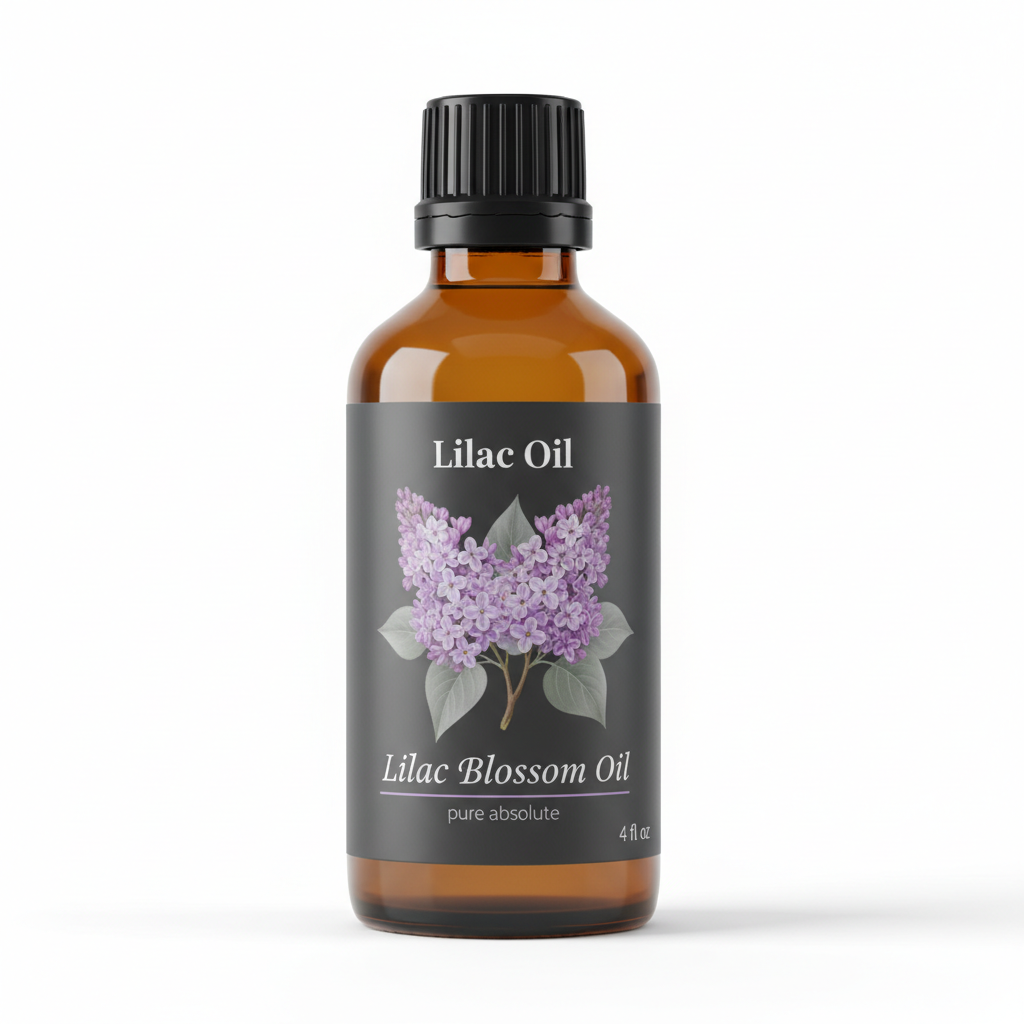
Lilac Blossom Oil
Lilac Blossom Oil from our own shop, in sizes from 0.5 oz to bulk.
From $15.99
Shop Now →Sources & Further Reading
- CandleScience, Wick Guide - Find The Right Candle Wick For Your Candles
- CandleScience, Wicking Container Candles
- CandleScience, How To Conduct a Basic Burn Test