Does Lilac Oil Go Bad? How to Tell When It Has Turned
Most people expect a bottle of oil to go off like milk: fine one day, spoiled the next. Lilac oil does not work that way. It fades and shifts slowly, and the first sign is almost always the nose, not the eye. Knowing what to listen for turns a vague worry about an old bottle into a quick, confident check.
Drift, not expiry
Our Lilac Blossom Oil is a composed scent, built from botanical extracts and infused aromatics to recreate lilac in bloom. It is not a distillate, so the stability research on essential oils is a guide here rather than a rulebook. The mechanism it describes is still the useful one to understand. The Tisserand Institute explains that oxidation is encouraged by three things: heat, light and moisture, and that it alters the perceptible odor of an oil. In its words, some brightness and freshness disappears.
That fits a floral like lilac, whose charm is a soft, springlike lift on top of a powdery, musky base. Lose some of the lift and the scent still smells floral, but flatter and heavier, a little like a bouquet left in a warm room. We say in our own storage guidance that heat and sun speed up drift in a composed floral scent, and that is the right word: drift.
How long a bottle keeps
We say floral oils like this one typically keep for 1 to 2 years when the bottle is tightly capped and stored in a cool, dark, temperature-stable spot, and that is a sensible expectation rather than a promise. The Tisserand Institute gives a similar rule of thumb for essential oils generally, at least 1 to 2 years before oxidation starts to take effect. It adds that refrigeration roughly doubles useful life, though that is a general guideline, and a cool cabinet is plenty for most of us.
Notice what that range depends on. A bottle opened once a month and capped straight away is in a different situation from one left open beside a sunny window during a candle session. Air is part of the picture: each time the cap comes off, fresh air goes in, and a nearly empty bottle holds far more air than a full one. Our post on storing lilac oil has the full routine, including the trick of decanting bulk into smaller bottles. Here the question is different: how do you tell?
The checks, in order of usefulness
1. Smell it against a reference
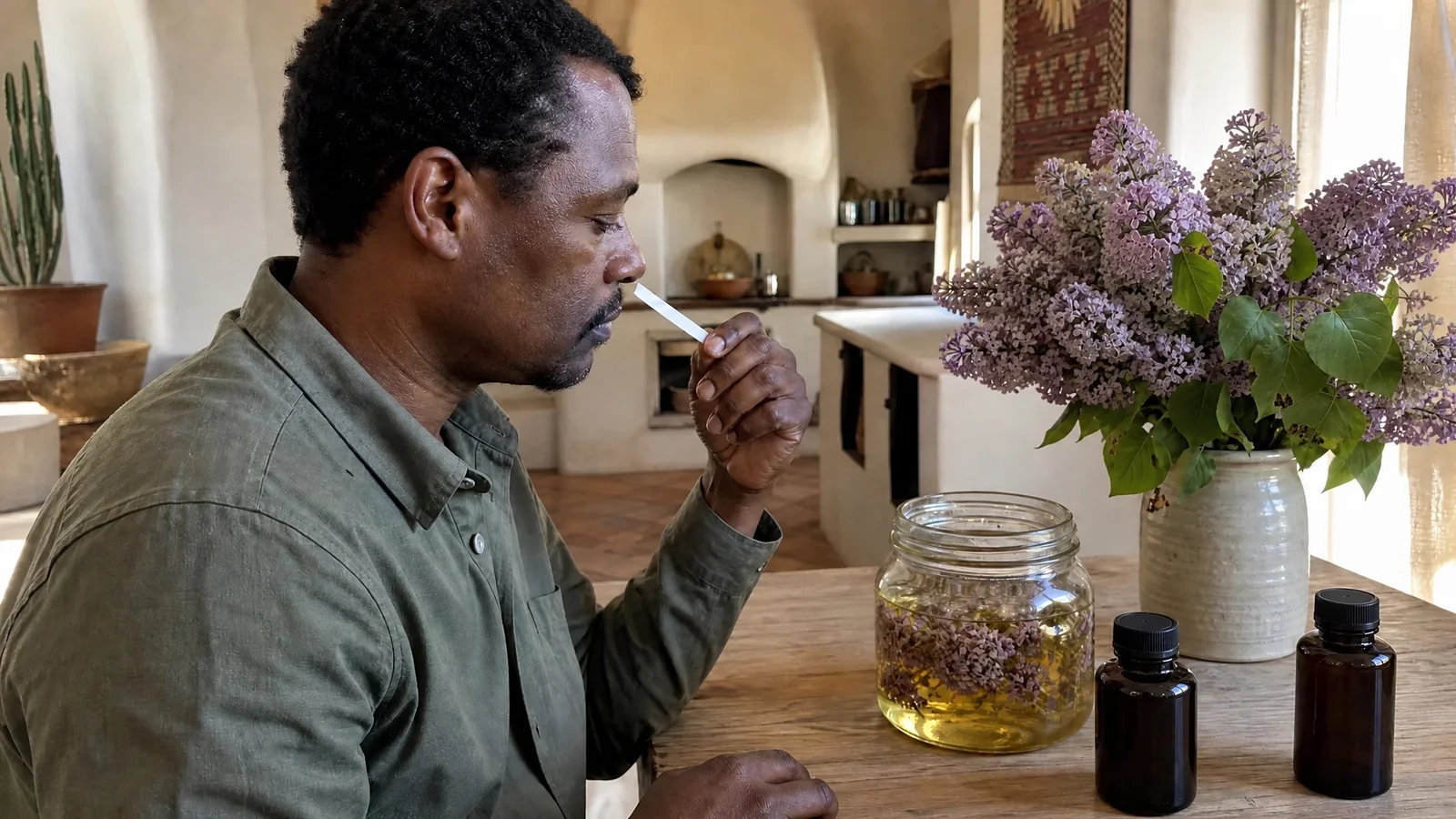
The Tisserand Institute makes a point worth remembering: you may not notice the change in smell unless you compare with a new, fresh oil. Our brains adjust quietly to a slowly changing scent, which is why the only reliable method is a side-by-side comparison.
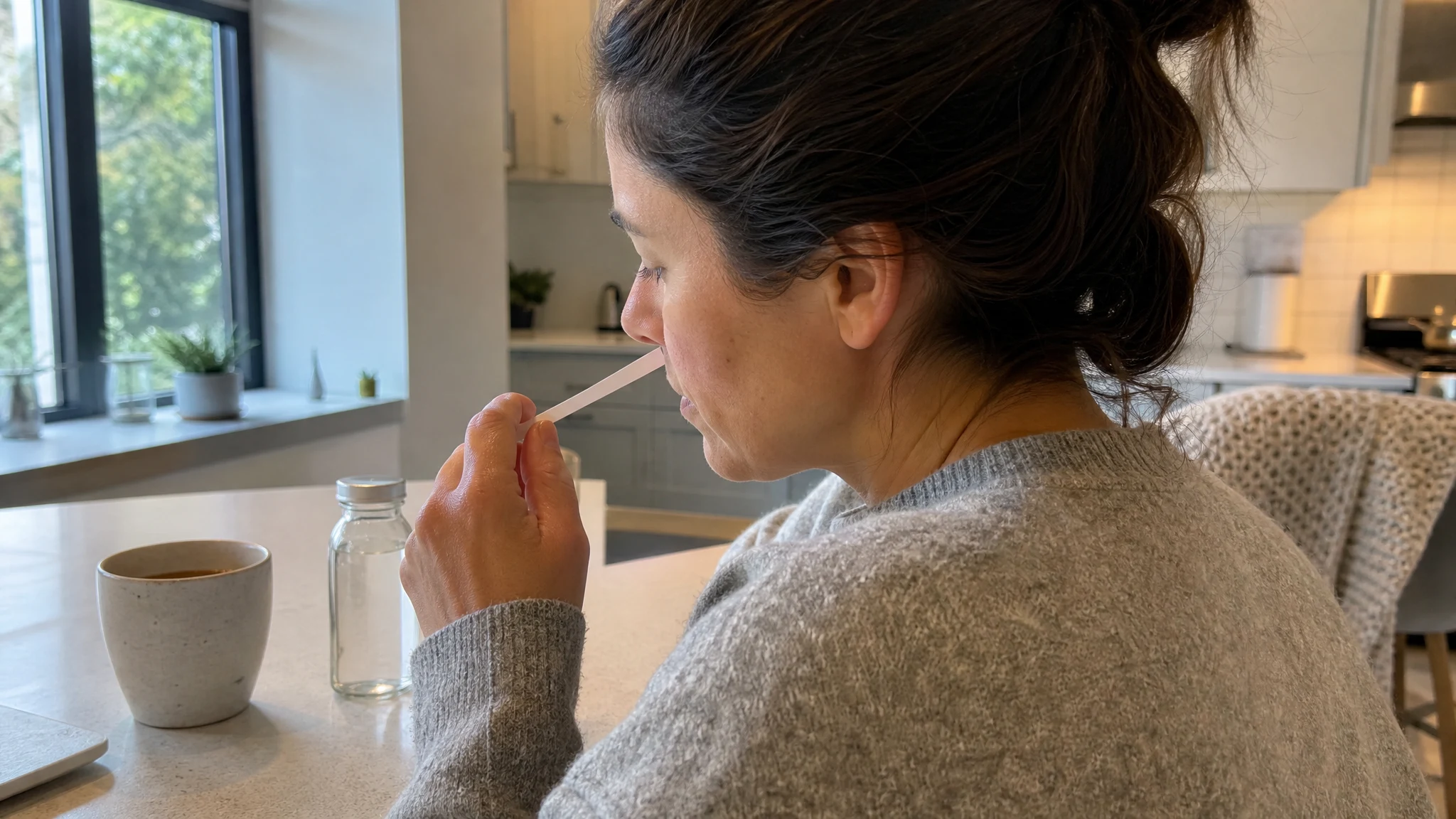
So make a reference when the bottle is new. Dab a single drop on a paper strip, write the date on the strip with a pencil, and keep it in a small zip bag in a drawer. Months later, dab a fresh strip from the working bottle and smell the two together. We describe the aroma as soft, powdery and springlike, with fresh purple florals, green stems, a hint of almond sweetness and a clean musky base. If the working bottle has lost the green freshness, or smells sharp, sour or oddly flat beside the reference, it has moved. Our guide to testing on paper strips shows how to smell strips without overloading your nose.
2. Look at the colour and clarity
The Certificate of Analysis we publish for one batch lists the appearance as a yellow liquid. A bottle that has darkened noticeably since you opened it, turned cloudy, or developed a sticky film around the neck deserves a second look. These are looser signals than smell, and light can change colour a little without telling you much, so treat them as supporting evidence. The Tisserand Institute notes that very old oils may become more viscous and eventually solidify, though it says that usually takes quite a few years, so a bottle that is visibly thick is a bottle well past its prime.
3. Notice how it behaves on skin
Skin is where an old bottle matters most. A 2016 dermatology study on lavender oil found that its main components, linalool and linalyl acetate, react with air to form compounds that can sensitise skin, and oxidised lavender oil at 6 percent in petrolatum produced positive patch-test reactions in 2.8 percent of the patients being tested. That was lavender, deliberately oxidised, so it is not a statement about our oil. It simply shows why old, air-exposed oil is a poor candidate for the skin. If you plan to wear the oil, use a fresher bottle, keep to our guidance of diluting to 0.5% to 2% in a carrier oil, and patch test first on a small area. Our dilution chart works in small batches, which also means you rarely keep a blend long enough for it to age.
What to do with an older bottle
A bottle that smells a little less bright is not necessarily finished. Many people are happy to use a slightly faded oil in a room spray, a wax melt or a drawer sachet, where the skin is not involved and a softer scent is perfectly pleasant. For anything that touches skin, or for a product you plan to sell, we would start with a fresh bottle. If you are scenting something for others, our post on making lilac scent last explains why adding more oil is rarely the cure for a faded result.
If a bottle carries a lot number, keep it. If a bottle smells different from what you expected when it first arrived, write to us with that lot number through the contact page. And if an oil you have used before suddenly stings or itches, stop using it and see a doctor if the reaction continues.
A good bottle of lilac oil asks for very little: a cool cabinet, a snug cap, and a quick sniff now and then against a dated strip. Do that, and the spring scent in the bottle will stay close to the one you opened on day one for a good while.
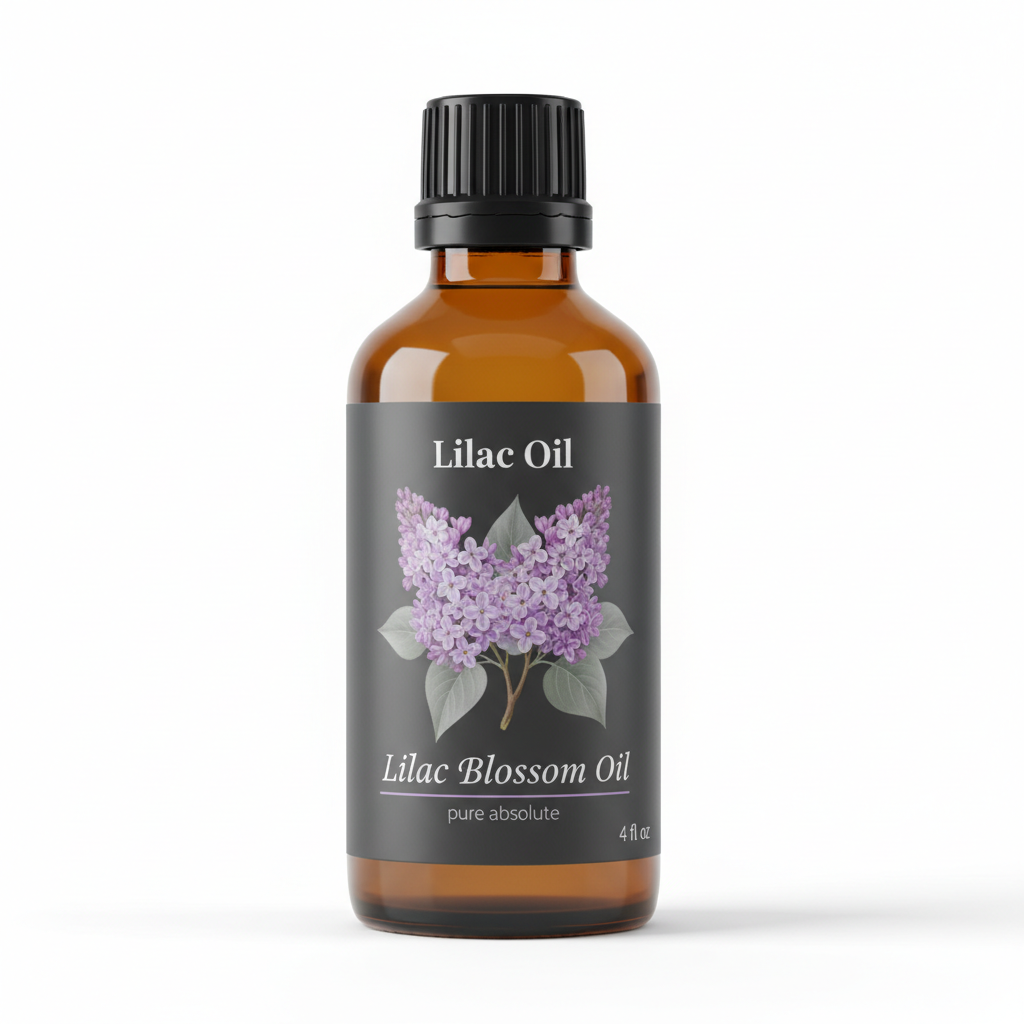
Lilac Blossom Oil
Lilac Blossom Oil from our own shop, in sizes from 0.5 oz to bulk.
From $15.99
Shop Now →Sources & Further Reading
- Is my bottle of essential oil oxidized or no longer good to use?, Tisserand Institute
- Patch Testing with Main Sensitizers Does Not Detect All Cases of Contact Allergy to Oxidized Lavender Oil, Hagvall and Christensson, Acta Dermato-Venereologica, 2016