Does Lilac Oil Stain? Getting It Out of Fabric and Wood
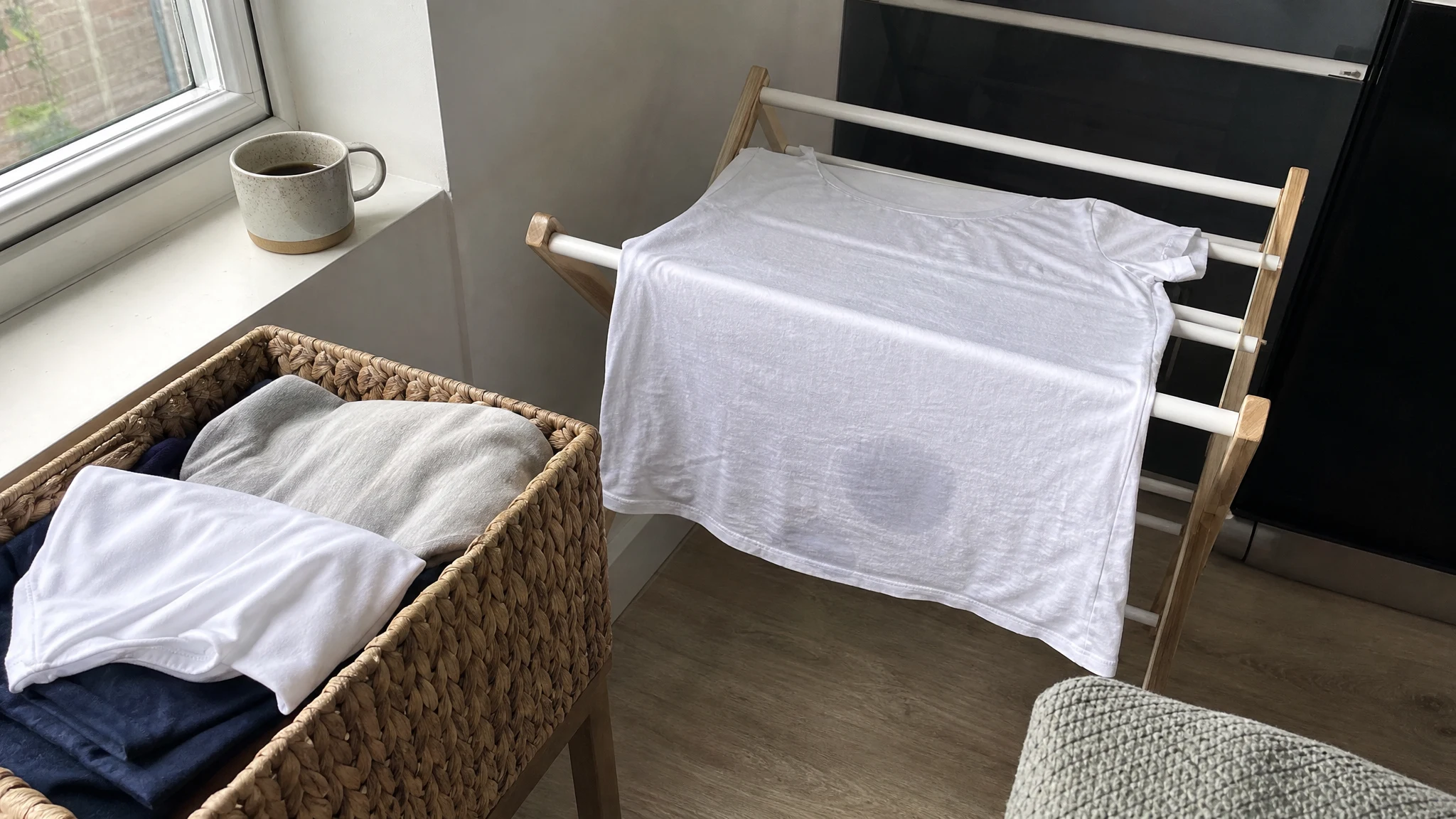
You are measuring a few drops into a candle pot, the bottle tips, and a bead of oil lands on your favourite cotton tee. The next question is practical: will it stain, and what do I do now? The short answer is that lilac oil is an oil, so it leaves the same kind of mark as any other, and it comes out much more easily when you treat it early.
An oil mark, not a dye mark
Our Lilac Blossom Oil is sold neat and is a concentrated material, which is why we recommend diluting it for skin. On fabric the issue is simpler than chemistry: oil soaks into fibres and leaves a darker, translucent patch that does not dry away the way water does. On a pale fabric you may also see a faint tint, because the Certificate of Analysis we publish for one batch lists the appearance as a yellow liquid. A pale mark on white cotton is reasonable to expect from a drop of a yellow liquid, and that is reasoning rather than a test result. We would not promise that it never marks anything.
The good news is that a single drop is tiny. At the usual rule of thumb of about 20 drops to a millilitre, one drop is roughly 0.05 ml. A small bead treated quickly is a small job.
The order that works
Texas A&M AgriLife Extension, in its Quick Stain Removal Guide, groups vegetable oils, animal fat, motor oil, cosmetics and candle wax together as oily stains, and gives the same core method for all of them. Applied to a drop of lilac oil, it looks like this.
- Act quickly and blot. The guide says time and heat exposure make stains harder to remove and advises a blotting motion rather than rubbing. Press a clean paper towel on the spot and lift. Rubbing pushes oil deeper and spreads it. Working from the back of the fabric helps push the stain out rather than further in.
- Check the care label, then test. Pretreatments can change a garment's colour, so try the product on a hidden area such as a hem or seam first, rinse, and let it dry, because fabric looks darker when wet.
- Work in liquid detergent. For oily stains the guide says to apply liquid detergent or a prewash stain remover freely, work it into the area, rinse your hands, and repeat. Liquid detergents suit oily soils. A plain dish detergent from the kitchen sink is a common stand-in, and a laundry pretreatment from the supermarket does the same job.
- Wash hot, as the label allows. Machine wash at the highest temperature the care label recommends.
- Check before drying. This is the step people skip. The guide says never to dry a stained garment in the dryer, because heat can make a remaining stain impossible to remove. Air dry, look at the spot in daylight, and repeat the treatment if a shadow remains.
Sometimes you need to treat a stain several times, and that is normal for oil.
When to hand it to a professional
The same guide is plain on one point: take dry-clean-only garments to a professional dry cleaner. We would extend that to silk scarves, wool, leather and suede, where water and detergent can leave a ring worse than the original mark. Blot gently, do not add anything, and tell the cleaner it is a scented oil and where it landed. That gives them the best chance.
Wood, stone and other surfaces
On a sealed table, glossy countertop or tile, a spilled drop wipes up with a paper towel and then a damp cloth with a little dish soap. On porous surfaces, such as unsealed wood, natural stone or grout, oil can soak in before you reach it, so wipe straight away and test any cleaner in a hidden corner first. For a good stone countertop, the manufacturer's care instructions or a stone specialist are a better guide than a kitchen cupboard. A small unseen test is a good habit on any finish you care about.
Keeping it off in the first place
Most spills happen while pouring into a small opening. Work over a tray or a folded towel, keep the cap on between pours, and wear an apron or old shirt for batch days. If you plan to scent fabric directly, as in a linen spray or sachets, test your diluted mixture on a hem or inside seam first, and let it dry before judging the mark. Our guide to lilac oil dilution will help you keep the strength low enough that a stray splash is a minor event. For anything that touches skin we recommend 0.5% to 2% in a carrier oil with a patch test first; there is more detail in our post on body products.
Oil on fabric feels like a disaster, but a blotter, a bottle of liquid detergent and a little patience handle most of it. If the garment is precious, a good dry cleaner is the right call, and nothing about a drop of lilac oil needs to stop you enjoying it.

Lilac Blossom Oil
Lilac Blossom Oil from our own shop, in sizes from 0.5 oz to bulk.
From $15.99
Shop Now →Sources & Further Reading
- Quick Stain Removal Guide, Texas A&M AgriLife Extension (publication L-5199)